
Table of Contents:
Is water really wet? The short scientific answer
What does "wet" actually mean in science?
Why does water make things wet?
The hidden science behind water molecules and surface tension
Does filtered water behave differently from tap water?
How understanding water science helps you make better drinking water choices
Common myths about water being "wet"
FAQs about water and wetness
Final verdict: water isn't wet—but it makes everything else wet
The question "Is water wet?" is one of the most debated topics in scientific curiosity on the internet. While it may sound simple, the answer depends on how we define the word wet—whether from a scientific, linguistic, or everyday perspective.
From a scientific point of view, water is not typically classified as "wet" because wetness describes the interaction between a liquid and a solid surface. Water itself is a liquid made of H₂O molecules that exhibit strong cohesive and adhesive properties, which is why it makes other objects appear wet.
In this article, we will break down the science behind water molecules, surface tension, and wetness, and also explain whether purified or filtered water behaves differently from tap water in real-world conditions.
Is water really wet? The short scientific answer
 The confusion around whether water is wet comes from how we use language versus how science defines physical properties.
In everyday language, we say water is wet because we associate wetness with the presence of water. However, in scientific terms, wetness is not a standalone property of a liquid. Instead, it describes how a liquid interacts with a solid surface.
According to scientific interpretation, something is considered wet when a liquid adheres to and remains on a surface. Since water is the liquid itself, it does not need to be "wetted" by another substance in the same way solids do.
This distinction is why scientists often say:
Water is the substance that causes wetness, not something that is inherently wet.
This foundational idea leads us into the deeper physics of what water actually is.
What does "wet" actually mean in science?
To properly understand the question, we need to define wetness in scientific terms.
Wetness is not a material property like density or temperature. Instead, it is a physical state of interaction between a liquid and a solid surface.
Scientific definition of wetness
Wetness occurs when:
- A liquid spreads across a solid surface
- Adhesion forces between liquid and solid are stronger than cohesion within the liquid
- A thin liquid film remains on the surface
Everyday vs scientific understanding
| Perspective | Definition of "Wet" |
|---|---|
| Everyday Use | Anything covered with water |
| Scientific Use | A surface condition caused by liquid interaction |
This difference explains why people naturally assume water is wet, even though science defines it differently.
The key lies in understanding molecular behavior—especially how water molecules interact with each other and with other materials.
Why does water make things wet?
 Water makes objects appear wet because of two fundamental molecular forces. As explained by the American Chemical Society, water molecules form hydrogen bonds that create strong cohesive forces, allowing water to spread across and adhere to many surfaces.
- Cohesion (water molecules attracting each other)
- Adhesion (water molecules sticking to other surfaces)
| Concept | What It Means | Everyday Example |
|---|---|---|
| Cohesion | Water sticks to water | Droplets |
| Adhesion | Water sticks to surfaces | Wet glass |
| Surface Tension | Water resists spreading | Water strider |
When water comes into contact with a surface like skin, glass, or fabric:
- Water molecules spread out due to adhesion
- They form a thin layer over the surface
- Cohesion keeps the water molecules connected
- The surface appears "wet" because it is coated in water
Example in daily life
- Your hands feel wet because water molecules spread across skin
- A table becomes wet because water adheres and forms a thin film
- Clothes absorb water due to capillary action between fibers
This interaction is the physical reason behind what we perceive as wetness.
Wetness:
A condition that occurs when liquid adheres to a solid surface.
Understanding this mechanism is essential for later topics such as filtration and water quality, since the behavior of water remains consistent regardless of whether it comes from a tap or a filtration system.
The hidden science behind water molecules and surface tension
Water behaves in a unique way due to its molecular structure: H₂O.
Each water molecule has a slightly positive and slightly negative side, making water a polar molecule. This polarity causes water molecules to attract each other through hydrogen bonding.
What is surface tension?
Surface tension is the force that holds water molecules together at the liquid's surface. The United States Geological Survey describes this phenomenon as a result of the strong attraction between neighboring water molecules, which explains why water forms droplets instead of spreading indefinitely.
This is why:
- Water forms droplets instead of spreading infinitely
- Some insects can walk on water
- Drops can stick to surfaces before falling
Why surface tension matters for wetness
Surface tension influences how water interacts with surfaces:
- High surface tension → water forms beads
- Lower surface tension → water spreads more easily
This balance between cohesion and adhesion is what creates the sensation of wetness in the physical world.
Without surface tension, water would not behave as we experience it in daily life.
🧠 Science Insight Box
Water is one of the few substances on Earth where hydrogen bonding plays a dominant role in shaping macroscopic behavior like droplet formation and capillary action.
Does filtered water behave differently from tap water?
 After understanding why water is not scientifically considered wet, many people naturally wonder whether filtered water behaves differently from tap water.
The short scientific answer is: no, filtered water does not behave differently in terms of its fundamental physical properties.
Both tap water and filtered water are composed of the same basic structure—H₂O molecules. These molecules retain their polarity, hydrogen bonding behavior, and surface tension characteristics regardless of filtration.
However, what does change is the composition of dissolved substances within the water.
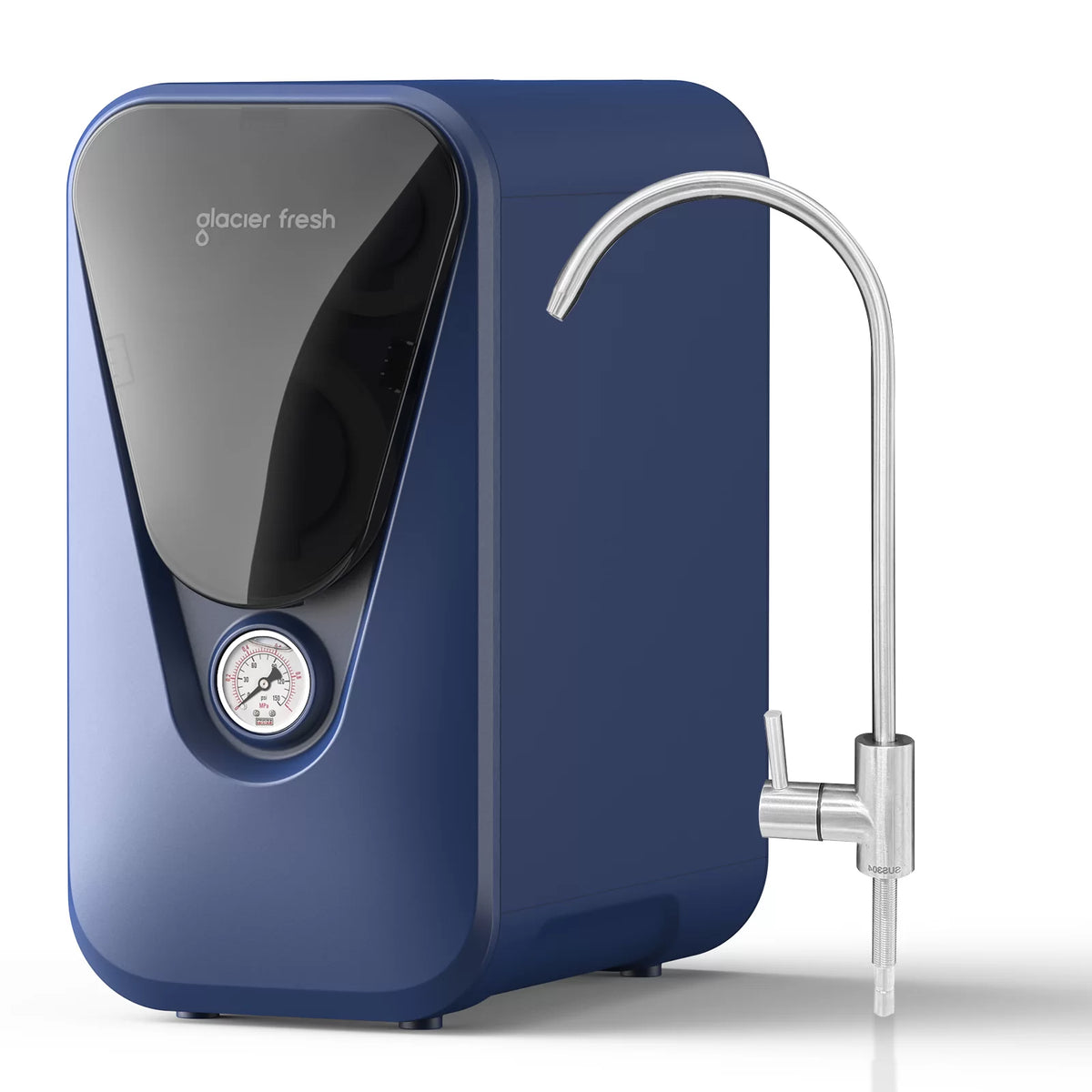
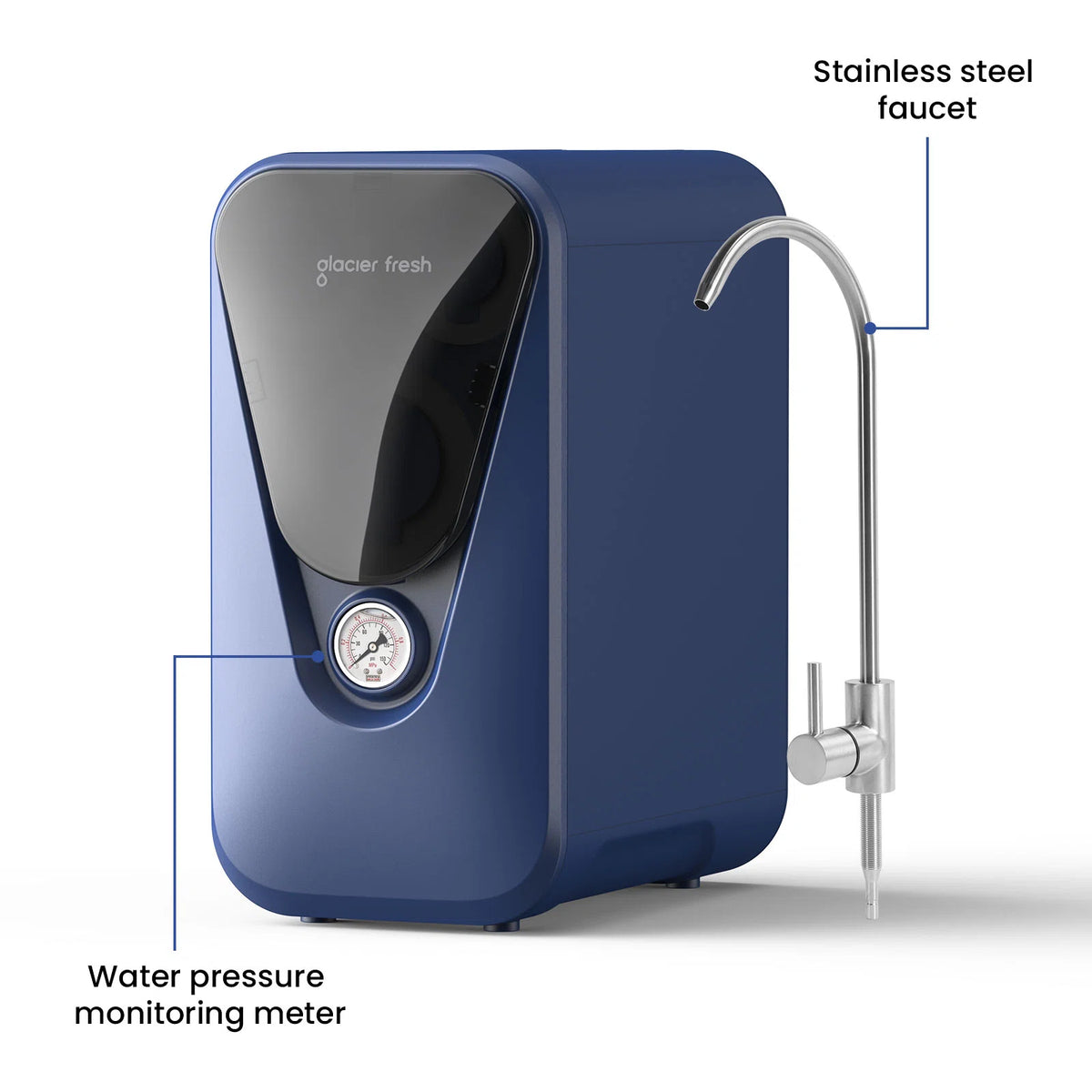
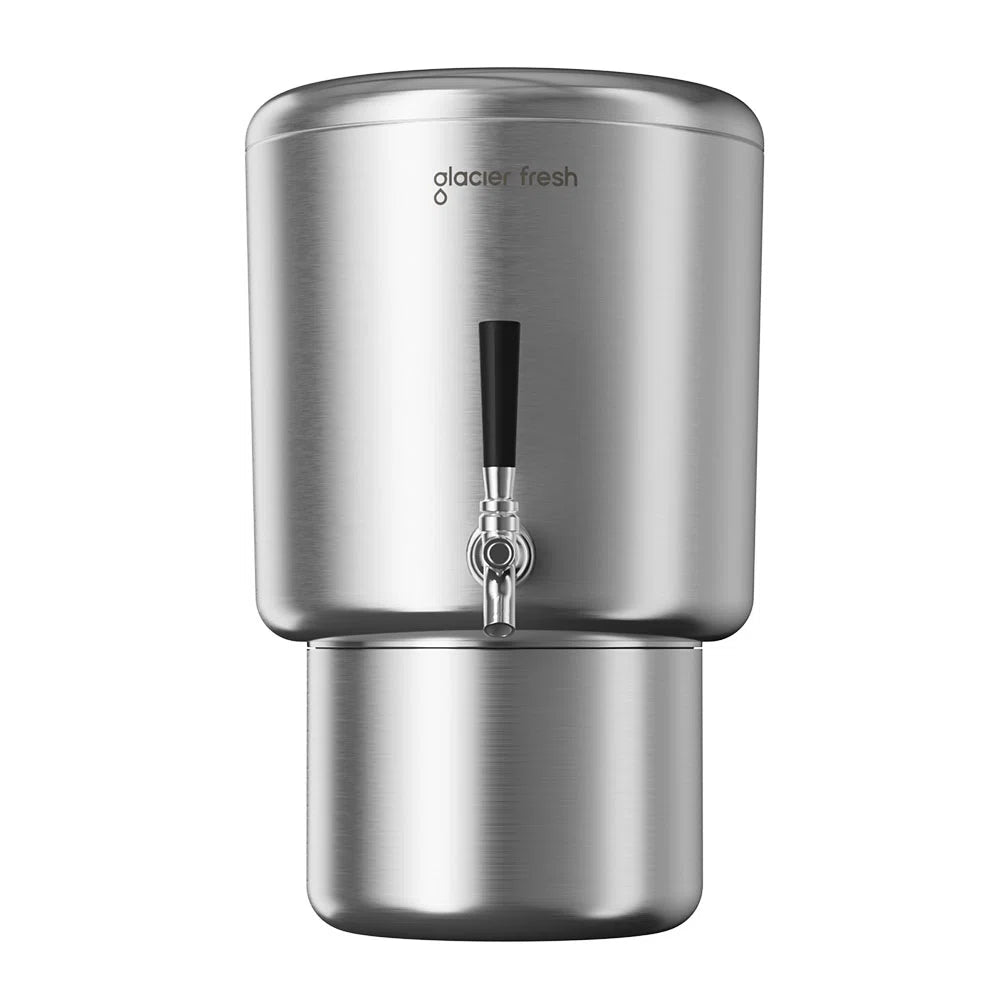
High-quality water filters, such as the Glacier Fresh U03 Reverse Osmosis System precisely remove harmful contaminants while preserving the natural physical properties of water molecules, ensuring you enjoy water that is truly safe and has a sweet taste.
Tap water vs filtered water: scientific comparison
| Property | Tap Water | Filtered Water |
|---|---|---|
| H₂O molecular structure | Same | Same |
| Surface tension | Same | Same |
| Wetness behavior | Same | Same |
| Dissolved contaminants | May contain | Reduced or removed |
| Taste & odor | Varies by region | Typically improved |
Key scientific insight
Filtration does not change what water is—it changes what water contains.
This distinction is critical in water science because many misconceptions arise from assuming that "cleaner water" behaves differently at a molecular level. In reality, filtration primarily improves sensory quality and safety, not the fundamental physics of water.
According to the United States Environmental Protection Agency, drinking water treatment and household filtration systems like countertop water filter system are designed to reduce contaminants such as chlorine, lead, and certain organic compounds while maintaining water's fundamental chemical structure.
Quick Recap
Before moving from water science to drinking water quality, here are the key concepts discussed so far:
- Water itself is not scientifically classified as wet.
- Wetness occurs when water adheres to another surface.
- Cohesion and adhesion explain why water forms droplets and spreads.
- Surface tension is created by hydrogen bonding between water molecules.
- Filtration changes water quality—not the molecular structure of H₂O.
How understanding water science helps you make better drinking water choices
Although the question "Is water wet?" begins as a scientific curiosity, understanding the answer provides valuable insights into how water behaves and why water quality matters:
The same molecular properties that allow water to make surfaces wet also enable it to dissolve minerals, nutrients, and contaminants. Understanding this helps explain why water quality—not just water itself—matters.
Water is more than just H₂O
| Water's Property | Why It Matters for Drinking Water |
|---|---|
| Polarity | Allows water to dissolve many substances |
| Hydrogen bonding | Influences how water interacts with surfaces |
| Universal solvent | Carries both beneficial minerals and unwanted contaminants |
| Stable H₂O molecules | Remain unchanged during filtration |
💡 Did You Know?
Scientists often refer to water as the "universal solvent" because of its remarkable ability to dissolve a wide range of substances. The United States Geological Survey notes that this property enables water to transport both naturally occurring minerals and environmental contaminants as it moves through the water cycle.
That's why you need a water filter like the Glacier Fresh U03 Reverse Osmosis, which features a multi-stage deep filtration system.
From water science to water quality
Although water molecules remain the same, the substances dissolved in water can vary significantly depending on the source. Minerals, chlorine, heavy metals, sediments, and emerging contaminants may all influence taste, odor, and overall water quality.
This is why water filtration technologies focus on removing contaminants rather than changing the water molecules themselves. Whether using activated carbon, ultrafiltration, or reverse osmosis water filters, the goal is to improve water quality by removing contaminants—not by altering the fundamental behavior of H₂O.
Continue exploring water science
If you enjoyed learning about the science behind wetness, you may also like:
Common myths about water being "wet"
 Even after learning the science behind why water isn't considered wet, several common misconceptions continue to circulate online.
Myth 1: Water is always wet
Fact: Wetness is not a property of water itself, but a description of how water interacts with another surface.
Water causes wetness—it is not defined by it.
Myth 2: Filtered water is "less wet" or behaves differently
Fact: Filtration does not change molecular structure. H₂O behaves identically whether it comes from a tap or a filtration system.
Myth 3: Pure water has different physical behavior
Fact: Even highly purified water (such as distilled water) still follows the same physical laws of cohesion, adhesion, and surface tension.
Myth 4: Ice or steam cannot be wet
Fact: Wetness applies specifically to liquid interaction. Ice and steam do not create wetness in the same way, although melting ice can create a thin liquid layer that feels wet.
Myth vs fact summary
| Statement | Reality |
|---|---|
| Water is wet | Wetness is an interaction, not a property |
| Filtered water behaves differently | Molecular behavior is unchanged |
| Pure water has different physics | False |
| Wetness applies to all states of water | Only liquid interaction matters |
Why this matters?
Understanding these distinctions is not just semantic—it helps clarify how water science actually works. Many misunderstandings in water quality discussions arise from mixing physical chemistry with everyday language.
This is also why topics like filtration, contaminants, and water quality must be understood separately from the basic physics of water molecules.
FAQs about water and wetness
Is water actually wet?
Scientifically, water is not considered wet. Wetness describes the interaction between a liquid and a solid surface.
Why does water make things wet?
Because water molecules adhere to surfaces through hydrogen bonding and form a thin liquid layer.
Is ice wet?
Ice itself is not wet, but when it begins to melt, a thin layer of liquid water can form on its surface, creating a wet sensation.
Is steam wet?
No. Steam is water in gaseous form and does not create liquid surface interaction unless it condenses.
Does purified water behave differently?
No. Purified water still consists of H₂O molecules with the same physical properties as tap water.
Why does filtered water taste better?
Filtration removes substances like chlorine, sulfur compounds, and organic impurities that affect taste and odor, improving sensory perception.
Can something be wet without water?
In scientific terms, wetness requires a liquid, and water is the most common example. Other liquids can also cause wetness.
Does water ever stop being water?
No. As long as the molecular structure remains H₂O, water retains its fundamental identity regardless of state or purity level.
Final verdict: water isn't wet—but it makes everything else wet
The question "Is water wet?" is a perfect example of how language and science can describe the same phenomenon differently. From a scientific standpoint:
- Water is not classified as "wet"
- Wetness is a condition created by liquid interaction with surfaces
- The behavior of water is governed by molecular forces such as cohesion, adhesion, and hydrogen bonding
Whether water comes from a municipal tap or a filtration system, its molecular structure remains the same. What changes is the quality of what is dissolved within it—not the fundamental physics of H₂O.
This scientific understanding is consistent with explanations provided by organizations such as the American Chemical Society, United States Geological Survey, and the United States Environmental Protection Agency, all of which emphasize that water's molecular behavior remains constant while water quality depends on the substances dissolved within it.
Understanding this distinction is important not only for science education but also for making informed decisions about water quality, filtration, and health.
References
- Encyclopaedia Britannica — Definition of water and physical states https://www.britannica.com/science/water
- American Chemical Society — Hydrogen bonding and molecular structure of water https://pubs.acs.org/doi/10.1021/jp9806011
- United States Geological Survey — Surface tension and water https://www.usgs.gov/water-science-school/properties-water
- United States Geological Survey — Water properties and behavior in nature https://www.usgs.gov/water-science-school/science/surface-tension-and-water
- United States Environmental Protection Agency — Drinking water contaminants and treatment overview https://www.epa.gov/sdwa/drinking-water-regulations-and-contaminants
- National Institutes of Health — Water chemistry and health-related research https://www.niehs.nih.gov/health/topics/agents/water-poll#:~:text=NIEHS%20research%20examines,with%20unsafe%20water.