
Table of Contents:
What Are the Main Differences Between Sediment and Carbon Water Filters?
How Sediment Filters Work: Physical Filtration and Micron Ratings Explained
How Carbon Filters Work: Adsorption, Surface Area, and Filter Types
What Are the Most Effective Water Filters for Removing Nitrates?
How Do Different Water Filtration Systems Compare in Terms of Filtration Quality?
Do You Need a Sediment Filter, a Carbon Filter, or Both?
FAQs
Conclusion
Shopping for a whole-house or under-sink setup, you see a sediment filter and a carbon filter side by side and assume one is just a better version of the other. They're not.
A sediment filter and carbon filter solve different problems with different mechanisms. One blocks particles by size; the other grabs chemicals by adsorption. Knowing which does what is the difference between water that looks clean and water that is clean.
What Are the Main Differences Between Sediment and Carbon Water Filters?
 A sediment filter is physical: porous media blocks anything larger than its rated micron size, while dissolved substances pass through. A carbon filter is chemical: contaminants bind to activated carbon's vast surface area through adsorption, trapping molecules rather than straining particles.
So in the carbon filter vs sediment filter comparison, you aren't ranking two versions of one thing; you're choosing between two tools.
Between sediment filter vs carbon filter, here's what each one handles:
-
A sediment filter removes sand, silt, rust, dirt, clay, and turbidity, nothing dissolved.
-
A carbon filter removes chlorine, chloramine (catalytic only), VOCs, pesticides, disinfection byproducts, taste and odor, and some PFAS.
-
Neither one removes lead, nitrates, arsenic, fluoride, dissolved minerals, bacteria, or viruses.
One rule never changes: sediment goes first. Particles clog carbon's pores and exhaust its capacity, so the sediment stage protects the carbon behind it.
How Sediment Filters Work: Physical Filtration and Micron Ratings Explained
Understanding Micron Ratings
A micron rating tells you the smallest particle a filter reliably catches. For reference, a human hair is about 70 microns, Giardia and Cryptosporidium cysts run 3 to 10 microns, and most bacteria sit between 0.2 and 2 microns.
Common ratings map to common jobs:
-
50 micron catches sand, large rust flakes, and visible debris.
-
10 micron is the standard whole-house pre-filter for fine silt, rust, and most sand.
-
5 micron suits supplies with rust or iron, catching fine clay and most silt.
-
1 micron handles well-water clay and approaches cyst size.
-
0.2 micron absolute crosses into microfiltration and removes bacteria.
One more label matters: nominal ratings catch about 80 to 90% of particles at the rated size; absolute ratings catch nearly all. For health-critical needs, use absolute.
What Factors Affect Filtration Performance for Small Contaminants?
The micron rating is a hard ceiling: a 5-micron filter can't block smaller particles. Flow rate matters next: faster water means less contact time and more borderline particles slipping through. As a filter loads, its pores narrow, sharpening filtration briefly but raising pressure drop, so replace it before water channels around the media.
Media type counts too: pleated filters give more surface area and higher flow, while spun polypropylene uses depth filtration for longer life in heavy sediment.
How Carbon Filters Work: Adsorption, Surface Area, and Filter Types
GAC vs. Carbon Block: How Filtration Systems Handle Micro-Level Contaminants
Two carbon formats dominate. Granular activated carbon (GAC) uses loose granules for high flow and long life, though water can channel between them and cut contact time; it handles chlorine, VOCs, and taste well. A carbon block compresses fine carbon powder, forcing longer contact and adding physical filtration down to about 0.5 micron, with better PFAS performance but lower flow.
Two specialty types matter: catalytic carbon, treated to remove chloramine and hydrogen sulfide that standard carbon won't reliably touch, and coconut shell carbon, whose micropores match chlorine, VOC, and PFAS molecules.
What Contaminants Can Carbon Filtration Remove From Tap Water?
Carbon is highly effective, 90% or more, against free chlorine, catalytic-grade chloramine, TTHMs and HAAs, VOCs, pesticides, herbicides, long-chain PFAS, and taste and odor.
It's only partly effective on some heavy metals such as mercury, and on microplastics through a 0.5-micron block. No carbon filter reliably removes nitrates, fluoride, arsenic, lead, dissolved minerals, bacteria, viruses, or TDS.
What Are the Most Effective Water Filters for Removing Nitrates?
 Nitrates earn their own section because they defeat both filter types. As dissolved inorganic ions, they pass straight through sediment and carbon of any rating, and boiling only concentrates them. It's a concern for infants under six months (where nitrates cause blue baby syndrome), pregnant women, and anyone in farm country above the EPA limit of 10 mg/L.
Three methods actually work:
-
Reverse osmosis pushes water through a semi-permeable membrane, removing 83 to 92% of nitrates plus fluoride, arsenic, lead, and dissolved solids; it's the most practical home option.
-
Anion exchange resin, a point-of-entry tank, swaps nitrate ions for chloride and treats the whole house, but needs salt regeneration.
-
Distillation boils water and collects the steam; it works but is slow and energy-hungry, so it suits small volumes.
A sediment and carbon combination does not remove nitrates. If your test shows them, the answer is under-sink RO.
How Do Different Water Filtration Systems Compare in Terms of Filtration Quality?
The Filtration Spectrum: From Sediment to RO
It helps to see filtration as a spectrum, each level adding coverage and leaving honest gaps. Sediment alone clears turbidity, rust, and sand but leaves every dissolved contaminant, chlorine, and bacteria untouched.
Carbon alone adds chlorine, chloramine, VOCs, byproducts, and taste, while still missing lead, nitrates, arsenic, fluoride, and bacteria. Sediment plus carbon, the common two or three-stage baseline, covers turbidity, chemical, and taste concerns for most city water, but still leaves lead, nitrates, and dissolved contaminants.
Ultrafiltration adds 0.01 to 0.1-micron hollow fibers that remove bacteria, protozoa, and some viruses while keeping minerals. A five-stage reverse osmosis system goes furthest, removing dissolved solids, heavy metals, PFAS, nitrates, fluoride, arsenic, and microbes, so it sits at the point of use, not the whole house.
Matching Technology to Contaminant
This table maps the common problem to the tool that solves it:
| Contaminant | Best-matched technology |
| Sand, rust, turbidity | Sediment filter (5 to 10 micron city water; 1 micron well clay) |
| Chlorine, taste, odor | GAC or carbon block |
| Chloramine | Catalytic carbon only |
| VOCs, pesticides, byproducts | Carbon block, or GAC with enough contact time |
| PFAS | Carbon block for partial reduction; under-sink RO for comprehensive |
| Lead | NSF 53-certified point-of-use filter or RO |
| Nitrates | Under-sink RO or anion exchange, not sediment or carbon |
| Arsenic | Under-sink RO |
| Bacteria, viruses | UV or absolute-rated UF, not carbon or sediment |
| Hardness | Water softener, not filtration |
Do You Need a Sediment Filter, a Carbon Filter, or Both?
 For most homes, both, in sequence, because they handle different things. A sediment-only setup fits clear water that still carries visible rust or sand from a well or old pipes. A carbon-only setup fits already particle-free city water with chlorine or taste issues, though a sediment pre-filter still protects carbon life. Pairing a sand and carbon filter is the default for the mix of turbidity and chemical concerns in most US water. Add RO when a test shows lead, PFAS, nitrates, arsenic, fluoride, or high TDS.
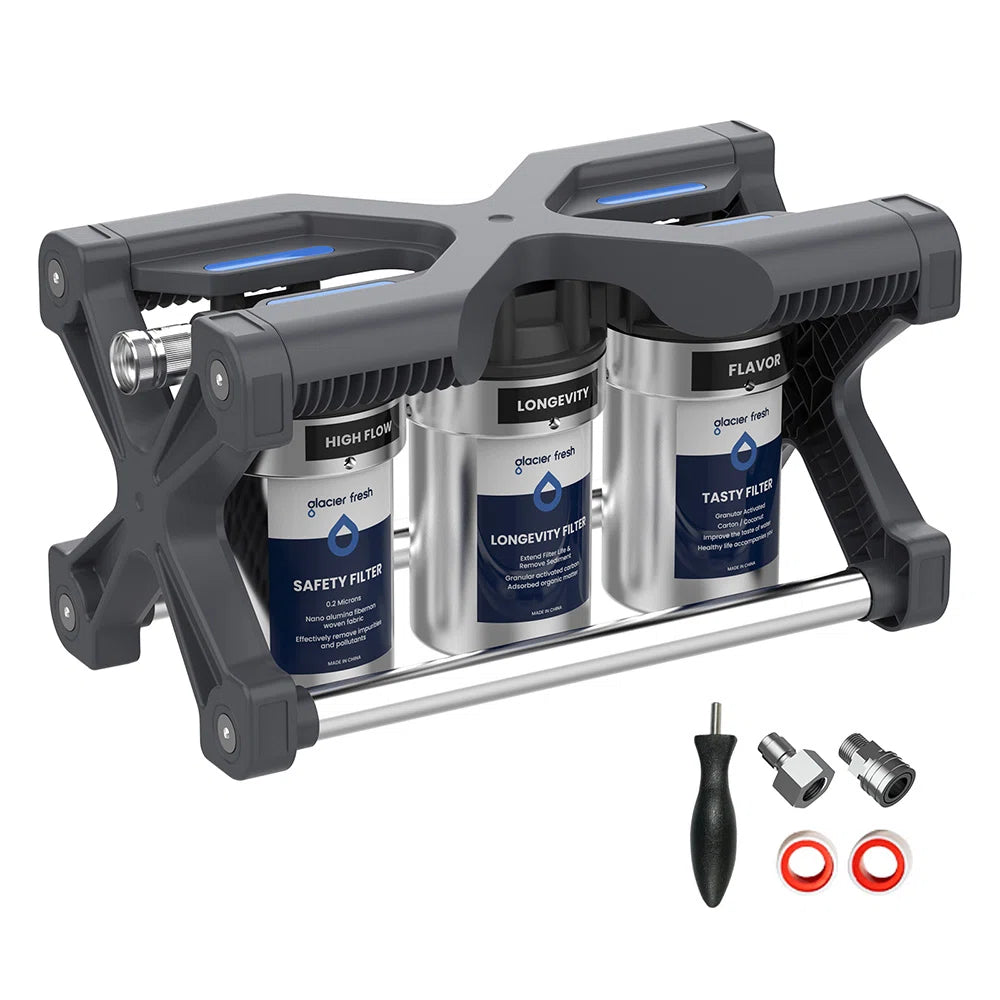
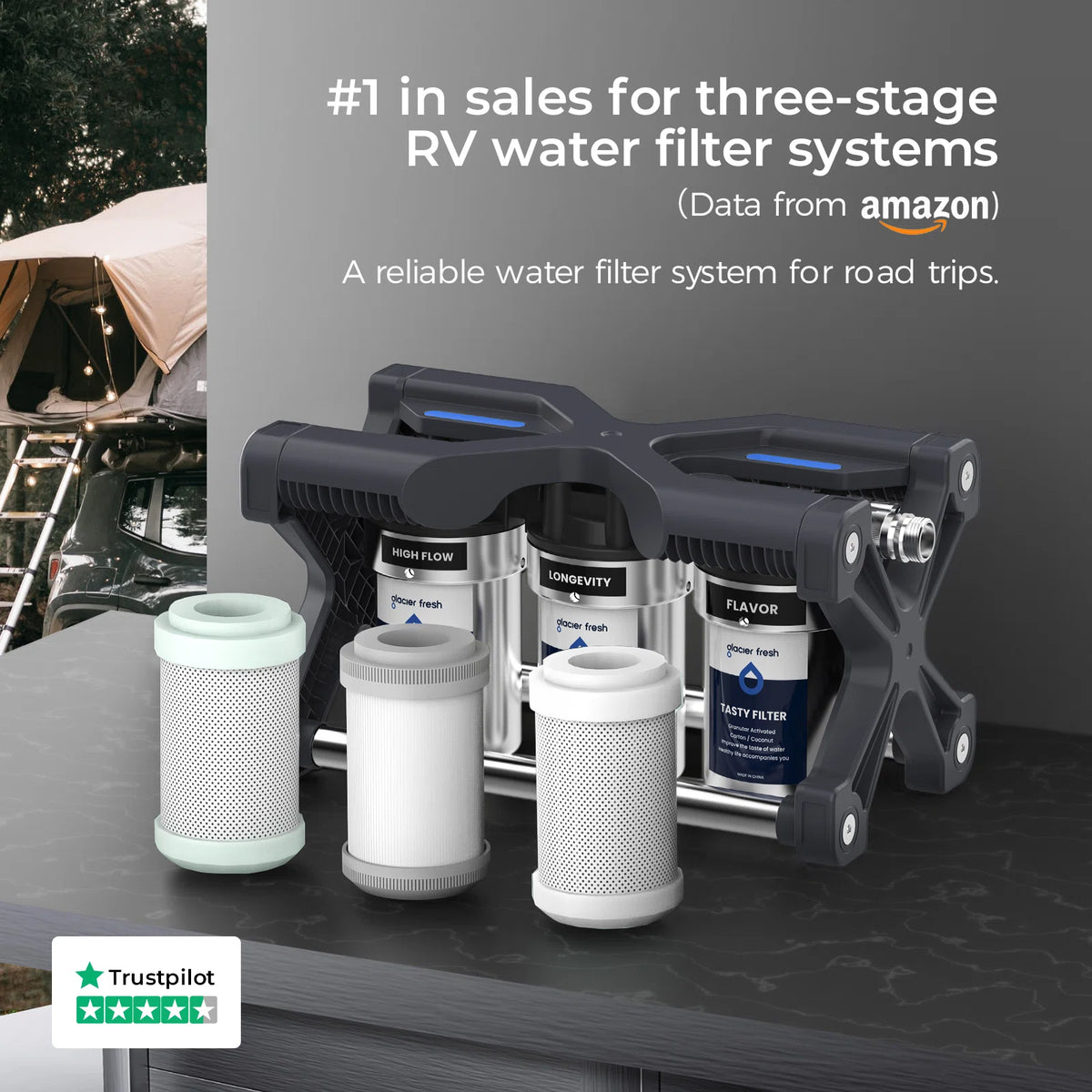
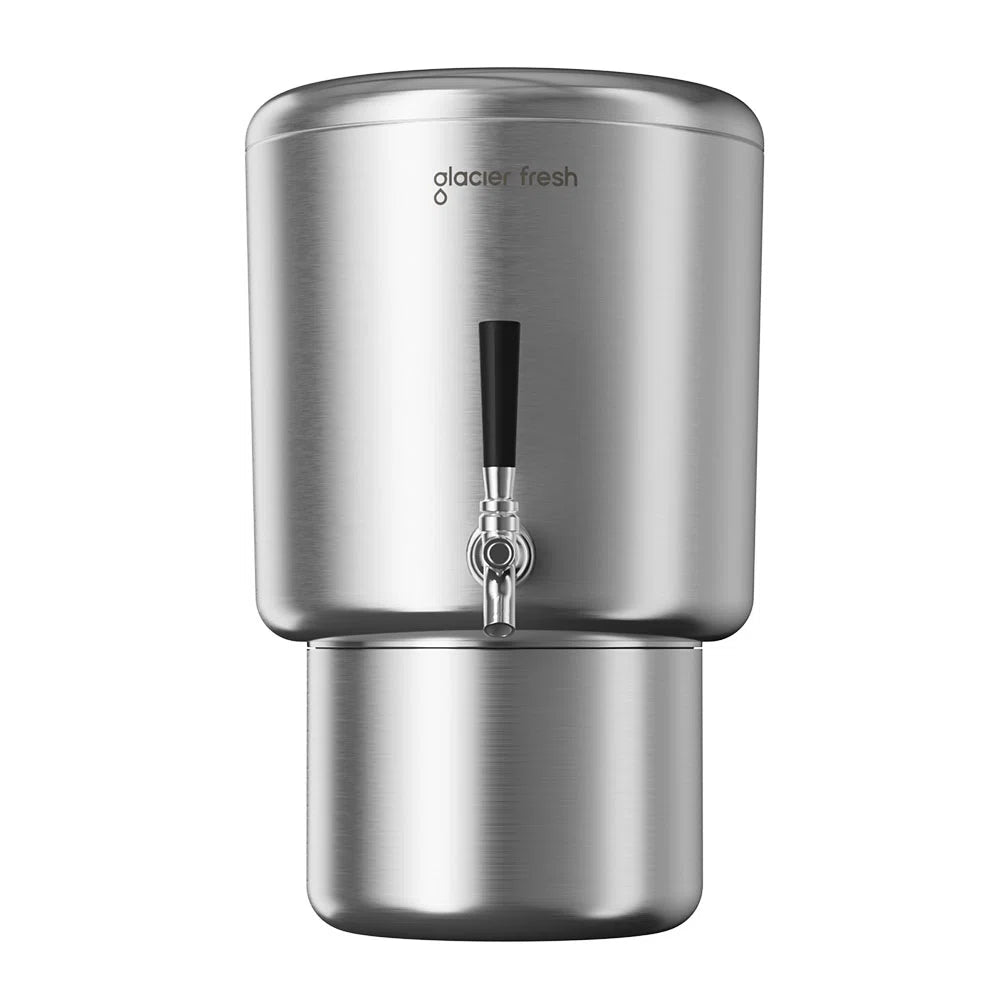
The GlacierFresh 3G Gravity-Fed System shows the sediment-then-carbon idea in countertop form: coconut activated carbon, fluoride-reduction media, and particle carbon, with no electricity or plumbing.
For lead and PFAS beyond carbon's reach, the PC04 Countertop Water Filter uses an Elarisey positively-charged nanofiber membrane, a third mechanism that traps contaminants by electrochemical attraction rather than size or adsorption, with SGS-verified reductions of lead (~99.87%) and PFAS (~99.62%).
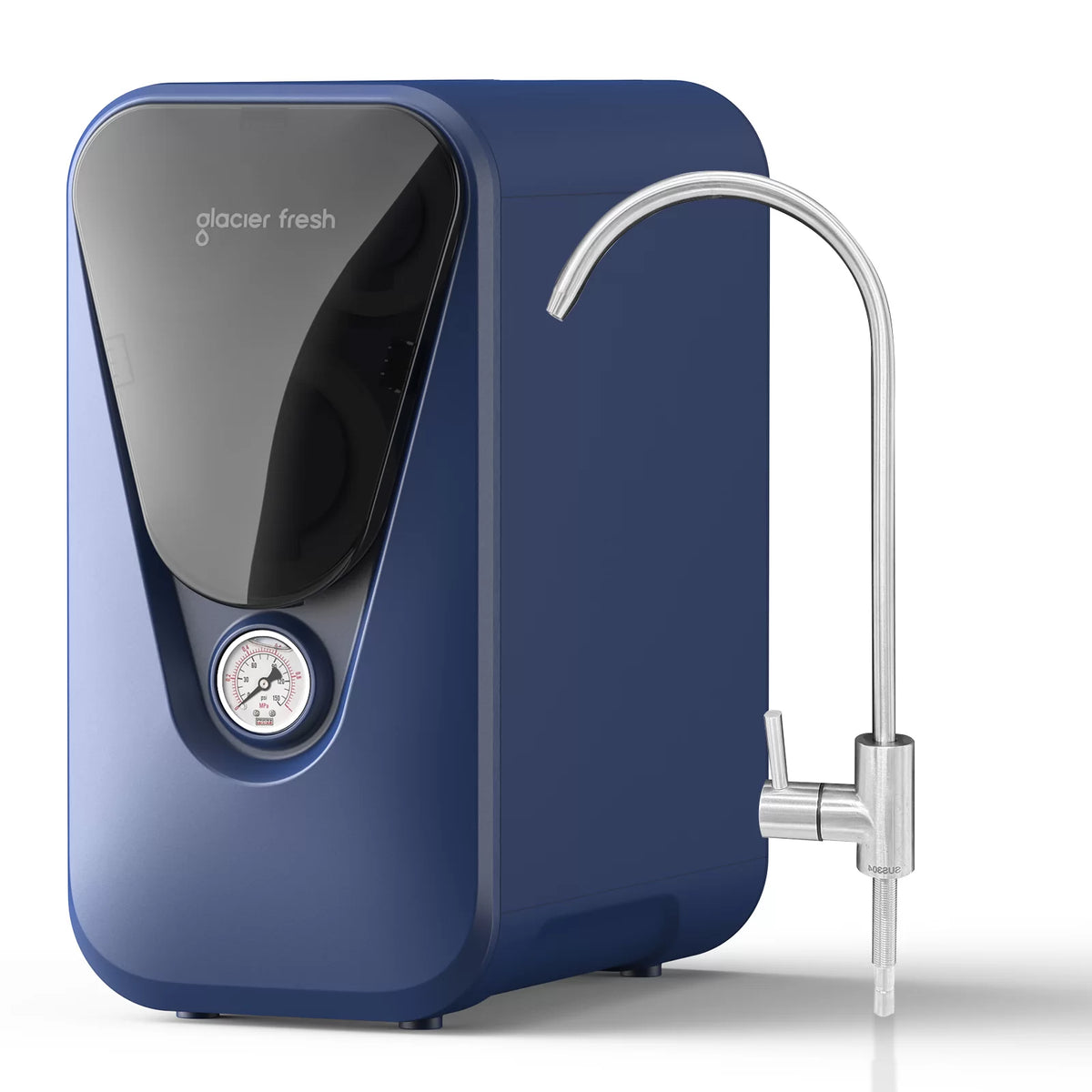
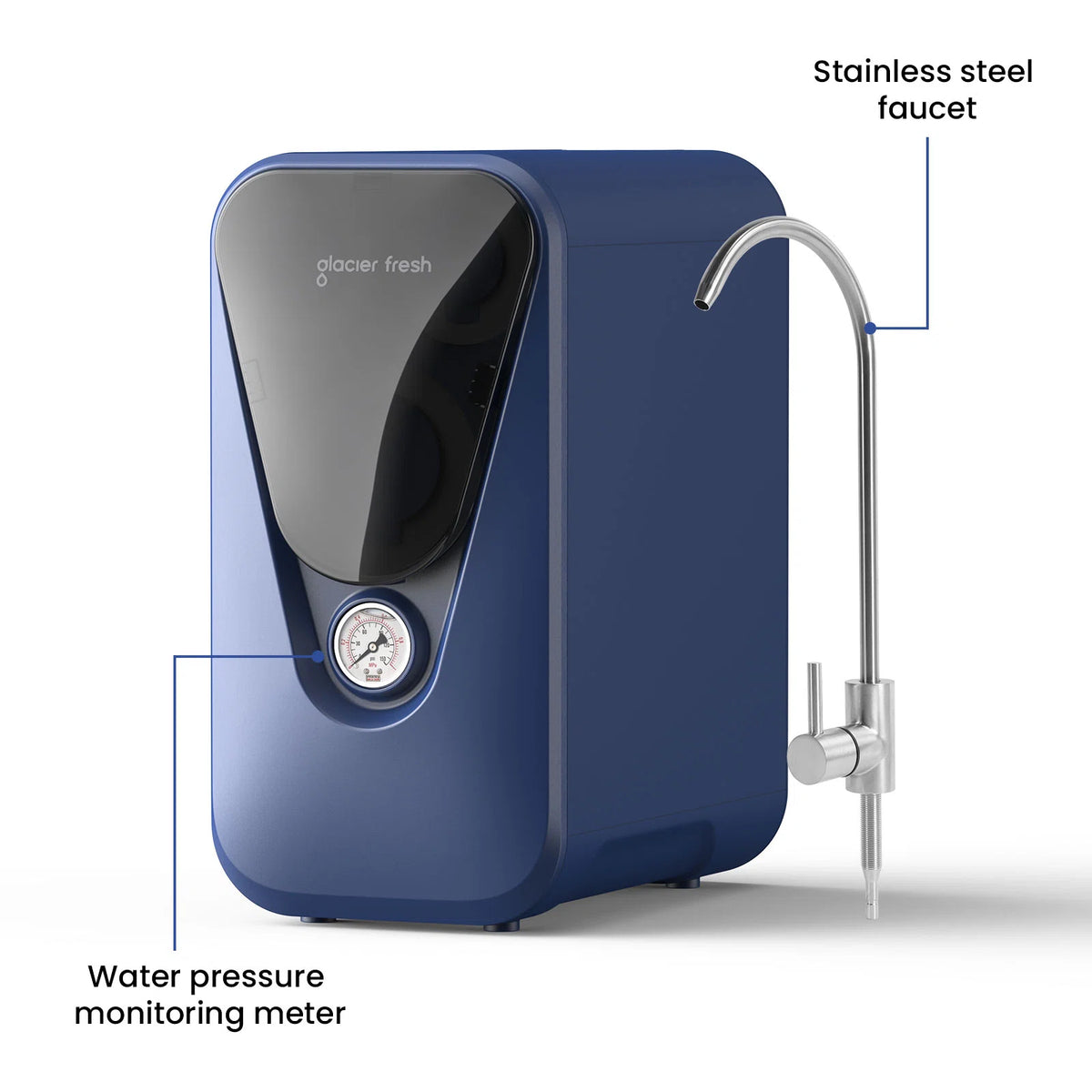
And for nitrates, the U03 five-stage under-sink RO removes what sediment and carbon can't, with PP cotton, compound carbon, a 0.0001-micron RO membrane, particle carbon, and post-carbon, certified to NSF/ANSI 58 and SGS.
FAQs
What contaminants can water filtration systems remove from tap water?
It depends on the technology. Sediment filters remove particles, carbon removes chlorine and many chemicals, RO removes dissolved threats like lead, nitrates, and PFAS, and UV or UF handle microbes. No single stage covers everything, so systems combine them.
How do different water filtration systems compare in terms of filtration quality?
Think of a spectrum. Sediment is most basic, carbon adds chemical removal, sediment plus carbon is a solid baseline, and reverse osmosis is the most comprehensive. Match the level to your water test.
How do filtration systems handle micro-level contaminants?
Through pore size and adsorption. Carbon blocks and absolute-rated sediment filters physically catch fine particles down to about 0.5 micron, while RO membranes reach 0.0001 micron to remove dissolved solids. Smaller pores mean finer filtration but slower flow.
Does a sediment filter remove chlorine?
No. A sediment filter removes particles by size, so chlorine and its taste pass right through. You need a carbon stage for that, which is why the two go in together, sediment first.
Can I use a carbon filter without a sediment filter?
You can on already-clear city water, but it shortens carbon life. Sediment clogs carbon's pores and wastes its capacity, so even carbon makers recommend a sediment pre-filter ahead of it.
Conclusion
Sediment and carbon filters aren't rivals; they're teammates handling particles and chemicals, and most homes need both. When a test turns up dissolved threats like lead, nitrates, or PFAS, add RO.
GlacierFresh covers every tier, from the 3G gravity-fed system to the Elarisey PC04 and the five-stage U03 RO. Explore the range at glacierfreshfilter.com.
References:
-
Centers for Disease Control and Prevention. About Choosing Home Water Filters. https://www.cdc.gov/drinking-water/prevention/about-choosing-home-water-filters.html
-
United States Environmental Protection Agency. Identifying Drinking Water Filters Certified to Reduce PFAS. https://www.epa.gov/water-research/identifying-drinking-water-filters-certified-reduce-pfas
-
United States Environmental Protection Agency. Chemical Contaminant Rules. https://www.epa.gov/dwreginfo/chemical-contaminant-rules
-
United States Environmental Protection Agency. Point-of-Use Reverse Osmosis Systems. https://www.epa.gov/watersense/point-use-reverse-osmosis-systems
-
Safe Drinking Water Foundation. Ultrafiltration, Nanofiltration and Reverse Osmosis. https://www.safewater.org/fact-sheets-1/2017/1/23/ultrafiltrationnanoandro
-
NSF International. Certified Drinking Water Treatment Units – Lead Reduction. https://info.nsf.org/Certified/dwtu/listings_leadreduction.asp