
Table of Contents:
What gives water its taste in the first place?
Why doesn't pure H₂O have much taste?
Why does filtered water taste better?
Does filtration change water molecules?
Does reverse osmosis water taste different?
Does better taste mean better water?
Why understanding water taste helps you choose the right filtration system
Common myths about filtered water taste
FAQs
Conclusion
In our previous article, we explored an intriguing scientific question: Is water really wet? The answer revealed that water's unique molecular structure allows it to interact with surfaces without changing the H₂O molecules themselves. That same principle helps explain another everyday question:
Why does filtered water taste better than tap water?
Many people assume filtration somehow changes water itself. In reality, the H₂O molecules remain exactly the same. What changes are the dissolved substances traveling with the water—including chlorine, minerals, sediments, dissolved gases, and trace organic compounds—all of which influence how water smells and tastes.
This guide explores the science behind water taste, dissolved minerals, chlorine, filtration, and why cleaner water often delivers a fresher drinking experience.
What gives water its taste in the first place?
 One of the biggest misconceptions about drinking water is that water itself has a strong flavor. Scientifically, that's not the case.
Pure water consists only of H₂O molecules, which have almost no taste or smell. The flavors we associate with drinking water come primarily from substances dissolved in it as water travels through natural environments and municipal distribution systems.
As the United States Geological Survey explains, water continuously dissolves minerals, gases, and other materials as it moves through soil, rock formations, rivers, reservoirs, and plumbing systems. These dissolved substances create the unique taste profile of different water sources.
The Main factors that influence water taste
| Substance | Common Source | Effect on Taste |
|---|---|---|
| Chlorine | Municipal disinfection | Bleach-like or chemical taste |
| Chloramine | Water treatment | Slight medicinal taste |
| Calcium & Magnesium | Natural minerals | Crisp, mineral-rich flavor |
| Hydrogen sulfide | Groundwater | Rotten egg odor |
| Iron | Old pipes or groundwater | Metallic taste |
| Organic compounds | Natural vegetation or pollution | Earthy or musty flavors |
Some of these substances are harmless at regulated levels, while others may affect both sensory quality and overall drinking water experience.
💡 Did you know?
Although water is often described as "tasteless," most people rarely drink completely pure H₂O. Instead, the taste we recognize comes from tiny amounts of dissolved minerals, gases, and other naturally occurring or treatment-related compounds.
Why doesn't pure H₂O have much taste?
If most drinking water has a recognizable flavor, why doesn't pure water?
The answer lies in human biology.
Taste receptors on the tongue respond to dissolved ions and chemical compounds rather than the H₂O molecule itself. Because pure water contains almost no dissolved substances, it stimulates the taste buds very little.
According to the American Chemical Society, the molecular structure of water remains remarkably stable regardless of where it comes from. Whether water is collected from rainfall, filtered through a household system, or purified using reverse osmosis, every molecule still consists of two hydrogen atoms bonded to one oxygen atom.
This explains an important concept introduced in our previous article:
Filtration does not change water molecules—it changes what travels with them.
Water taste vs water chemistry
| Pure H₂O | Typical Drinking Water |
|---|---|
| Nearly tasteless | Contains dissolved minerals and compounds |
| No noticeable odor | Odor depends on dissolved substances |
| Same molecular structure | Same H₂O molecules plus impurities or minerals |
| Rare outside laboratories | Common in everyday life after natural mineralization |
🔬 Science fact
Water molecules are identical whether they come from a mountain spring, a municipal water supply, or a household filtration system. What creates differences in taste is the unique combination of dissolved substances—not the H₂O molecules themselves.
🔹 Quick recap
Before exploring why filtered water often tastes better, remember these key scientific principles:
- Water molecules remain unchanged during filtration.
- Taste comes from dissolved substances—not from H₂O itself.
- Water's ability to dissolve minerals and contaminants explains why water from different sources tastes different.
- Understanding water chemistry provides the foundation for understanding modern water filtration.
Why does filtered water taste better?
Simply put, filtration improves taste by reducing or removing substances that create unpleasant flavors and odors—while leaving the H₂O molecules unchanged.
Rather than changing water itself, filtration targets the compounds dissolved within it. As noted by the United States Environmental Protection Agency, different filtration technologies are designed to reduce specific contaminants and improve the aesthetic qualities of drinking water, including taste, odor, and clarity.

1. Chlorine is reduced
Chlorine is one of the most common reasons people describe tap water as having a chemical or swimming pool-like taste.
Municipal water suppliers add chlorine to control harmful microorganisms, a practice recognized by the Centers for Disease Control and Prevention as one of the most important public health advances in drinking water treatment. While effective for disinfection, residual chlorine can noticeably affect taste and odor.
Activated carbon filters are particularly effective at reducing free chlorine, which is why many consumers notice an immediate improvement in flavor.
2. Odor-causing compounds are reduced
Some groundwater sources naturally contain hydrogen sulfide or organic compounds that create earthy, musty, or rotten egg-like odors.
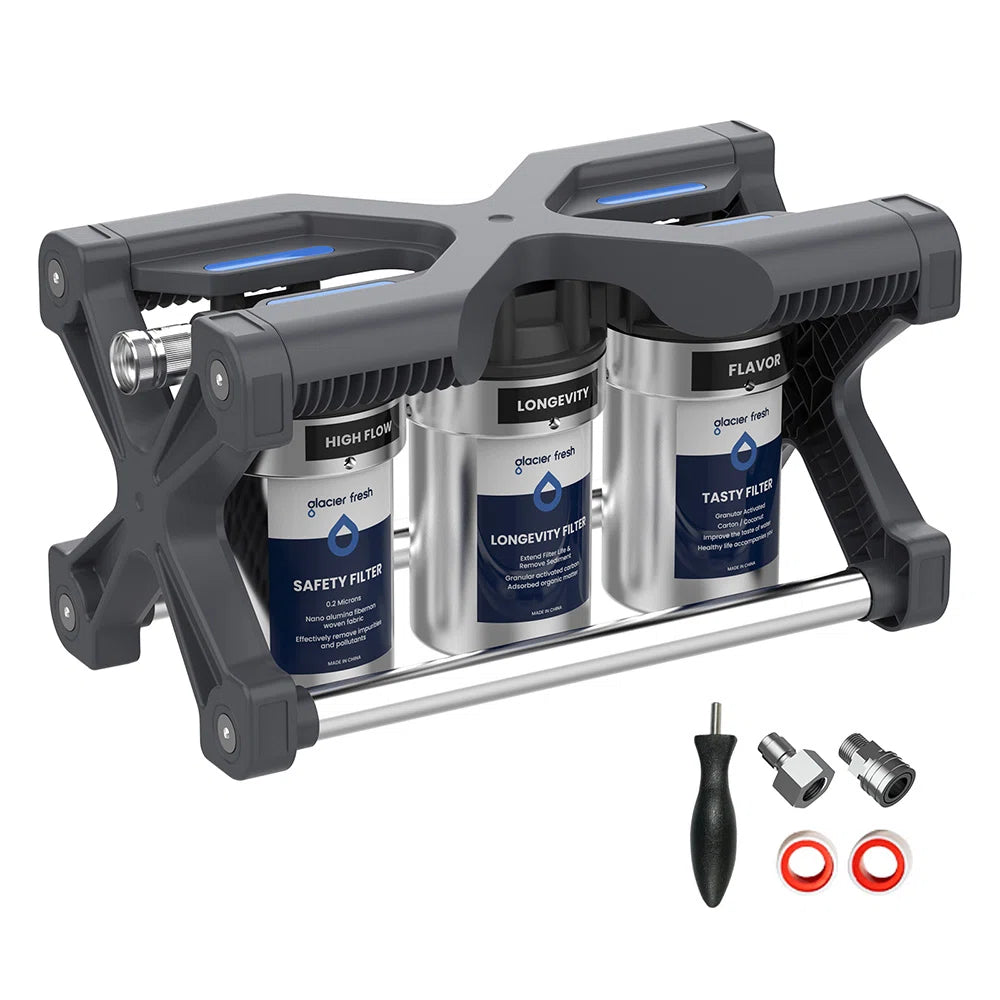
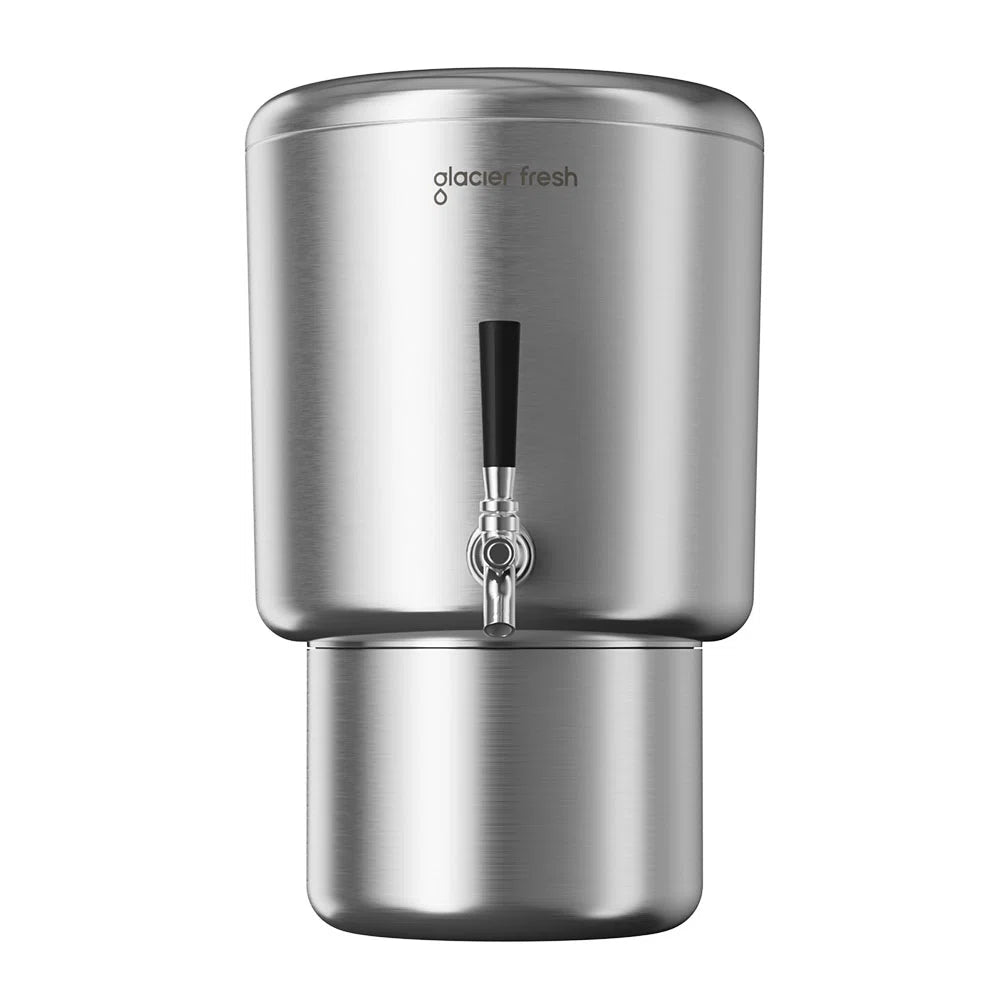
Although these compounds are often present at low concentrations, the human nose is highly sensitive to them. Modern filtration technologies like Glacier Fresh PC04 countertop water filter system can significantly reduce many odor-causing substances, resulting in a cleaner sensory experience.
3. Sediment no longer masks flavor
Tiny particles of rust, sand, or sediment rarely change water chemistry, but they can affect mouthfeel and overall drinking experience.
Removing suspended particles helps water appear clearer and taste fresher, even though the molecular structure of the water remains exactly the same.
4. The overall flavor becomes more balanced
Filtration doesn't aim to create "perfect" water—it aims to remove compounds that distract from water's naturally clean taste.
As undesirable flavors are reduced, subtle natural mineral notes become easier to perceive, giving many people the impression that filtered water tastes smoother and more refreshing.
Comparison: why filtered water often tastes different
| Substance | Can Affect Taste? | Typical Flavor Impact | Can Many Household Filters Reduce It? |
|---|---|---|---|
| Chlorine | ✔ | Chemical | ✔ |
| Chloramine | ✔ | Slight medicinal | Some systems |
| Hydrogen sulfide | ✔ | Rotten egg | Specialized systems |
| Sediment | ✔ | Gritty | ✔ |
| Certain VOCs | ✔ | Musty | Many carbon-based systems |
| Calcium & Magnesium | Mild | Mineral taste | Depends on filtration technology |
Does filtration change water molecules?
After learning why filtered water tastes better, many people naturally ask another question: Does filtration actually change the water itself?
The scientific answer is no.
Whether water passes through an activated carbon filter, an ultrafiltration membrane, or a reverse osmosis (RO) system, the H₂O molecules remain exactly the same. Filtration changes what is dissolved in the water—not the molecular structure of water itself.
This concept builds directly on the science explored in our previous article, Is Water Really Wet? Just as water's ability to make surfaces wet comes from its molecular properties, those same molecules remain chemically identical before and after filtration.
According to the American Chemical Society, a water molecule is composed of two hydrogen atoms and one oxygen atom linked by stable covalent bonds. Household filtration systems do not alter these bonds; instead, they selectively remove or reduce substances mixed with the water.
Water molecules vs. dissolved substances
| Water Molecules (H₂O) | Dissolved Substances |
|---|---|
| Remain unchanged during filtration | Can be reduced or removed |
| Determine water's physical properties | Influence taste, odor, color, and water quality |
| Same in tap, filtered, and purified water | Vary depending on the water source |
💡 Why this matters
Understanding this distinction explains two important facts:
- Water's physical behavior remains the same. Filtered water still forms droplets, creates surface tension, and behaves exactly like ordinary water.
- Its sensory experience can change dramatically. By reducing chlorine, sulfur compounds, sediments, and certain dissolved contaminants, filtration creates a cleaner and more refreshing taste without changing the H₂O molecules themselves.
This is one of the biggest misconceptions surrounding household water filtration. Filtration improves water quality, not water chemistry.
Does reverse osmosis water taste different?
One of the most frequently discussed topics in drinking water science is the taste of reverse osmosis (RO) water.
Many people describe RO water as:
- Cleaner
- Crisper
- Lighter
Others say it tastes:
- Flat
- Bland
- Less "fresh"
So why do opinions differ?
The answer lies in Total Dissolved Solids (TDS).
According to the United States Geological Survey, TDS refers to the combined amount of dissolved minerals, salts, and other inorganic or organic substances present in water. Reverse osmosis systems are designed to remove a very high percentage of these dissolved solids.
Because calcium, magnesium, sodium, and other minerals contribute subtle flavors, reducing them can make water taste more neutral. Some people perceive this neutrality as exceptionally clean, while others describe it as less flavorful simply because familiar mineral notes have been reduced.
Importantly, a lower TDS value does not automatically mean healthier water, nor does a higher TDS value necessarily indicate poor water quality. Taste and water safety are related but not identical concepts.
Filtered Water Taste Comparison
| Water Type | Typical Taste Profile | Main Reason |
|---|---|---|
| Tap Water | Mineral-rich, sometimes chemical | Minerals, chlorine, disinfectants |
| Carbon-Filtered Water | Cleaner, fresher | Reduced chlorine and odors |
| Reverse Osmosis Water | Neutral, crisp, sometimes "flat" | Significantly lower dissolved solids |
| Spring Water | Mild mineral flavor | Naturally occurring minerals |
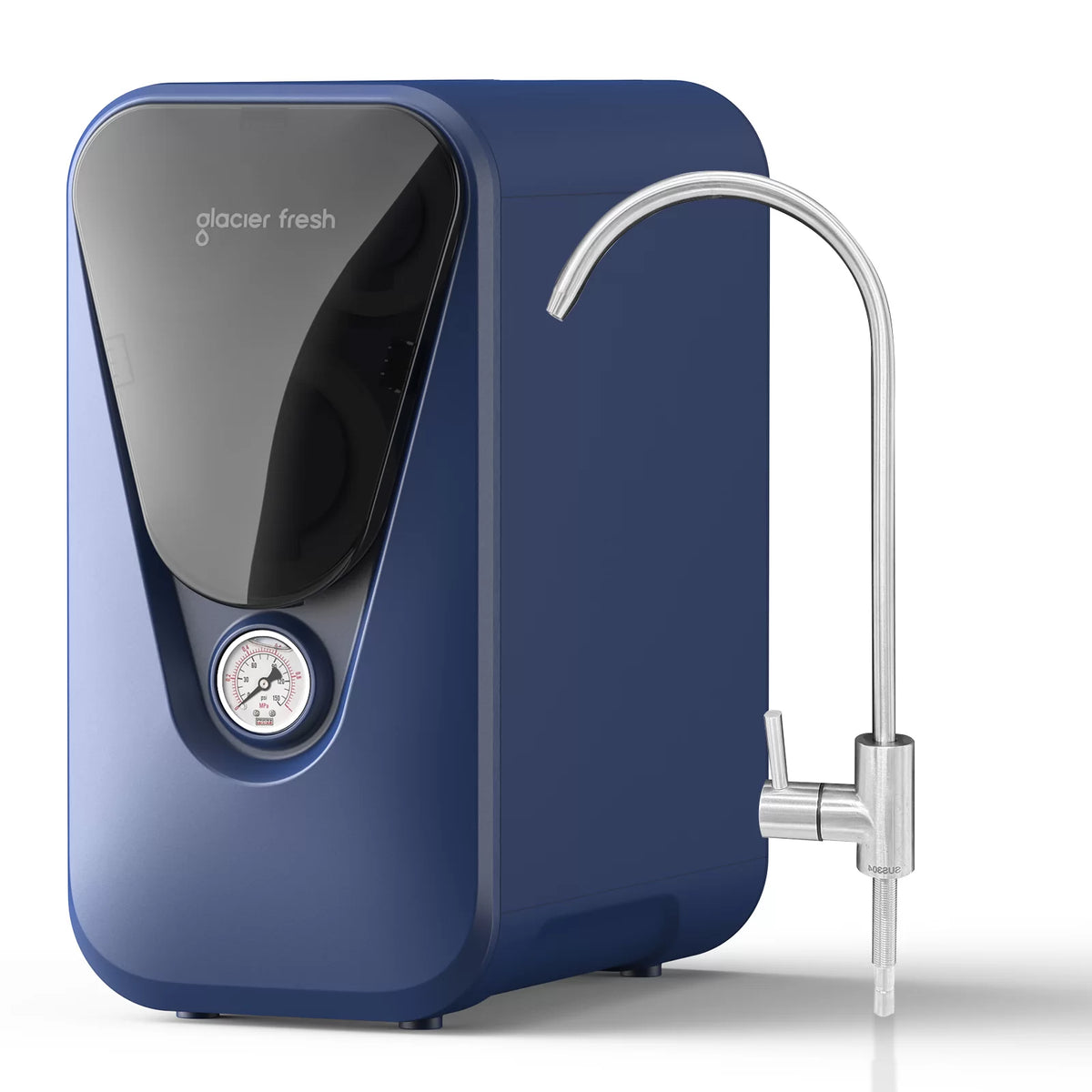
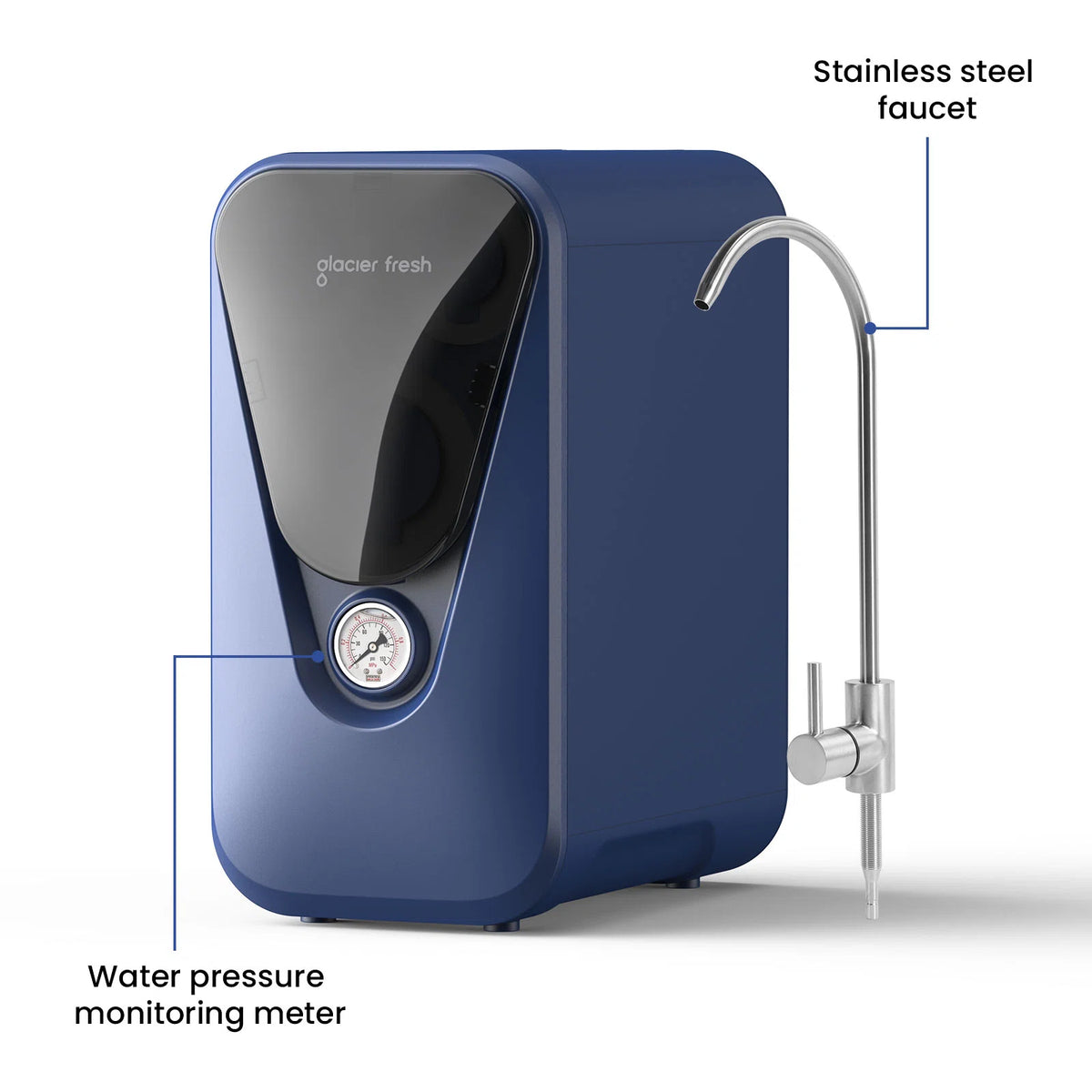
Reverse Osmosis Systems, as the systems with the highest filtration precision on the market, are a popular choice among many users. But is there a product that uses an RO system while also ensuring the water retains minerals to enhance its taste? The answer is yes. The Glacier Fresh U03 Alkaline Reverse Osmosis System purifies water while maintaining a naturally balanced pH level and retaining minerals.

⭐ Science Insight
People do not actually "taste" water molecules.
Instead, taste receptors respond to dissolved minerals, ions, and other compounds suspended in the water. As these substances change, the drinking experience changes—even though every H₂O molecule remains exactly the same.
Does better taste mean better water?
Many consumers assume that if water tastes better, it must also be healthier.
While improved taste is often a positive sign, taste alone is not a reliable indicator of water safety.
According to the United States Environmental Protection Agency, some contaminants can affect taste or odor, while others have no noticeable flavor at all. Likewise, many naturally occurring minerals that give water a pleasant taste are not harmful—in fact, some contribute to the overall mineral content of drinking water.
This means:
- Safe water does not always taste perfect.
- Great-tasting water is not automatically contaminant-free.
- Water quality should be evaluated using testing data and appropriate filtration, not taste alone.
Taste vs. water quality
| Characteristic | Indicates Taste? | Indicates Safety? |
|---|---|---|
| Chlorine odor | ✔ | Not necessarily |
| Metallic taste | ✔ | Sometimes |
| Cloudy appearance | Sometimes | Possibly |
| No taste or odor | No | Not necessarily |
| Laboratory water test | No | ✔✔✔ |
📌 Key takeaway
Taste is one part of the drinking water experience—but it is not a complete measure of water quality. Understanding both the science of taste and the science of contaminants allows consumers to make more informed decisions about filtration.
Why understanding water taste helps you choose the right filtration system
 Not every unpleasant taste has the same cause.
Understanding why filtered water tastes different can help identify which type of filtration technology is best suited for a particular water issue.
Instead of choosing a filtration system based solely on marketing claims, it's more effective to understand what is affecting your water's taste in the first place.
Water taste decision guide
| If Your Water Tastes Like... | Possible Cause | Filtration Technology Often Used |
|---|---|---|
| Bleach or swimming pool | Chlorine | Activated Carbon |
| Rotten eggs | Hydrogen Sulfide | Oxidation + Specialized Carbon |
| Metallic | Iron or Copper | Iron Reduction or RO Systems |
| Bitter or Salty | High TDS | Reverse Osmosis |
| Earthy or Musty | Organic Compounds or Algae By-products | Activated Carbon |
| Cloudy or Gritty | Sediment | Sediment Filters |
According to the EPA, reviewing your local drinking water quality report (Consumer Confidence Report) is one of the most effective ways to understand the characteristics of your municipal water supply before selecting a filtration solution.
🔗 Continue exploring water science
If you're interested in learning more about the science behind drinking water, you may also enjoy:
- Is Water Really Wet? The Science Behind Water Molecules, Surface Tension & Pure Water (understanding water's molecular behavior)
- What Is TDS in Water? (how dissolved solids influence water quality and taste)
- Reverse Osmosis Explained (how RO membranes remove dissolved contaminants)
- Hard Water vs. Soft Water (how minerals affect taste, cleaning performance, and household appliances)
Common myths about filtered water taste
Although the science behind water taste is well understood, several misconceptions continue to circulate online. The following myths often confuse consumers when evaluating drinking water and filtration systems.
Myth 1: Filtered water should taste exactly like bottled water
Reality
Not necessarily.
Even after filtration, water can still taste different depending on its original source. Natural minerals, local water chemistry, and the type of filtration technology used all influence the final flavor profile.
For example, spring water often retains naturally occurring calcium and magnesium that contribute to a mild mineral taste, while reverse osmosis (RO) water generally contains fewer dissolved solids and may taste more neutral. Likewise, activated carbon filters primarily improve taste by reducing chlorine and odor compounds rather than removing every dissolved substance.
Key Takeaway: Different water sources and filtration methods produce different taste profiles—there is no single "correct" taste for filtered water.
Myth 2: All water filters improve taste the same way
Reality
Different filtration technologies are designed to target different substances, so their impact on taste can vary significantly.
| Filtration Technology | Primary Target | Typical Effect on Taste |
|---|---|---|
| Activated Carbon | Chlorine, VOCs, odors | Fresher, cleaner flavor |
| Reverse Osmosis | Dissolved solids (TDS) | Neutral, crisp taste |
| Sediment Filter | Sand, rust, particles | Improved clarity and mouthfeel |
| Ultrafiltration | Fine particles and microorganisms | Cleaner overall drinking experience |
Choosing the right filtration system depends on what is affecting your water, not simply on which filter is available.
Myth 3: If water tastes fine, it doesn't need filtration
Reality
Taste alone cannot determine water quality.
According to the United States Environmental Protection Agency, some contaminants—including lead, nitrates, and certain PFAS compounds—may have little or no noticeable taste, odor, or color. Conversely, chlorine may create a distinct taste even though it is intentionally added to help protect drinking water during distribution.
This is why water quality assessments rely on laboratory testing and local water quality reports rather than taste alone.
Key Takeaway: Good-tasting water is not always contaminant-free, and unpleasant-tasting water is not necessarily unsafe.
Myth 4: Reverse osmosis water is "too pure" to drink
Reality
This is one of the most common misconceptions about RO water.
Reverse osmosis systems are designed to remove a high percentage of dissolved contaminants and minerals, but they do not make water unhealthy. In fact, the World Health Organization notes that drinking water quality depends on multiple factors, including safety, source water, and overall diet—not simply on mineral concentration.
Many modern RO systems like Glacier Fresh U03 under sink reverse osmosis system also incorporate remineralization filters to improve taste by adding back small amounts of beneficial minerals after purification.
Key Takeaway: Reverse osmosis produces highly purified water, and whether remineralization is desirable often depends on personal taste preferences and system design.
FAQs
Does filtered water actually taste better?
In many cases, yes. Filtration can reduce chlorine, unpleasant odors, sediments, and certain dissolved compounds that affect flavor, resulting in a cleaner and fresher taste.
Why does tap water taste different in different cities?
Water sources, mineral composition, local treatment methods, and distribution systems vary from one region to another. These differences influence both taste and odor.
Does reverse osmosis remove minerals?
Yes. Reverse osmosis removes a high percentage of dissolved solids, including many naturally occurring minerals. Some RO systems include remineralization filters to improve taste.
Why does filtered water sometimes taste sweeter?
Removing chlorine and other compounds that mask natural flavors may make water seem smoother or slightly sweeter, even though no sugar has been added.
Does boiling water improve its taste?
Boiling may remove some dissolved gases and temporarily reduce certain odors, but it does not effectively remove many dissolved contaminants or minerals.
Why does my filtered water suddenly taste bad?
A change in taste may indicate that the filter cartridge has reached the end of its service life, the water source has changed, or additional maintenance is needed.
Does cold water taste better than warm water?
Many people perceive cold water as fresher because lower temperatures reduce the volatility of certain odor compounds and change how taste receptors perceive flavor.
Conclusion
So, why does filtered water taste better?
The answer has less to do with changing water itself and more to do with changing what the water carries.
As we learned in our previous article, Is Water Really Wet?, water molecules remain remarkably stable. Those same H₂O molecules are present in tap water, filtered water, and purified water alike. What changes is the mixture of dissolved minerals, disinfectants, sediments, organic compounds, and other substances that influence how water smells, tastes, and feels.
By reducing unwanted compounds while preserving water's natural molecular structure, filtration allows the clean, refreshing character of water to become more noticeable. Understanding this science not only explains why filtered water often tastes better but also helps consumers make more informed decisions about drinking water quality and household filtration.
Ultimately, better-tasting water is not just about enjoying every sip—it's about understanding the science behind one of the world's most essential resources.
References
The scientific concepts presented in this article are based on publicly available educational resources from the following organizations:
- United States Geological Survey — Water Science School: Water Properties, Water Quality, and Total Dissolved Solids. https://www.usgs.gov/water-science-school/water-quality https://www.usgs.gov/water-science-school/properties-water https://www.usgs.gov/mission-areas/water-resources/science/chloride-salinity-and-dissolved-solids#:~:text=The%20dissolved%20solids,dissolved%20in%20water.
- United States Environmental Protection Agency — Drinking Water Standards, Consumer Confidence Reports (CCR), and Home Drinking Water Filtration Guidance. https://www.epa.gov/ccr https://www.epa.gov/ground-water-and-drinking-water/home-drinking-water-filtration-fact-sheet
- American Chemical Society — ChemMatters and educational resources on molecular structure, hydrogen bonding, and the chemistry of water. https://www.acs.org/education/resources/topics/water.html
- Centers for Disease Control and Prevention — Safe Water Systems and Drinking Water Disinfection. https://stacks.cdc.gov/view/cdc/37072
- World Health Organization — Guidelines for Drinking-water Quality. https://www.who.int/publications/i/item/9789241549950
- American Water Works Association — Resources on drinking water treatment processes and consumer education. https://www.awwa.org/resource/source-water-protection/