
Table of Contents:
What Does ‘Legal’ Drinking Water Actually Mean in the US?
So Should You Still Use a Water Filter?
How Regional Water Quality Affects Purifier Choice
When to Choose Reverse Osmosis Water Filter Systems
Whole House Water Filter System vs Point-of-Use Filtration
Best Water Purifier for Apartments vs Houses
Refrigerator Water Filters vs Countertop Filters for Lead and PFAS
How to Decide Whether You Personally Need a Water Filter
FAQs
Conclusion
Your water meets legal standards… but should you still filter it?
In the US, drinking water regulations set safety baselines but do not guarantee a 100% clean drinking water. The Environmental Protection Agency (EPA) sets legal limits on contaminants on a level that protects public health, but it doesn’t mean tap water is free from health risks.
This is why many homeowners consider installing a reverse osmosis water filter or other household filtration systems, even when their tap water meets legal standards.
What Does ‘Legal’ Drinking Water Actually Mean in the US?

The EPA regulates tap water through Maximum Contaminant Levels (MCLs), which are enforceable limits set under the Safe Drinking Water Act. If a water system meets these limits, the water is considered legally safe to drink.
The EPA also sets Maximum Contaminant Level Goals (MCLGs), which are non-enforceable health targets representing contaminant levels with no expected health risks. Because MCLGs are often lower than enforceable limits, legally compliant water may still contain small amounts of contaminants.
Legal drinking water meets regulatory standards, but it is not necessarily contaminant-free.
So Should You Still Use a Water Filter?
Your water may meet legal standards, but having a water filter can greatly boost safety. The Centers for Disease Control and Prevention (CDC) estimates that 1 in 44 people get sick in the US from waterborne diseases. There are cases when EPA limits do not address other concerns such as aging infrastructure in homes, pipe corrosion risks, and other emerging contaminants that are not fully regulated yet.
Also, issues in taste, odor, and aesthetic water quality matter too, which can be resolved by adding another layer of protection through using a water filter – a solution that can benefit infants, immunocompromised individuals, and older adults too.
How Regional Water Quality Affects Purifier Choice

In industrial regions, PFAS (per- and polyfluoroalkyl substances) are heavily present because these are widely used chemicals that contaminate groundwater. Meanwhile, agricultural regions are prone to nitrate and pesticide contamination. The EPA even developed measures to address specific issues related to agricultural runoff in water bodies.
Older cities even have legacy plumbing, which may have corroded pipes with risks of lead contamination. In rural areas where they rely on groundwater as a water source, their water may have high mineral content. Exposure to these contaminants poses different health risks per region.
Choosing a Water Purifier Based on Where You Live
Choosing a water purifier depends on your location. City water users often choose filters that improve taste and reduce chlorine or metals from older plumbing. Suburban households may prefer systems that handle a wider range of common contaminants, especially if water quality varies throughout the year.
Homes with private wells usually require stronger filtration, since well water is not treated by municipal utilities. For households looking for the most comprehensive protection, advanced filtration systems such as reverse osmosis can reduce many of the contaminants commonly found in both municipal and well water.
Water Purifier Selection Based on Local Tap Water Quality
Choose wisely by reviewing your local Consumer Confidence Report (CCR), which is a water quality summary of your locality.
You can also do a DIY water test before choosing a water purifier. Do this so you can match common contaminant risks with appropriate filtration technologies for your home.
When to Choose Reverse Osmosis Water Filter Systems
If your water is contaminated with dissolved contaminants like heavy metals, PFAS, nitrates, and microplastics, a reverse osmosis water filter is ideal for your household. EPA research states that RO systems greatly reduce PFAS in drinking water, with their RO membranes that remove up to 99% of these impurities, producing clean and safe drinking water for your home.
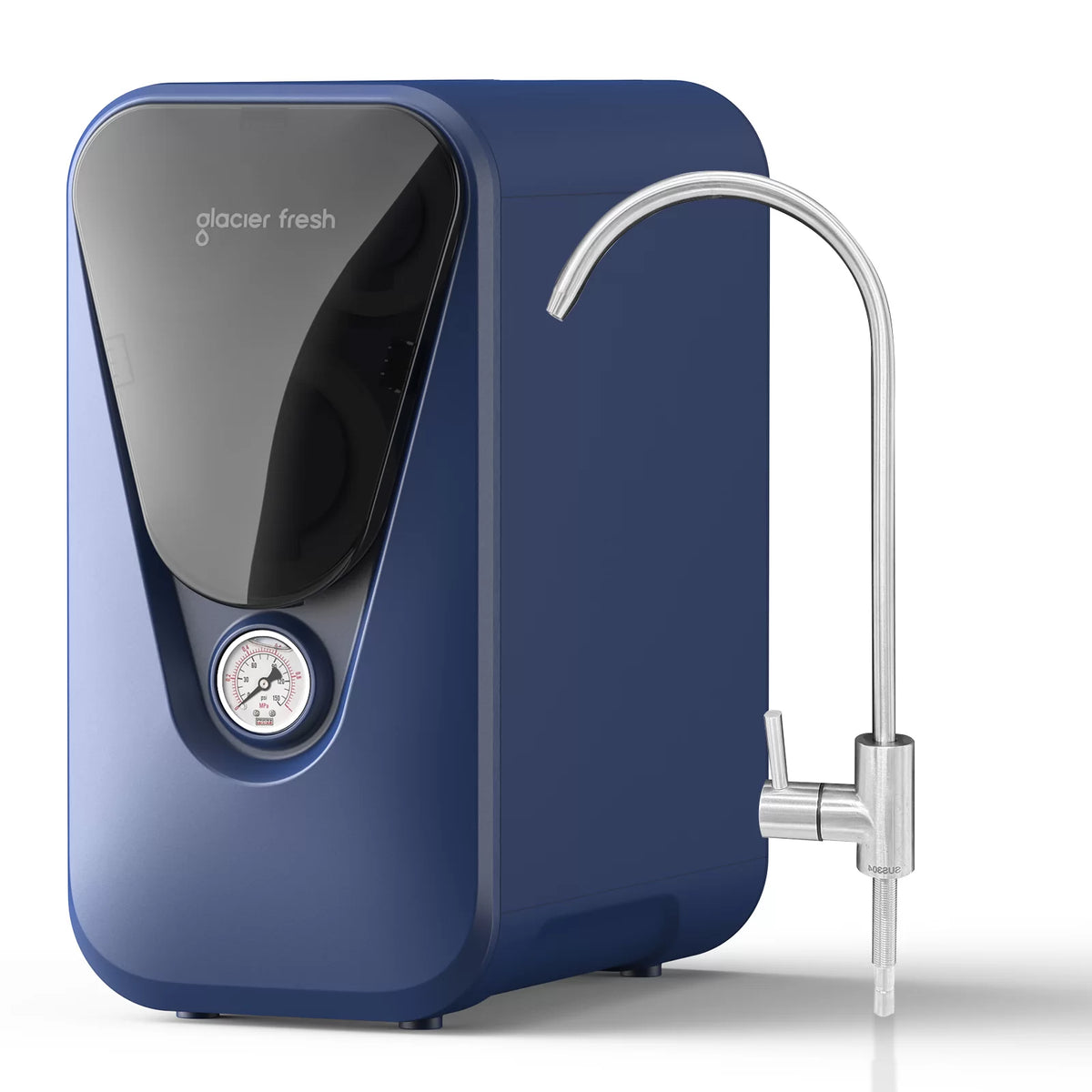
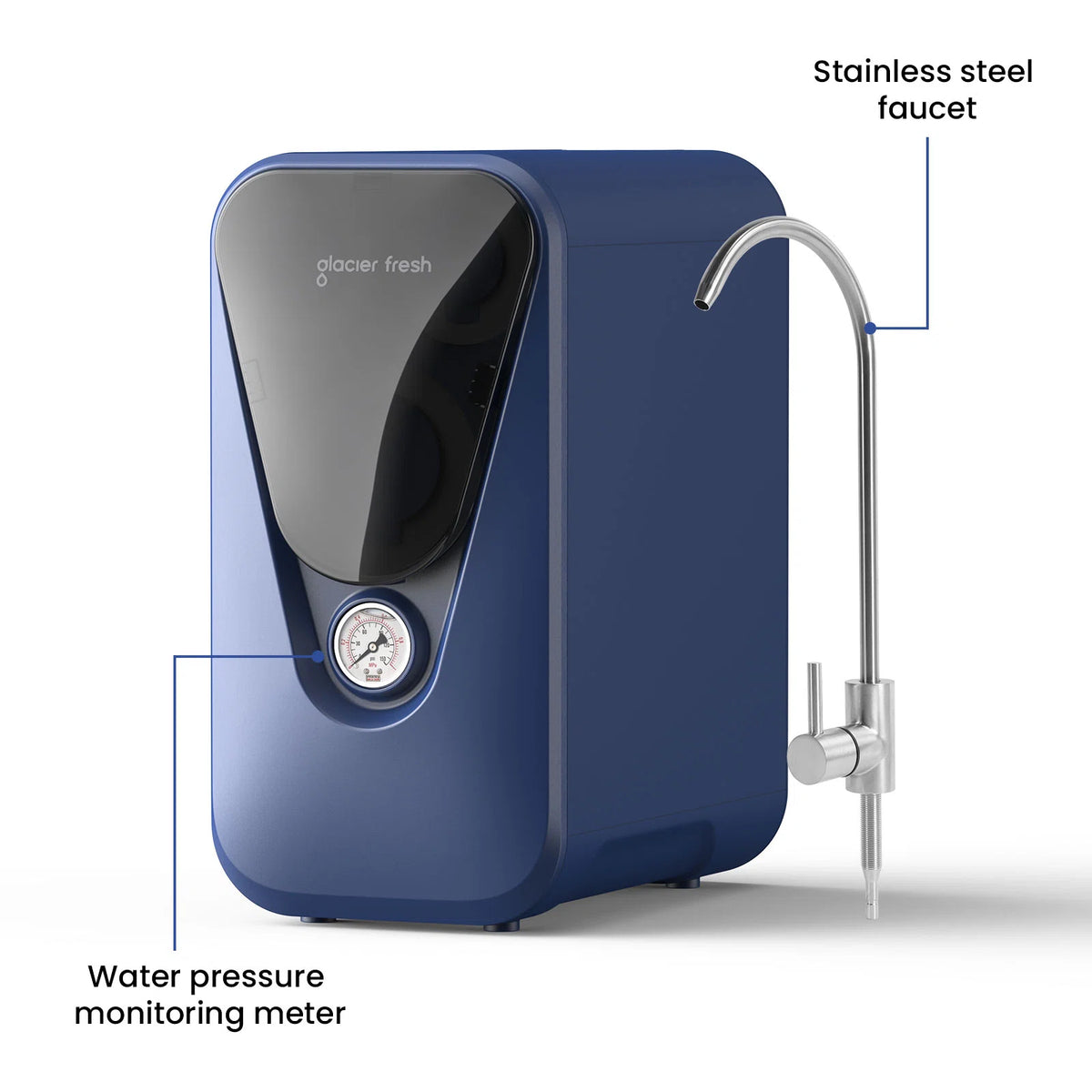
In high-risk areas like industrial and agricultural regions, a point-of-use reverse osmosis water filter system installed under the sink can help provide clean drinking water. GlacierFresh undersink RO systems are ideal household solutions, offering tried and tested filtration performance in effectively removing contaminants.
Whole House Water Filter System vs Point-of-Use Filtration
Having a whole home water filter system is different from only having a filter for drinking water, and here are the differences between the two:
Whole Home Water Filter Systems for Source-Wide Protection
With a whole house water filter system, water is treated at the entry point, including water used for bathing, laundry, and kitchen duties. These are advantageous when the water has sediment, chlorine, sulfur odors, or hard water affecting the plumbing system. These help protect your appliances from scale buildup and improve water quality. However, these may not remove ultra-fine contaminants like PFAS or nitrates.
Under-Sink House Water Filter Systems for Targeted Drinking Water Protection
On the other hand, point-of-use systems refer to systems installed under the sink, mainly used to filter water for drinking or cooking. They are effective in removing dissolved contaminants.
Under-sink water filter systems are usually more affordable and space-efficient, ideal for homes with limited space that still want access to clean drinking water. These systems are recommended for urban municipal water users, offering protection for aging pipes and convenience for daily use.
Best Water Purifier for Apartments vs Houses
Where you live can also be a factor in helping you decide what water filtration to get.
For apartment renters, having a limited space is an issue. With this, countertop filters may be ideal because it’s compact and easy to install. Gravity filtration systems do not require plumbing or electricity, which makes it renter-friendly.
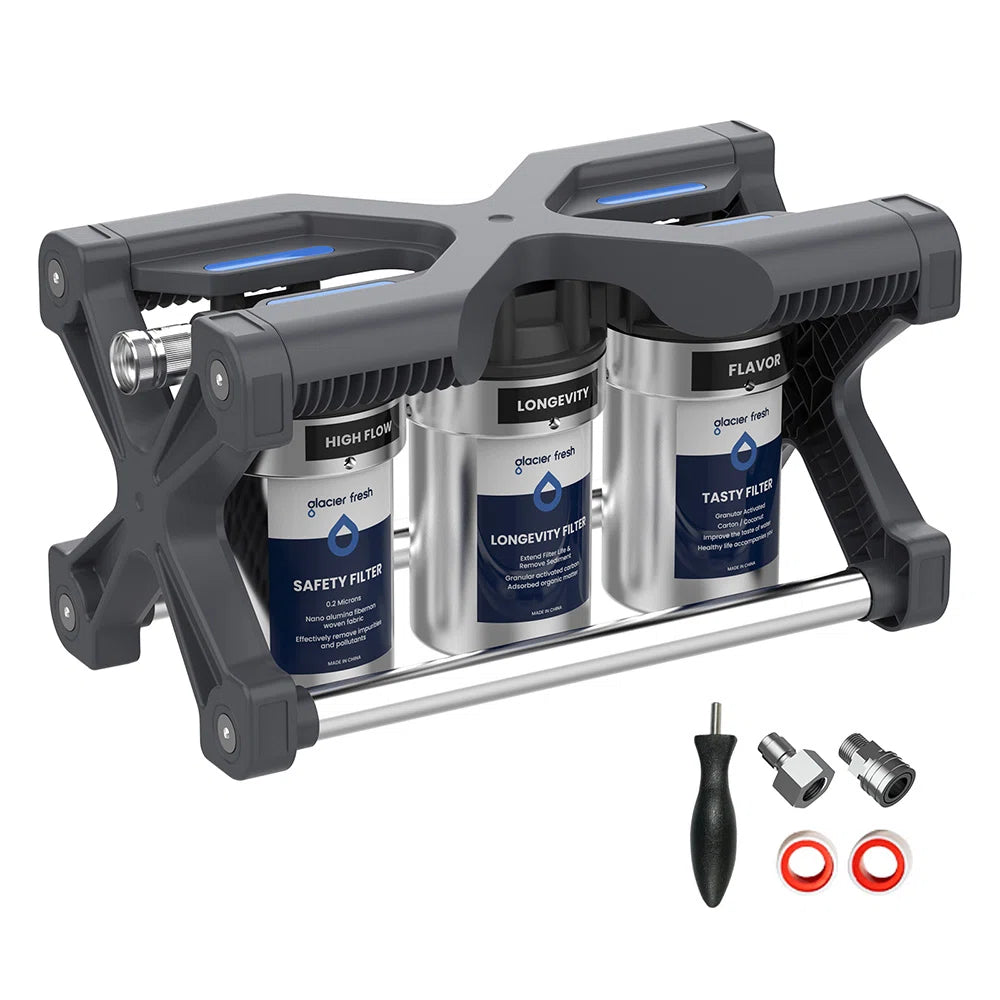
There are also portable RO systems for advanced filtration, especially recommended for families with infants living in apartment units where permanent modification is usually not allowed.
Homeowners have more flexibility with installations. Under-sink filtration provides drinking water purification. For households with concerns about heavy metals, dissolved solids, and metals, multi-stage RO systems are recommended. If you want a broader and comprehensive protection, having a whole-house system might be worth looking at.
Refrigerator Water Filters vs Countertop Filters for Lead and PFAS

Having refrigerator water filters is convenient because they can reduce contaminants like chlorine and other organic compounds. Plus, they can also improve the taste of water and ice. However, performance can be limited compared to advanced filtration systems, which is why you can’t solely rely on its filtration capacity.
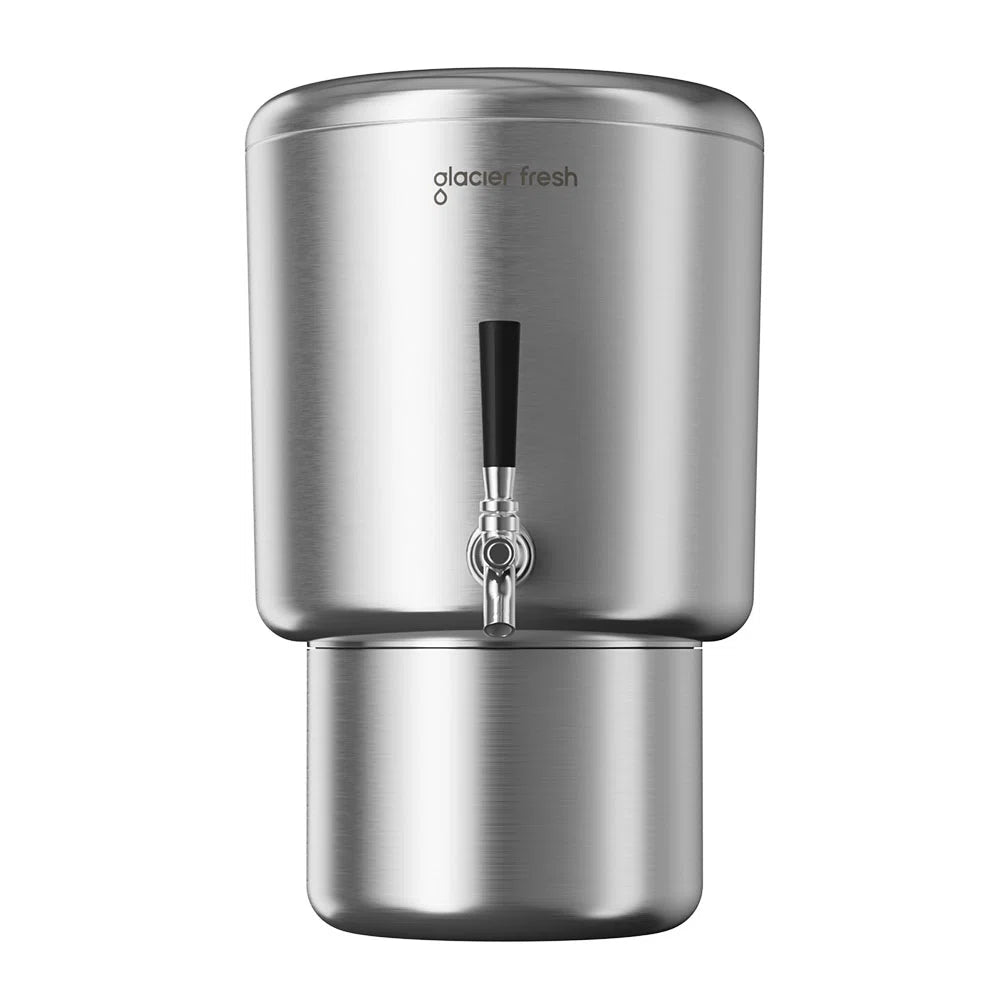
In many cases, countertop filters are more ideal for their stronger performance in filtering water. It’s easy-to-install with no permanent fixtures required, and they’re portable and compact, fit for tiny home spaces.
These are equipped with multi-stage filtration, which can greatly reduce contaminants like lead or PFAS that can harm your health and risk water quality concerns.
How to Decide Whether You Personally Need a Water Filter
-
Review CCR reports so you know what water issues you have in your area and if your water meets regulatory standards.
-
Consider your home’s plumbing age and renovations. Outdated plumbing materials and older pipes and fixtures affect your home’s water quality.
-
Evaluate household health concerns. Infants, people with weakened immune systems, and the elderly need an additional layer of protection and access to safer drinking water.
-
Balance household factors and water safety goals. Think about your budget, convenience, and priorities when choosing a water filtration system.
FAQs
1. Do I need a water filter in the US?
Having a water filter in the US is not required, but it’s a necessity. While most U.S. water systems are regulated, they can still contain small amounts of contaminants. A water filter helps remove these contaminants and ensure safe drinking water.
2. Is it okay to drink tap water in the USA?
Water quality varies per region. It can be generally safe, but it all depends on other factors too such as plumbing age, infrastructure, and geographical location. Review your CCR to check if your tap water is safe for drinking.
3. What happens if you don’t use a water filter?
Nothing harmful may happen if your water meets regulatory standards. However, you can still consume small amounts of contaminants, or notice an odor or unpleasant taste. Having a water filter is an added layer of protection that improves water quality.
4. Is it healthier to drink tap water or filtered water?
Both can be safe, but filtered water is known to reduce contaminants and improve the water’s taste. Filtered water is more aligned with ideal health exposure goals, which is why many people choose to have a water filtration system at home.
5. What happens to your body when you start drinking filtered water?
There may be no visible physical changes, but drinking filtered water helps in removing contaminants and improving taste, which can encourage better hydration. Knowing you have clean drinking water helps you in your water intake too.
Conclusion
Understanding your local water quality can help you decide the appropriate water filtration system to get for your homes. While we have legal standards set for safe drinking water, having certified household filtration systems can offer an added protection layer on your daily drinking water, which can minimize health issues.