
Table of Contents:
The basics of water filtration scale
What is microfiltration(MF)?
What are nanofiber filters?
Side-by-side comparison: nanofiber vs microfiltration
Application scenarios: which one should you choose?
How to evaluate filtration claims on product pages?
Conclusion
As awareness of drinking water quality grows, more homeowners are paying closer attention to the types of filtration technologies used in their water systems. Terms like microfiltration, nanofiber filtration, and reverse osmosis often appear in product descriptions, but many people aren’t sure what they actually mean.
One of the most important differences between filtration technologies lies in scale—specifically, the size of the particles a filter can remove. Understanding the difference between nanofiber filters and microfiltration systems can help you choose the right solution for your home.
In this guide, we’ll break down how these two technologies work, how they compare, and when each one makes the most sense.
The basics of water filtration scale

What is a micron?
Water filters are typically rated in microns (µm), a unit used to measure extremely small particles.
To put this into perspective:
- Human hair: about 70 microns.
- Fine sand: about 90 microns.
- Bacteria: typically 0.2–2 microns.
- Some viruses: 0.02–0.3 microns.
A filter with a smaller micron rating can capture smaller contaminants. However, micron ratings alone don’t tell the whole story—filtration structure and technology also play a major role.
From micro to nano: understanding measurement differences
Microfiltration and nanofiber filtration operate at very different scales.
- Microfiltration: typically filters particles between 0.1 and 10 microns.
- Nanofiber filtration: uses fibers measured in nanometers (1 micron = 1,000 nanometers).
Because nanofibers are extremely thin, they create a dense web-like structure that can capture smaller particles while still allowing water to pass through efficiently.
What is microfiltration(MF)?
Microfiltration (MF) is one of the most widely used filtration technologies in residential and commercial water systems.
How microfiltration works?
Microfiltration uses a physical membrane barrier with small pores. Water passes through the membrane, while particles larger than the pore size are trapped and removed. This process is purely mechanical, meaning it doesn`t rely on chemicals or electrical processes.
What microfiltration removes?
Microfiltration is effective at removing:
- Sediment
- Rust
- Sand
- Dirt and debris
- Some bacteria
- Larger microorganisms
Because of this, microfiltration is commonly used as a pre-filtration stage in multi-stage water treatment systems.
What microfiltration cannot remove?
Despite its effectiveness for particles, microfiltration has limitations, it generally cannot remove:
- Viruses
- Dissolved salts
- Heavy metals
- Nitrates
- Many chemical contaminants
These substances are much smaller than the pore size of microfiltration membranes and can pass through easily.
What are nanofiber filters?

Nanofiber filtration is a newer technology that uses ultra-fine fibers arranged in a dense network to capture contaminants. Instead of relying only on pore size, a nanofiber filter uses a combination of mechanical interception and electrostatic attraction.
How nanofiber filtration works?
Nanofibers are extremely thin—often less than 500 nanometers in diameter. When layered together, they create a highly porous but intricate structure that can trap very small particles. Because of the massive surface area created by these fibers, contaminants are captured more efficiently than with traditional filtration materials.
Filtration scale in nanofiber technology
The key advantage of nanofiber filters lies in their nano-scale structure. Even though water flows through easily, the dense fiber network can capture extremely small particles, including:
- Fine particulates
- Microplastics
- Some bacteria
- Certain viruses (depending on filter design)
This makes nanofiber filters particularly useful for applications requiring high filtration precision without sacrificing flow rate.
What nanofiber filters can remove?
Nanofiber filters are often capable of removing:
- Fine sediment
- Microplastics
- Bacteria
- Organic particulates
- Some airborne or waterborne pathogens
However, like microfiltration, nanofiber filtration does not remove dissolved solids unless it is combined with another technology, such as under sink reverse osmosis systems.
Side-by-side comparison: nanofiber vs microfiltration
Although both technologies focus on removing particulate contaminants, their structure and performances differ.

The biggest difference lies in how the filtration layer is constructed. Microfiltration relies mainly on pore size, while nanofiber filters rely on a complex fiber network that increases capture opportunities.
Application scenarios: which one should you choose?
Choosing between nanofiber filtration and microfiltration depends largely on your water source, contamination concerns, and household needs.
When microfiltration is a good choice
Microfiltration may be the right option if:
- Your primary concern is sediment or visible particles.
- Your home already has relatively clean municipal water.
- You need a pre-filter for a multi-stage system.
- You want high flow rates with minimal pressure loss.
- You are installing a whole-house sediment filtration system.
In these scenarios, microfiltration provides a reliable and cost-effective solution.
When nanofiber filtration may be better
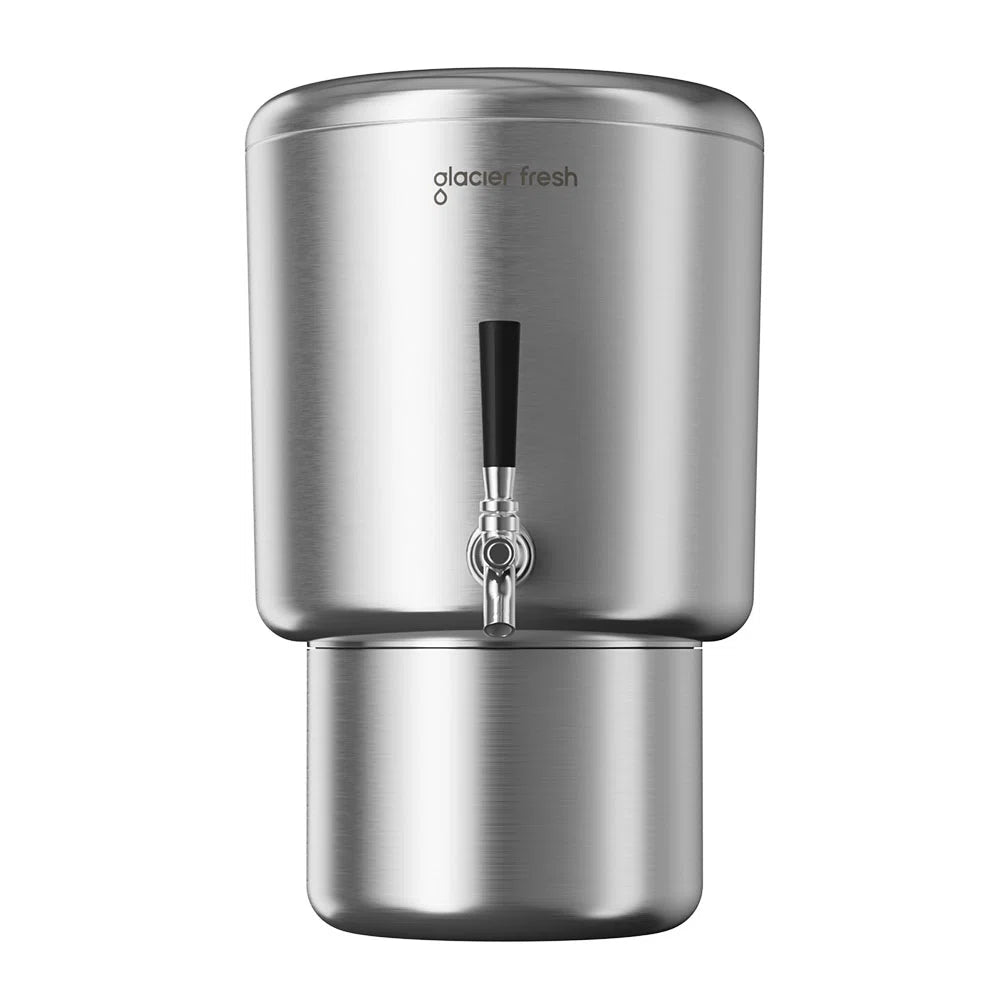
Nanofiber filtration like the countertop gravity water filter system can be beneficial if:
- You want higher filtration precision.
- You are concerned about microplastics in drinking water.
- You want improved protection against bacteria and ultrafine particles.
- You prefer advanced filtration without the complexity of RO systems.
- You need efficient filtration with minimal pressure drop.
For households seeking more advanced filtration performance, nanofiber technology offers a strong balance between precision and efficiency.
How to evaluate filtration claims on product pages?
With many filtration technologies available, it`s important to look beyond marketing terms. Here are a few key factors to consider:
1: micron rating
Check whether the rating is nominal or absolute.
2: certified testing
Look for independent certification, such as NSF/ANSI standards.
3: Multi-stage design
Systems that combine sediment, carbon, and fine filtration typically perform better.
4: Real-world performance
Consider flow rate, filter lifespan, and maintenance requirements.
Understanding these factors will help you choose a filtration system that truly meets your requirements.
Conclusion
Nanofiber filtration and microfiltration are both valuable technologies in modern water treatment, but they operate at different scales and serve slightly different purposes.
Microfiltration is a reliable solution for removing sediment, debris, and larger microorganisms, making it a popular choice for pre-filtration and whole-house systems. Nanofiber filters, meanwhile, offer a more advanced structure that can capture ultrafine particles and microplastics while maintaining strong water flow.
Ultimately, the best choice depends on your water source, the contaminants you’re concerned about, and the level of filtration you want. By understanding how these technologies differ, homeowners can make more informed decisions and ensure their families have safer, cleaner drinking water.