
Table of Contents:
How to Compare Water Filters: Refrigerator Water Filter vs Countertop vs Reverse Osmosis
What Are the Best Water Filters for Refrigerators?
What Benchtop Water Filters Are Best for Your Home?
Countertop RO Water Filter vs Under-Sink RO System
US Water Filter Systems: How Regulations and Standards Affect Product Performance
How to Choose the Best Water Purifier System for Home
FAQs
Conclusion
For a lot of households, getting cold water straight from the refrigerator itself feels convenient and safe. However, as countertop reverse osmosis (RO) purification systems become more popular, some are questioning whether a built-in refrigerator water filter provides better protection than the former. But the truth is, filtration strength varies widely by system type.
How to Compare Water Filters: Refrigerator Water Filter vs Countertop vs Reverse Osmosis
Choosing the right water filter for your home should be based on the following factors:
| Refrigerator water filter | Countertop water filter | Reverse osmosis (RO) system | |
|---|---|---|---|
| Filtration strength | Basic carbon filtration | Moderate to strong with carbon, nanofiltration, or gravity system | Very high, with a semi-permeable RO membrane that removes contaminants |
| Contaminant removal range | Chlorine, taste, odor, and some sediments | Chlorine, sediment, some heavy metals, PFAS, and microplastics | Heavy metals, PFAS, nitrates, dissolved solids, and more |
| Installation complexity | Built into the refrigerator; simple cartridge replacement | Gravity-fed; no permanent plumbing required | Undersink installation required |
| Water production speed | Continuous flow through the dispenser | Slower due to gravity systems | Continuous supply |
| Cost and maintenance | Low to moderate | Moderate | Higher initial investment |
| Household compatibility | Cartridge replaced every 6 months | Replacement varies by model | Multi-stage filter changes every 6–24 months |
What Are the Best Water Filters for Refrigerators?

Refrigerator water filters are built-in purification systems for your refrigerator. These automatically filter both drinking water and ice, making it easy to filter your water. Aside from that, they’re very convenient – no installation required, and only a simple cartridge replacement will do for their maintenance.
GE Refrigerator Water Filter RPWFE & RPWF
The GE Refrigerator Water Filter RPWFE & RPWF is NSF-certified for chlorine, lead, mercury, and sediment reduction. It uses carbon block filtration technology whcih improves taste and odor. One of its key features is its strong convenience filtration with seamless appliance integration.
This filter is designed for select GE refrigerator models with RFID chip compatibility. Its replacement cycle is six months or 300-gallon.
GlacierFresh LT1000P Replacement Filter
The GlacierFresh LT1000P Replacement Filter offers better compatibility across LG, Kenmore, and other refrigerator models. It’s known for its carbon block filtration, which targets sediments, rust, chlorine, and odor.
With its 6-month or 200-gallon lifespan, it offers a cost-effective way for an upgrade to your appliance-based filtration.
GlacierFresh GF-ZERO Sub-Zero Replacement Filter
The GlacierFresh GF-ZERO Sub-Zero Replacement Filter is NSF-certified for its chlorine reduction performance. Its key features include advanced carbon filtration, which improves water and ice quality, and compatibility with Sub-Zero professional refrigerator models. It provides strong performance to premium refrigerator systems, too.
What Benchtop Water Filters Are Best for Your Home?

Benchtop water filters are stronger performance-wise than refrigerator filters, but they’re still mid-tier when it comes to purification performance compared to RO systems.
Here are some of the best benchtop water filters:
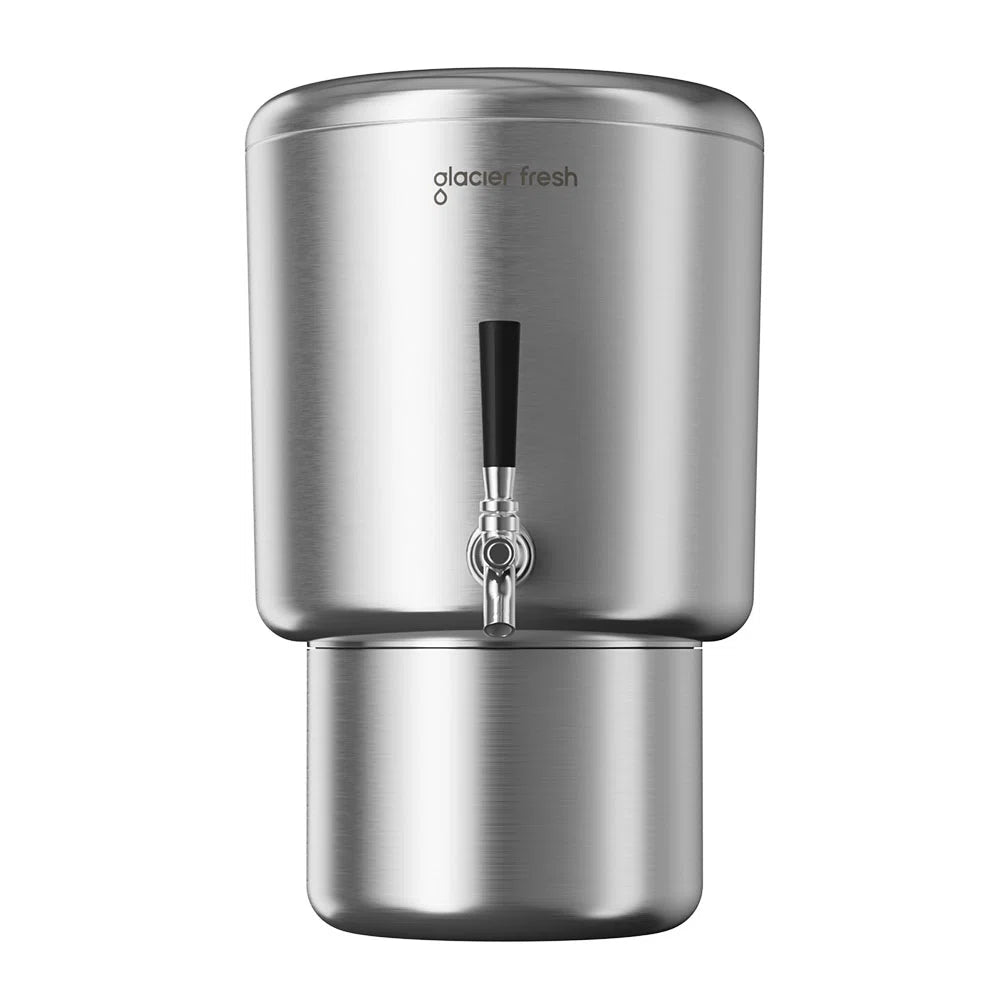
GlacierFresh 2.25 Gallon Stainless Steel Gravity Filter
The GlacierFresh 2.25 Gallon Stainless Steel Gravity Filter is gravity-powered and doesn’t need plumbing or electricity to work. It’s made of Elarisey™ nanofiber filtration targeting heavy metals, PFAS, microplastics, and chlorine. It meets international NSF and SGS certifications, ensuring its safety and performance. This gravity filter is ideal for health-conscious families for everyday drinking water.
GlacierFresh Coolon Countertop Water Purifier
GlacierFresh Coolon Countertop Water Purifier has a nanofiltration membrane that removes heavy metals, PFAS, microorganisms, and organic contaminants. It boasts instant-chilled purified water capability for modern convenience and as a performance countertop purifier. It has a smart filter replacement indicator, great for ergonomic usability.
Countertop RO Water Filter vs Under-Sink RO System
Reverse osmosis systems are known to be one of the most comprehensive purification technologies. With its RO membranes, dissolved contaminants like PFAS, lead, nitrates, and microplastics are removed thoroughly, making drinking water safe for every household.
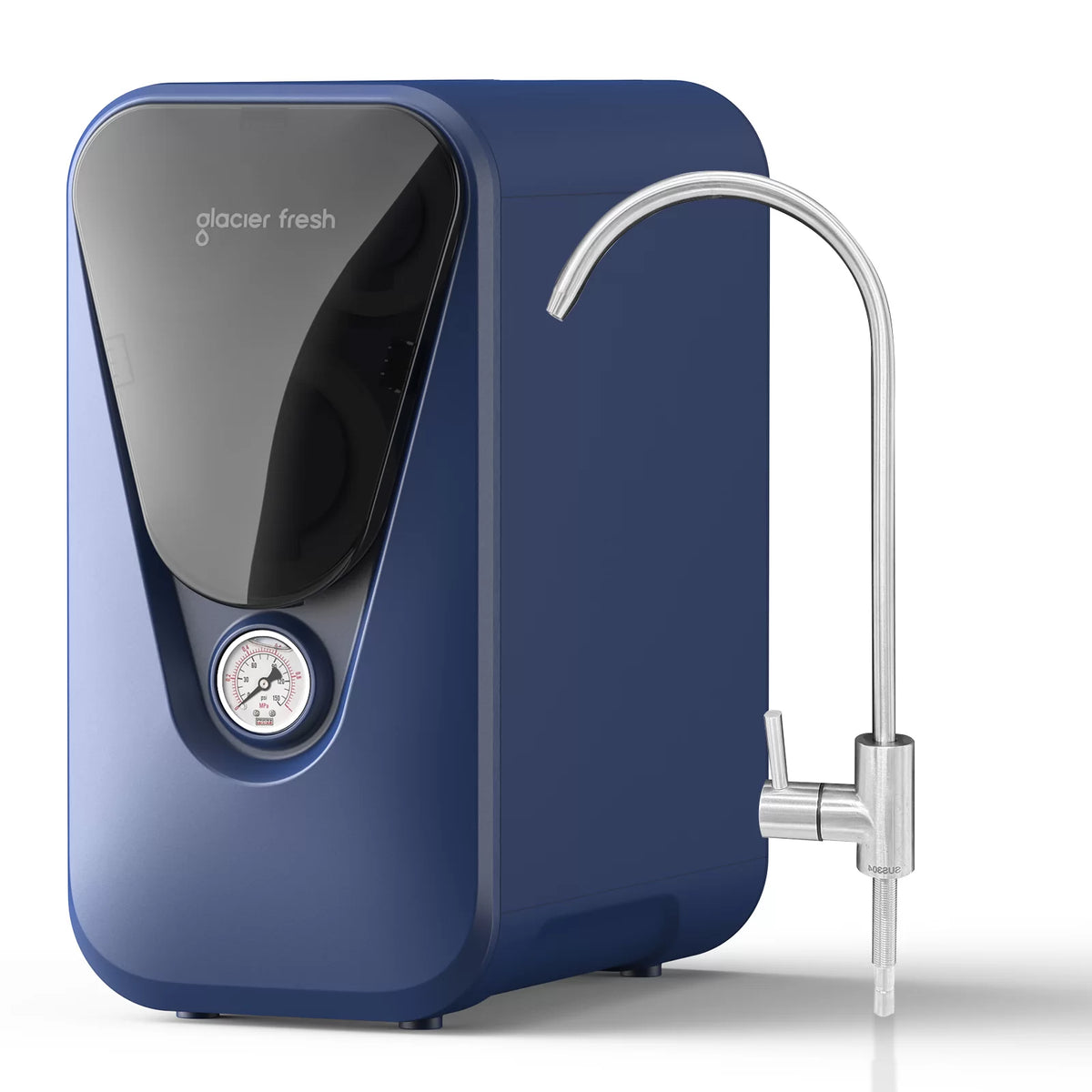
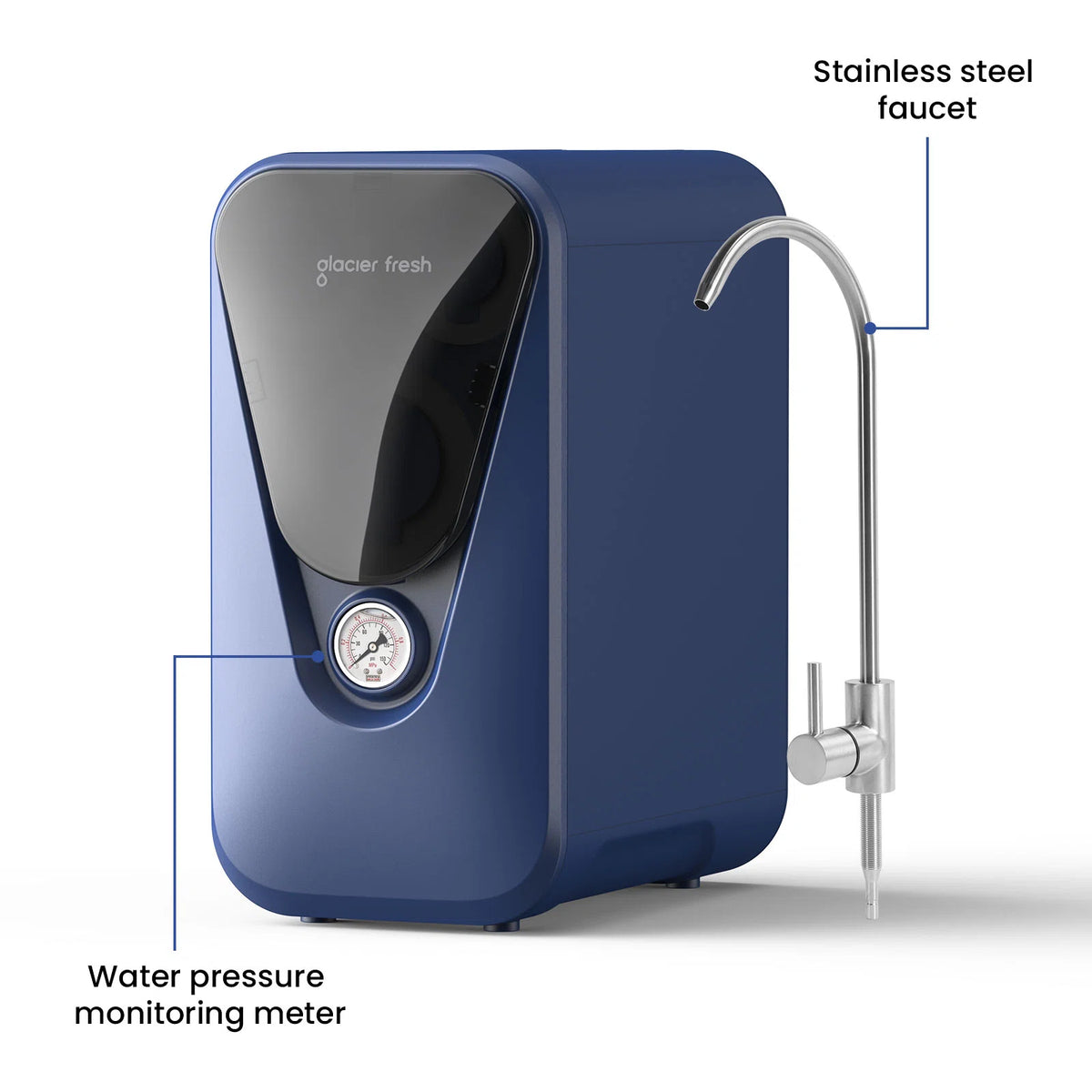
RO countertop water filters are ideal for households with small spaces, since they’re very simple to install. On the other hand. Under-sink RO systems like the GlacierFresh 800GPD Undersink Reverse Osmosis System are high-capacity and can be integrated to your kitchen plumbing while still being space-saving and silent.
Both deliver reverse osmosis purification, but your choice should depend on your preference in installation, space, and needs.
US Water Filter Systems: How Regulations and Standards Affect Product Performance
Certifications are crucial when it comes to US water filter systems. National Sanitation Foundation (NSF) or American National Standards Institute (ANSI) certifications help verify that a product has been independently tested. These certify that a product is effective in reducing specific contaminants and are true to their claims when it comes to drinking water.
When it comes to regulations, you need to know that there are aesthetic certifications and health contaminant certifications, too. The former certifies the aesthetic factors such as chlorine taste and odor reduction, while the latter notes the regulated contaminants like lead, PFAS, or more. A water filter can be certified by either of these two.
The EPA also explains that point-of-use (POU) water filters with PFAS-reduction certifications are crucial for refrigerator water filters.
How to Choose the Best Water Purifier System for Home

Having a water filter at home is better than having none at all. Water filters provide an additional layer of protection for safe drinking water. The key is choosing a system that fits your household's needs:
-
Refrigerator filters are ideal for households that prioritize ease of use. They integrate seamlessly into your appliance, are simple to replace with cartridge-based filters, and require minimal maintenance. They automatically provide filtered drinking water and ice, making everyday access quick and convenient.
-
Countertop water filters are best for flexibility and easy setup. These are well-suited for renters, apartment dwellers, and households with flexible living arrangements. They provide moderate purification without requiring plumbing changes or complex installation. Because they are portable, they are also a practical choice for families who move frequently or travel often.
-
Reverse osmosis systems are the top choice for advanced purification. Reverse osmosis systems, especially undersink RO systems, are ideal for households that want more comprehensive contaminant removal and long-term drinking water quality improvement. These systems are known to reduce a wider range of contaminants and are often chosen by households looking for high-performance filtration.
When comparing options, consider factors such as convenience, filtration performance, water flow speed, and certifications. Evaluating these features will help you choose the water purifier that best fits your home.
FAQs
1. What are the different types of water purifiers for the home?
Common types of water purifiers at home include refrigerator filters, countertop systems, and undersink reverse osmosis systems. Each of these filters vary by filtration strength, installation method, and range of contaminants it can reduce.
2. Which water filter removes the most toxins?
Reverse Osmosis systems are known to remove the most number of contnaminants like heavy metals, PFAS, nitrates, dissolved solids, and more. This is because it offers a multi-stage filtration that is comprehensive for purification.
3. What should we check before buying a water purifier?
Check your water quality report, and identify the contaminants. This will point you to the water filter you need. Verify if the product is NSF-certified too. Consider household compatibility, costs, and installation before buying one.
4. What does it mean if a water filter is NSF certified?
An NSF-certified water filter means that the product has been independently tested to verify their claims on contaminant reduction, safety, and others. It also confirms performance reliability under recognized international guidelines.
5. Do I really need to replace my fridge water filter?
Yes, you need to replace your refrigerator water filter every 6 months. This helps maintain the proper performance of your water filter. Overused filters will lose effectiveness and reduce flow, which can let contaminants to pass through.
Conclusion
Refrigerator, countertop, and RO systems serve different purification levels. Built-in refrigerator filters are primarily for convenience, benchtop provides more flexibility and mid-tier protection, while RO systems offer advanced contamination removal. The key to deciding is to match filtration strength to your household’s safety goals and long-term health priorities.