
Table of Contents:
Is Campground Water Safe to Drink?
Understanding RV Water Sources
Common Contaminants Found in Campground Water
How RV Travelers Can Ensure Safe Drinking Water
Types of Water Filters and Portable Water Purifiers for Camping
How Water Filtration Helps Remove Lead From Water
FAQs
Conclusion
A lot of RV parks advertise “potable water,” but it doesn’t necessarily mean quality. There are hidden risks like bacteria, heavy metals, sediments, and poorly maintained private wells, which is why it’s important to have portable water filters and purification systems so you can have safe drinking water while you travel.
Is Campground Water Safe to Drink?

When Campground Water Is Considered Safe Drinking Water
Potable water is defined as “water which meets the prescribed quality standards by the U.S. public Health Service Drinking Water Standards.” It’s important to note that potable doesn’t always mean clean-tasting or contaminant-free.
Many RV parks source water from municipal water systems which are regulated, while some private wells aren’t. In the US, public drinking water systems are regulated by the US Environmental Protection Agency. It is generally safe when treated and monitored through filtration and chlorination systems, as mentioned by the Department of Health and Human Resources.
Why Some RV Travelers Still Filter Campground Water
While generally safe, RV travelers are careful about campground water issues such as:
-
Aging pipes which can introduce rust and sediments
-
Biofilm buildup in campground hoses
-
Hard water and sediment causing mineral buildup
-
Chemical contaminants like chlorine or heavy metals
-
Seasonal contamination issues affecting water quality.
Even treated water can still contain traces of impurities from different water sources.
Understanding RV Water Sources
Campground water comes from different sources having varied levels of treatment and quality.
Common Water Sources at Campgrounds
The most common water source is municipal hookups, which are monitored and treated. There are shared reservoirs too, and remote campsites have natural water sources. Many RVs rely on private wells, which are not tested or regularly treated, which means it’s more susceptible to contamination.
According to the Centers for Disease Control and Prevention, private wells are not regulated as regulations to public drinking water systems do not apply to them.
Is Well Water Safe to Drink for RV Travelers?
The safety of well water depends on testing and treatment. Contaminants to watch out for include bacteria, nitrates, heavy metals, and sulfur, which are risks to public health. So even when water is labeled as potable, filtration is recommended to ensure safe drinking water.
Common Contaminants Found in Campground Water
Water may contain common contaminants even when they are said to be potable.These are some of the most common ones to watch out for.
Bacteria, Viruses, and Parasites
Microbial contamination poses a health risk which can cause gastrointestinal illness like diarrhea and vomiting, according to the CDC. Organisms like E.coli, Giardia, and Cryptosporidium may enter untreated water sources and therefore contaminate water.
Heavy Metals and Chemical Contaminants
Heavy metals and chemical contaminants like lead, PFAS, chlorine, and agricultural runoff often come from areas with agricultural or industrial activities, and places with aging infrastructures, which can also cause health issues.
Hard Water Minerals
Minerals like calcium and magnesium are common, but they are not really harmful to drink. However, these cause scale buildup in RV systems which can damage plumbing systems and appliances.
How RV Travelers Can Ensure Safe Drinking Water
Even when water is said to be treated, RV travelers must also be prepared and do your due diligence in getting safe drinking water. The CDC notes that well water is not always treated
1. Confirm water source with campground management. Ask for the water source so you can understand potential risks.
2. Use potable water hoses specifically made for drinking water so that chemicals don’t leach into your water supply.
3. Clean and disinfect your RV tanks with chlorine regularly to prevent contamination and bacteria buildup. Follow your maintenance guidelines accordingly.
4. For a few seconds, let water run through the hose before connecting, so you can clear it from debris, stagnant water, and other contaminants.
Types of Water Filters and Portable Water Purifiers for Camping

There are different types of water filters depending on your needs, travel style, and water quality concerns.
Inline RV filters
These are used as attachments to your hose which can remove sediments and chlorine. They’re simple to use and affordable.
Multi-stage filtration systems
These can remove more contaminants by combining carbon, sediment, and fine filters, which improve water quality.
Reverse osmosis systems
RO systems are known to be more advanced, as they can remove heavy metals, bacteria, viruses, and PFAS, providing high-quality drinking water.
UV purification systems
This system uses UV light to kill bacteria and viruses. For a complete treatment, this is often used alongside other filters.
Portable purifier bottles
They may be limited in filtration capacity, but it’s helpful for emergency and short trips as these are compact and convenient.
Best Portable Water Filter System for RV Travelers
The best water filter system depends on your priorities, whether it’s convenience, filtration level, or overall water quality. Check out GlacierFresh water filter options tailor-fit for every need.
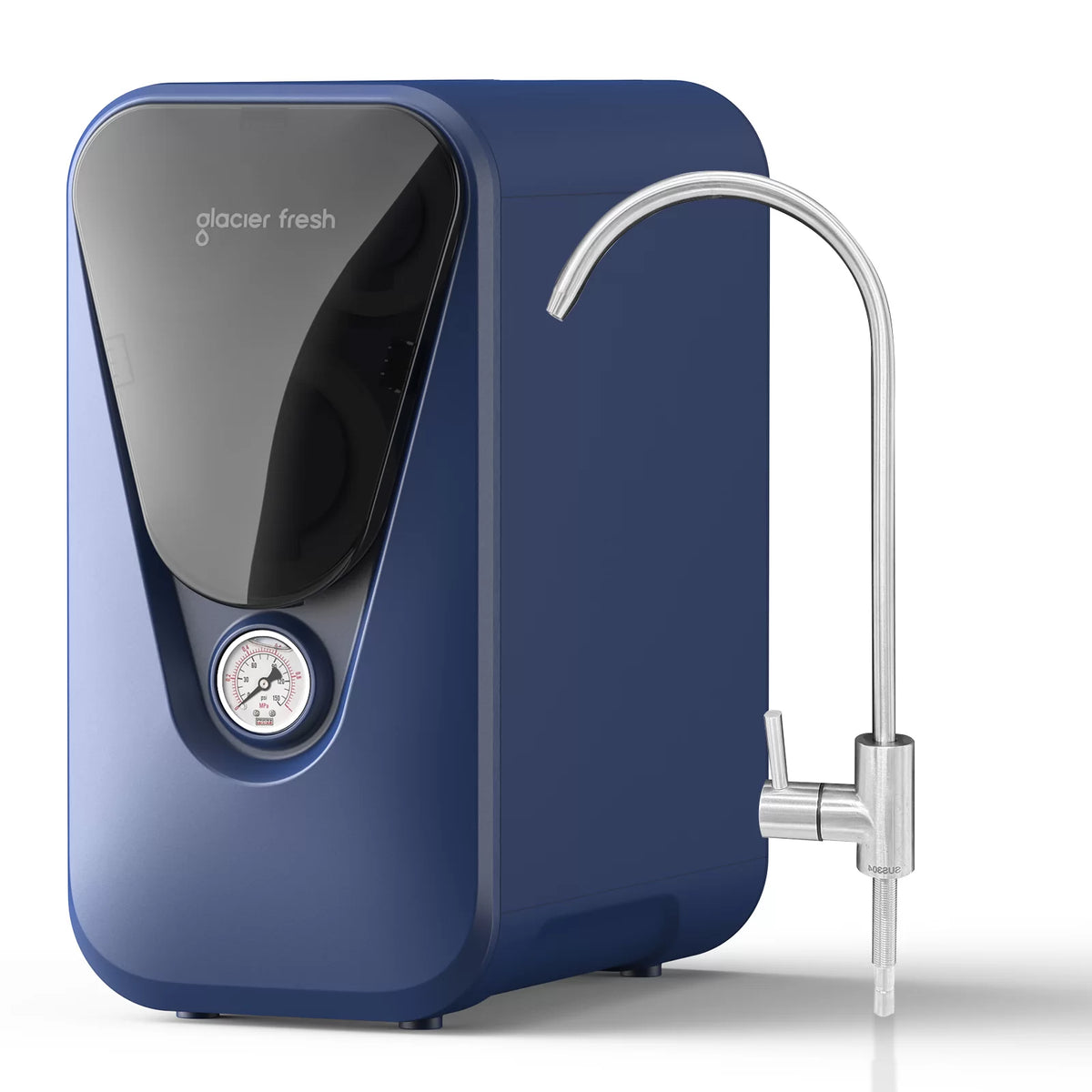
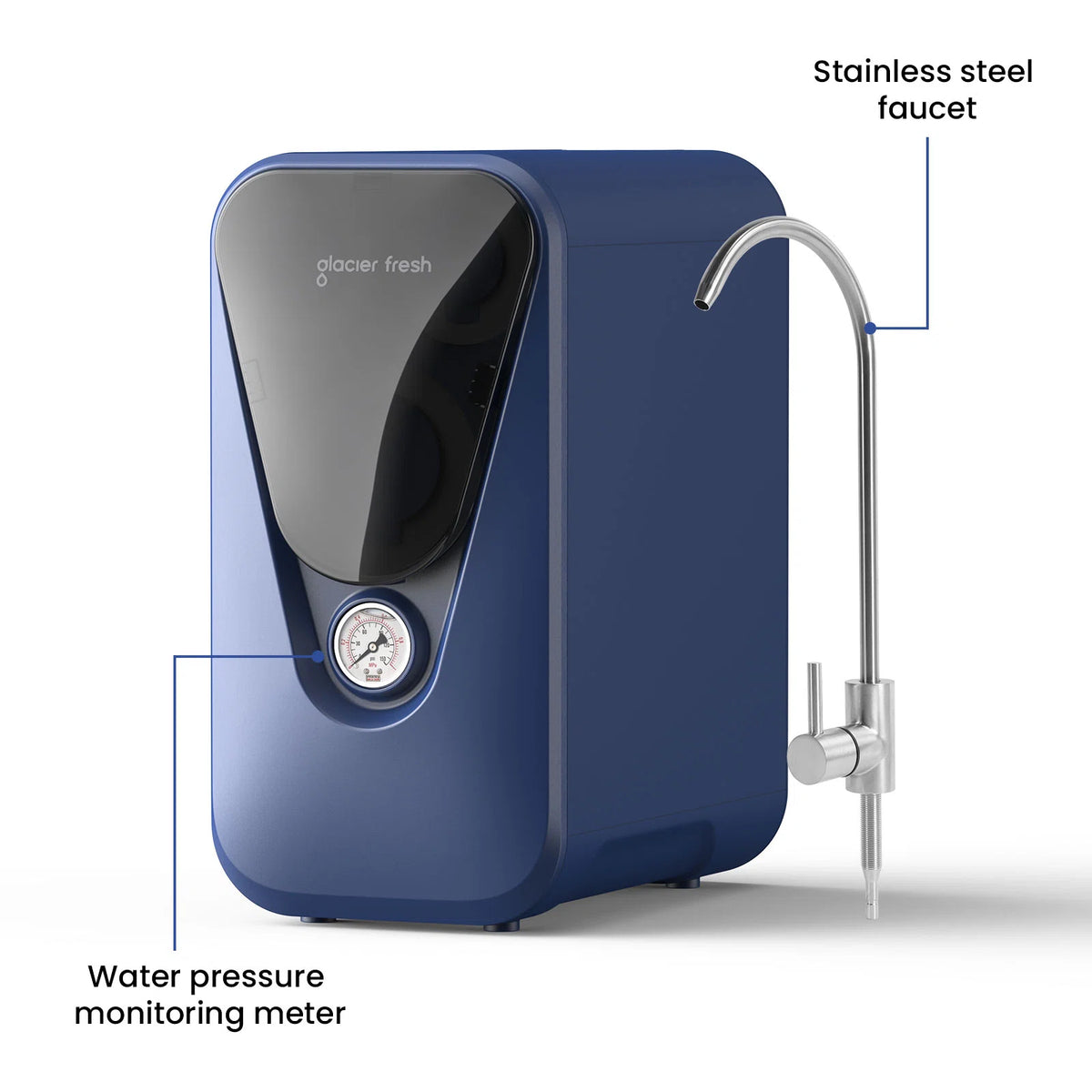
GlacierFresh RV Reverse Osmosis System for Camping & Travel
If you prefer the most advanced water purification, the GlacierFresh RV Reverse Osmosis System is the choice for you. It features an advanced 4-stage filtration system which can remove PFAS, chlorine, bacteria, viruses, heavy metals, and even parasites. It also passed FCC, FDA, CA65, NSF/ANSI certifications, which ensures standard quality and performance.
What makes it ideal for camping and travel is its plug-and-play installation and long lifespan of up to 25,000 water bottles. It’s made for rvs, boats, cabins, and off-grid travels.
With these advanced features, this portable RO system can remove most contaminants compared to basic water filters.
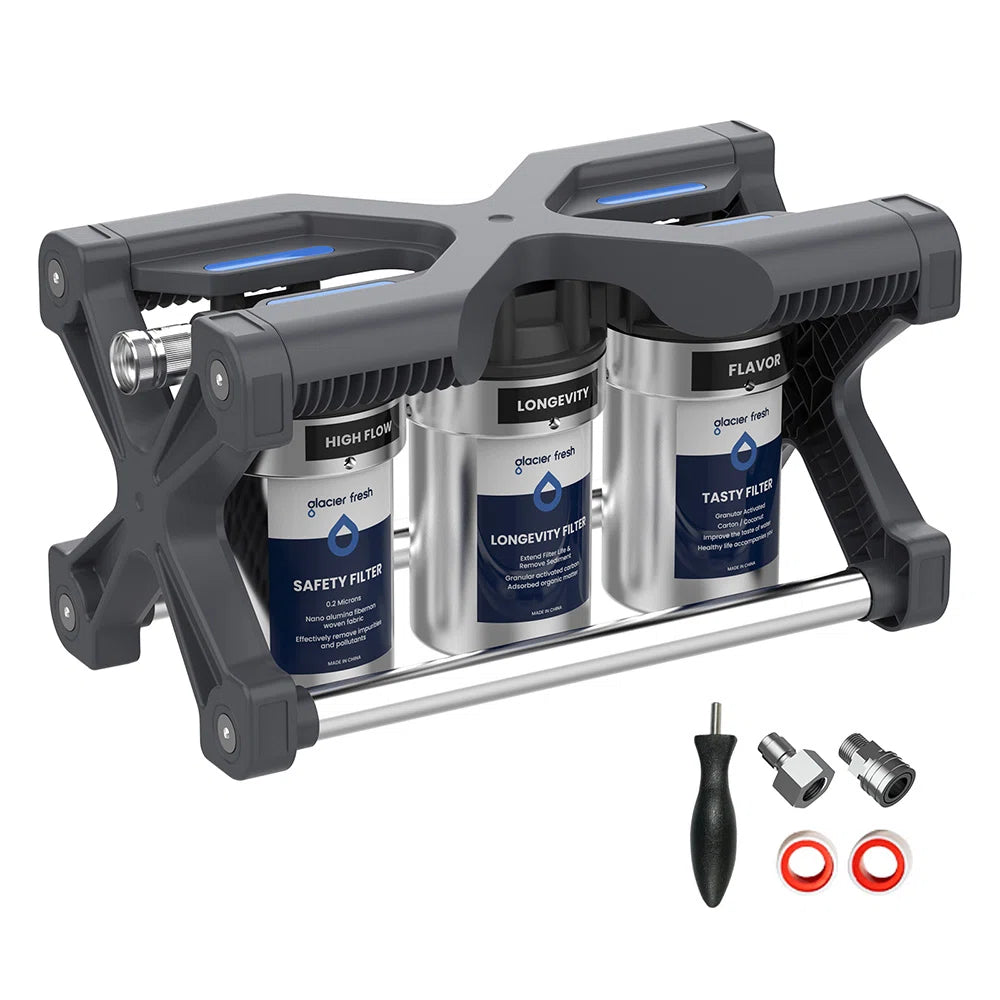
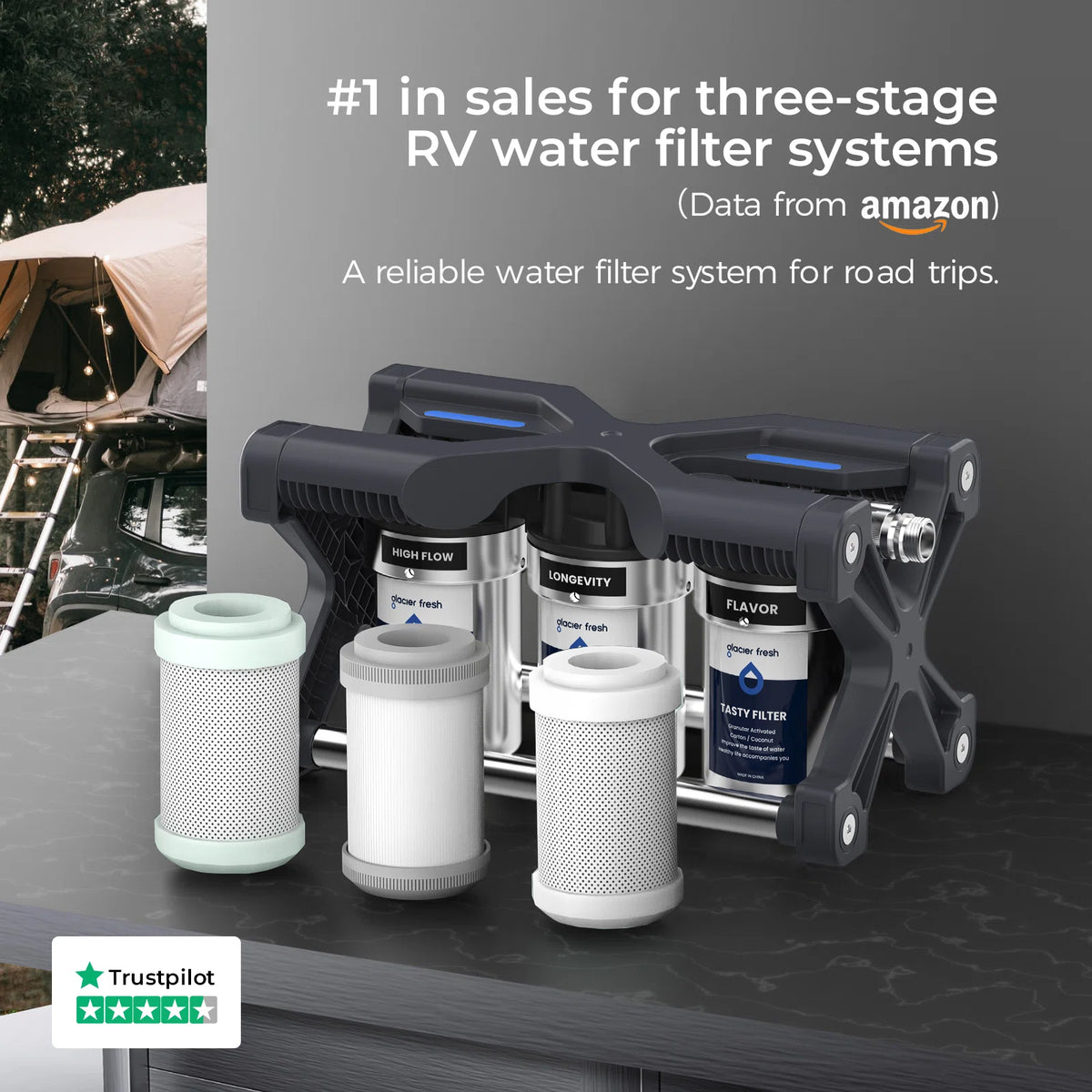
GlacierFresh AUQAGO 3-Stage RV Water Filter System
If you want a balance of portability and filtration, get the GlacierFresh AUQAGO 3-Stage RV Water Filter System. It uses a 0.2-micron high-flow filtration, a sediment pre-filter and a charcoal/coconut shell carbon filter which reduce contaminants and improve taste.
Its stainless steel quick connect hose makes it easy to use with well or city water too. Plus, its compact 5-inch filter design can save you storage space. If you’re looking for a reliable and portable water filter, this is a good one for campground hookups.
GlacierFresh Portable RV Water Softener
The GlacierFresh Portable RV Water Softener helps improve water quality and protect your RV’s plumbing system. With a 16,000 grain capacity, the GlacierFresh Portable RV Water Softener works by converting hard water to soft water, reducing mineral buildup, improving shower and washing experience, and protecting your appliances. It's also tool-free and no electricity required, making it easy to use and valuable to use with a water filter.
How Water Filtration Helps Remove Lead From Water
Lead is a harmful substance that can cause serious damage to your body. This is why having water filters is important, as it can help remove up to 99% of this toxic substance.
Where Lead Can Enter Campground Water
Lead can pass through old plumbing systems, corroded pipes, or aging municipal infrastructure. These can introduce lead into your water supply.
Why Advanced Filtration Matters
Advanced filtration can help remove contaminants like lead. Through reverse osmosis systems’ fine membranes, they can remove microscopic levels of harmful contaminants. Meanwhile, carbon filtration can reduce heavy metals. Lastly, micron filtration can capture other small particles.
Combining these methods can ensure that water safety is significantly improved thus giving you safe drinking water while on the road.
FAQs
Is it safe to drink water from your RV?
Yes, as long as you know that the water source is safe and if you have a water filter system in your RV. Sanitize and disinfect your tank regularly, install and replace proper filters, and use potable hoses to ensure access to safe drinking water.
What is the healthiest natural water to drink?
Spring water is often considered the healthiest natural water to drink. However, its safety should be tested because untreated natural sources may pose harmful risks to your health if it contains bacteria and contaminants.
What is the simplest way to make water safe to drink?
Boiling water is the simplest way to make water safe to drink when off-grid. However, this does not entail advanced purification, that’s why many RV owners still equip their RVs with the best potable water filter systems to get safe and clean drinking water.
What are the 7 most common water-borne diseases?
The most common waterborne diseases are typhoid, cholera, giardiasis, hepatitis A, E.coli infections, dysentery, and cryptosporidiosis. These are caused by contaminated water which lead to digestive illness and severe dehydration.
Is distilled water the same as boiled water?
No, they aren’t the same. Distilled water is purified by removing minerals and contaminants, while boiled water does not; it only kills microorganisms. Distilled water undergoes a process of evaporation and condensation.
Conclusion
While “potable,” campground water may not always be reliable. An added layer of protection through portable water filters in your RVs can shield you from unwanted health issues. And to help with this, GlacierFresh systems offer a wide range of RV water filter products so you can access safe drinking water anytime, anywhere.