
Table of Contents:
Why RV Travelers Need a Dedicated Water Filtration System
Types of Portable Water Filtration Systems for RV Camping
Best RV Camping Water Purifiers to Consider in 2026
Inline vs Canister RV Filters: Which One Is Better?
Whole RV vs Point-of-Use for RV
Most Effective Filtration System for RV Use in 2026
How to Compare RV Water Filters in 2026
Maintenance and Replacement for RV Systems for Water Filtration
FAQs
Conclusion
RV travel is exciting, but traveling to places also means different water sources, thus different water quality. Relying solely on campground water can be risky, so it’s important to have a filtration setup to get access to clean and safe drinking water.
Why RV Travelers Need a Dedicated Water Filtration System
Regular household filters aren’t designed for RV use, so it's important to get a proper filtration for your RV system.
Common Water Problems at Campgrounds
Water contamination can come from different sources, and campers who drink unsafe drinking water may experience diarrhea, vomiting, or stomach pain.
These are the common issues that you might encounter:
-
Sediment and rust from aging pipes
-
Chlorine taste and odor from municipal treatment systems
-
Hard water causing mineral buildup
-
Bacteria and microorganisms from untreated water systems
-
Agricultural or industrial contaminants seeping into groundwater
Health, Appliance Protection, and Better-Tasting Water
To help you choose the right water filter for your RV, these factors to consider:
-
Ensure safe water for drinking and cooking.
-
Protect your RV plumbing and appliances from damage.
-
Improve shower and washing experience by eliminating harsh chemicals.
-
Reduce scale buildup by having an outdoor water softener system.
Types of Portable Water Filtration Systems for RV Camping
There are several portable water filtration system options specifically made for RV use. Here are some of them:
Inline RV Water Filters
This type of water filter directly connects to the campground water hose, making it easy to use. It’s lightweight and affordable, and is very effective in basic filtration like removing sediment and chlorine.
Canister RV Water Filter Systems
These water filter systems offer multi-stage filtration and are able to remove more contaminants. It uses cartridges that can be replaced and customized depending on your needs.
Reverse Osmosis for RV Camping
Among the three, RO systems provide the most comprehensive filtration as it can remove the most contaminants like heavy metals, fluoride, PFAS, bacteria, and viruses. The World Health Organization emphasizes that it’s important to remove these chemical and microbial contaminants for safe drinking water consumption.
RO systems have become more popular for RV travelers, because these can produce water that can be compared to bottled quality.
Best RV Camping Water Purifiers to Consider in 2026
Best Portable Reverse Osmosis System for RV Drinking Water

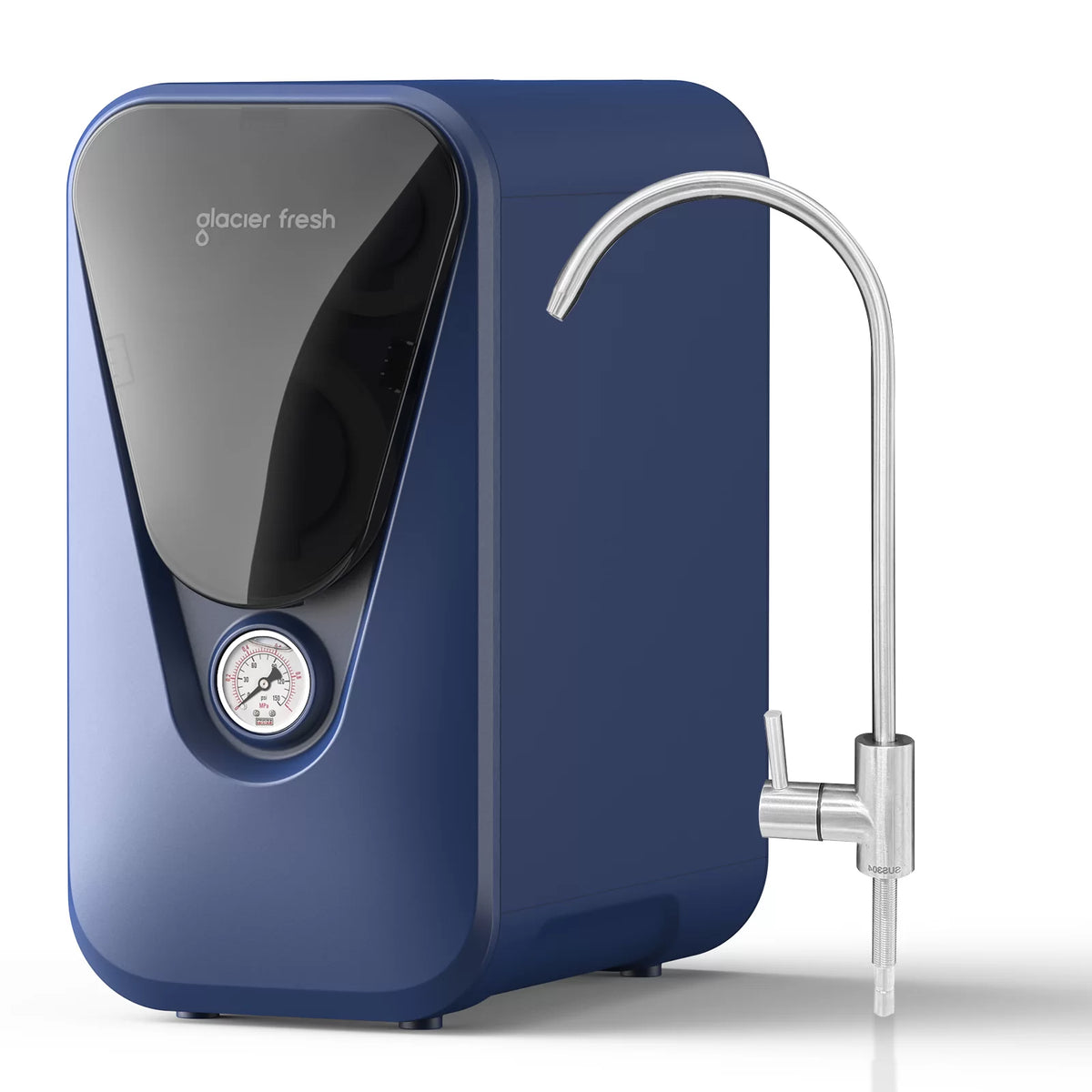
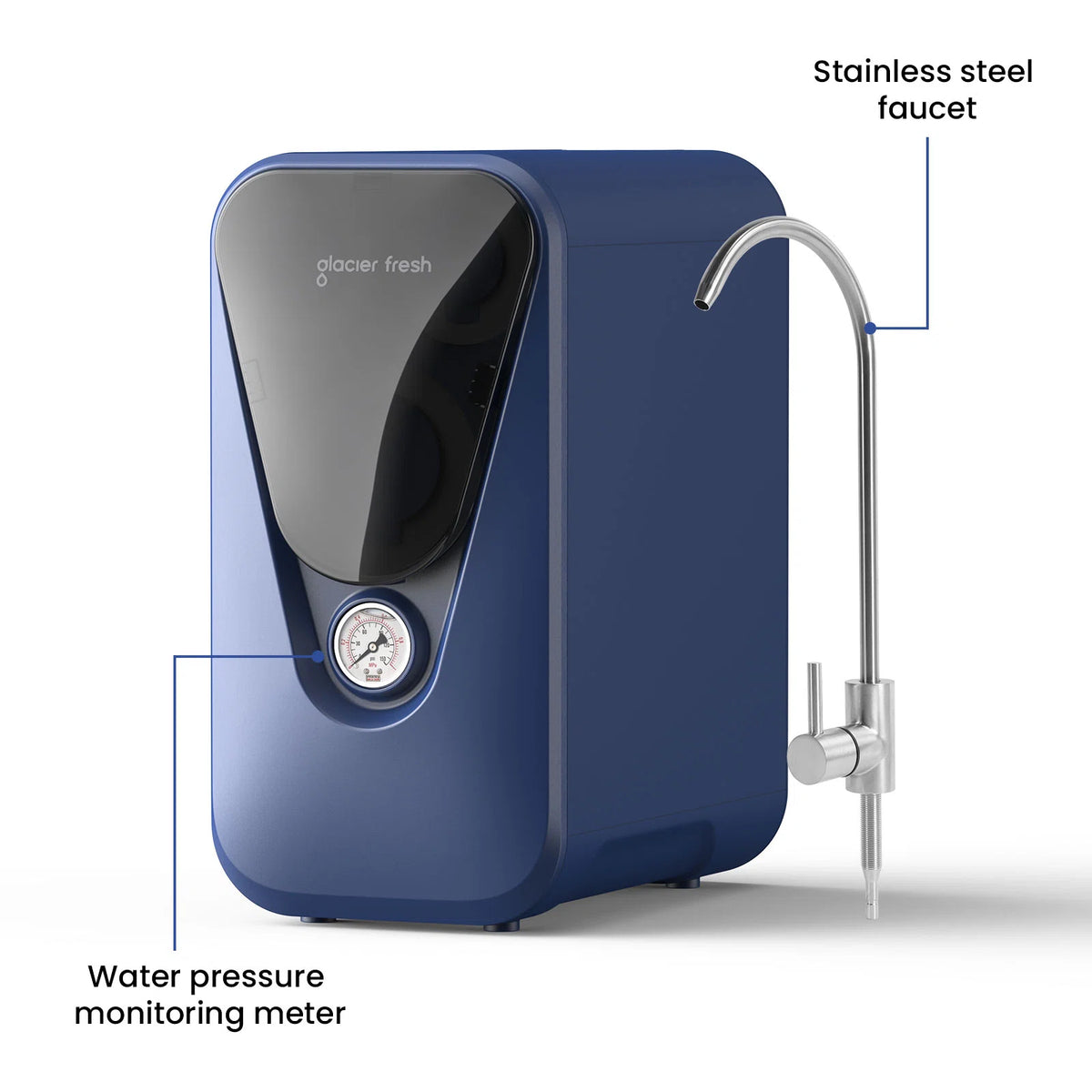
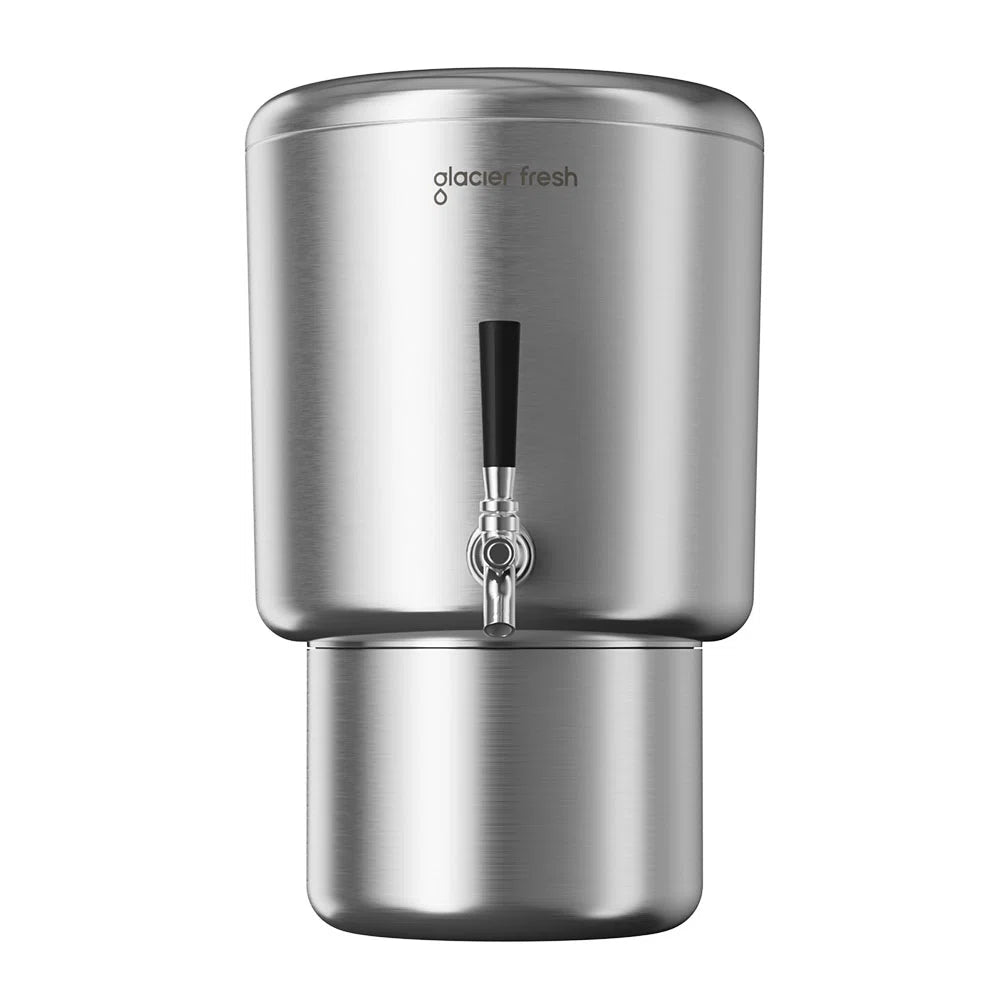
For travelers who want reliable and high-quality drinking water off-grid, the GlacierFresh RV Reverse Osmosis System is an ideal choice. It offers a 4-stage filtration system that can remove bacteria, viruses, heavy metals, chlorine, and PFAS. Plus, its plug-and-play installation makes it easy to install for beginners.
This RO system has a lifespan that can produce around 25,000 bottles, making it cost-effective. It’s also NSF/ANSI, FDA, FCC, and CA65-certified, ensuring that it has passed rigorous standards when it comes to quality and performance. It’s a good choice for travelers looking for convenience, advanced filtration, and cost-effectivity.
Best Multi-Stage RV Water Filter System

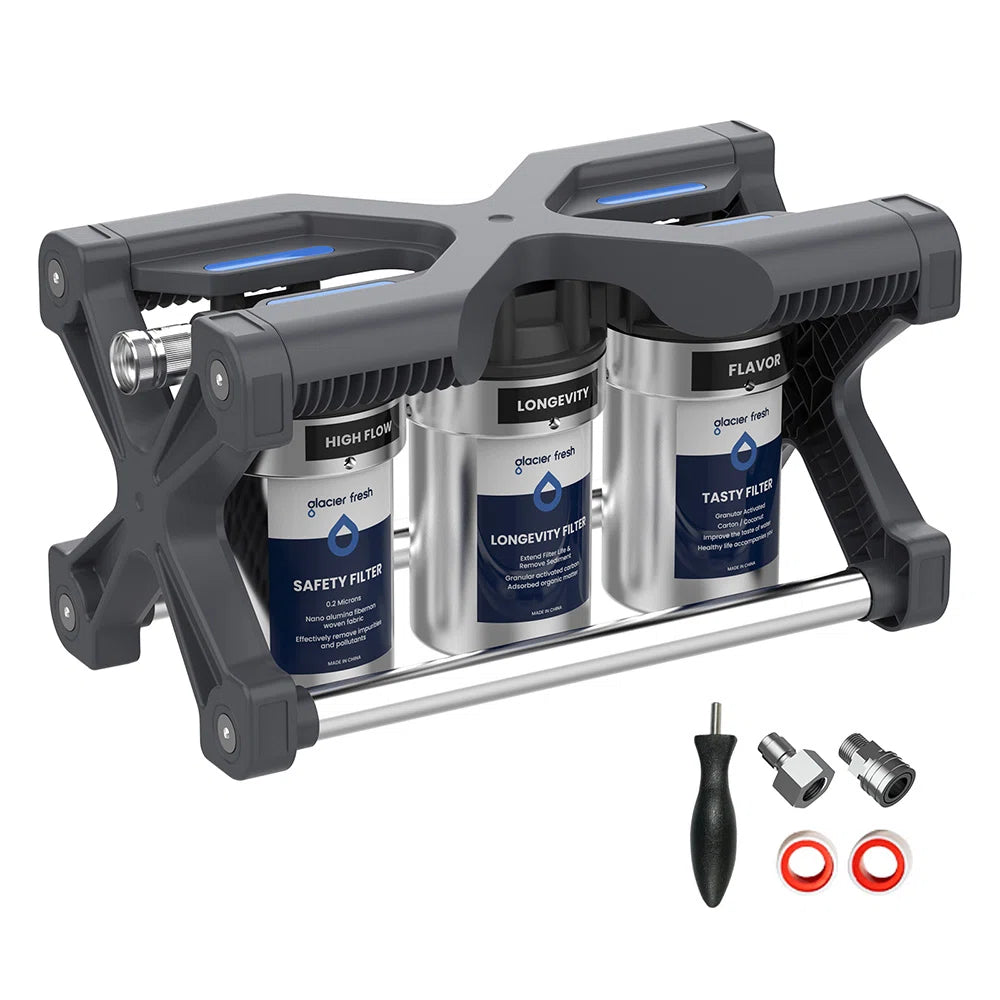
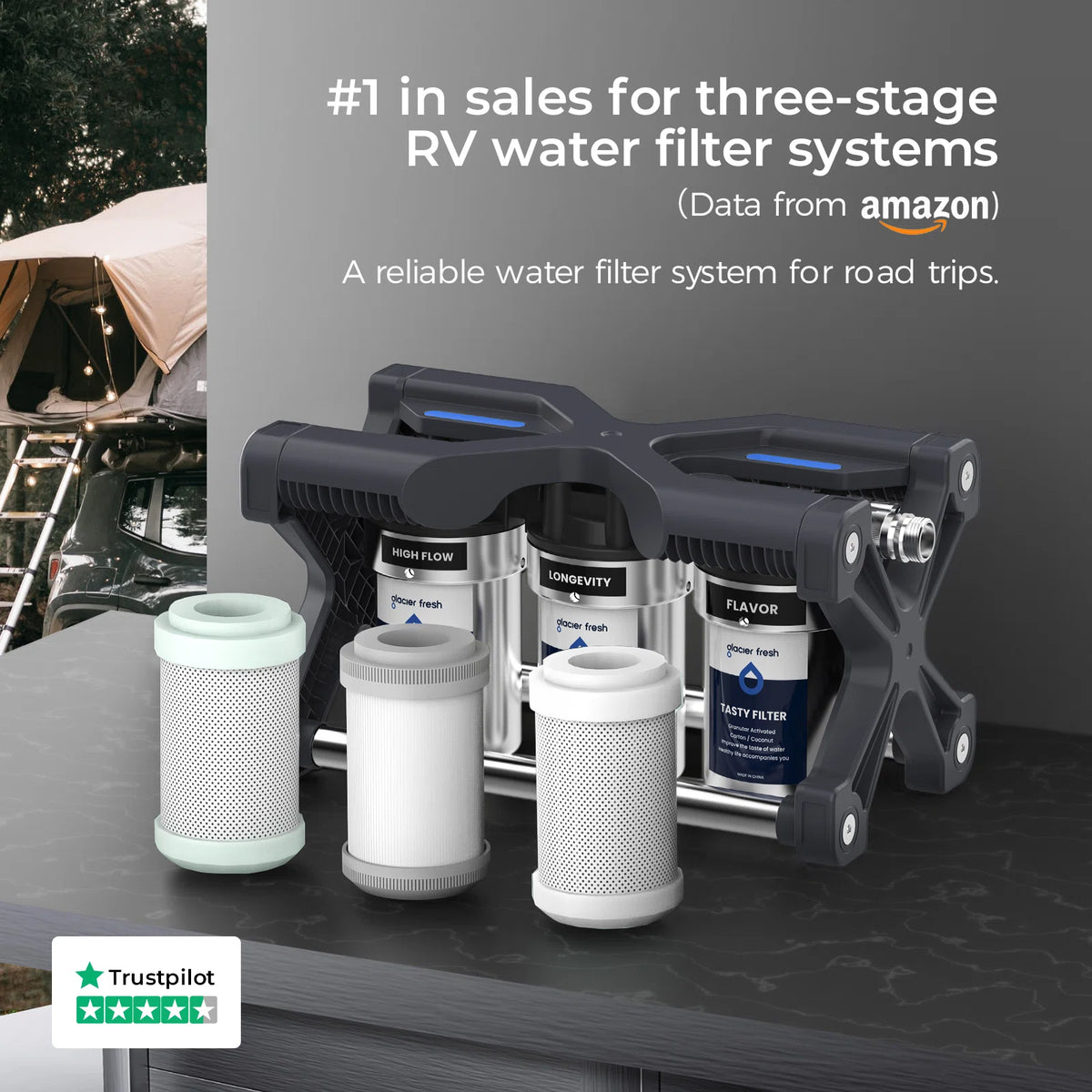
GlacierFresh AUQAGO 3-Stage RV Water Filter System is known for its high-performance, portable water filtration system which prefers better filtration compared to inline filters. It’s compact enough with its 5-inch filters, which makes it space-saving.
This water filter system offers 3-stage filtration with a 0.2 micron high-flow filter, removing sediment and carbon, which improves taste and extends filter life.
Its stainless steel quick-connect fittings enable it to easily attach to campground water sources, and its built-in pressure regulator helps protect your RV too.
Best Outdoor Water Softener System for RV Travel
Water softeners help remove hardness-causing minerals in your water. And one that’s specifically designed for RV travelers is the GlacierFresh Portable RV Water Softener, which is compatible with most campground water hookups.
It has a tool-free setup and requires no electricity, and even perfectly complements filtration systems. With its 16,000-grain capacity, this water softener can reduce mineral buildups that can damage appliances and pipes.
Inline vs Canister RV Filters: Which One Is Better?
| Inline Filters | Canister RV Filters | |
|---|---|---|
| Filtration performance | Basic | Multi-stage |
| Installation complexity | Very easy | Moderate |
| Cost | Low | Medium |
| Maintenance | Whole unit replacement required | Replaceable cartridges |
| Flow rate | Moderate | Higher |
| Best use case | Light use | Full-time RV use |
Inline filters are great for budget-friendly and quick solutions for beginner users. But most experienced RV users prefer canister systems because of its better filtration performance and maintenance.
Whole RV vs Point-of-Use for RV
| Whole RV System | Point-of-use System | |
|---|---|---|
| Primary purpose | Filters all water entering the RV | Filters only drinking water |
| Water coverage | Entire RV | Specific faucet only |
| Typical filtration technologies | Sediment, carbon, softeners | RO, alkaline, carbon |
| Installation difficulty | Moderate | Easy to moderate |
| Maintenance requirements | Periodic filter changes | More frequent |
| Flow rate | High | Lower |
| Best for | General water protection | Safe drinking water |
Most RV owners combine both whole RV and point-of-use filters to get safer and high-quality drinking water.
Most Effective Filtration System for RV Use in 2026
When traveling off-grid, water sources vary so contaminants also differ. The best solution for this is to get an effective filtration system that combines technologies to get quality and safe water.
Multi-Stage Filtration Systems Provide the Best Overall Protection
Multi-stage filtration systems feature multiple stages to effectively filter sediment, carbon, and fine micron. With this, each filter can remove dirt, rust, reduce chlorine and unwanted odor, plus remove fine particles. Compared to single inline filters, multi-stage filtration systems offer more consistent quality in terms of RV water filtration.
Reverse Osmosis for Maximum Drinking Water Purity
RO systems are known to have the most comprehensive purification method. RO systems remove dissolved contaminants, heavy metals, bacteria, viruses, and PFAS, ensuring water safety. These systems are great for RVs, as safe water is provided for drinking and cooking.
Why Many RV Travelers Add an Outdoor Water Softener
In US campgrounds, hardwater is pretty common. To prevent this, an outdoor water softener system can be used which prevents scale buildup in RV plumbing and water heaters. This also helps improve shower comfort, and soap performance.
Recommended RV Filtration Setup
-
Whole RV multi-stage filtration: Get this to protect plumbing and improve your overall water quality.
-
Reverse Osmosis system: This helps provide purified drinking water.
-
Outdoor water softener system: While optional, this helps prevent scale buildup from hard-water regions.
How to Compare RV Water Filters in 2026
Find the best fit for your RV lifestyle through these key performance factors:
Filtration Stages
Having multiple filtration stages is equivalent to more contaminants removed. This is because each layer targets different contaminants.
Micron Rating
The lower the micron rating means the finer the filtration. A water filter with smaller micron sizes can capture small particles. The EPA recommends an absolute one-micron filter to remove waterborne parasites like Cryptosporidium.
Flow Rate
Flow rate is essential to maintain water pressure especially in sinks, showers, and appliances. Too high of a flow rate may reduce efficiency, while too low might mean clogged filters.
Filter Lifespan
You can definitely save time and cost when you get a system that can filter tens of thousands of gallons, because you can reduce the need for replacements.
Installation and Portability
It’s very important for RV travelers to get a portable water filter system that’s easy to install and space-saving. Keep in mind that you’ll always be on the move and travel from one location to another, so get one that requires minimal setup.
Certifications
Look for important certifications such as NSF/ANSI, FDA, or CA65 compliance. These ensure that the water filter system is safe and compliant with set standards for quality and performance.
Maintenance and Replacement for RV Systems for Water Filtration
Maintenance is essential to keep your RV water filter system working effectively. Some parts need to be replaced to keep optimal performance for a long time:
-
Sediment filters: every 3–6 months
-
Carbon filters: every 6–12 months
-
RO membranes: every 1–2 years
For RV owners in cooler climates, winterizing your RV water filters is crucial to prevent damage from freezing temperatures. It’s also important to flush tanks and disinfect RV water systems regularly, to keep it clean so it can provide consistent water quality.
FAQs
How to filter campground water?
There are many water filter systems available to filter campground water. You may use a multi-stage filtration setup which connects to your hose, or an RO unit which removes contaminants and improves the taste and safety of the water.
Should I leave water in my RV water tank after?
Leaving water in your RV water tank for long periods is not advisable. Stagnant water in tanks can promote bacteria growth, so drain and sanitize your tanks every after use, especially after trips before storing it away.
Do you leave faucets open after winterizing RV?
Some RV owners leave their faucets slightly open to relieve pressure and prevent trapped water from freezing. Just make sure that all lines are drained or filled with antifreeze before you leave your faucets open.
Which water filter removes the most contaminants in the world?
RO systems can remove a lot of contaminants such as PFAS, heavy metals, bacteria, dissolved salts, and even viruses. This is because of its semi-permeable membrane which offers effective filtration methods.
Do portable water filters work?
Yes, portable water filters work in removing sediments, chlorine, and other contaminants, thus improving water quality. They may not be as powerful as mult-stage filter systems, but these are convenient and useful enough even for RV use.
Conclusion
The most reliable RV water filter setup usually combines all multi-stage filtration, RO, and the addition of a water softener to ensure clean water and protect your RV system. Explore GlacierFresh’s solutions to find one that best fits your RV needs.