
Table of Contents:
Does Arizona Have Hard Water? (And How Hard Is It Really?)
What Is TDS of Tap Water, and Why Does It Matter for Arizona?
Water Softeners vs. Filtration Systems: What's the Difference?
Water Descaling and Filtration Solutions: Salt-Based, Salt-Free, and RO
Best Water Softener System for Arizona: What to Look For
Countertop Filters and Pitchers: A Good Option for Arizona Renters and Small Households?
How to Choose the Best Water Filtration System for Your Arizona Home
FAQs
Conclusion
You wipe down the faucet on Monday, and by the weekend the chalky white crust is back. The ice comes out cloudy, your coffee has a metallic edge, and your skin feels tight after a shower. If that's your house, you're not imagining it.
Arizona has some of the hardest water in the country, and it's not a small annoyance. It's a steady Arizona water quality issue that wears on your plumbing, your appliances, and the taste of what you drink.
Does Arizona Have Hard Water? (And How Hard Is It Really?)
 Short answer: yes. The state ranks among the hardest in the country, with most major cities classified as hard or very hard.
Hardness is the amount of dissolved calcium and magnesium in your water, measured in grains per gallon (GPG) or parts per million (PPM). The USGS calls water “very hard” past 180 mg/L, and most of Arizona clears that easily.
Across the state:
-
Phoenix runs roughly 9 to 20 GPG, depending on the year and source, with TDS often between 560 and 686 ppm
-
Scottsdale and Chandler sit among the highest hardness levels in the valley
-
Bullhead City reaches about 615 PPM, the second-highest recorded municipal hardness in the country
-
Flagstaff is one of the cleaner spots in the state
The cause is geology plus climate. The state's water comes mostly from the Colorado River and deep aquifers, and as it moves through limestone it picks up calcium and magnesium. With only about 7 inches of rain a year in the Phoenix metro, harder groundwater fills the gap.
To be clear, hard water isn't unsafe. Arizona water meets EPA and Arizona Department of Environmental Quality standards. The trouble is practical, not toxic, and it builds up quietly over time.
What Is TDS of Tap Water, and Why Does It Matter for Arizona?
TDS, or total dissolved solids, is the combined total of dissolved minerals, salts, and compounds in your water, measured in PPM. The EPA's secondary guideline is 500 ppm, a non-enforceable level tied to taste and household effects, not safety. Phoenix regularly runs past it, often 560 to 686 ppm.
High TDS isn't automatically unsafe, but in a hard-water state it shows up in ways you can see and taste:
-
A bitter, salty, or metallic taste in drinking water and ice
-
Scale deposits inside water heaters, pipes, and appliances
-
White residue on faucets, showerheads, and glassware
-
Shorter lifespans for dishwashers, water heaters, and washing machines
Testing at home is cheap. A handheld TDS meter runs $10 to $20, and home kits add hardness and pH. Read hardness and TDS together: a filter that cuts contaminants but not minerals won't fix the scale or taste in Arizona.
Water Softeners vs. Filtration Systems: What's the Difference?
People mix these two up, and they solve different problems. A water softener uses ion exchange to pull calcium and magnesium out, swapping them for a little sodium. That prevents scale, protects appliances, and leaves skin less filmy. It won't remove chlorine, PFAS, lead, or bacteria.
A filtration system does the opposite. It removes contaminants like chlorine, chloramines, heavy metals, PFAS, and sediment, but it doesn't soften water or stop scale. For most Arizona homes you benefit from both: a whole-house softener at the point of entry, plus an RO or countertop filter for what you drink. Add only a hard water filter for the house without softening, and you'll still see scale on the heater and fixtures. On sizing, look for salt-based softeners rated at least 32,000 grains.
Water Descaling and Filtration Solutions: Salt-Based, Salt-Free, and RO
 Three approaches cover almost every Arizona household.
Salt-Based Water Softeners
This is the most effective option for Arizona's extreme hardness, which averages around 12 GPG statewide. Ion exchange removes calcium and magnesium, so you get the full benefits across skin, hair, laundry, dishes, and appliances. It's the right call at 15 GPG and above. The trade-offs: it adds trace sodium, needs salt refills, and makes some wastewater when it regenerates.
Salt-Free Water Descalers and Conditioners
These use Template-Assisted Crystallization (TAC) to change how hardness minerals behave. The minerals stay in the water but are far less likely to stick and form scale. You get lower maintenance, no added sodium, and a greener footprint, which suits renters and the sodium-conscious. The catch: at Phoenix-level hardness, salt-based systems give more complete protection.
Reverse Osmosis Systems for Drinking Water
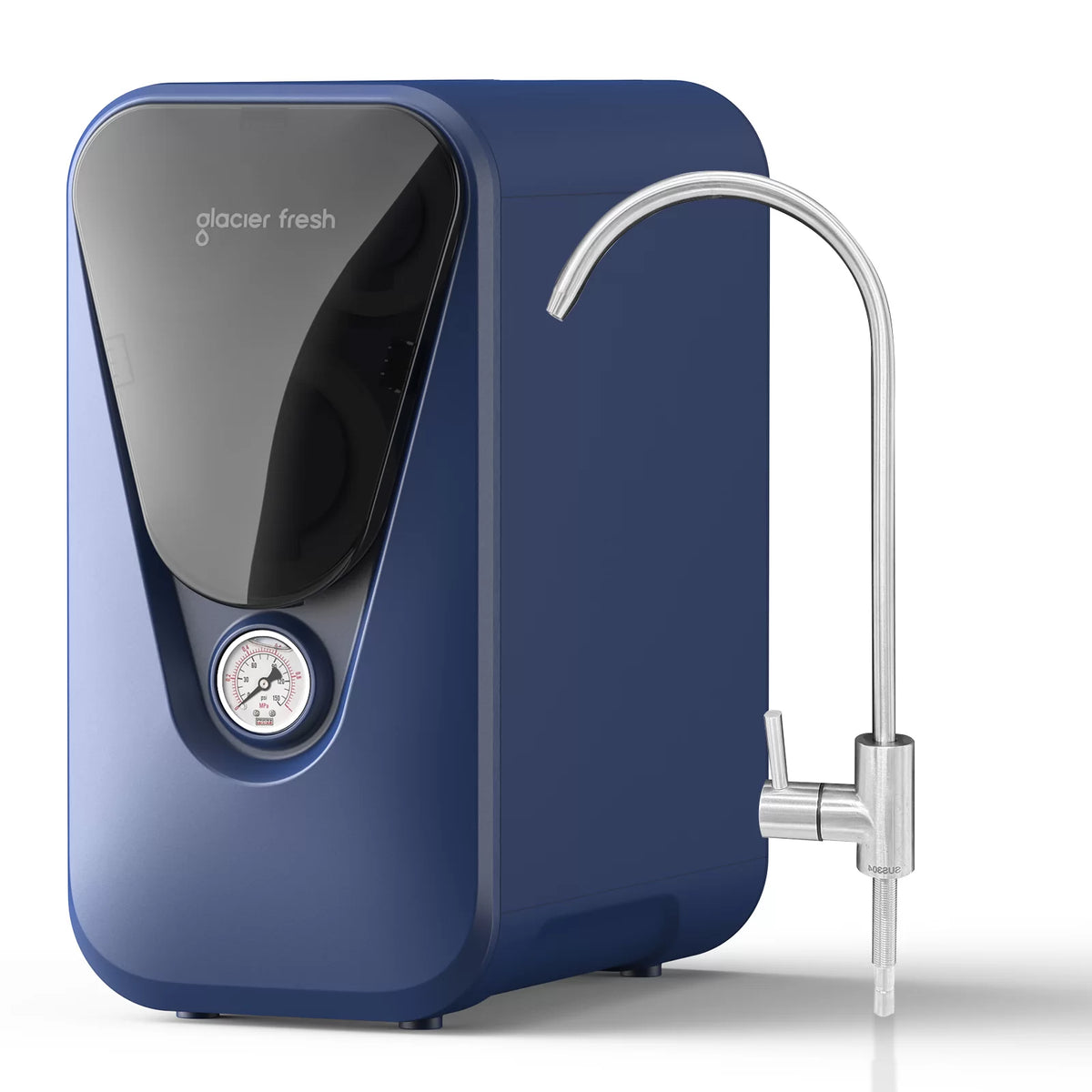
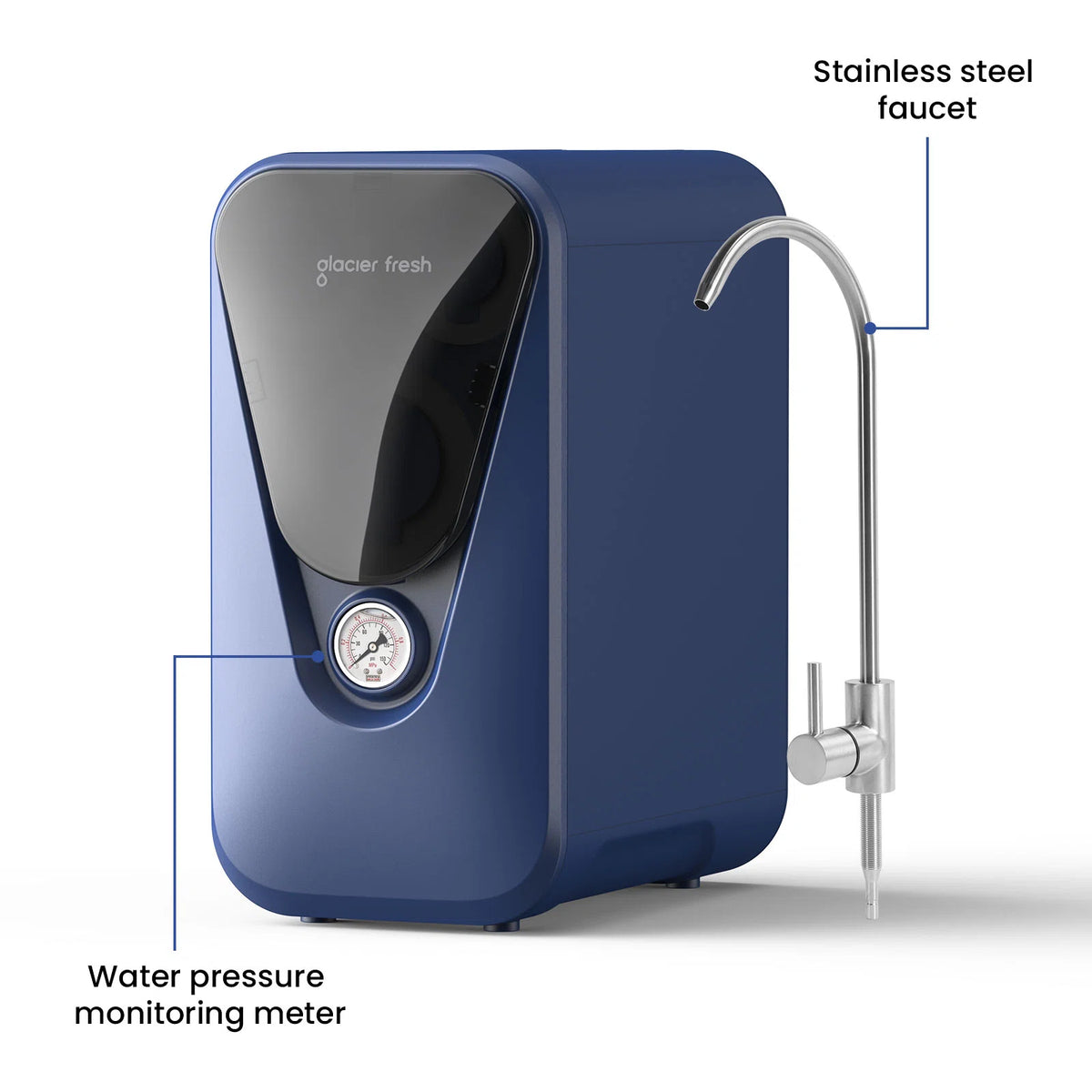
RO is the highest level of purification for a home, removing 97 to 99% of dissolved solids including lead, fluoride, nitrates, PFAS, and chlorine. It's too costly to run whole-house, so it lives under the kitchen sink, often paired with a whole-house softener. For a non-electric option, the GlacierFresh U03 800GPD Undersink Reverse Osmosis System runs on water pressure alone, installs in under 30 minutes, and reduces TDS by roughly 40 to 60% while cutting PFAS, lead, chlorine, and heavy metals. That TDS drop is what high-PPM Arizona water needs.
Best Water Softener System for Arizona: What to Look For
Choosing the best water softener system for Arizona comes down to a few specifics that matter more here than elsewhere.
-
Grain capacity: at least 32,000 grains for a 2 to 4 person household, and 48,000 to 64,000 grains for larger homes
-
Regeneration type: demand-initiated (metered) systems regenerate based on actual use, saving salt and water
-
Resin quality: high-crosslink (10%) or commercial-grade resin holds up better under Arizona's heavy load
-
Chloramine compatibility: Phoenix and Tucson disinfect with chloramines, so confirm the softener and any carbon stage are rated for them
Some prefer a combination unit that pairs softening with carbon filtration, handling hardness, chloramines, and sediment at once. Many softeners support DIY install, but Arizona adds a wrinkle: anything in a garage or outdoor space needs UV-resistant housing, since the heat is brutal on plastic.
Countertop Filters and Pitchers: A Good Option for Arizona Renters and Small Households?
 Not everyone can install a whole-house softener. Renters, condo owners, and smaller households often want something portable with no plumbing, and that's a fine start.
A countertop or gravity-fed Arizona water filter removes chlorine, chloramines, heavy metals, PFAS, bacteria, and sediment, improving taste and safety. What it can't do is reduce hardness or stop scale in your pipes and appliances. So it fits when your concern is drinking and cooking water, not the water heater.
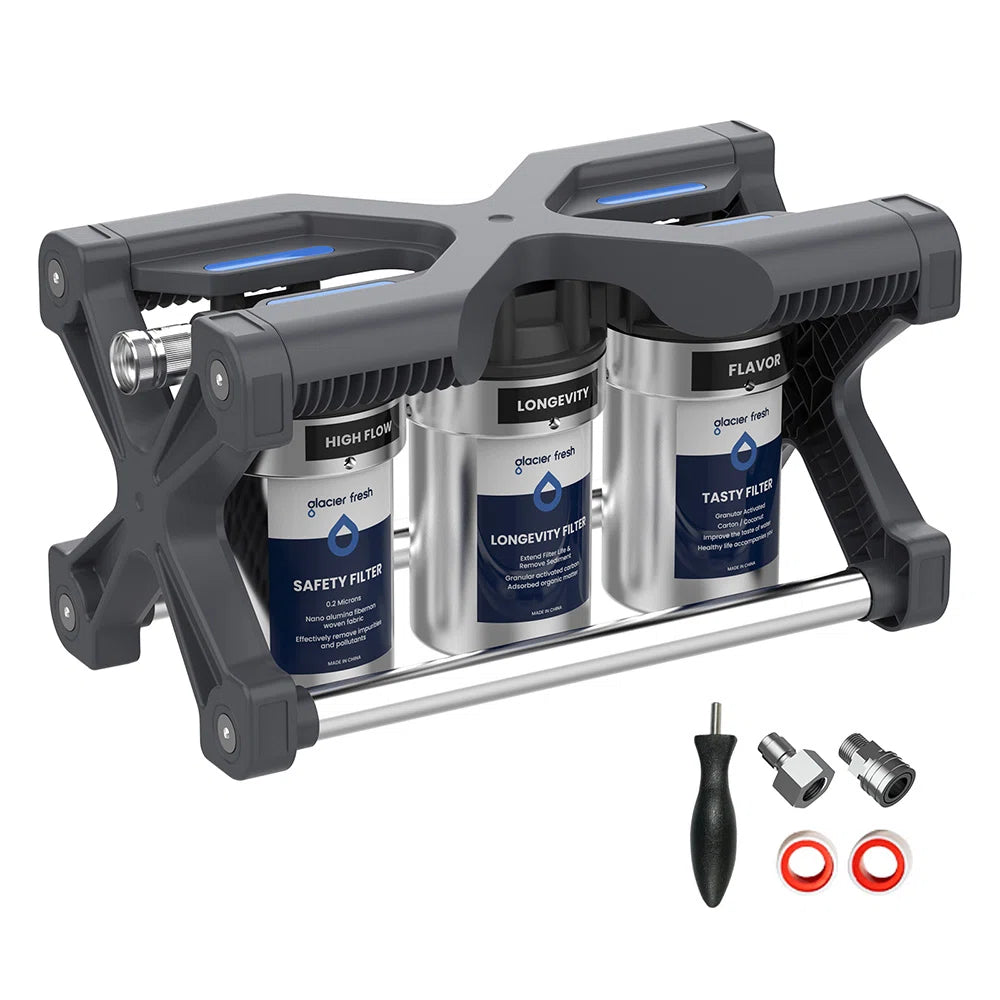
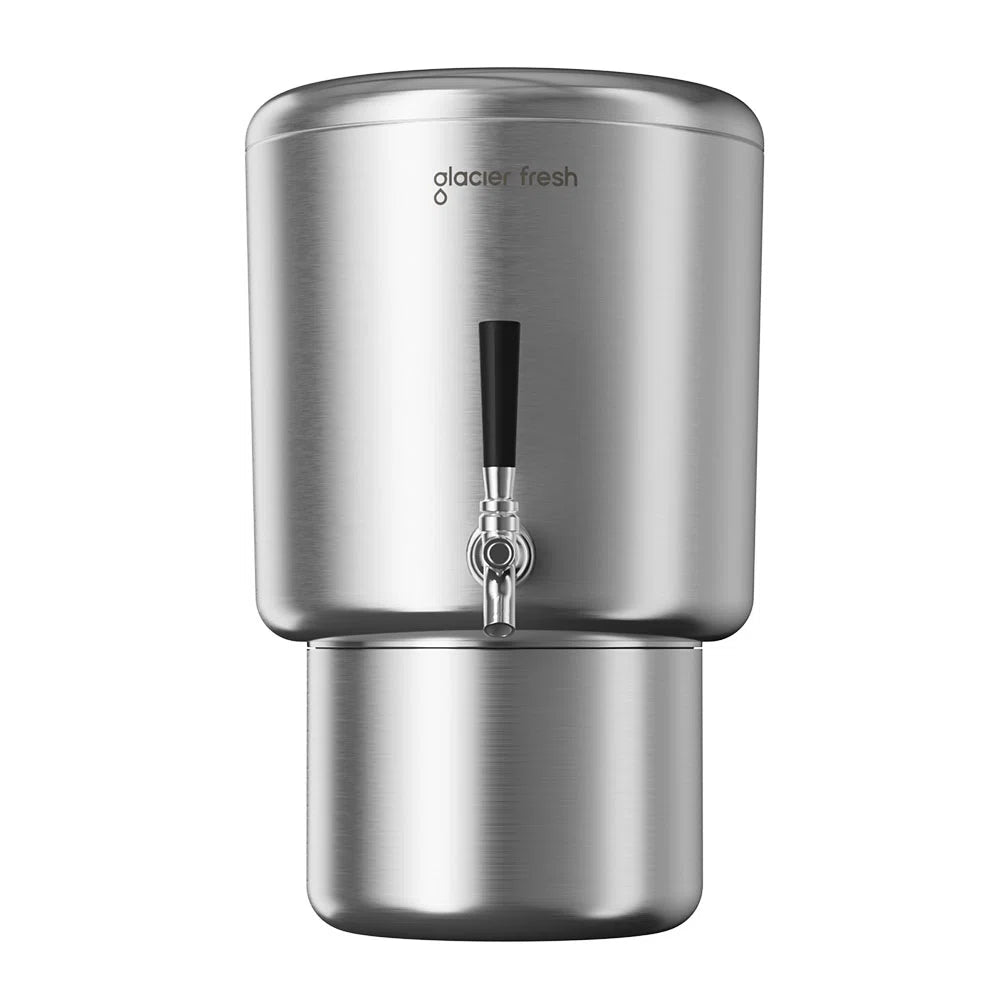
GlacierFresh has options suited to Arizona taps. The PC04 2.25G Countertop Water Filter uses an Elarisey positively-charged nanofiber membrane and, per third-party SGS results, reduces lead by about 99.87%, chlorine by 99.47%, PFAS by 99.62%, and BPA by 99.4%, with no plumbing or electricity.
For bigger households, the 3G Gravity-Fed System with six filters adds capacity. For budget or on-the-go use, the Purela glass pitcher series filters chlorine, PFAS, heavy metals, and microplastics.
How to Choose the Best Water Filtration System for Your Arizona Home
Work through it in order.
Step 1: Test Your Water First
Hardness varies block to block, so don't assume your number from a neighbor's. A home TDS meter, hardness strips, a mail-in lab test, or a free local assessment all give you a baseline. Test hardness, TDS, chloramine, and pH. On a well, add iron, bacteria, and arsenic.
Step 2: Match the System to Your Actual Problem
Once you know your numbers, the right system usually picks itself:
-
Scale on appliances and a hard mineral taste: a salt-based whole-house softener
-
Lead, PFAS, chlorine, or high TDS in drinking water: an under-sink RO system
-
Both at once: a softener plus RO combo, which fits most Phoenix-area homes
-
Renters or small households: a countertop gravity filter or glass pitcher
-
Well water with sediment and bacteria: a multi-stage whole-house filter with a UV stage
Step 3: Consider Arizona-Specific Factors
Heat comes first. Garages and outdoor utility areas regularly hit 110°F-plus, so look for stainless steel or UV-stabilized housings.
Chloramines come second: Phoenix and Tucson use them instead of plain chlorine, and a standard carbon block handles them, but confirm your system is rated for it.
Then there's efficiency: even a thin layer of scale makes a water heater run longer and use more energy, and water heating already accounts for a big share of home energy use, so softening pays back in lower bills and longer appliance life.
FAQs
What are the best water softener options available in Las Vegas?
Las Vegas water is in Arizona's league, often very hard at 16 GPG or more, since it also draws from the Colorado River. The same priorities apply: a metered salt-based softener of at least 32,000 grains, high-crosslink resin, and chloramine-rated carbon. Test your hardness before sizing.
What are the best water systems available in Texas for residential use?
Texas varies by region, from very hard in San Antonio and the Hill Country to softer near the Gulf. For hard areas, a salt-based softener plus under-sink RO covers most homes. On wells, add sediment and UV stages. A local test sizes it right.
What is the best whole house filter for well water in Arizona?
For Arizona well water, the strongest setup pairs sediment and carbon stages with a UV purifier, plus targeted media if your test shows arsenic or iron. GlacierFresh focuses on point-of-use RO and countertop filtration rather than whole-house well systems, so an under-sink RO is a practical add-on for drinking water.
Is Arizona tap water safe to drink?
Yes. Despite the hardness, Arizona water meets federal Safe Drinking Water Act standards. The hardness is a nuisance issue, not a health one. Many residents still add RO or carbon filtration to improve taste and trim contaminants like PFAS, which a USGS study found in nearly half of U.S. tap water.
Do I need a water softener or a reverse osmosis system in Arizona?
Most Phoenix-area homes need both, since they solve different problems. A softener stops scale; RO purifies drinking water. If you must start with one, base it on your test results and main complaint. The CDC's guidance on matching filtration to the contaminant is a good neutral start.
Conclusion
Hard water is part of life in Arizona, but living with the scale, cloudy ice, and dry skin isn't. Test your water first, match the system to your real problem, and account for the heat and chloramines that make this state different.
GlacierFresh covers every tier, from the U03 non-electric undersink RO system to the PC04 countertop filter and the Purela glass pitcher series. Explore the full range at glacierfreshfilter.com.
References:
-
United States Geological Survey. Hardness of Water. https://www.usgs.gov/water-science-school/science/hardness-water
-
Arizona Department of Environmental Quality. Arizona Department of Environmental Quality (ADEQ). https://www.azdeq.gov/
-
United States Environmental Protection Agency. Secondary Drinking Water Standards: Guidance for Nuisance Chemicals. https://www.epa.gov/sdwa/secondary-drinking-water-standards-guidance-nuisance-chemicals
-
United States Department of Energy. Water Heating. https://www.energy.gov/energysaver/water-heating
-
United States Environmental Protection Agency. Per- and Polyfluoroalkyl Substances (PFAS). https://www.epa.gov/sdwa/and-polyfluoroalkyl-substances-pfas
-
United States Geological Survey. Tap Water Study Detects PFAS 'Forever Chemicals' Across the US. https://www.usgs.gov/news/national-news-release/tap-water-study-detects-pfas-forever-chemicals-across-us
-
Centers for Disease Control and Prevention. About Choosing Home Water Filters. https://www.cdc.gov/drinking-water/prevention/about-choosing-home-water-filters.html