
Table of Contents:
Why Households Are Installing Water Purifiers for the Home
What Is the Most Effective Water Filtration System for Home Use?
Best Home Water Filtration by Household Need: Factors to Compare Water Filters
House Water Filtration System Reviews: What Homeowners Commonly Say
FAQs
Conclusion
Clean tap water isn’t something most households question until something changes. A strange taste, an odor, or a local advisory can quickly change how you think about what’s coming out of your faucet.
That’s one reason more families are looking for the best home water filtration system. Not all systems work the same way, and the right choice depends on what you want to remove and how you use water at home.
Why Households Are Installing Water Purifiers for the Home
Concerns about tap water quality in the U.S. have become more visible in recent years.
A U.S. Geological Survey study found that at least 45% of U.S. tap water contains one or more PFAS compounds, often called “forever chemicals,” which have been linked to potential health risks. These findings have pushed many households to take filtration into their own hands.
Common contaminants found in municipal water include:
-
Chlorine used for disinfection
-
PFAS and other industrial chemicals
-
Lead from aging pipes and plumbing
-
Microplastics and fine particles
Many standard filters only address part of the problem. The CDC notes that most home filters are carbon-based and mainly reduce taste, odor, and some heavy metals, but they do not remove germs or all dissolved contaminants.
This is why point-of-use filtration systems are becoming more common. Instead of treating all water, they focus on the water you drink and cook with, where quality matters most.
What Is the Most Effective Water Filtration System for Home Use?

Effectiveness depends on several factors, including the filtration technology, where the system is installed, your water source, and how much water your household uses daily.
Reverse Osmosis (RO) Systems
Reverse osmosis systems are widely considered one of the most effective options among water purification systems home households rely on.
They use a semipermeable membrane with pores around 0.0001 microns, which allows water molecules through while blocking many contaminants.
These systems can remove:
-
Heavy metals such as lead
-
PFAS and other dissolved chemicals
-
Chlorine
-
Microplastics
-
Bacteria and some pathogens
They are usually installed under the sink and use multiple stages, including sediment and carbon filters before the RO membrane.
Research shows that reverse osmosis and distillation can remove nearly all fluoride from water, which is relevant in areas where fluoride levels are a concern. For households dealing with more complex contamination, RO systems are also considered the best drinking water system for home use.
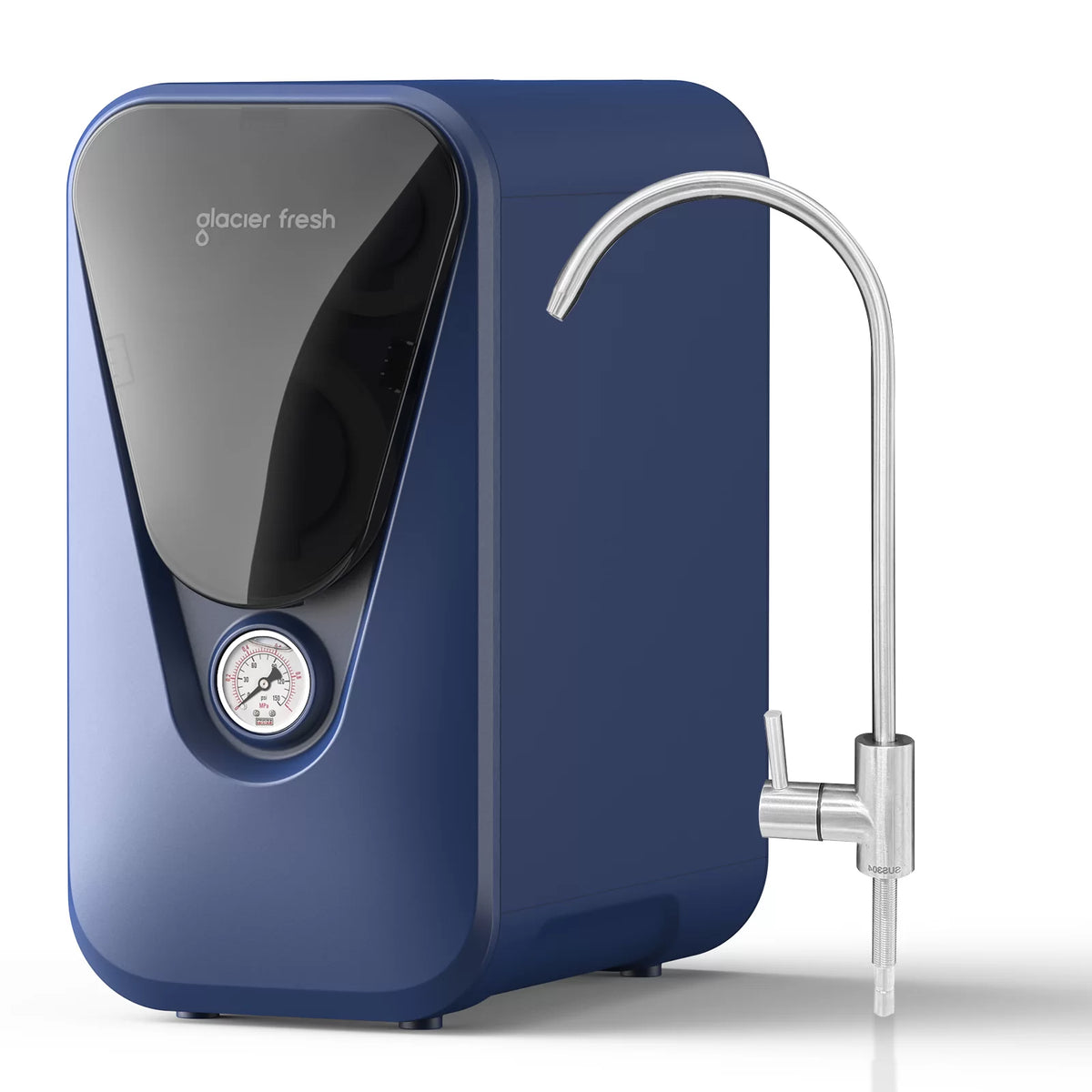
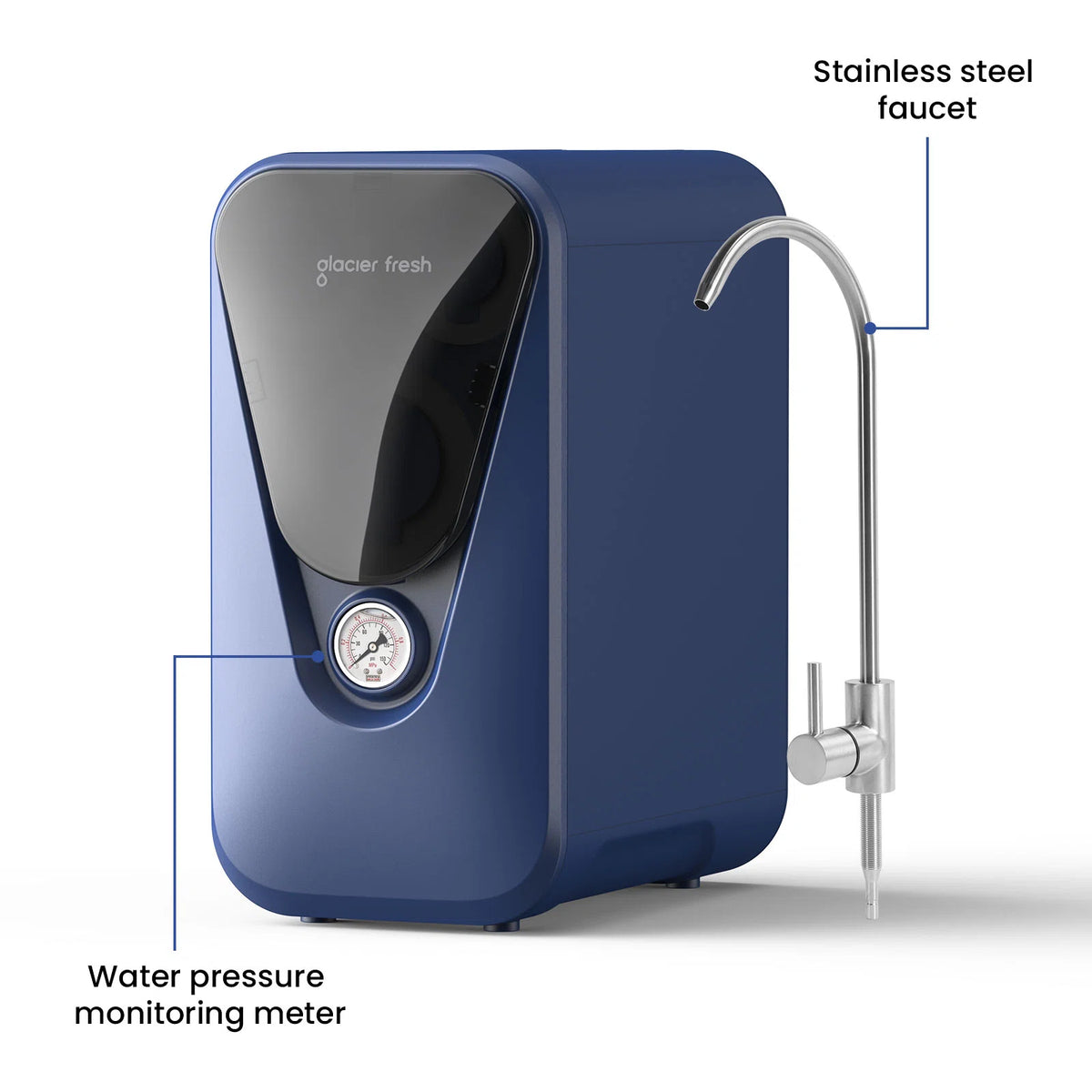
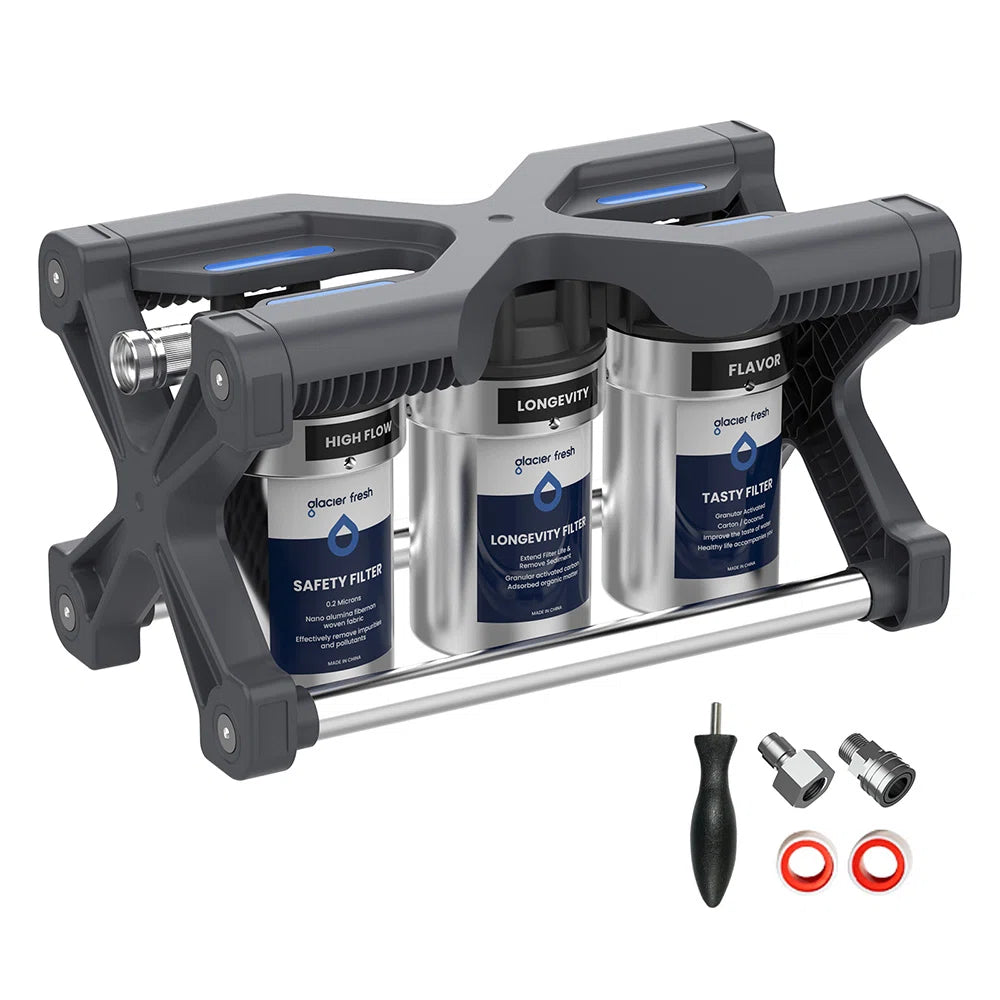
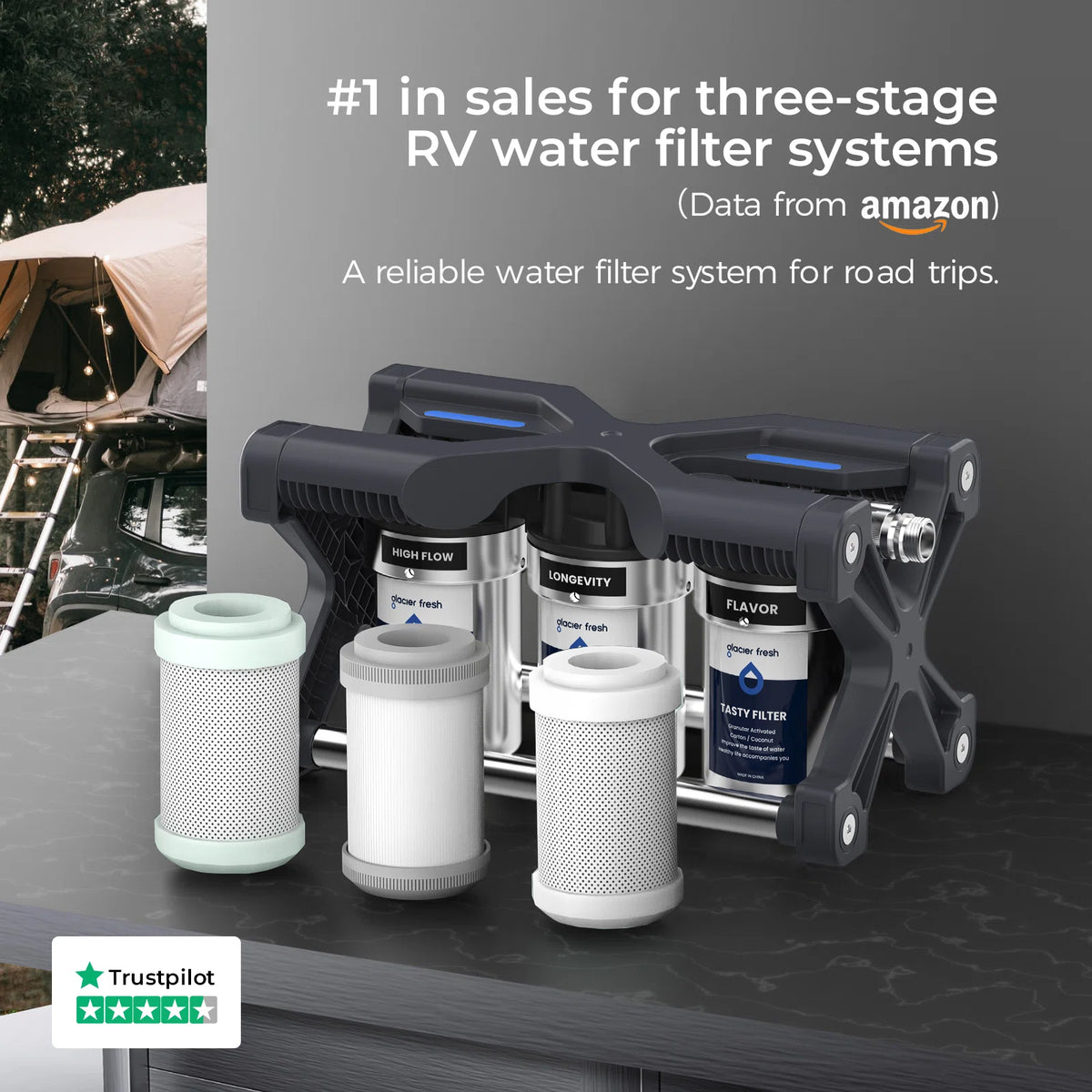
A portable option like the GlacierFresh RV Reverse Osmosis System provides 4-stage filtration and can produce 12 fl oz of purified water in about a minute, which makes it suitable for travel or flexible use at home.
Whole-House (Point-of-Entry) Filtration Systems
Whole-house systems treat water at the point it enters your home.
They protect:
-
Showers and bath water
-
Appliances like dishwashers and water heaters
-
Washing machines
These systems typically use carbon filtration, sediment filters, or water softening. While they improve overall water quality, they do not always remove microscopic contaminants like PFAS or dissolved solids as effectively as RO systems.
For this reason, many households pair a whole-house system with a dedicated drinking water solution.
Under-Sink Water Filtration Systems
Under-sink systems connect directly to a dedicated faucet and are a common upgrade from basic filters.
They typically use carbon or multi-stage filtration to remove chlorine, heavy metals, and sediment.
They offer stronger performance than pitchers while remaining relatively easy to install.
Systems like the GlacierFresh U03 Undersink Reverse Osmosis System combine multi-stage filtration with high output, producing up to 800 gallons per day and carrying NSF/ANSI 58 certification.
Countertop Water Filtration Systems

Countertop systems sit on your kitchen surface and connect to a faucet or operate through gravity.
They’re known for:
-
No permanent installation
-
Portability
-
Larger capacity than pitchers
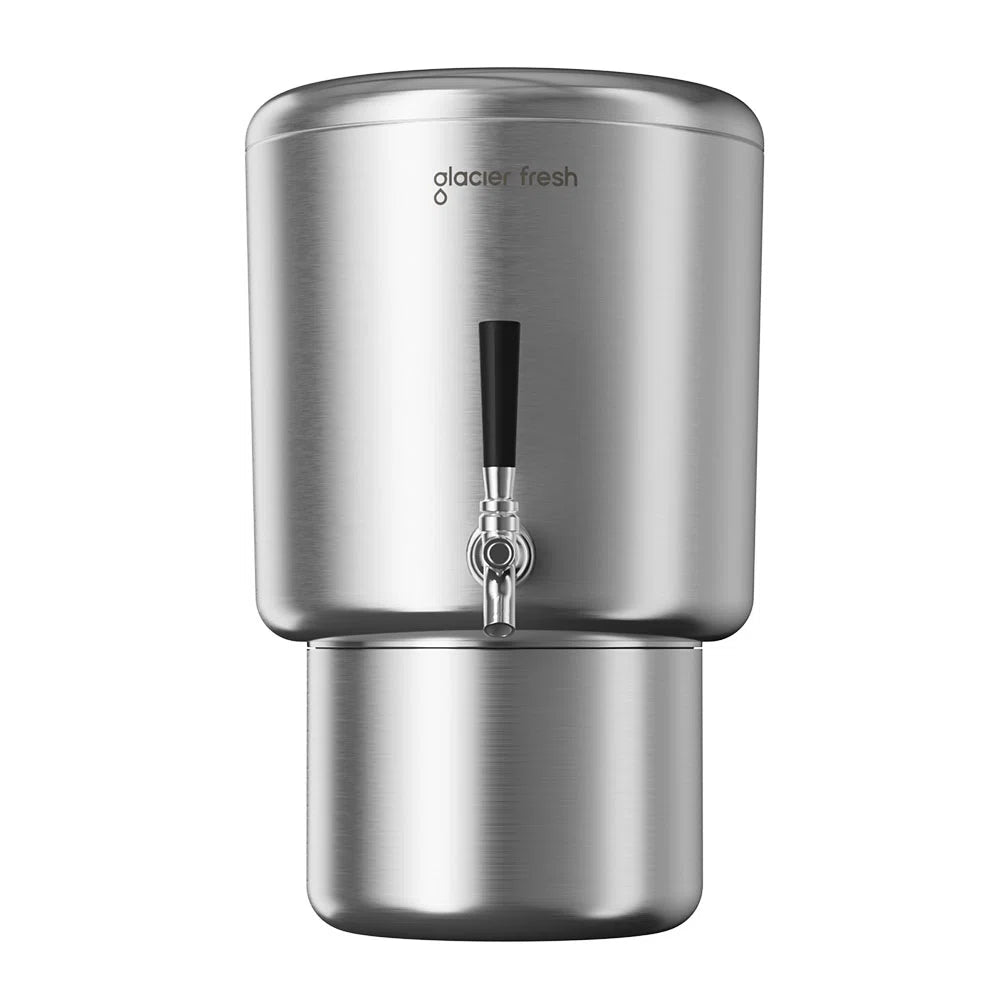
The GlacierFresh PC04 System uses a stainless steel design and nanofiber filtration to reduce lead, PFAS, chlorine, and microplastics.
Countertop Water Purifiers With Cooling or Dispensing
These systems combine filtration with convenience features like chilled water or instant dispensing.
They typically use nanofiltration or carbon filtration and plug into a power source.
They’re a practical fit for apartments, offices, or smaller kitchens.
The GlacierFresh Coolon Cold Water Dispenser includes nanofiber filtration, instant cooling, and tool-free filter replacement, which simplifies maintenance.
Water Filter Pitchers
Pitchers remain one of the most accessible types of water purifiers home users consider.
They use activated carbon or ion exchange filters to reduce chlorine, odor, and some heavy metals.
They’re best suited for smaller households or lighter usage.
The Purela P01 Glass Water Pitcher uses dual-stage membrane and carbon filtration and is NSF 42 certified, helping improve taste and reduce basic contaminants.
Refrigerator Water Filters
Refrigerator filters are built into many modern appliances and use activated carbon filtration.
They’re designed to improve taste and reduce chlorine, sediment, and some heavy metals. The EPA recommends choosing filters with verified certifications, especially for PFAS reduction, when selecting point-of-use systems.
They’re convenient, but they are typically used alongside more advanced filtration for broader contaminant removal.
Best Home Water Filtration by Household Need: Factors to Compare Water Filters
Choosing the best home water filtration system starts with understanding a few practical factors.
Contaminants in Your Water
Start by identifying what you want to remove. This could include lead, chlorine, PFAS, microplastics, sediment, or bacteria.
Checking local water reports or testing your tap water gives you a clearer baseline. Reverse osmosis systems tend to cover the widest range of contaminants.
Filtration Technology
Different technologies serve different purposes:
-
Activated carbon improves taste and reduces chlorine
-
Reverse osmosis removes heavy metals, PFAS, and dissolved contaminants
-
Nanofiltration reduces pollutants while retaining some minerals
-
Sediment filters capture particles like rust and sand
Installation Type
Point-of-use systems treat water at a single tap, while whole-house systems treat all incoming water.
Countertop systems and pitchers are easier to install and move, which can be useful for renters or smaller spaces.
Capacity and Flow Rate
Pitchers are better for smaller households. Countertop systems offer more storage, while high-output RO systems can produce large volumes quickly.
Maintenance and Filter Replacement
Every system requires ongoing maintenance.
Check how often filters need to be replaced and how easy that process is. Some systems require more frequent changes than others.
Certification and Testing
Look for certifications like NSF/ANSI standards or third-party testing.
These help verify that the system performs as claimed, especially for contaminants like PFAS.
Budget and Convenience
Budget plays a role, but so does daily convenience.
Pitchers are affordable but limited. Countertop and under-sink systems offer a balance of performance and usability.
House Water Filtration System Reviews: What Homeowners Commonly Say
Insights on water purification systems for home setups tend to focus on performance and ease of use.
Reverse osmosis systems are often praised for clean taste and broad contaminant removal. Some users mention installation complexity or the space required under the sink.
Countertop filters are valued for portability and simple setup. Gravity systems are appreciated for capacity, though filtration speed can be slower.
Meanwhile, under-sink systems are often seen as a middle ground between performance and convenience. Users like the hidden installation and dedicated faucet.
Pitchers are known to be easy to use and budget-friendly, though they don’t remove as many contaminants as other systems. On the other hand, countertop dispensers are often chosen for convenience features like chilled or instant water, especially in apartments and offices.
FAQs
What is the best drinking water system for home use?
Reverse osmosis systems are often considered the most effective for drinking water because they remove a wide range of contaminants, including heavy metals, PFAS, and microplastics, while improving taste.
What is the most recommended water purifier for households?
Under-sink and reverse osmosis systems are commonly recommended for households since they balance strong filtration with convenience and provide consistent access to filtered drinking water.
What are the best filters for water in a home filtration system?
The best filters depend on your needs, but activated carbon, reverse osmosis membranes, and nanofiltration systems are widely used for reducing contaminants and improving water quality.
What are the disadvantages of a whole house water filter?
Whole-house systems may not remove dissolved contaminants like PFAS or heavy metals as effectively as reverse osmosis systems and can require higher upfront installation costs.
Do I really need a reverse osmosis system with well water?
If your well water contains heavy metals, bacteria, or high dissolved solids, a reverse osmosis system can provide more thorough filtration compared to basic filters.
Conclusion
The most effective choice depends on your water quality, the contaminants you want to remove, how much water you use, and how you prefer to install and maintain your system.
GlacierFresh offers a range of filtration options, from portable reverse osmosis units to countertop systems and pitchers, giving households flexibility to choose what fits their setup.