


Table of Contents:
Why Knowing Your Countertop Water Filter Lifespan Matters?
Average Lifespan of Countertop Water Filters
How to Choose a Countertop Filter by Water Quality, Budget, and Use
Signs Your Countertop Water Filter Needs Replacement
Recommended Replacement Filter Systems
Tips to Extend the Life of Your Countertop Water Filter
FAQs
Conclusion
Why Knowing Your Countertop Water Filter Lifespan Matters?
 A countertop filter is only reliable when the cartridge, membrane, or bulb is still working within its rated capacity. As filters age, pores can clog, carbon can become exhausted, and trapped contaminants may reduce flow or affect taste. Replacing the water filter on time is especially important for homes using well water, high-sediment municipal water, or water with noticeable chlorine, odor, or mineral content.
For practical planning, treat the manufacturer’s rated gallons as the starting point rather than a fixed promise. A two-person household with clear municipal water may reach the expected service life, while a larger household or a home with hard water, rust, or sediment may need earlier replacement. This is the difference between a rated lifespan and real-world performance.
Average Lifespan of Countertop Water Filters
The life span of a countertop water filter depends mainly on filtration technology, water quality, and daily use. Most systems range from 2 months to 2 years, while selected membranes or bulbs may last longer. The table below converts the original lifespan chart into an editable format and adds practical selection notes.
| Filter Type | Typical Lifespan | What It Filters | Best For |
| Activated carbon | 2–6 months | Chlorine, VOCs, taste and odor | Apartments, city water, taste improvement |
| Reverse osmosis | RO membrane: 1–3 years; pre/post filters: 6–12 months | Heavy metals, fluoride, dissolved solids | Homes needing broad contaminant reduction |
| Ceramic | 6–12 months | Bacteria, cysts, sediment, microplastics | Gravity-fed systems and emergency use |
| UV light | 12–24 months for bulb | Viruses and bacteria | Microbial control when water is visually clear |
High-capacity systems with larger cartridges often last longer than compact portable models. However, RO systems can also involve trade-offs such as slower filtration, wastewater, and mineral reduction. Understanding these drawbacks before installing a system can help you choose a filter that fits your needs rather than buying only for the longest rated life.
How to Choose a Countertop Filter by Water Quality, Budget, and Use
A good countertop filter choice starts with the water, not the product page. Check whether your local water has chlorine taste, fluoride, lead risk from old plumbing, well-water sediment, or high mineral content. Then match the system to the contaminant, the household size, and the ongoing cartridge cost.
| Situation | Best Fit | Why It Works | Watch Out For |
| City water, chlorine taste, low sediment | Activated carbon or nanofiber countertop filter | Improves taste and reduces common tap-water contaminants with simple upkeep | Replace earlier if flow slows or odor returns |
| Fluoride, TDS, heavy metals, or broader concerns | Countertop or under-sink RO system | Offers deeper reduction for dissolved contaminants | Needs pre-filter care and may reduce minerals |
| Well water, sediment, cyst concerns | Gravity ceramic/nanofiber system plus pre-sediment control | Handles particles and some microbial concerns without electricity | Test water for bacteria, nitrates, arsenic, or PFAS |
| Hard water or scale on kettle and faucet | Softening solution plus suitable drinking filter | Reduces scale stress on appliances and may protect filter flow | A drinking filter alone may not soften water |
Regional water quality matters. Western and Southwestern states often deal with harder water and higher dissolved minerals, some municipal systems add fluoride or chloramine, and private wells can vary sharply by location. If you see scale buildup, test hardness and TDS; if you use well water, consider professional testing for bacteria, nitrates, arsenic, and heavy metals before choosing a replacement schedule.
Simple lifespan estimate: divide the filter’s rated gallons by your household’s daily drinking and cooking water use, then reduce the result by 20-30% if your water has visible sediment, high hardness, or strong chlorine odor. For example, a 200-gallon filter used at 2 gallons per day may last about 100 days under average conditions, but closer to 70-80 days with heavy sediment or hard water.
Signs Your Countertop Water Filter Needs Replacement
Filter failure is usually gradual. Pay attention to changes in flow, taste, smell, and system behavior instead of waiting for the cartridge to look dirty. These signs are useful whether you use carbon, RO, ceramic, nanofiber, or UV-based filtration.
- Decreased water flow or slow filtration
- Odd taste or smell in water
- Visible sediment or discoloration
- Filter indicator shows the end of the rated lifespan
- System drips, leaks, or does not seal properly
- Water quality test strips show rising TDS, chlorine, hardness, or other target contaminants
Delaying replacement can reduce contaminant removal and may allow trapped debris to affect taste or odor. In a lifetime water filter claim, read the fine print carefully: the housing may be long-lasting, but cartridges, membranes, bulbs, or seals still need scheduled replacement.
Recommended Replacement Filter Systems
The following countertop systems are suitable for daily drinking water, office use, or portable setups. Compare capacity, filter technology, and replacement needs before choosing one.
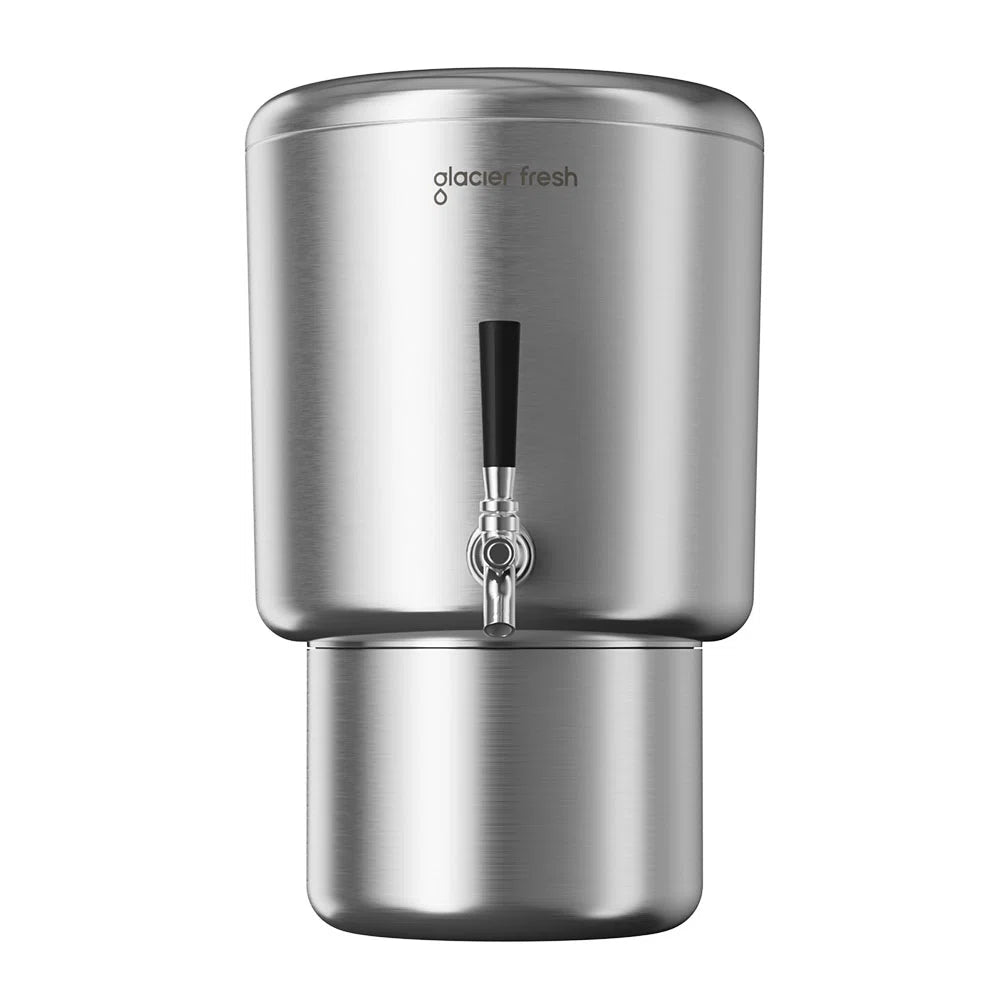
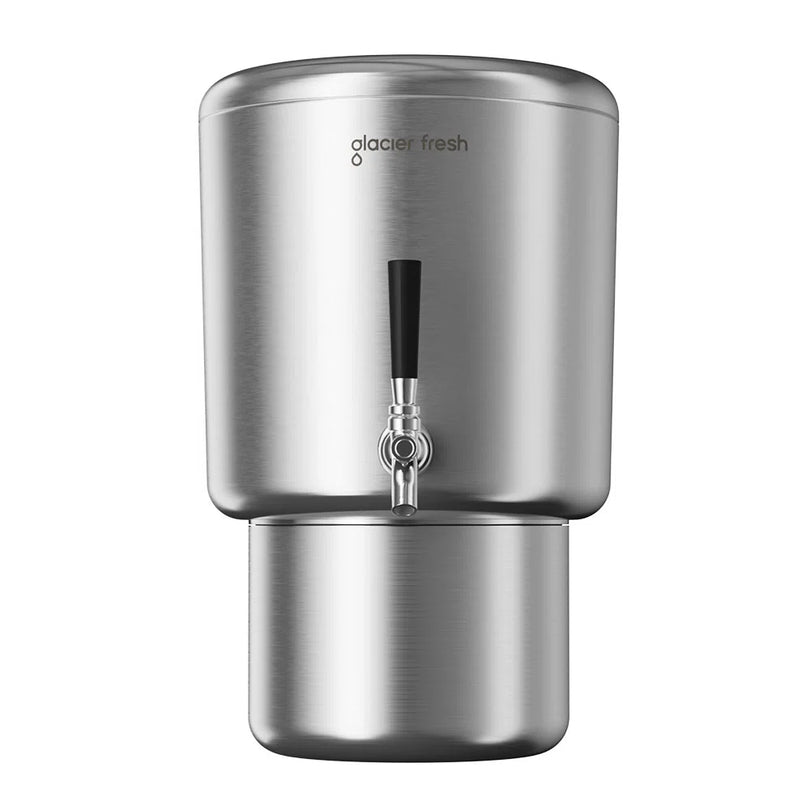
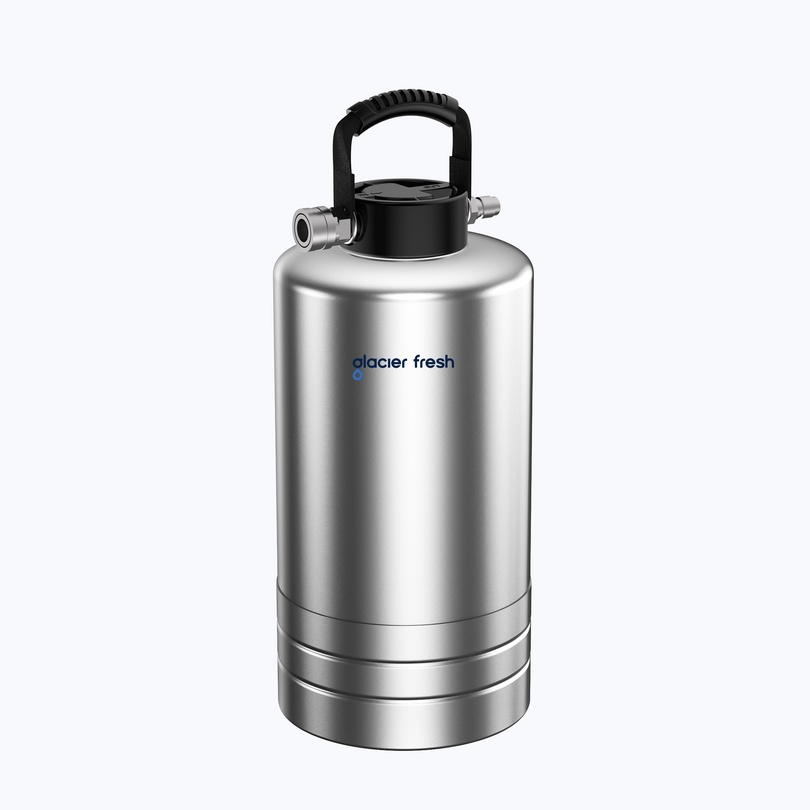
1. Glacier Fresh 3G Countertop Water Filter System
 The Glacier Fresh 3G Counter-top Water filter system is a gravity-fed purifier for homes, offices, and spaces where users want clean water without complex installation or power. Made with 304 stainless steel, it offers a 3-gallon capacity per hour and uses a nanofiber filtration membrane designed to trap more than 99.9 percent of microorganisms.
- No electricity needed; gravity-fed operation
- 3-gallon capacity per hour
- Captures 99.9% microorganisms
- Works with tap, municipal, or well water
- Certified safe: FCC-SDOC, FDA, NSF, SGS
- Smart filter lifespan timer
- 200 gallons or 3 months rated lifespan
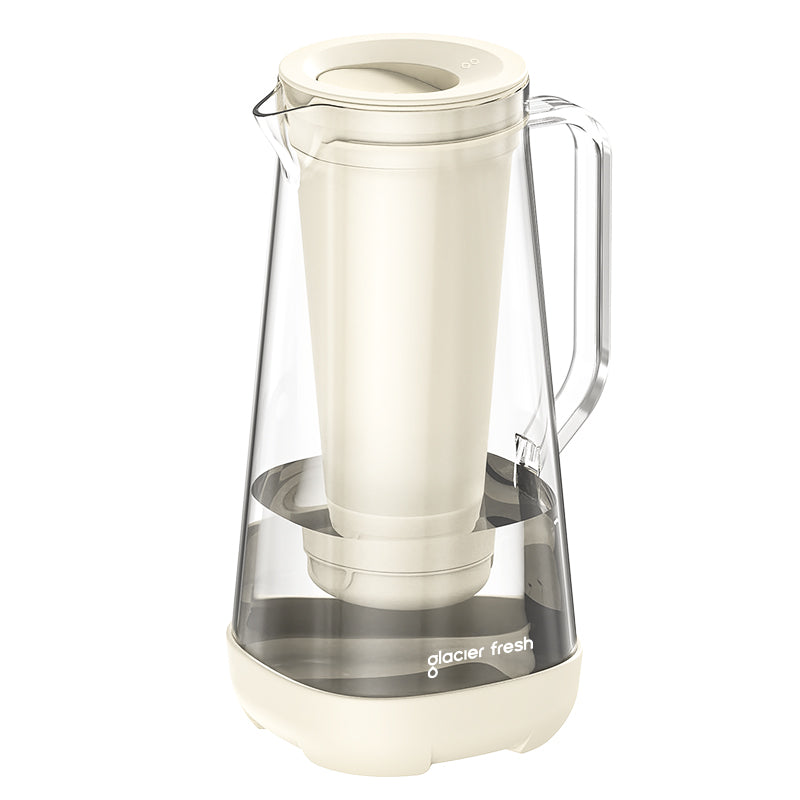
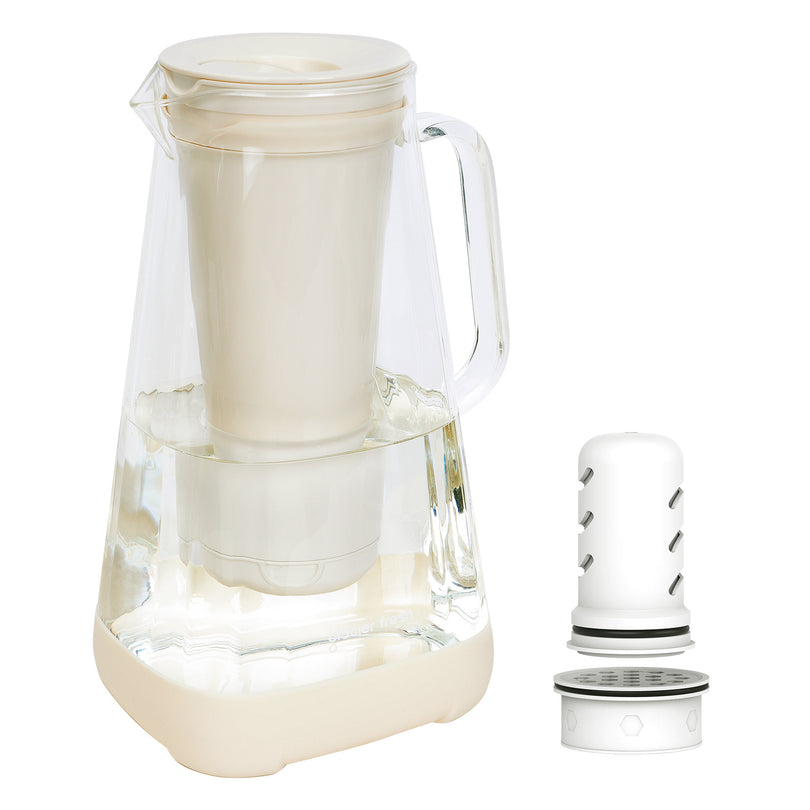
2. Glacier Fresh 2.25G Gravity-Fed Water Filter System

The GlacierFresh 2.25G Water Filter is portable and made with 304 stainless steel. Its three-stage filtration uses coconut-based activated carbon to reduce taste, odor, chlorine, sediment, heavy metals, fluoride, rust, and cysts of spores.
- Removes up to 200 contaminants
- Improves water flavor
- Gravity-fed operation
- Fast flow rate: 4 gallons per hour
- Three-step filtration helps reduce fluoride and chlorine
- Leak-proof design
- Portable for indoor and outdoor use
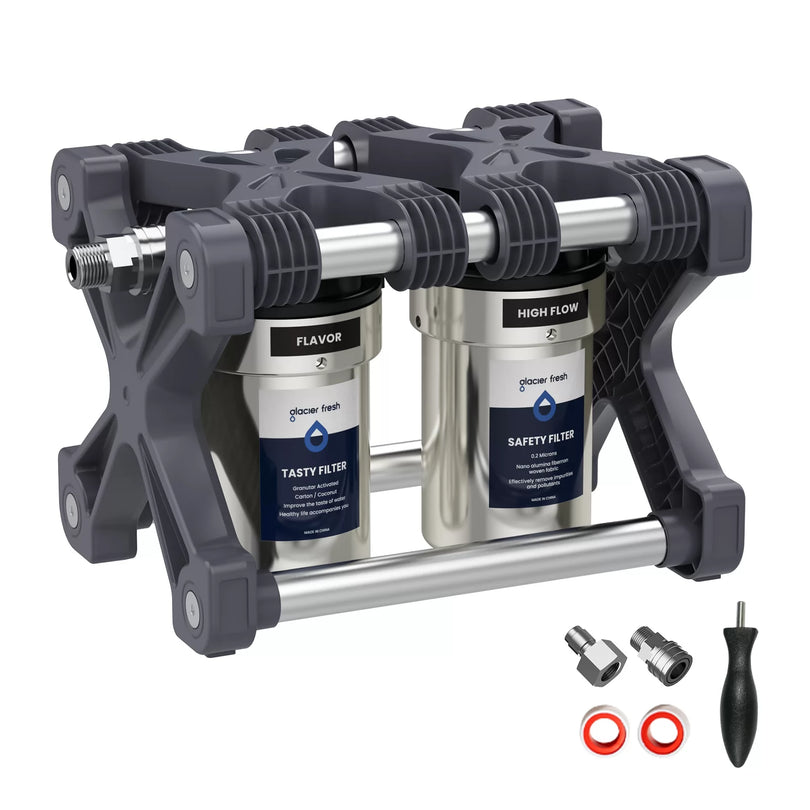
3. Glacier Fresh Gravity-fed Water Filter System

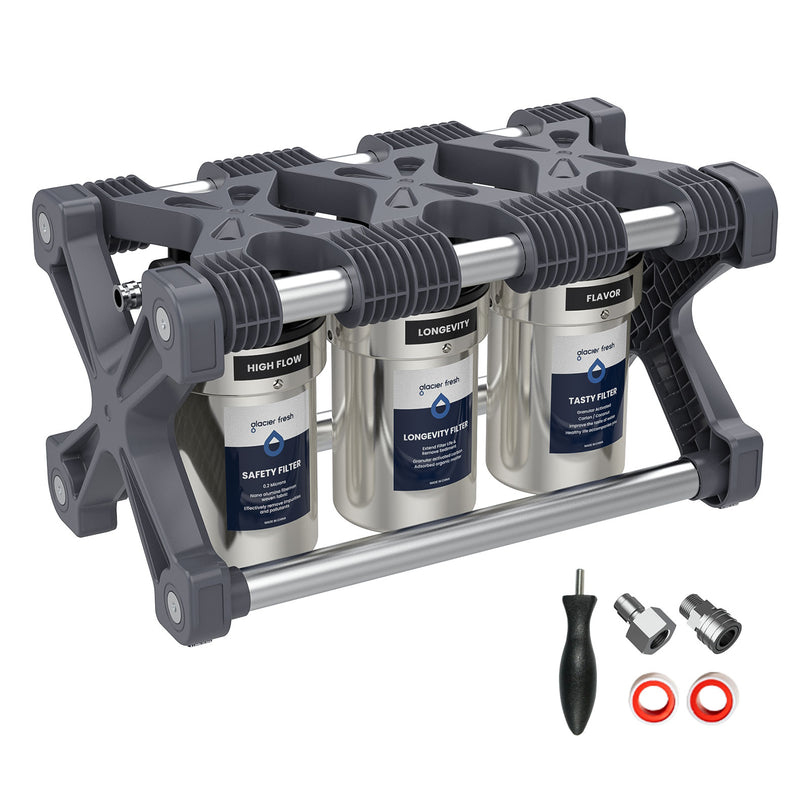
The Glacier Fresh Gravity-fed Water Filter System is built with polished 304 stainless steel and a visible water level spigot. Its multi-filter configuration supports longer service life and helps reduce chlorine, heavy metals, rust, sediment, pesticides, pharmaceuticals, and VOCs. Activated carbon filters can last up to 3,000 gallons, while fluorine filters last up to 1,000 gallons.
- 3-gallon high-capacity filtration
- Multiple filters for a broad range of impurities
- Durable stainless steel structure
- Leak-resistant flat surface design
- Metal spigot with real-time water level view
- Simple installation and electricity-free use
Tips to Extend the Life of Your Countertop Water Filter
Maintenance is the easiest way to protect performance and avoid unpleasant taste, leaks, or premature clogging. Keep the system clean, avoid overloading the filter, and record replacement dates on the unit or in a phone reminder.
- Every new cartridge: flush according to the manual before drinking; carbon dust or trapped air can affect first-use taste.
- Weekly: check flow rate, spigot tightness, lid fit, and any odor change.
- Monthly: clean the tank and wipe stainless steel surfaces with a soft cloth; avoid detergents on membranes.
- Every 3-12 months: replace cartridges based on rated gallons, water test results, and use level.
- Long storage: empty the tank, dry parts fully, and store in a cool, dry place away from direct sun.
- Cost planning: set aside budget for cartridges, seals, and specialty filters such as fluoride or RO pre/post filters.
Avoid using visibly muddy water unless the system is designed for it. When using reverse osmosis systems, many users also ask whether RO water is safe and healthy to drink. RO water is generally safe, but it can reduce minerals such as calcium and magnesium, so filter choice should reflect both contaminant concerns and taste preferences.
FAQs
How often should I replace my countertop water filter?
Most countertop filters need replacement every 3-12 months, but the correct timing depends on rated gallons, household usage, and water quality. Test strips, flow changes, odor, or taste changes can help confirm whether replacement is needed earlier.
How can I test water quality to determine filter replacement needs?
At home, use chlorine, hardness, pH, TDS, and lead test strips for quick screening. For well water, suspected heavy metals, bacteria, PFAS, or nitrate, use a certified laboratory because basic strips cannot measure every health-related contaminant accurately.
What are the risks of delaying filter replacement beyond the recommended lifespan?
An overdue filter may clog, slow the flow, reduce contaminant removal, create odor or taste problems, and stress seals or housings. In high-sediment or hard-water areas, delaying replacement can shorten the usable life of the system.
How do hard water and mineral content affect filter performance and lifespan?
Hard water can leave scale on tanks, spigots, and internal surfaces. It may also reduce flow and make some cartridges work harder. If you see white scale or dry skin and hair, test hardness and consider a softening or shower-filter solution in addition to a drinking-water filter.
Can countertop water filters be recycled, and how should used cartridges be disposed of?
Some housings and stainless steel parts can last for years, but used cartridges depend on local recycling rules and the materials inside. Check the manufacturer’s guidance, drain cartridges fully, and avoid reusing exhausted media for drinking water.
Conclusion
What is the lifespan of a countertop water filter? The practical answer depends on filter type, local water quality, daily usage, and maintenance. Use the rated lifespan as a baseline, then adjust for sediment, hard water, odor, taste changes, or slower flow. With the right system, regular cleaning, and timely cartridge replacement, a countertop filter can provide cleaner drinking water while keeping costs predictable.
Related Reading
- Reverse Osmosis, Nanofiber, Ultrafiltration: Which One Is Right for You?
- Multi-Stage Water Filters
- The Health Benefits of Drinking Chilled Filtered Water