
Table of Contents:
Why Lead in Water Remains a Public Health Concern
Lead in US Drinking Water Regulations Explained
EPA Lead Action Level Explained
What Are the Legal Limits for Lead in Drinking Water?
Federal vs State Lead Drinking Water Regulations
States With Stricter Lead Drinking Water Standards
Signs of Lead in Water
How to Test for Lead in Water
What Homeowners Can Do to Reduce Lead in Water
FAQs
Conclusion
If you live in an older home or a city with aging infrastructure, lead in water has probably crossed your mind. Even when your utility meets federal standards, that doesn’t automatically mean the water at your sink is lead-free.
If you care about your family’s long-term health, it helps to understand how regulations actually work and what you can control inside your own home.
Why Lead in Water Remains a Public Health Concern

Lead usually enters drinking water after it leaves the treatment plant. By the time it reaches your tap, it may have moved through materials that contain lead.
Common sources include:
-
Lead service lines connecting homes to municipal mains
-
Older faucets, valves, and solder that contain lead
-
Corrosion inside aging pipes that allows lead to leach into water
If your home was built before the mid-1980s, some of these materials may still be in place. When water sits in pipes for several hours, small amounts of lead can dissolve into it.
Long-term exposure has been linked to developmental delays in children, reduced IQ, behavioral changes, and cardiovascular and kidney problems in adults. Children and pregnant women are especially vulnerable. Even low levels can build up over time.
Lead in US Drinking Water Regulations Explained

Drinking water rules in the United States are enforced by the U.S. Environmental Protection Agency (EPA).
One of the main frameworks governing lead in water is the Lead and Copper Rule (LCR). Instead of setting a strict limit at every tap, the rule focuses on system-wide monitoring and corrosion control.
Water systems test samples from higher-risk homes, usually those with older plumbing. If more than 10% of sampled homes exceed the action level, utilities must take corrective steps.
Compliance is measured at the system level. Your utility can meet federal requirements while your home still has elevated lead because of your own pipes.
EPA Lead Action Level Explained
The EPA currently uses an action level of 15 parts per billion (ppb) to determine when a system must respond.
The 15 ppb figure is not a safety guarantee. It’s a regulatory trigger that requires utilities to respond when system-wide sampling crosses the threshold. Required actions can include expanded testing, corrosion control adjustments, pipe replacement efforts, and public notification.
Because only a portion of homes are sampled, individual properties with higher lead levels can go undetected in routine testing.
What Are the Legal Limits for Lead in Drinking Water?
Federal policy is based on the position that there is no safe level of lead exposure. The Maximum Contaminant Level Goal (MCLG) for lead is set at zero.
Enforcement, however, relies on the 15 ppb action level rather than a strict maximum limit at each tap.
In practical terms:
-
The MCLG of zero represents the health goal.
-
The action level is the enforcement benchmark that triggers required system responses.
That gap between the health target and the regulatory threshold is one reason confusion persists.
Federal vs State Lead Drinking Water Regulations
States implement and enforce federal drinking water laws, and they may adopt stricter requirements if they choose.
While the EPA sets baseline rules, states can lower action levels, require more frequent testing, mandate faster lead service line replacement, or impose stronger public notification requirements. Some states have moved ahead of federal timelines, particularly after high-profile water crises brought national attention to the issue.
Differences may also appear in how states fund replacement programs, whether they require full removal of both public and privately owned portions of lead service lines, and how quickly they require utilities to act once elevated levels are detected.
States With Stricter Lead Drinking Water Standards
There is no official nationwide ranking that determines which states have the strictest regulations. Policy strength is typically evaluated based on action levels, replacement timelines, and enforcement mechanisms.
However, some states are frequently cited for adopting stronger measures:
-
Michigan lowered its action level to 12 ppb, below the previous federal 15 ppb benchmark. The state also requires full lead service line replacement, with phased deadlines extending through 2041.
-
New Jersey enacted a 2021 law requiring all community water systems to identify and replace lead service lines, including customer-owned sections, by 2031. This timeline moves faster than the upcoming federal replacement schedule that begins in 2027.
-
Illinois mandates full replacement of lead service lines and connected galvanized lines, with timelines that vary based on system size.
Signs of Lead in Water

Lead in tap water is typically invisible, odorless, and tasteless. You cannot confirm contamination by sight or smell alone.
Indirect warning signs may include:
-
A home built before 1986 with original plumbing
-
Known lead service lines in the neighborhood
-
Elevated results in local water quality reports
Because signs of lead in water are not usually detectable through the senses, testing is the only reliable way to confirm levels.
How to Test for Lead in Water
Public water systems publish annual Consumer Confidence Reports (CCR) that summarize monitoring data. These reports provide system-level information but may not reflect conditions inside your home.
If you want to know how to test for lead in water, you can:
-
Request certified laboratory testing through a state-approved lab
-
Use an EPA-recognized home sampling kit
-
Follow first-draw sampling instructions to capture water that has been sitting in pipes for at least six hours
Accurate sampling is important. Improper collection can underestimate lead levels. In higher-risk homes, professional testing may be worth the added cost.
What Homeowners Can Do to Reduce Lead in Water
If you’re concerned about exposure, you can take these steps:
-
Flush taps for several minutes after water has been sitting overnight or while you were away.
-
Replace older faucets or valves that may contain lead components.
-
Use a filtration system certified for lead reduction. Many common carbon filters mainly improve taste and odor and may reduce certain heavy metals, but they do not remove germs.
-
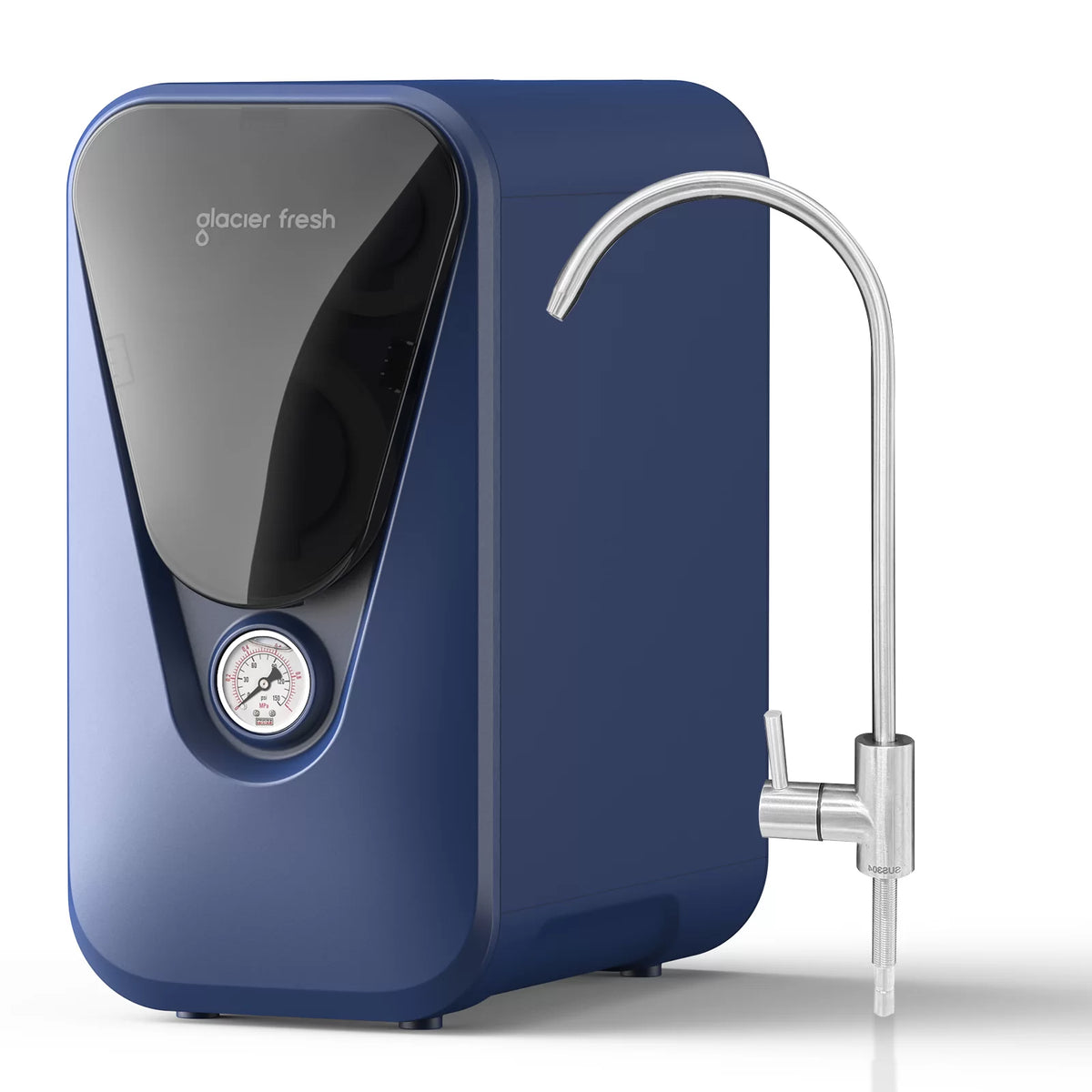
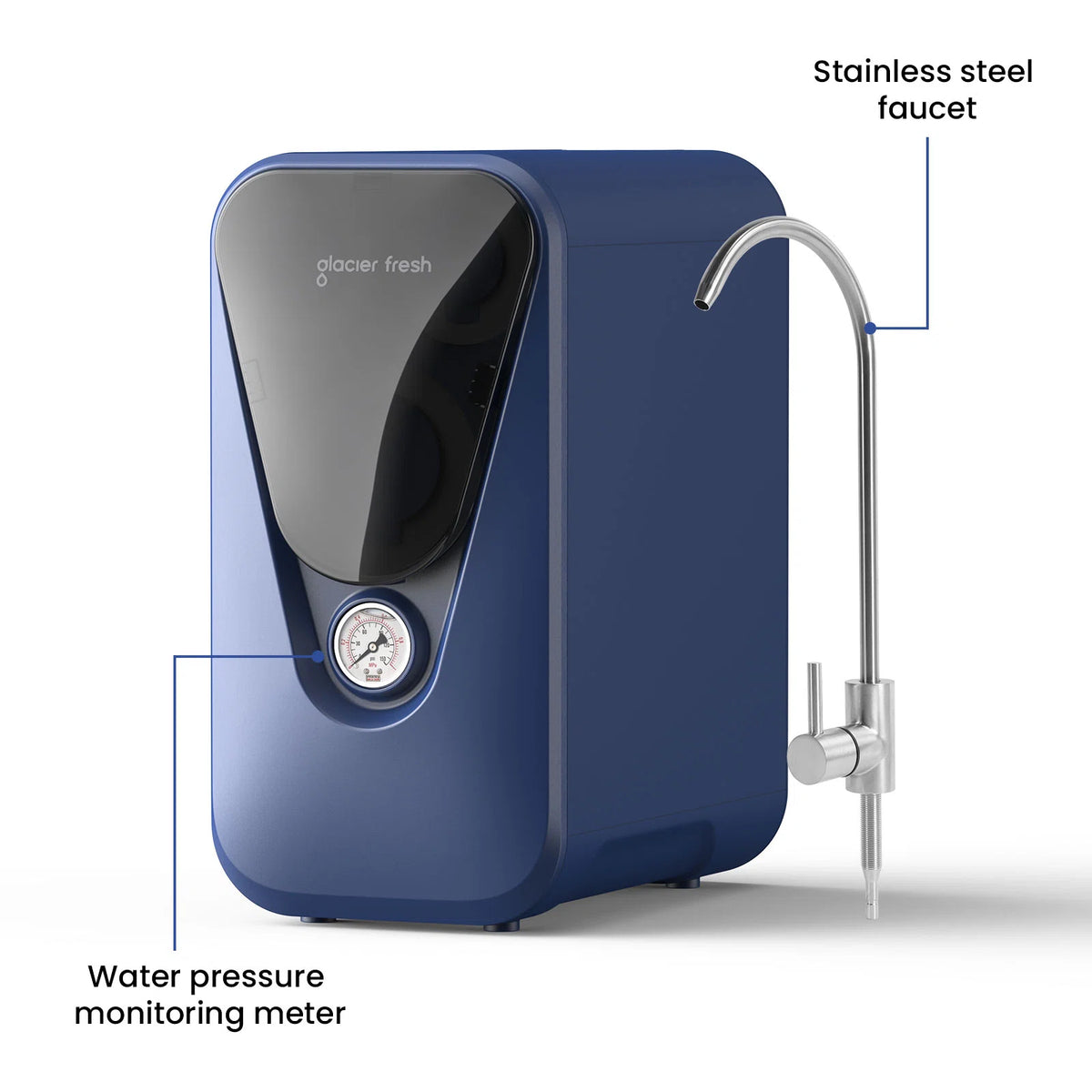
Consider reverse osmosis for broader contaminant reduction. It can reduce dissolved chemicals such as lead and copper and may also lower arsenic, fluoride, radium, sulfate, and calcium, depending on the system. A tankinside option like the GlacierFresh U03 is built for daily drinking and cooking use.
-
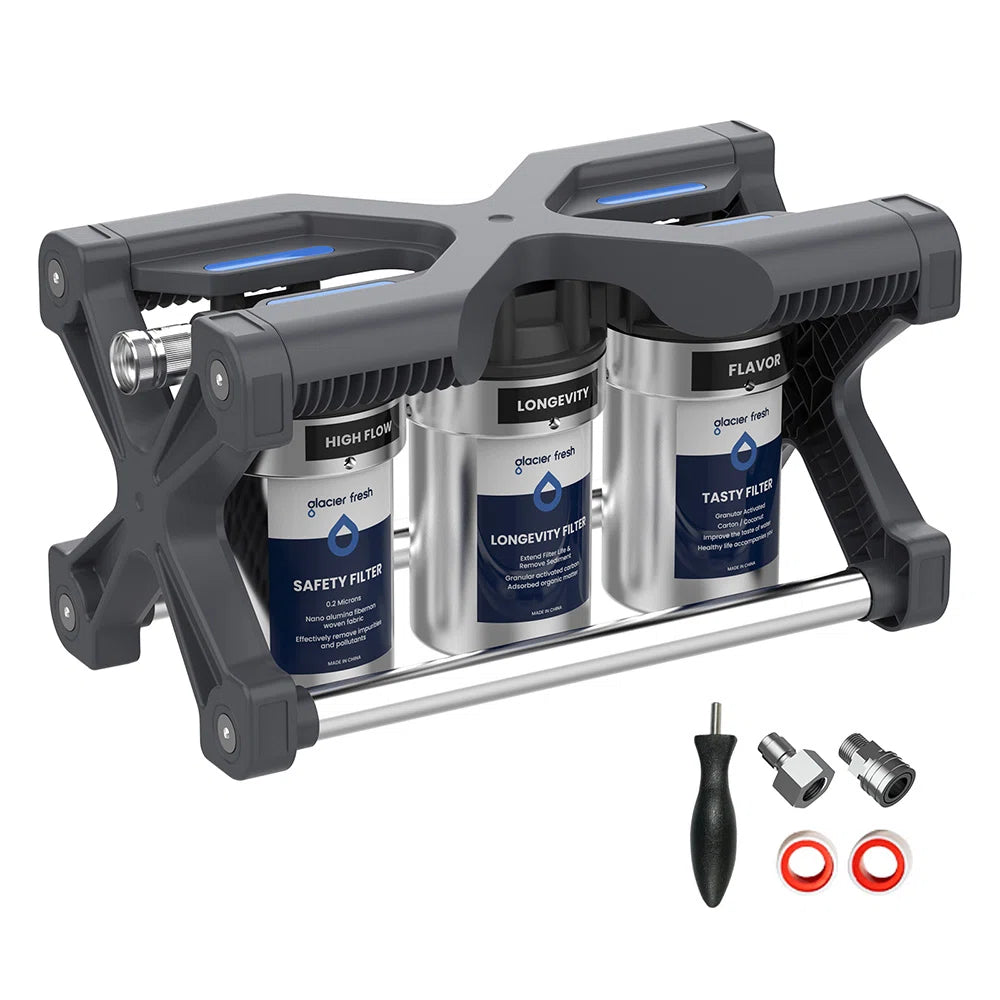
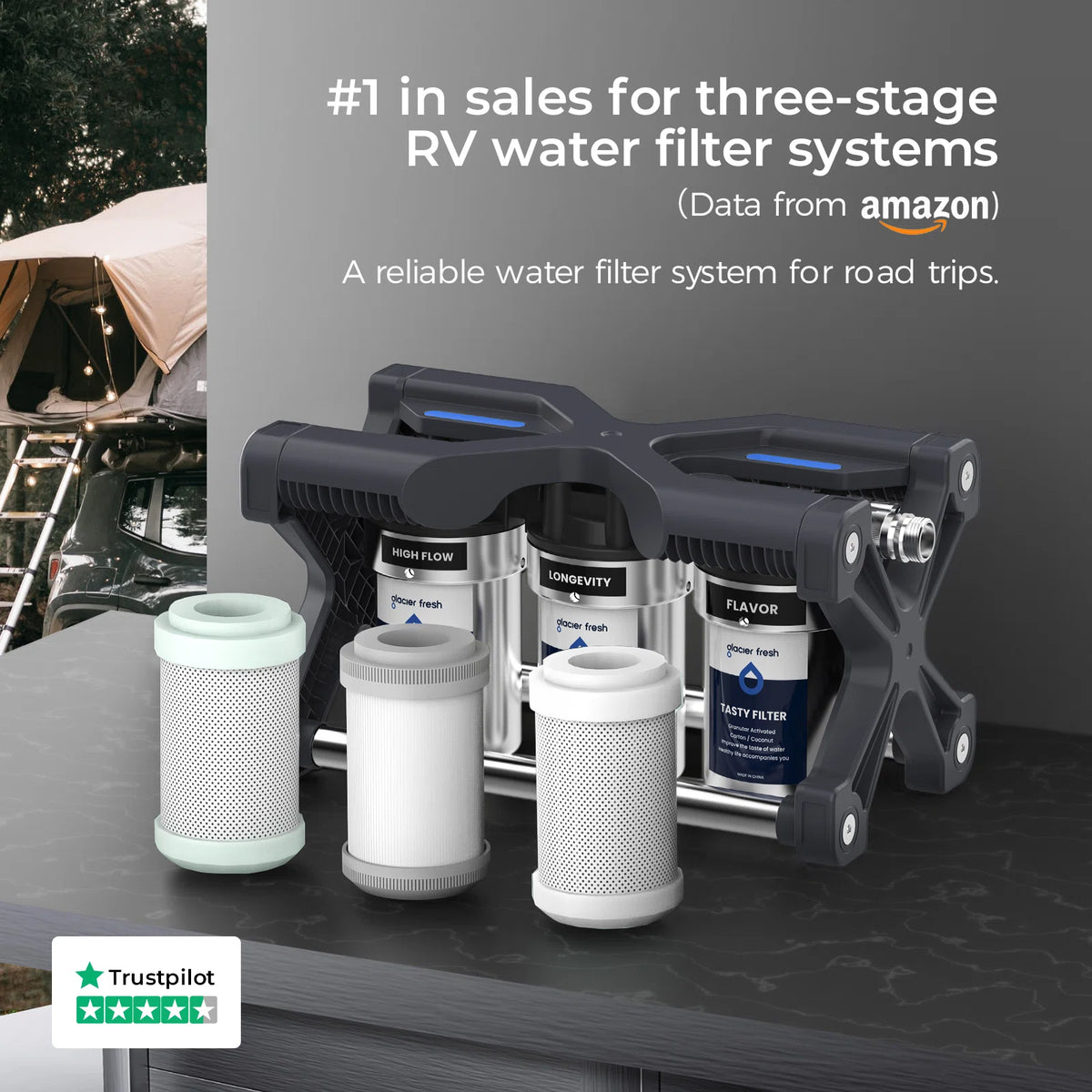
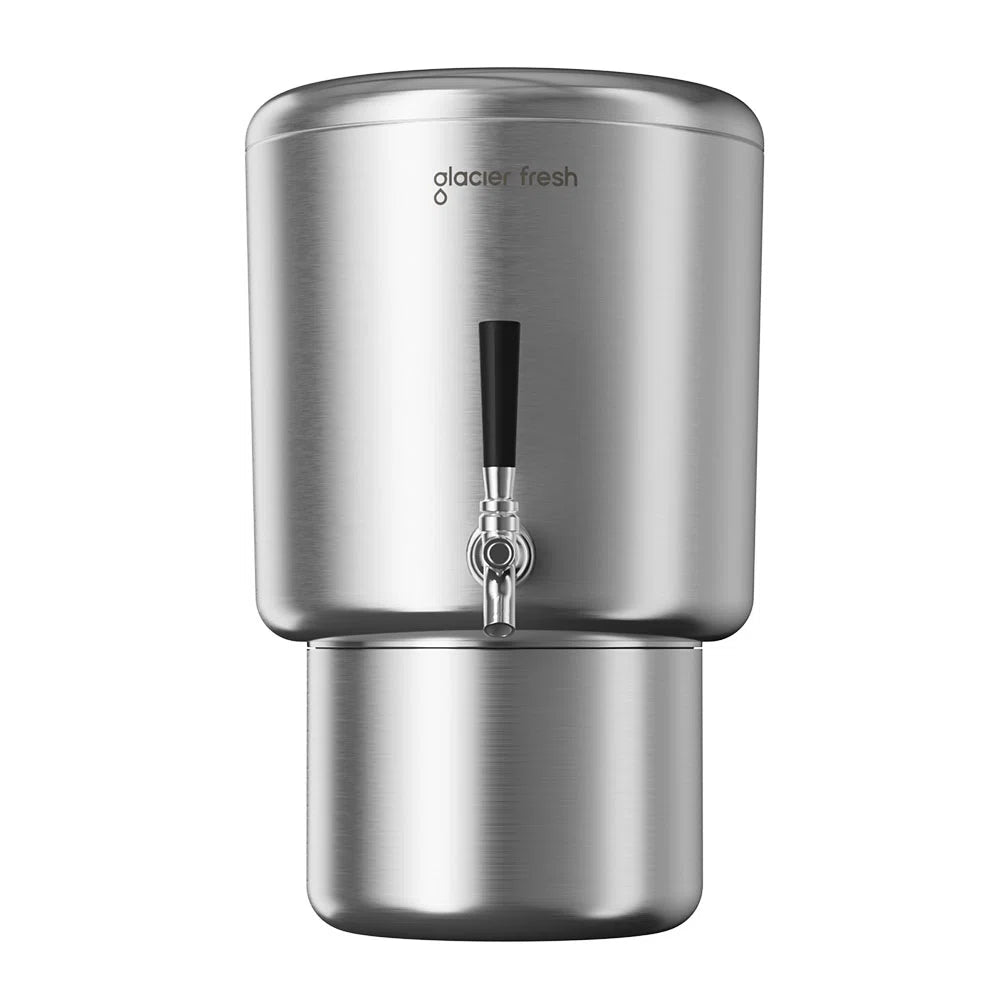
For backup use, off-grid situations, or added redundancy, a gravity system such as the GlacierFresh Gravity-Fed Water Filter System provides multi-stage filtration without electricity and can serve as a secondary drinking water source.
-
Explore full lead service line replacement when financially feasible.
FAQs
1. What happens if lead is found in water?
If elevated lead levels are detected, public water systems must implement corrective actions when results exceed the regulatory action level. At the household level, you may need to use certified filtration, flush pipes, or consider plumbing replacement.
2. Is it safe to drink water from lead pipes?
Water that travels through lead pipes can dissolve small amounts of lead, especially when it sits in plumbing for hours. Because there is no safe level of exposure, mitigation steps are recommended if lead pipes are present.
3. Is lead removed by boiling water?
Boiling water does not remove lead. In fact, evaporation can concentrate dissolved metals, potentially increasing lead levels. If lead contamination is a concern, certified filtration systems designed for metal reduction are more effective than heat-based treatment.
4. What is one of the earliest symptoms of lead exposure?
In children, early symptoms may include irritability, developmental delays, and learning difficulties. Adults may experience high blood pressure or kidney strain after prolonged exposure.
5. What is the acceptable limit for lead in water?
The EPA’s health goal for lead is zero. For regulatory purposes, the current action level used for compliance monitoring is 15 ppb, which triggers required system responses rather than defining a safe threshold.
Conclusion
Federal regulations address lead exposure at the system level. Your household plumbing still influences what you drink.
When you understand action levels, state standards, and testing options, you’re in a stronger position to protect your home. For families who want added control, Glacier Fresh filtration systems provide practical options designed to reduce contaminants such as lead.