
Table of Contents:
Oklahoma Water Quality: A State-Level Picture
Tulsa Tap Water Quality: What's In It in 2026
Oklahoma City Tap Water Quality: What's In It in 2026
Soft or Hard Water in My Area: How Oklahoma's Water Differences Affect Purifier Choice
What Factors Affect Water Filtration System Performance at Home?
Best Home Water Filtration Systems Available Today: What Works for Oklahoma Homes
How to Choose the Best Water Purification System for My Home in Tulsa or Oklahoma City?
FAQs
Conclusion
There's a chalky ring on the coffee maker, the evening tap water has a faint chemical edge, and when the kids ask for a glass you pause for half a second: Is the water quality in my area actually safe to drink? If you live in Tulsa or Oklahoma City, you've probably had that moment.
Here's the wrinkle. Both cities consistently meet every federal and state drinking water standard, yet independent analyses flag dozens of contaminants above EPA health guidelines. Plenty of homeowners start by searching “tap water quality near me,” and the honest answer is that legal and optimal aren't the same thing here.
Oklahoma Water Quality: A State-Level Picture
 Oklahoma water quality is a story of compliance with caveats. The state runs more than 500 community water systems serving roughly 3.6 million residents, and the contaminants reported most often are disinfection byproducts, nitrates, and arsenic. About a quarter of Oklahomans rely on private wells, which, unlike public systems, aren't regulated or monitored by any state or federal agency.
Hard water is close to universal: Oklahoma City runs around 154 ppm and Lawton higher still, while western and central groundwater is harder and saltier than eastern Oklahoma's surface water.
On PFAS, nine public systems have detected levels above EPA limits, with compliance not required until 2031, and more than 80% of the state's wastewater sludge is land-applied as fertilizer, a pathway that can carry PFAS into groundwater. The water is legal, but the gap between legal and optimal is wider here than in many states.
Tulsa Tap Water Quality: What's In It in 2026
Tulsa draws from four northeastern Oklahoma lakes, Oologah, Spavinaw, Eucha, and Hudson, treated at the Mohawk and A.B. Jewell plants, where staff ran more than 47,000 tests in 2025.
The 2026 report shows the water met or exceeded every federal and state requirement, and found no detectable PFAS or lithium during EPA-required monitoring, a genuinely good result for a major city.
The flip side: independent databases still flag disinfection byproducts as the main concern. Chlorinating surface water produces trihalomethanes (TTHMs) and haloacetic acids (HAAs) that are legal at current levels but tied to higher long-term bladder-cancer risk.
Tulsa also runs about 50 lead-and-copper tap samples a year against the 15 ppb action level, with recent results near 4 ppb, and older homes stay the main lead risk. The lake water is moderately hard, easier on plumbing than western Oklahoma's groundwater but still scale-forming.
Oklahoma City Tap Water Quality: What's In It in 2026
Oklahoma City pulls from surface reservoirs, mainly Lake Hefner, Lake Overholser, and Stanley Draper (fed by the Atoka pipeline), with Canton and Sardis as backups, serving about 1.2 million people. The 2024 report logged zero violations and all PFAS below 4 ppt.
What sets OKC apart is its disinfection: the city uses chloramine, chlorine plus ammonia, which doesn't dissipate when water sits in the fridge overnight and needs activated carbon to remove. Its 2024 trihalomethanes (about 69 ppb) and haloacetic acids (about 36 ppb) sit below the EPA's 80 and 60 ppb limits but far above EWG's health guidelines.
Chromium-6 shows up at levels health advocates flag, standard carbon won't touch it, and nitrates from farm runoff are a concern for infants. Lead came in at a 4.1 ppb 90th percentile, with 173 public-side lead lines under replacement. The water is moderately hard at about 154 ppm.
Soft or Hard Water in My Area: How Oklahoma's Water Differences Affect Purifier Choice
 If you're wondering whether you have soft or hard water in your area, the Oklahoma answer is almost always hard, but the type of hardness and the contaminants riding along with it change by region.
-
Eastern Oklahoma around Tulsa runs on moderately hard lake water, where disinfection byproducts and tap-side lead in older homes lead the list.
-
Central Oklahoma around OKC is also moderately hard but adds chloramine byproducts (which need catalytic carbon, not plain carbon), chromium-6, and nitrates.
-
Western and rural Oklahoma leans on groundwater that's hard to very hard and often salty, with nitrates near farmland and arsenic in some central formations like the Norman area.
This is why filter choice can't be generic: a carbon pitcher rated for chlorine does nothing for OKC's chloramine, and an NSF 42 filter does nothing for chromium-6 or nitrates.
What Factors Affect Water Filtration System Performance at Home?
Source Water Contaminant Profile
A filter only helps with the contaminants it's actually rated to remove. OKC's chloramine needs catalytic carbon, not standard activated carbon; Tulsa's TTHMs and HAAs need a carbon block or RO stage; and chromium-6 and nitrates need RO, which carbon can't address.
NSF Certification
NSF 42 covers aesthetics only (taste, odor, chlorine). NSF 53 covers health contaminants like lead, mercury, and VOCs and is required for verified lead removal. NSF 58 covers full RO systems, the right standard for OKC's multi-contaminant profile, adding nitrates, fluoride, chromium-6, and PFAS. Verify claims on the NSF database, not just the box.
Water Pressure and Flow Rate
Under-sink RO needs a minimum water pressure to run. OKC and Tulsa municipal pressure is usually plenty, though older homes and top-floor apartments can see less. Non-electric RO systems run on standard pressure without a booster pump.
Filter Replacement Compliance
Oklahoma's hardness and disinfection byproducts saturate filter media faster than soft, clean water. Check RO membranes toward the shorter end of their 1-to-3-year range, and replace carbon pre-filters on schedule, since an exhausted pre-filter stops protecting the RO membrane.
Best Home Water Filtration Systems Available Today: What Works for Oklahoma Homes
 For Oklahoma City Homes
The core concerns are chloramine byproducts, chromium-6, nitrates, lead in older homes, and moderate hardness. The thorough setup is an NSF 58 under-sink RO with a catalytic carbon pre-filter for chloramine, plus a softener if appliance protection matters. Skip NSF 42-only pitchers as a primary fix; they improve taste but miss the health-related contaminants.
For Tulsa Homes
Tulsa's main concerns are TTHMs, HAAs, lead in older neighborhoods, and moderate hardness, with PFAS currently non-detect. An under-sink RO or a high-performance countertop filter with a carbon block and NSF 53/58 certification covers the disinfection byproducts and lead.
In pre-1986 homes, prioritize NSF 53 lead reduction at the tap, since home plumbing can add lead the city test won't catch.
For Rural Oklahoma Well Owners
Concerns vary by region: nitrates and salinity in the west, bacteria near farms, arsenic around Norman, and iron and manganese in spots.
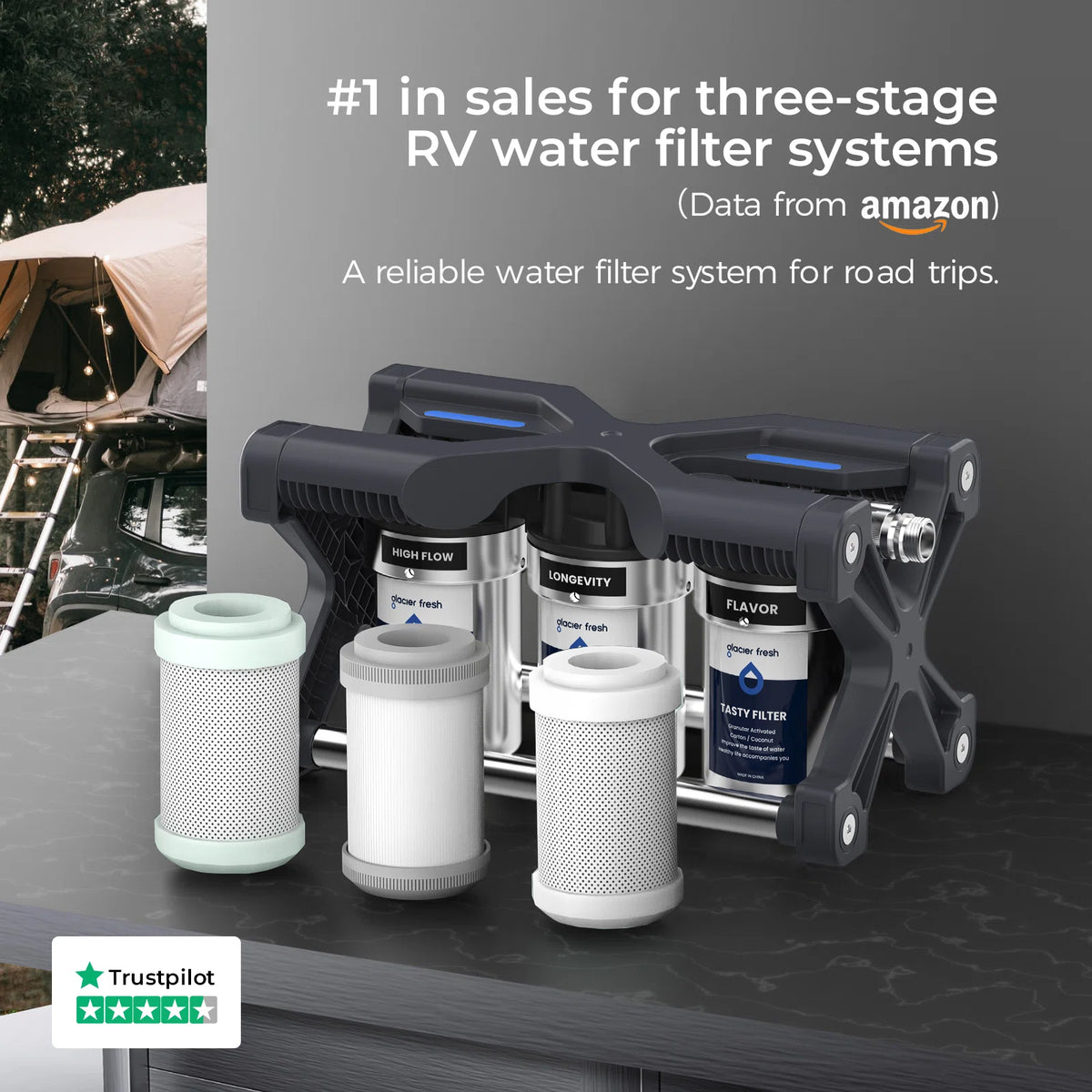
Test first through OWON's free county screenings or an ODEQ-accredited lab, then build multi-stage whole-house treatment (sediment, carbon, and UV for bacteria) paired with under-sink RO for drinking.
Recommended Water Purifier Options from GlacierFresh
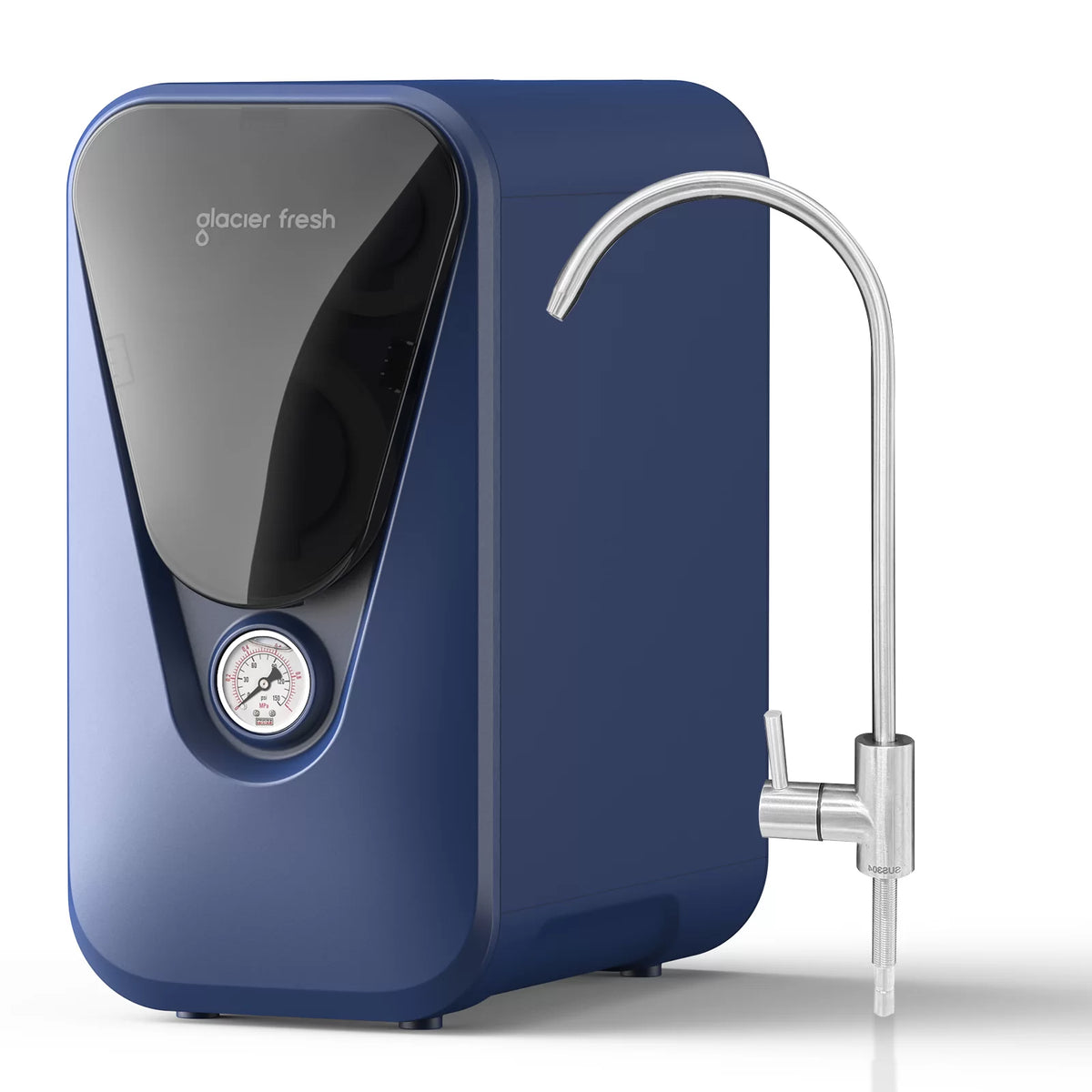
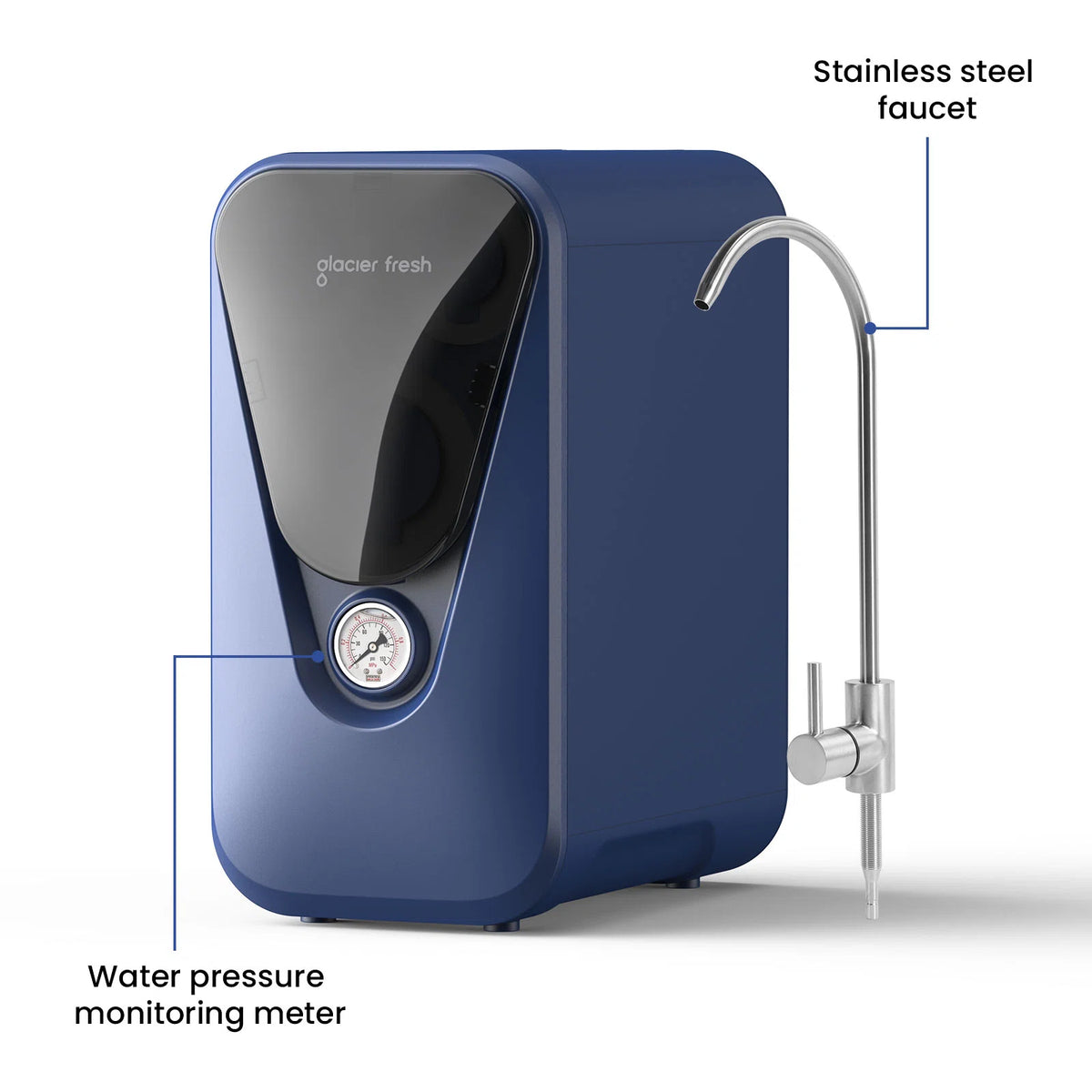
The GlacierFresh U03 Under-Sink RO (GFU03-800G) is an NSF/ANSI 58 and SGS-certified 5-stage system that runs without electricity on standard OKC and Tulsa water pressure, no booster pump or plumber needed, and reduces PFAS, chromium, nitrates, disinfection byproducts, lead, and TDS, the most documented concerns in both cities, installing in under 30 minutes.
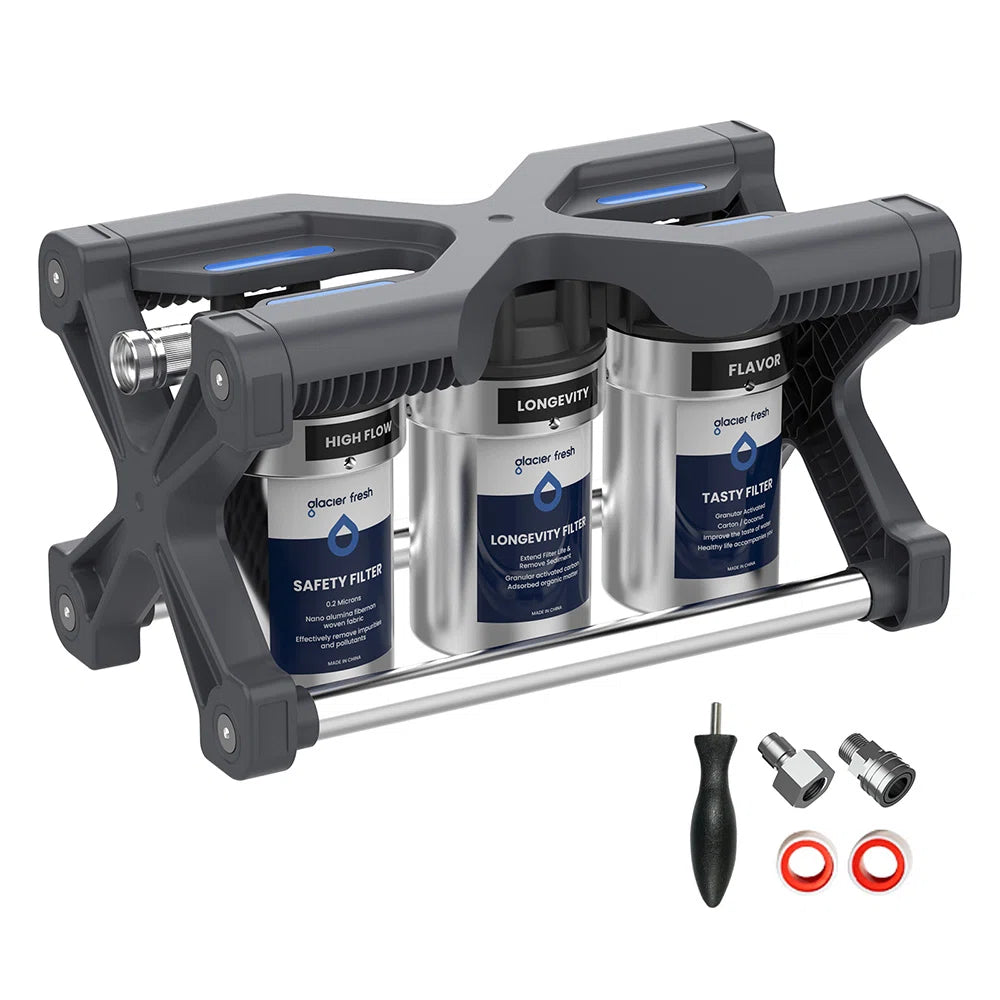
The PC04 Countertop Filter uses an Elarisey nanofiber membrane with no plumbing and SGS-verified reductions of lead (about 99.87%), PFAS (about 99.62%), and chlorine (about 99.47%), a fit for renters and apartments.
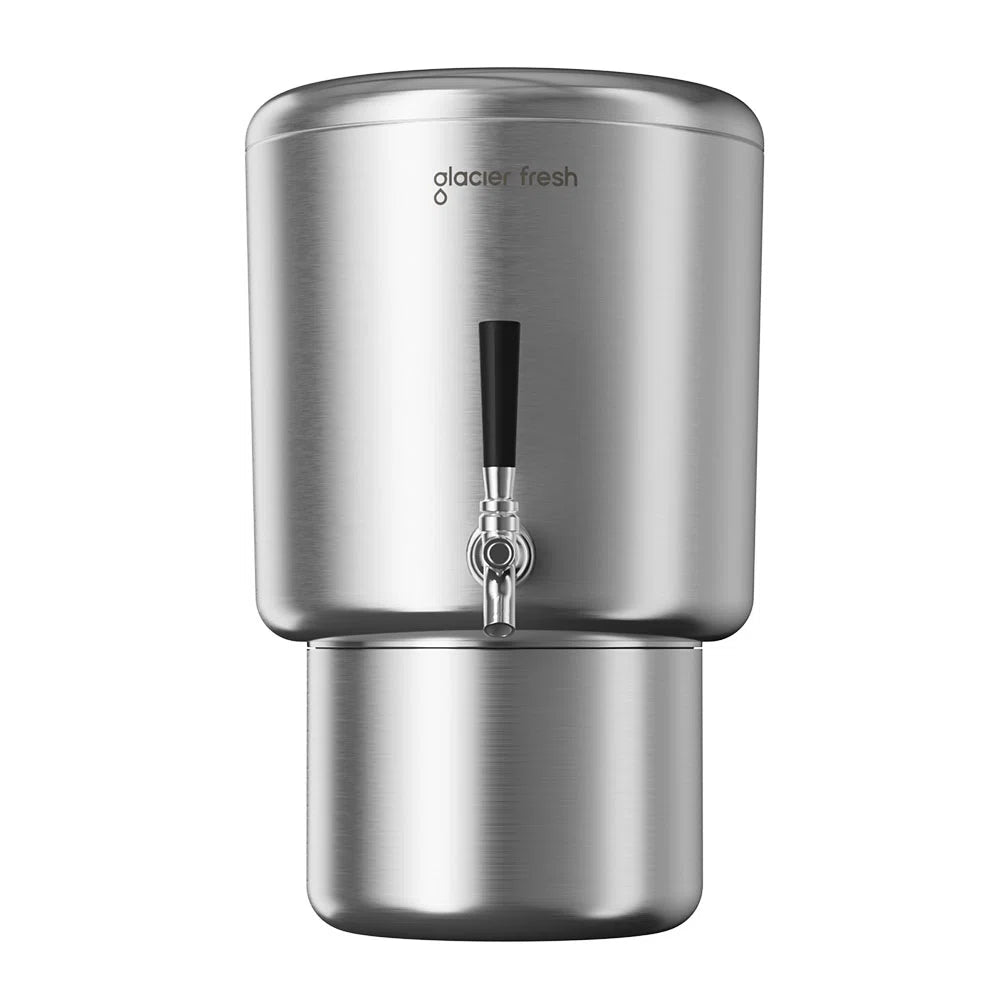
For Oklahoma's hot summers, the Coolon Cold Water Dispenser chills filtered water to 7 to 10°C on demand with Elarisey nanofiltration, removing PFAS, heavy metals, and chlorine while keeping beneficial minerals, with no ice or plumbing.
The 3G Gravity-Fed System and Purela pitchers are electricity-free entry points for renters and students.
How to Choose the Best Water Purification System for My Home in Tulsa or Oklahoma City?
1. Know What's in Your Water
On city water, start with your city water quality report: Tulsa publishes its CCR online, and OKC's is available through the city and ODEQ. Cross-reference a health-guideline database for perspective beyond legal limits. On a well, use OWON's free basic screening or an ODEQ-accredited lab for a full panel.
2. Match the System to Your Actual Concerns
-
Tulsa city water: an NSF 58 under-sink RO or a strong NSF 53 countertop filter covers the byproduct and lead concerns.
-
OKC city water: an under-sink RO with catalytic carbon handles chloramine, chromium-6, nitrates, and byproducts in one system.
-
Any pre-1986 home: NSF 53 lead reduction at the tap, regardless of city test results.
-
Rural well: multi-stage whole-house plus RO, and never skip the water test.
3. Factor in Oklahoma's Climate
Oklahoma summers regularly top 100°F, so any system in an unconditioned garage needs heat-rated, UV-stabilized housings. For cold drinking water without waiting on a fridge pitcher, the Coolon dispenser delivers chilled, filtered water on demand, a real quality-of-life win in an Oklahoma August.
FAQs
What is the best drinking water system for home?
For most homes, an under-sink reverse osmosis system certified to NSF/ANSI 58 is the most complete option, since it removes the widest range of contaminants. If you only need lead and taste handled, an NSF 53 carbon filter is cheaper and simpler. Match the system to your water test.
How does regional water quality affect purifier choice?
A lot. OKC's chloramine needs catalytic carbon, Tulsa's disinfection byproducts respond to a carbon block or RO, and western well water with nitrates or arsenic needs RO. The same pitcher that's fine in one town can be useless in the next.
Is Oklahoma City tap water safe to drink?
It meets all federal and state standards with zero recent violations. The caveats are disinfection byproducts above health guidelines, chromium-6, and chloramine taste, which is why many OKC homes add an RO or catalytic-carbon filter for drinking water.
Do I need to test my private well in Oklahoma?
Yes. Private wells aren't regulated or monitored by the state, so testing is on you. OWON offers free basic screenings through county Extension offices, and an ODEQ-accredited lab can run a full panel for nitrates, bacteria, arsenic, and metals.
Does a water filter remove hard water in Oklahoma?
No. Filters and RO improve taste and remove contaminants but don't soften water; calcium and magnesium need a water softener. Many Oklahoma homes pair a softener for the whole house with an RO at the kitchen tap for drinking.
Conclusion
Oklahoma's tap water clears every legal bar, but legal and ideal aren't the same glass of water. Find out what's actually in yours, match the certifications to it, and pick the tier that fits your home.
GlacierFresh spans every level, from the NSF 58 and SGS-certified U03 under-sink RO to the Coolon cold water dispenser and the Purela pitcher series. Explore the full range at glacierfreshfilter.com.
References:
-
Oklahoma Department of Environmental Quality. Oklahoma Department of Environmental Quality https://www.deq.ok.gov/
-
United States Environmental Protection Agency. Per- and Polyfluoroalkyl Substances (PFAS). https://www.epa.gov/sdwa/and-polyfluoroalkyl-substances-pfas
-
City of Tulsa. Water Quality. https://www.cityoftulsa.org/government/departments/water-and-sewer/water-supply/water-quality
-
City of Oklahoma City. About Your Tap Water. https://www.okc.gov/departments/utilities/about-your-tap-water
-
United States Geological Survey. Hardness of Water. https://www.usgs.gov/water-science-school/science/hardness-water
-
NSF International. Certified Drinking Water Treatment Units – Lead Reduction. https://info.nsf.org/Certified/dwtu/listings_leadreduction.asp
-
Oklahoma State University Water Resources Center. Oklahoma Well Owner Network. https://water.okstate.edu/our-work/oklahoma-well-owner-network