
Table of Contents:
Michigan's Water Quality Landscape: What the Data Shows in 2026
The Flint Water Crisis: What It Taught Michigan Homeowners About Lead
Water Testing in Michigan: What to Test For and How to Do It
What Contaminants Can Water Filtration Systems Remove From Tap Water?
Under Sink Water Filtration Systems: Tank vs. Tankless RO for Michigan Homes
How Do I Choose the Best Reverse Osmosis System in Michigan?
No-Installation Options: Countertop Filters and Pitchers for Michigan Renters
FAQs
Conclusion
In a southeast Michigan suburb, a homeowner reads a headline about PFAS found in a nearby county and wonders whether the tap water is safe. An hour north in Flint, a longtime resident watches the city finish replacing its lead pipes and asks a quieter question: is the worst really over?
Michigan's water story lives between those two moments. The Flint water crisis put aging infrastructure on the national map, and the Great Lakes give the region some of the cleanest source water in the country, but forever chemicals and old pipes mean what reaches your glass still depends on your home and your county.
Michigan's Water Quality Landscape: What the Data Shows in 2026
 Michigan's public systems serve roughly 10 million residents, and the Great Lakes Water Authority alone serves about 3.9 million across 126 southeast Michigan communities, drawing from Lake Huron and Lake Erie. That source water is among the cleanest in the country before treatment, and GLWA-treated water currently shows non-detect levels for PFAS. The concern sits downstream and underground.
Michigan's MPART program passed its 300th confirmed PFAS site in early 2025 and climbed past 320 by the end of the fiscal year. About 30% of residents, roughly 1.12 million households, rely on private wells that aren't required to test for PFAS.
The contaminants that matter most for Michigan homeowners fall into a short list:
-
Lead: older homes, often pre-1986, still have lead solder, brass fixtures, or lead service lines
-
PFAS: risk rises near military bases like Camp Grayling, industrial zones, and fire-training sites
-
Arsenic: naturally occurring in Thumb-region and central Michigan bedrock aquifers
-
Iron and manganese: common in private wells, causing staining and taste problems
-
Bacteria and nitrates: standard private-well concerns, especially near farmland
The Flint Water Crisis: What It Taught Michigan Homeowners About Lead
The Flint water crisis began in 2014, when the city switched to the Flint River without corrosion control and lead leached from aging pipes into homes. It raised children's blood lead levels and reshaped how the country thinks about lead in drinking water.
By 2026 the picture is very different. Flint completed its lead service line replacement in 2025, with nearly 11,000 lines replaced across more than 28,000 properties, and recent monitoring has held lead in the 3 to 6 ppb range, below the federal 15 ppb action level and Michigan's stricter 12 ppb standard. The city now draws Lake Huron water through the GLWA.
The lesson reaches statewide. Older homes in Detroit, Lansing, and Grand Rapids still carry lead solder, brass fixtures, or galvanized pipe that can add lead at the tap even when utility water leaves the plant clean. Lead in water is almost always an infrastructure problem, not a source-water one, which is why a filter at the point of use is where lead protection matters most.
Water Testing in Michigan: What to Test For and How to Do It
Every private well owner should test at least once a year. Renters or buyers of pre-1986 homes on city water should test the tap for lead, and anyone near a confirmed PFAS site should test for PFAS. On municipal water, request your utility's Consumer Confidence Report first, then test your own tap for lead, since utility results reflect the distribution system, not your home's pipes.
Private well owners should test annually for coliform bacteria and nitrates, add arsenic every few years in the Thumb and central bedrock regions, and use an MPART-certified lab for PFAS near a base, industrial site, or fire-training area. EGLE's lab and county health departments handle most testing, often at low cost. Test before you buy: what's in your water decides which NSF certifications and stages you actually need.
What Contaminants Can Water Filtration Systems Remove From Tap Water?
What a filter removes comes down to its technology and certified claims, not its price or marketing.
Remove Lead From Water
Standard carbon and pitcher filters don't remove lead unless they're NSF 53 certified for it. The most effective options are an NSF 53 water filter using a carbon block, or an NSF 58-certified RO system. Because lead usually enters at home through old pipes and solder, a point-of-use lead water filter under the sink or on the counter, not a whole-house carbon filter, is the right approach.
Water Filter to Remove PFAS
Standard carbon and pitcher filters don't reliably remove PFAS, especially shorter-chain types. Reverse osmosis is the most effective point-of-use option, cutting 90 to 99%+ of PFAS including PFOA and PFOS. Look for NSF 58 with an explicit PFAS reduction claim, or NSF P473 certification, to verify performance.
Other Contaminants RO Systems Address
Beyond lead and PFAS, an RO membrane also reduces arsenic (relevant for Thumb-region wells), nitrates (important for infant safety near farmland), fluoride, disinfection byproducts, heavy metals like mercury and chromium, and overall TDS, which sharpens the taste of Great Lakes water. What RO doesn't do: soften hard water, which needs a softener, or disinfect at the whole-house level, which private wells handle with UV.
Under Sink Water Filtration Systems: Tank vs. Tankless RO for Michigan Homes
Under-sink RO is the most space-efficient way to handle lead, PFAS, and arsenic at the kitchen tap. Two designs dominate.
Tank-Based RO Systems
These store filtered water in a pressurized tank, so it's always ready on demand, which suits lower-pressure homes. The trade-offs are a larger cabinet footprint and more wastewater in older designs.
Tankless RO Systems
Tankless units filter on demand with no storage tank, saving space and usually delivering higher flow, often 400 to 800 or more gallons per day, with better waste ratios. Some need electricity for a booster pump in low-pressure homes.
What to Look for in Either Design for Michigan Homes
For Michigan's lead and PFAS concerns, prioritize NSF/ANSI 58 for the RO system, a verified PFAS claim or NSF P473, NSF/ANSI 53 on the carbon stages for lead, and NSF/ANSI 372 for lead-free construction. Most under-sink systems install in 30 to 60 minutes without a plumber.
How Do I Choose the Best Reverse Osmosis System in Michigan?
 Step 1: Know Your Contaminants
On GLWA-area city water, the main concerns are lead from home plumbing, PFAS in some areas, and disinfection byproducts, all of which an NSF 58 RO handles. On other municipal systems, check your CCR for the lead 90th-percentile result and any PFAS detections, and test your tap if the home predates 1986. On a private well, test first, since arsenic, iron, bacteria, PFAS, and nitrates vary by location.
Step 2: Match Certifications to Your Needs
Lead only in an older city home: an NSF 53 carbon block is enough, with no RO required. Lead plus PFAS, which covers most Michigan city households: an under-sink RO certified to NSF 58 with a PFAS claim, adding P473 if you're near a PFAS site or in the arsenic-prone Thumb. A private well with iron, bacteria, and PFAS needs multi-stage treatment plus UV, then RO for drinking water.
Step 3: Consider Installation and Maintenance
Look for tool-free connections and clear instructions; most under-sink RO units install in under an hour. Plan on replacing pre-filters every 6 to 12 months and the RO membrane every 1 to 3 years. Non-electric systems suit Michigan's occasional power outages well.
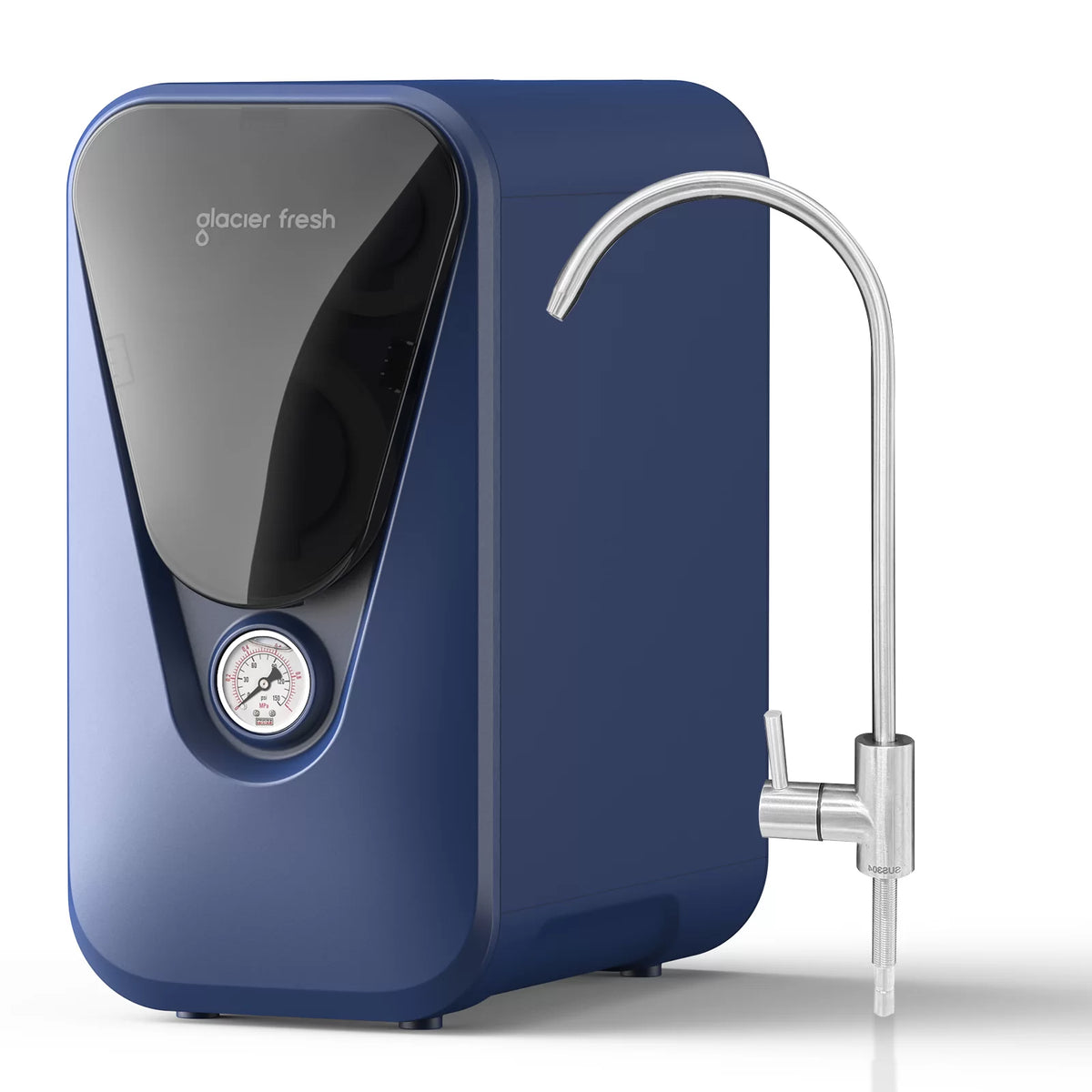
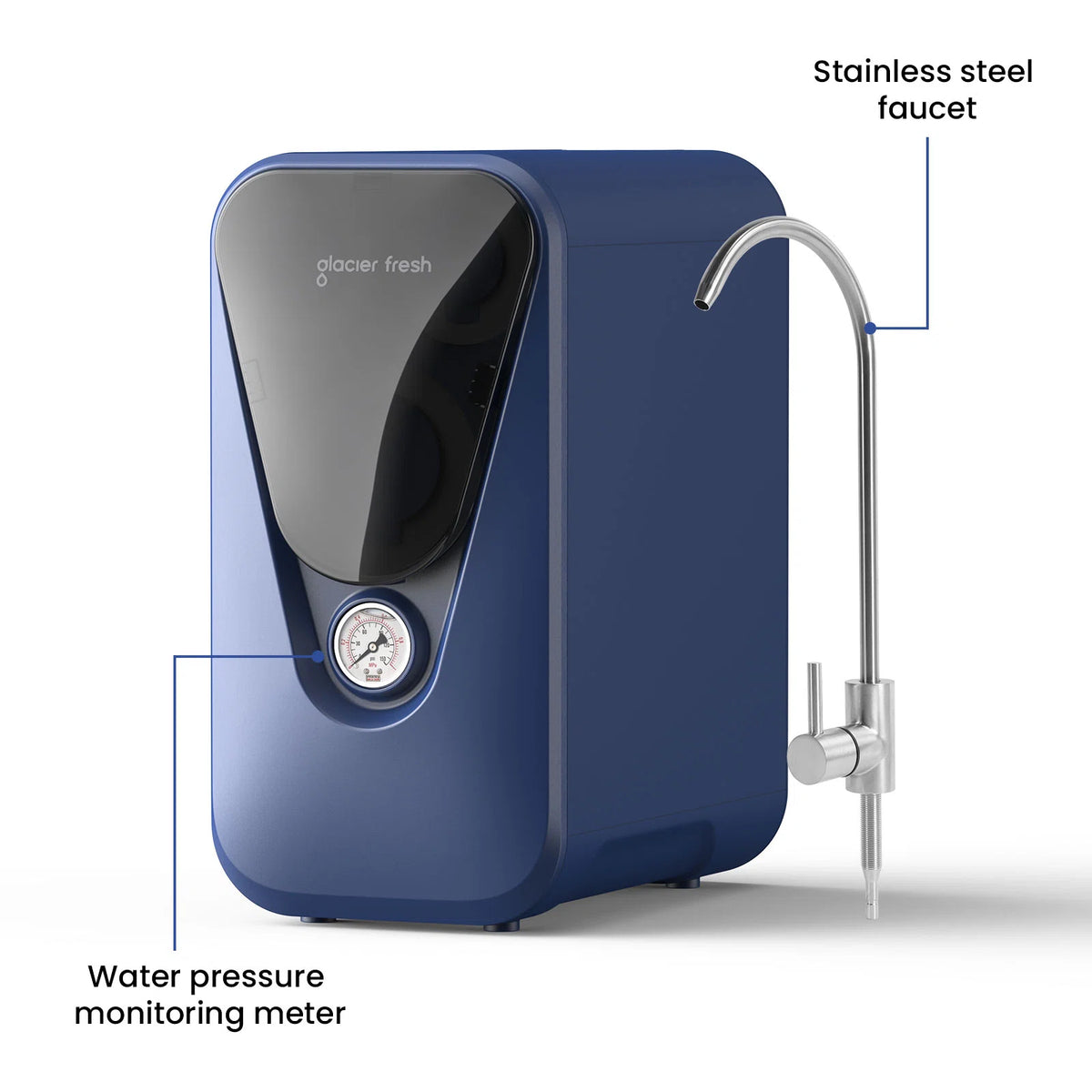
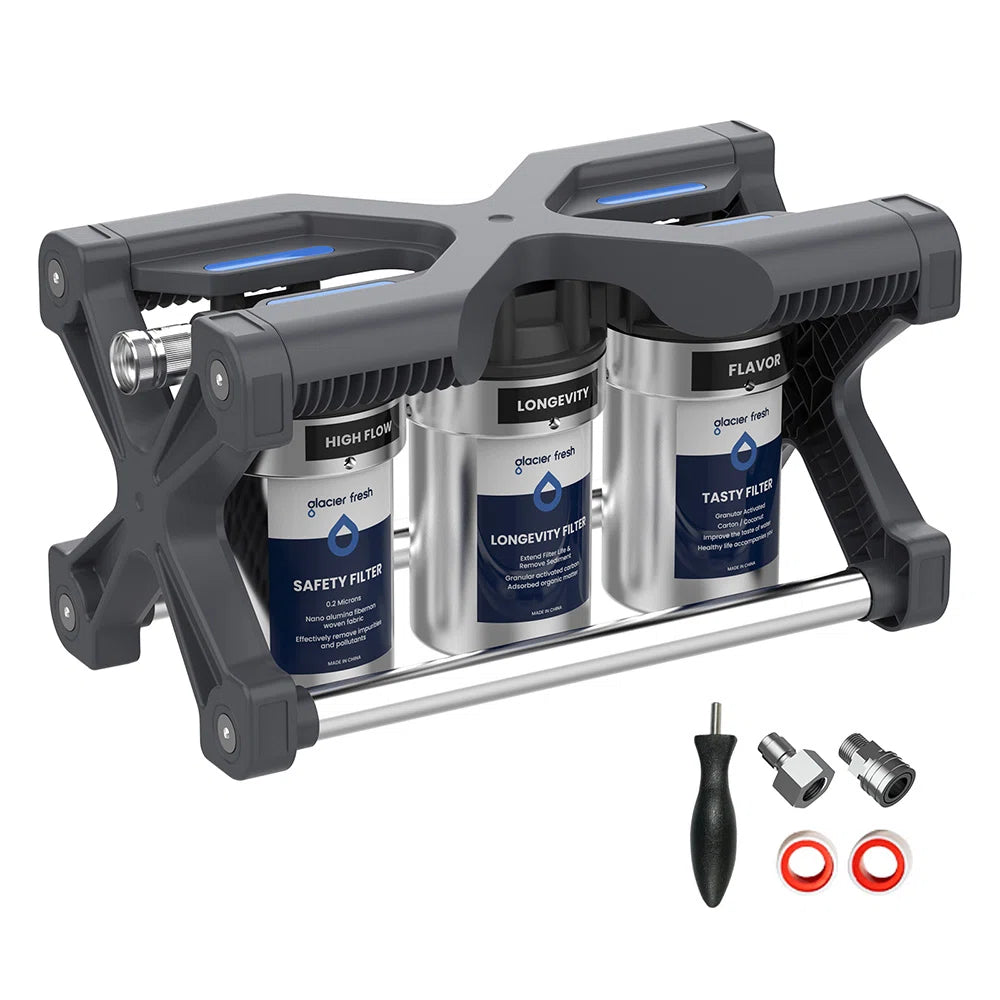
The GlacierFresh U03 800GPD Undersink RO System (model GFU03-800G) is one such non-electric option. This GFU03 RO system is NSF/ANSI 58 and SGS certified, carries no electric-shock risk from leaks, installs in under 30 minutes with the included fittings, and runs five stages: PP cotton, compound carbon, a 0.0001-micron RO membrane, particle carbon, and post-carbon. It comes in Classic (requires drilling) and Elite (replaces your existing faucet, no drilling) versions, directly targeting Michigan's lead and PFAS concerns.
No-Installation Options: Countertop Filters and Pitchers for Michigan Renters
Renters, condo owners, and short-term residents can't always install under-sink RO, and they still have solid options. Countertop gravity filters and pitchers can remove chlorine, lead (when NSF 53 certified), heavy metals, PFAS, microplastics, and bacteria, though they don't cut TDS or PFAS as thoroughly as a full RO system.
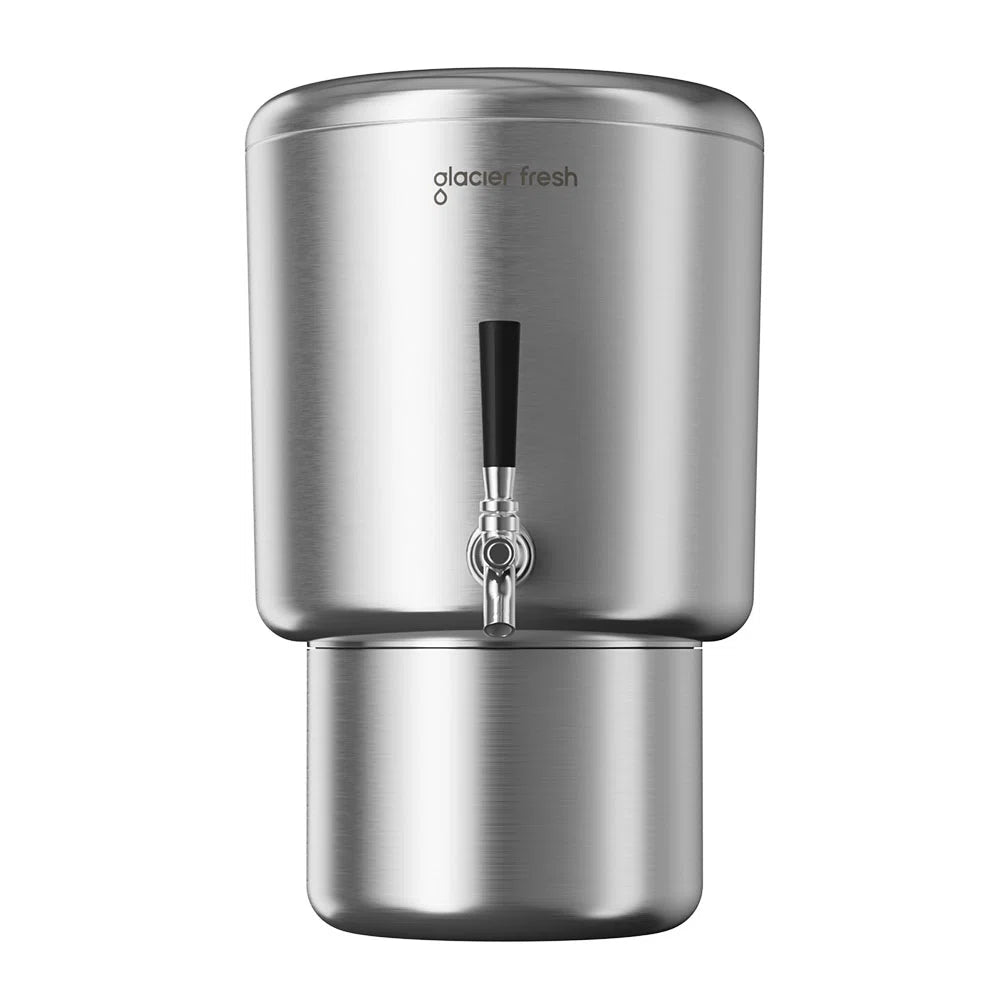
The GlacierFresh PC04 2.25G Countertop Filter uses an Elarisey positively-charged nanofiber membrane and, per SGS results, reduces lead by about 99.87%, PFAS (PFOS and PFOA) by 99.62%, chlorine by 99.47%, and BPA by 99.4%, with no plumbing or electricity and a filter-life indicator. That makes it a strong fit for renters in older Michigan buildings where lead plumbing is a worry.
For entry-level options, the 3G Gravity-Fed System (six filters, no electricity) and the Purela glass pitcher series remove chlorine, microplastics, PFAS, and heavy metals including lead and mercury.
FAQs
What should I consider when choosing a reverse osmosis water treatment system?
Start with your water test, then match certifications: NSF/ANSI 58 for the system, an NSF 53 carbon stage for lead, a PFAS claim or P473 if PFAS is a concern, and NSF 372 for lead-free parts. After that, weigh tank versus tankless, waste ratio, filter costs, and whether you want a non-electric design.
Is Michigan tap water safe to drink?
Most municipal water meets federal and state standards, and Great Lakes source water is high quality. But lead from home plumbing and PFAS in some areas mean a point-of-use filter is a sensible safeguard, especially in older homes or near a known PFAS site.
Do I need a water filter if I'm on GLWA water?
GLWA-treated water currently tests non-detect for PFAS and meets lead standards at the plant. The remaining risk is your home's own pipes, so an NSF 53 or NSF 58 filter at the tap is worth it mainly if you have older plumbing.
How do I know if my home has lead pipes?
Homes built before 1986 are the most likely to have lead solder, brass fixtures, or lead service lines. Check the service line at your meter, review your utility's lead inventory, and test your tap, since lead can be present even when utility water tests clean.
Can a pitcher filter remove lead and PFAS?
Only if it's certified for them. Look for an NSF 53 listing for lead and an NSF 53 PFAS or P473 listing for PFAS. Many basic pitchers handle only chlorine and taste, so check the specific certified claims, not just the NSF label.
Conclusion
Michigan's source water is excellent, but the path from the Great Lakes to your glass runs through pipes and aquifers that can add lead, PFAS, and more. Test first, match the certifications to what you find, and pick the tier that fits your home.
GlacierFresh covers every level, from the NSF 58 and SGS-certified GFU03 under-sink RO to the Elarisey PC04 countertop filter and the Purela pitcher series. Explore the full range at glacierfreshfilter.com.
References:
-
Michigan PFAS Action Response Team (MPART). Michigan PFAS Action Response Team(MPART). https://www.michigan.gov/pfasresponse
-
State of Michigan. Taking Action on Flint Water. https://www.michigan.gov/flintwater
-
United States Environmental Protection Agency. Basic Information about Lead in Drinking Water. https://www.epa.gov/ground-water-and-drinking-water/basic-information-about-lead-drinking-water
-
Michigan Department of Environment, Great Lakes, and Energy. Drinking Water and Environmental Health Division. https://www.michigan.gov/egle/about/organization/drinking-water-and-environmental-health
-
NSF International. Certified Drinking Water Treatment Units – Lead Reduction. https://info.nsf.org/Certified/dwtu/listings_leadreduction.asp
-
United States Environmental Protection Agency. Identifying Drinking Water Filters Certified to Reduce PFAS. https://www.epa.gov/water-research/identifying-drinking-water-filters-certified-reduce-pfas