
Table of Contents:
Understanding Texas Water: Why One Filter Does Not Fit All
Texas Water Well Map: Private Wells and Groundwater Across the State
How Regional Water Quality Affects Purifier Choice in Texas
What Are the Best Water Systems Available in Texas for Residential Use?
Best Whole House Filter for Well Water in Texas
City of Houston TX Water: What's In It and What to Do About It
Texas Well Water and Off-Grid Living: Filtration for Rural Properties and RV Use
How to Choose the Right Water Filtration System for Your Texas Home
FAQs
Conclusion
In Lubbock, a homeowner scrubs chalky white buildup off the showerhead for the second time this month. In Houston, a parent reads a water-quality report and worries about PFAS in what their kids drink. Same state, very different problems.
That's the thing about Texas water: there's no single story. The state is big enough that what's in your tap depends on your region, your aquifer, and whether you're drawing from city infrastructure or one of the roughly 800,000 water wells in Texas.
Understanding Texas Water: Why One Filter Does Not Fit All
 Texas pulls from very different sources by region: the Colorado River around Austin, the Edwards Aquifer near San Antonio, Lake Houston and Lake Livingston for Houston, and the Ogallala Aquifer across the Panhandle.
The one constant is hardness. Nearly every major Texas city tests hard or very hard, averaging about 12 grains per gallon, well above the national norm. Past hardness, the picture splits. West Texas cities regularly cross the EPA's 500 ppm TDS guideline, while PFAS shows up mainly around Houston and Dallas.
Texas Water Well Map: Private Wells and Groundwater Across the State
Texas runs one of the largest networks of water wells in Texas in the country. The Texas Water Development Board (TWDB) Groundwater Database holds over 141,000 recorded sites, and the Texas Commission on Environmental Quality (TCEQ) Water Well Report Viewer tracks more than 800,000 historical well reports.
The catch: private wells aren't federally regulated the way city water is, so owners are fully responsible for testing and treating their own supply.
Quality swings hard by aquifer:
-
Ogallala (Panhandle and West Texas): high mineral content and hardness, with some arsenic and nitrates
-
Edwards (Hill Country and San Antonio): generally good quality but hard, with limestone-driven TDS
-
Gulf Coast (East and Southeast Texas): elevated iron and manganese, occasional bacteria, and radium in spots
-
Trinity (Central Texas): elevated hardness and some heavy-metal concerns
Well owners should test yearly for hardness, TDS, iron, manganese, nitrates, arsenic, bacteria, and pH. Before drilling or buying rural property, a Texas water well map tool such as that of the TWDB lets you check well depth and aquifer zones by county.
How Regional Water Quality Affects Purifier Choice in Texas
Your region decides which contaminants matter most, and that decides your system.
West Texas and the Panhandle (Lubbock, Amarillo, Odessa, Midland)
The hardest water in the state, often cited above 20 grains per gallon, with TDS routinely over 500 ppm. The main concerns are naturally occurring arsenic, nitrates in farm country, and disinfection byproducts.
The fix that covers all of it: a whole-house softener rated 32,000 grains or more, plus an under-sink RO for drinking water.
Gulf Coast and Southeast Texas (Houston, Beaumont, Corpus Christi)
Surface water from large reservoirs blended with coastal groundwater. Concerns include PFAS near the San Jacinto River, chromium-6, arsenic, and disinfection byproducts. Standard carbon won't touch PFAS, so only RO or a PFAS-rated filter addresses it.
Recommended: an under-sink RO for drinking, a whole-house carbon or chloramine filter for showers, and a softener for appliance protection.
Central Texas (Austin, San Antonio, Hill Country)
San Antonio's Edwards Aquifer water is naturally hard with TDS often above 500 ppm, while Austin's Colorado River supply scores better but stays very hard. Hill Country wells run hard with occasional iron and bacteria.
Recommended: a softener plus carbon for chloramines, an under-sink RO for drinking, and UV for private wells.
North Texas (Dallas-Fort Worth, Denton, Plano, McKinney)
The Dallas area has reported PFAS, and surface-sourced water runs very hard. Older neighborhoods carry a lead risk at the tap even when the utility's water tests clean, since aging pipes add lead after the plant.
Recommended: an under-sink RO for PFAS and lead, a softener for hardness, and a carbon pre-filter for chloramines.
What Are the Best Water Systems Available in Texas for Residential Use?
 There's no single best system. It depends on city versus well water, your region's contaminants, household size, and your priorities. The layered setup most Texas homes settle on has three parts:
-
A whole-house water softener at the point of entry for the universal hardness
-
A carbon or catalytic carbon filter for chloramines and VOCs, common in Houston and DFW
-
An under-sink reverse osmosis unit at the kitchen tap for drinking and cooking
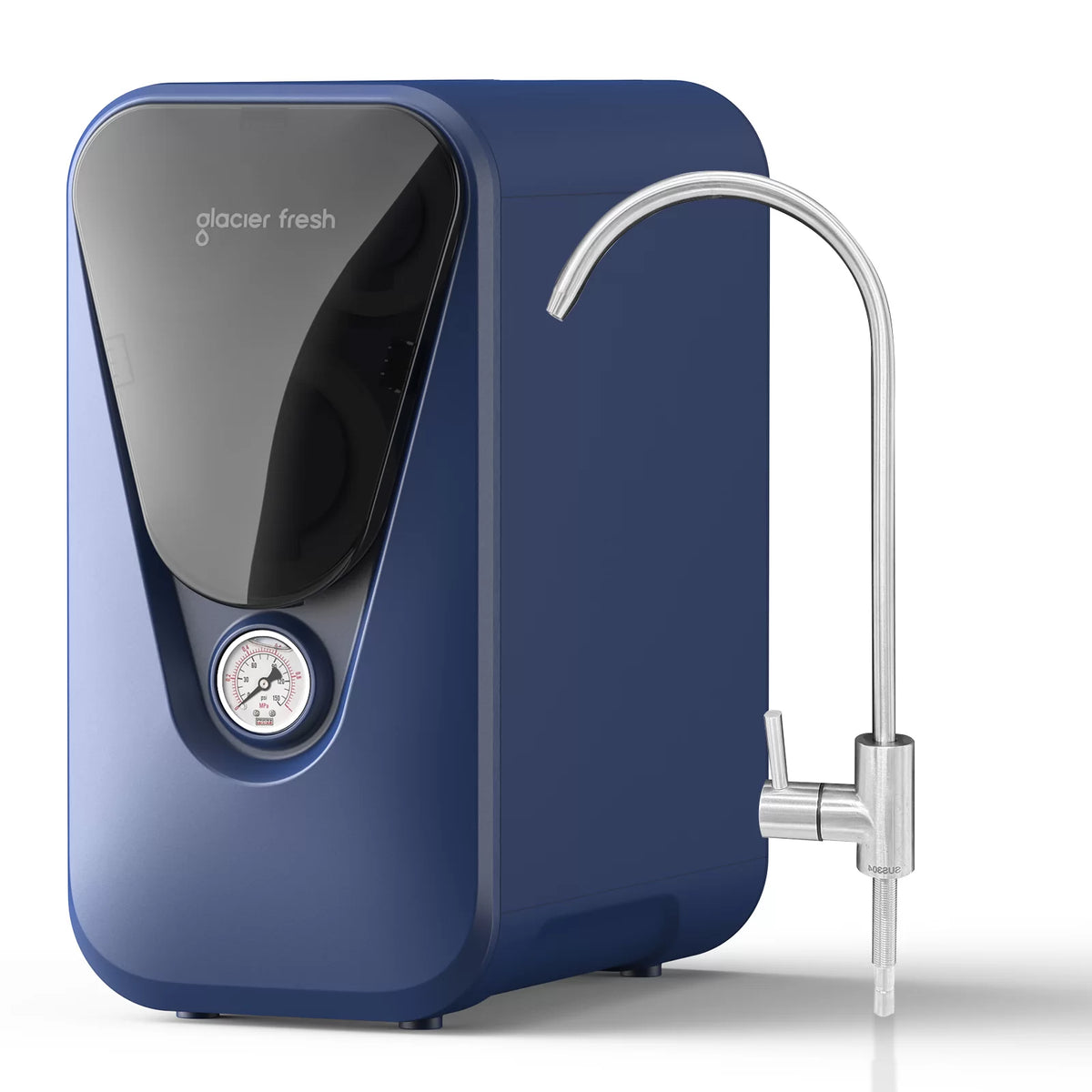
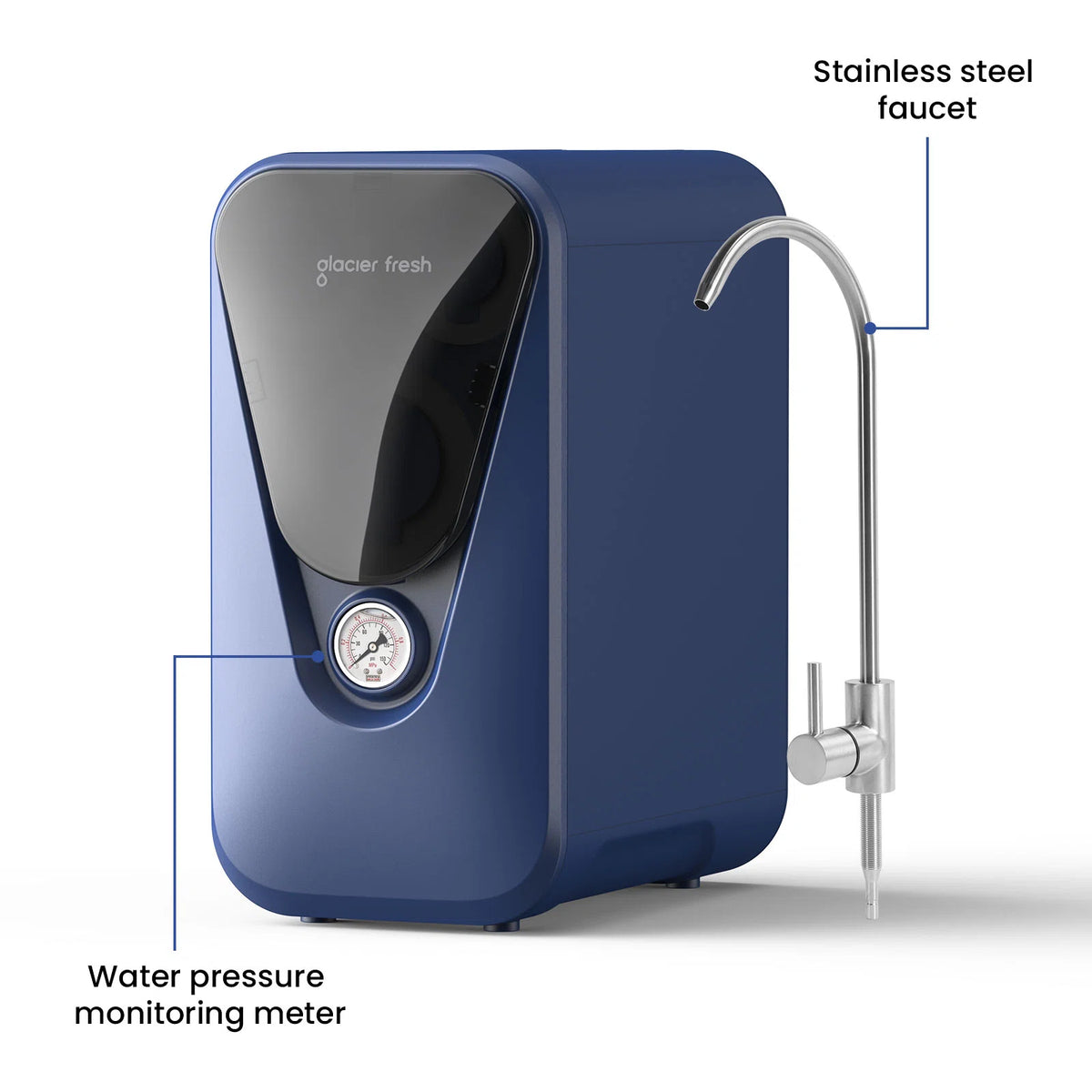
For renters and apartments, a countertop or pitcher filter handles chlorine, PFAS, heavy metals, and bacteria with no plumbing. On the product side, the GlacierFresh U03 800GPD Undersink RO System needs no electricity, installs in under 30 minutes for most users, and is certified to NSF/ANSI 58 and SGS, removing PFAS, arsenic, lead, and chlorine while cutting TDS, relevant to Houston, Lubbock, and DFW.
For no-install options, the PC04 Countertop Filter and the 3G Gravity-Fed System work without electricity, which helped during Winter Storm Uri.
Best Whole House Filter for Well Water in Texas
Private well owners face a different problem than city users: no municipal pre-treatment and no utility testing. The cardinal rule is test before you filter. A comprehensive lab test tells you which stages you actually need.
What Are the Best Water Filters for Well Water?
A typical Texas well stack runs in this order, and you only build the stages your test calls for:
-
Sediment pre-filter (5 micron) to catch dirt, sand, and rust and protect later stages
-
Iron and manganese filter for staining and metallic taste, key on Gulf Coast and East Texas wells
-
Carbon block for chlorine, VOCs, pesticides, and taste and odor issues
-
UV disinfection for bacteria and viruses, standard for all Texas wells, especially after flooding
-
Under-sink RO at the kitchen tap for arsenic, nitrates, fluoride, and dissolved solids
West Texas wells may need arsenic-specific media, and East and Central Texas wells often need hydrogen sulfide treatment for rotten-egg odor. A softener belongs almost everywhere in Texas, positioned after the iron filter so iron doesn't foul the resin.
Can You Recommend the Best Water Purification Solutions for Residential Use in Lubbock?
Lubbock has one of the toughest municipal profiles in the state: among the hardest water in Texas, TDS consistently above 500 ppm, plus arsenic and disinfection byproducts. A practical layering is a whole-house softener (48,000 grains for a family of four at this hardness), a whole-house carbon filter for chlorine and TTHMs, and an under-sink RO for drinking, which is the most important layer here for arsenic, nitrates, TDS, and fluoride.
For renters near Texas Tech, the PC04 countertop filter or a Purela glass pitcher improves drinking water with no install, and the U03 RO system matches Lubbock's needs in one compact unit.
City of Houston TX Water: What's In It and What to Do About It
The City of Houston, TX water system serves over 2.4 million people, drawing mostly surface water from Lake Houston, Lake Livingston, and Lake Conroe plus some groundwater.
It meets all federal and state standards, but several contaminants sit above health-based guidelines tracked by the EWG Tap Water Database: arsenic (highest detected around 8 ppb, under the 10 ppb legal limit), chromium-6, PFAS near the San Jacinto River, and disinfection byproducts such as TTHMs and HAA5. The water is moderately hard at roughly 6 to 7 grains per gallon and disinfected with chloramine.
For Houston homes, an under-sink RO is the primary fix, since it removes PFAS, chromium-6, arsenic, TTHMs, lead, and TDS in one place. Add a whole-house carbon or chloramine filter for showers, and a softener if appliance protection matters.
Texas Well Water and Off-Grid Living: Filtration for Rural Properties and RV Use
 Ranches, lake houses, and hunting cabins across Texas often run on private wells, rainwater, or hauled water. Rural well quality is the most unpredictable, since a neighbor's well half a mile away can test completely differently. RV travelers hit the same uncertainty at campground hookups.
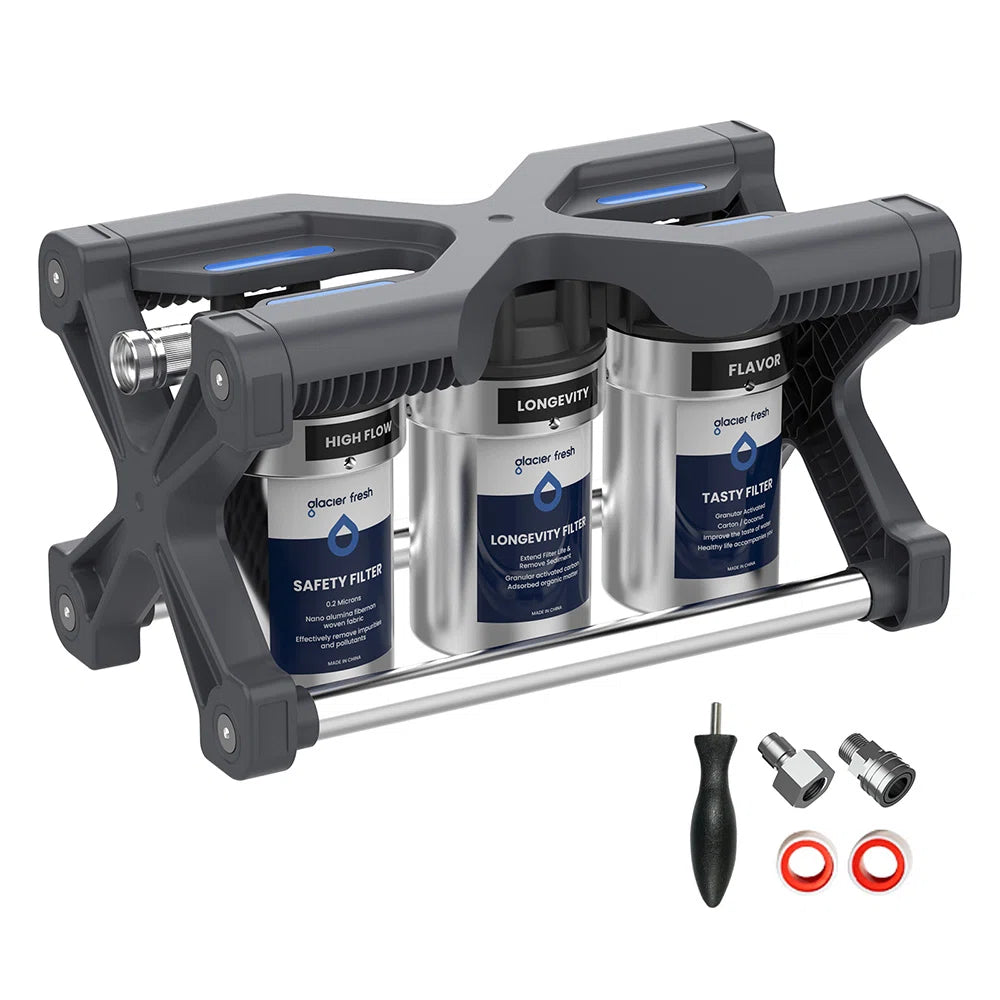
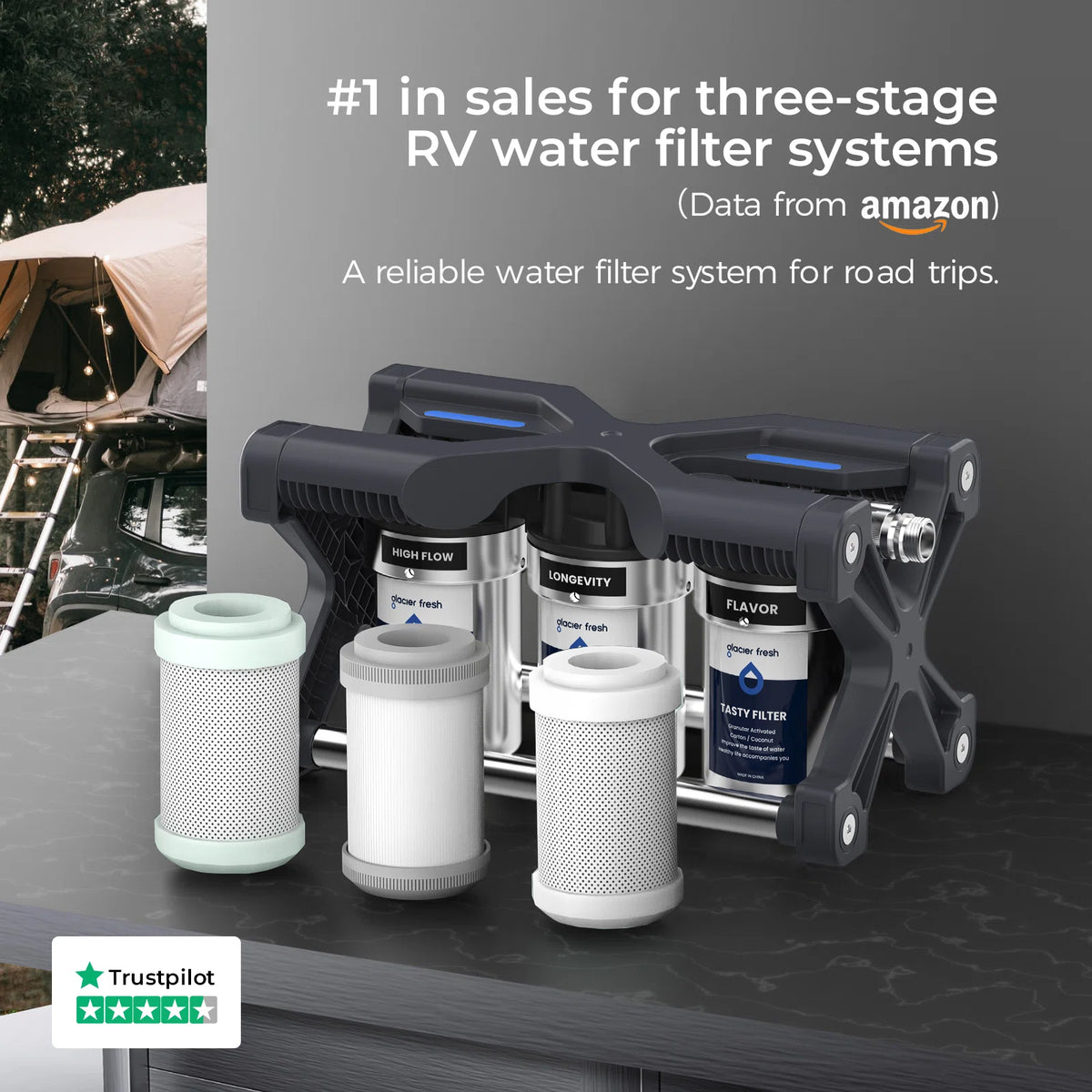
The GlacierFresh RV Reverse Osmosis System (RVRO01) is built for exactly this: compact, connects to any standard water pipe, and removes 99.99% of bacteria, viruses, heavy metals, PFAS, and chlorine from sources including lake and well water. It's FCC, FDA, CA65, and NSF/ANSI certified, and one filter covers roughly 25,000 water bottles. For outage-prone homes, gravity-fed countertop systems need no power and make a reliable backup, a real consideration after Winter Storm Uri in 2021.
How to Choose the Right Water Filtration System for Your Texas Home
Step 1: Identify Your Water Source
On city water, request your utility's latest Consumer Confidence Report, which every Texas public system publishes yearly, and cross-check the EWG Tap Water Database. On a private well, get a lab test before buying anything, and retest after flooding, drought, or construction.
Step 2: Map Your Region's Known Contaminants
Priorities shift by where you live:
-
West Texas and Panhandle: arsenic, nitrates, TDS, and hardness
-
Houston and Gulf Coast: PFAS, chromium-6, TTHMs, arsenic, and hard water
-
North Texas (DFW): PFAS, lead from older pipes, chloramines, and hardness
-
Central Texas and Hill Country: hardness, TDS, and bacteria in wells
-
East Texas and rural: iron, manganese, bacteria, and sediment
Step 3: Match the System to the Problem
Scale and appliance damage alone call for a whole-house softener. Drinking-water safety (PFAS, arsenic, lead, nitrates, TDS) calls for an under-sink RO. Both, which is most Texas homes, means a softener plus RO. Well water with iron, sulfur, or bacteria needs a multi-stage whole-house system before the softener, while renters do well with a countertop or pitcher filter. The CDC's guidance on matching a filter to your contaminant is a good neutral reference.
FAQs
Is tap water safe to drink in Texas?
Public systems meet federal and state standards, so it's legally safe. But legal isn't the same as ideal: many cities exceed health-based guidelines for PFAS, arsenic, or disinfection byproducts, which is why point-of-use filtration is common.
Does all of Texas have hard water?
Effectively yes. Nearly every major city tests hard or very hard, with West Texas the most extreme. A whole-house softener is the standard fix, paired with an RO for cleaner drinking water.
How often should I test my private well in Texas?
At least once a year for bacteria, nitrates, and pH, and more often after flooding, drought, or nearby drilling. Add arsenic and PFAS if you're near farming or industry.
Do I need reverse osmosis or just a carbon filter in Texas?
Carbon handles chlorine, taste, and many disinfection byproducts, but it won't remove PFAS, arsenic, or nitrates. Those need reverse osmosis, so many Texas homes run both.
Where can I find a map of water wells in Texas?
The TWDB Groundwater Database and TCEQ Water Well Report Viewer both map well locations and driller reports by county, which is the easiest way to research water wells in Texas before drilling or buying rural land.
Conclusion
Texas doesn't have one water problem, so it doesn't have one fix. Test first, then match the system to your region and source. GlacierFresh covers every tier, from the U03 non-electric RO system for whole-home drinking water to the PC04 and Purela pitcher series for renters and apartments. Explore the full range at glacierfreshfilter.com.
References:
-
United States Geological Survey. Hardness of Water. https://www.usgs.gov/water-science-school/science/hardness-water
-
United States Environmental Protection Agency. Secondary Drinking Water Standards: Guidance for Nuisance Chemicals. https://www.epa.gov/sdwa/secondary-drinking-water-standards-guidance-nuisance-chemicals
-
Texas Water Development Board. Groundwater Database Reports. https://www.twdb.texas.gov/groundwater/data/gwdbrpt.asp
-
Texas Commission on Environmental Quality. Water Well Report Viewer. https://www.tceq.texas.gov/gis/waterwellview.html
-
United States Environmental Protection Agency. Private Drinking Water Wells. https://www.epa.gov/privatewells
-
Texas Water Development Board. Groundwater Data Viewer. https://www3.twdb.texas.gov/apps/WaterDataInteractive/GroundwaterDataViewer/?map=sdr
-
Environmental Working Group. EWG's Tap Water Database – Austin Water (TX1010013). https://www.ewg.org/tapwater/system.php?pws=TX1010013
-
United States Environmental Protection Agency. Per- and Polyfluoroalkyl Substances (PFAS). https://www.epa.gov/sdwa/and-polyfluoroalkyl-substances-pfas