


Table of Contents:
What is structured water?
Is Structured Water Real? What Science Says
Potential benefits of structured water
Health claims associated with structured water
Does Structured Water Hydrate Better? A Comparison
Structured water vs. regular water: what are the differences?
Structured Water Claims vs. Scientific Evidence
Scientific perspectives on structure water
FAQs
Conclusion
What is structured water?

Structured water is a type of water in which the molecules are organized into specific, stable arrangements — often described as hexagonal water structure or hexagonal water. These patterns aren't seen in regular, unstructured tap water. Think of it like a choir: both types of water have the same molecules (or singers), but they harmonize beautifully in structured water. Proponents sometimes refer to this arrangement as the structured water molecule — a concept we'll examine critically in the sections that follow.
Is structured water real? What science says
According to chemistry experts — including researchers at the University of New South Wales — the short answer is: no, not in the way it's marketed.
Water molecules do form temporary hydrogen-bonded clusters, a phenomenon studied in materials science. However, these bonds continuously break and reform at timescales shorter than 200 femtoseconds — far too fast for any stable hexagonal water structure to persist long enough to reach your cells, let alone exert the claimed biological effects.
The proposed chemical formula H₃O₂, often cited in hexagonal water benefits marketing, is not a recognized stable molecule by chemistry. Water's formula is H₂O. A different formula would describe an entirely different substance — one that does not exist in any commercially available product.
Potential benefits of structured water
Proponents point to several purported benefits. One key claim is enhanced hydration. It's believed that the unique arrangement of water molecules in structured water can improve the hydration process. Structured water could theoretically offer a more efficient way to hydrate your body — though this claim lacks peer-reviewed support in humans.
Next, proponents claim water purification benefits — that structured water may self-cleanse, reducing contaminants and maximizing purity. Additionally, energy alignment is often cited: this type of water is thought to align with the body's natural energy currents, improving overall wellness.
In summary, structured water might offer improved hydration, a cleaner drinking experience, and a boost to your body's energy alignment. But remember, while these benefits sound promising, they remain under scientific scrutiny and are not validated by controlled clinical trials.
Health claims associated with structured water
Over time, numerous health claims have emerged surrounding structured water. You've probably heard about its alleged superior hydration effects. Compared to regular water, structured water is claimed to hydrate the body much more efficiently — because its unique molecular structure supposedly allows for better cellular absorption, helping to stave off dehydration.
Enthusiasts also attest to structured water's ability to bolster energy levels. This is due to its proposed ability to carry energy in the form of bio-photons — light energy particles said to be essential for biological processes. Drinking structured water supposedly enhances bio-photonic transmission in your cells, leading to higher energy levels and improved overall wellness.
While these health claims sound promising, it's important to note that scientific evidence supporting them is limited. Most of the available research is preliminary and subject to ongoing debate. Therefore, it's crucial to approach these claims with skepticism until more conclusive studies are conducted. In the meantime, stay hydrated and maintain a balanced diet for optimal health.
Does Structured Water Hydrate Better? A Comparison
The table below compares different water types on hydration efficacy, scientific grounding, and cost — giving you a clear, evidence-based picture.
|
Water Type |
Hydration Efficacy |
Scientific Basis |
Typical Cost |
|
Structured Water |
Claimed superior |
Unproven / marketed |
High (devices/products) |
|
Filtered Tap Water |
Proven effective |
Science-backed |
Low (filtration system) |
|
Bottled Spring Water |
Effective |
Natural mineral content |
Medium |
|
Plain Tap Water |
Effective |
Regulated |
Lowest |
The verdict: clean filtered water — such as water processed through ultrafiltration or reverse osmosis systems — provides proven, effective hydration at a fraction of the cost of structured water devices or premium bottled products marketed for their special structure.
If you're considering alkaline or premium bottled waters as an alternative, note that most alkaline bottled water benefits are similarly overstated relative to their price. The health benefits of drinking chilled filtered water are well documented, however, and provide a practical starting point.
Structured water vs. regular water: what are the differences?

You may wonder how structured water differs from the regular tap or bottled water you're used to. The difference lies primarily in the molecular arrangement and the concept of water memory.
- Structured water is claimed to have a more orderly molecular arrangement, forming hexagonal water clusters. This supposedly enhances hydration, nutrient absorption, and overall energy transfer within the body.
- Regular water, on the other hand, is said to have a less organized molecular structure. Despite going through filtration and purification processes, it's believed to lack the 'structure' found in natural water sources.
- The concept of water memory also plays a crucial part in the structured water debate. Proponents believe that water can 'remember' and transfer the energetic properties of substances it's been in contact with, whereas regular water is considered 'blank'.
Don't be misled, though; while these differences might sound impressive, it's crucial to note that the scientific community has yet to provide substantial evidence supporting these claims.
For those curious about real, evidence-based filtration differences — such as how ultrafiltration, nanofiber, and reverse osmosis systems compare — Glacier Fresh's guide on reverse osmosis, nanofiber, and ultrafiltration: which one is right for you offers a science-grounded breakdown.
Structured Water Claims vs. Scientific Evidence
As the table illustrates, none of the core hexagonal water benefits claims are supported by robust clinical evidence. This does not mean water science is settled — researchers continue to study EZ (Exclusion Zone) water and related phenomena — but commercially sold "structured water" products have not demonstrated these effects in reproducible human trials.
|
Structured Water Claim |
Scientific Assessment |
Evidence Quality |
|
Superior cellular hydration |
No peer-reviewed evidence; water transport is one-molecule-at-a-time |
None |
|
Hexagonal molecule structure stable |
H-bonds break and reform in <200 femtoseconds; no stable structure |
Contradicted |
|
Water 'memory' of substances |
No credible mechanism; rejected by mainstream chemistry |
None |
|
Boosts energy via bio-photons |
Bio-photon claims are not validated in clinical trials |
None |
|
Better than filtered/tap water |
Clean filtered water provides equivalent hydration |
No advantage |
|
H₃O₂ chemical formula |
Not a recognized stable molecule; water is H₂O |
Contradicted |
Scientific perspectives on structure water
While the concept of structured water might seem intriguing, it's essential to consider what science says about it. Research in the field of hydration science indicates that the unique molecular arrangement concept behind structured water has not been validated for commercial products. The most prominent researcher often cited by structured water proponents, Dr. Gerald Pollack of the University of Washington, himself does not endorse the commercial products sold under the structured or hexagonal water label.
Now, the concept of water memory, often associated with structured water, is more controversial. Many scientists argue that water doesn't have the capacity to 'remember' previous molecular arrangements, as some proponents suggest.
You're probably wondering: should you invest in structured water? It's fair to say that until more rigorous scientific studies are conducted, you should approach with caution. It's always wise to remain skeptical of any product marketed as a 'miracle cure,' and structured water is no exception.
Instead, investing in a proven water filtration system — one that removes real contaminants like chlorine, heavy metals, or PFAS — delivers measurable health value. You can learn more about the truth about PFAS in your tap water and how to remove it to understand what real water quality threats look like.
FAQs
1. What is structured water, and is it the same as hexagonal water?
Structured water and hexagonal water are used interchangeably in marketing to describe water whose molecules are claimed to form stable hexagonal clusters (also referred to as H₃O₂). The terms are marketing constructs — not distinct scientific categories. Both refer to the same unproven concept.
2. Are there proven hexagonal water benefits?
No peer-reviewed clinical studies have confirmed hexagonal water benefits in humans. Some animal studies have shown preliminary results with magnetized water, but these have methodological limitations (no control groups, industry-funded research) and cannot be generalized to marketed structured water products.
3. Does structured water hydrate better than filtered tap water?
There is no credible scientific evidence that structured water hydrates better than clean filtered water. Water transport across cell membranes occurs one molecule at a time through aquaporin proteins — a mechanism that is unaffected by any proposed hexagonal clustering. Clean filtered water from a quality system achieves effective hydration reliably and at far lower cost.
4. What are the best alkaline bottled waters in the US — and how do they compare to structured water?
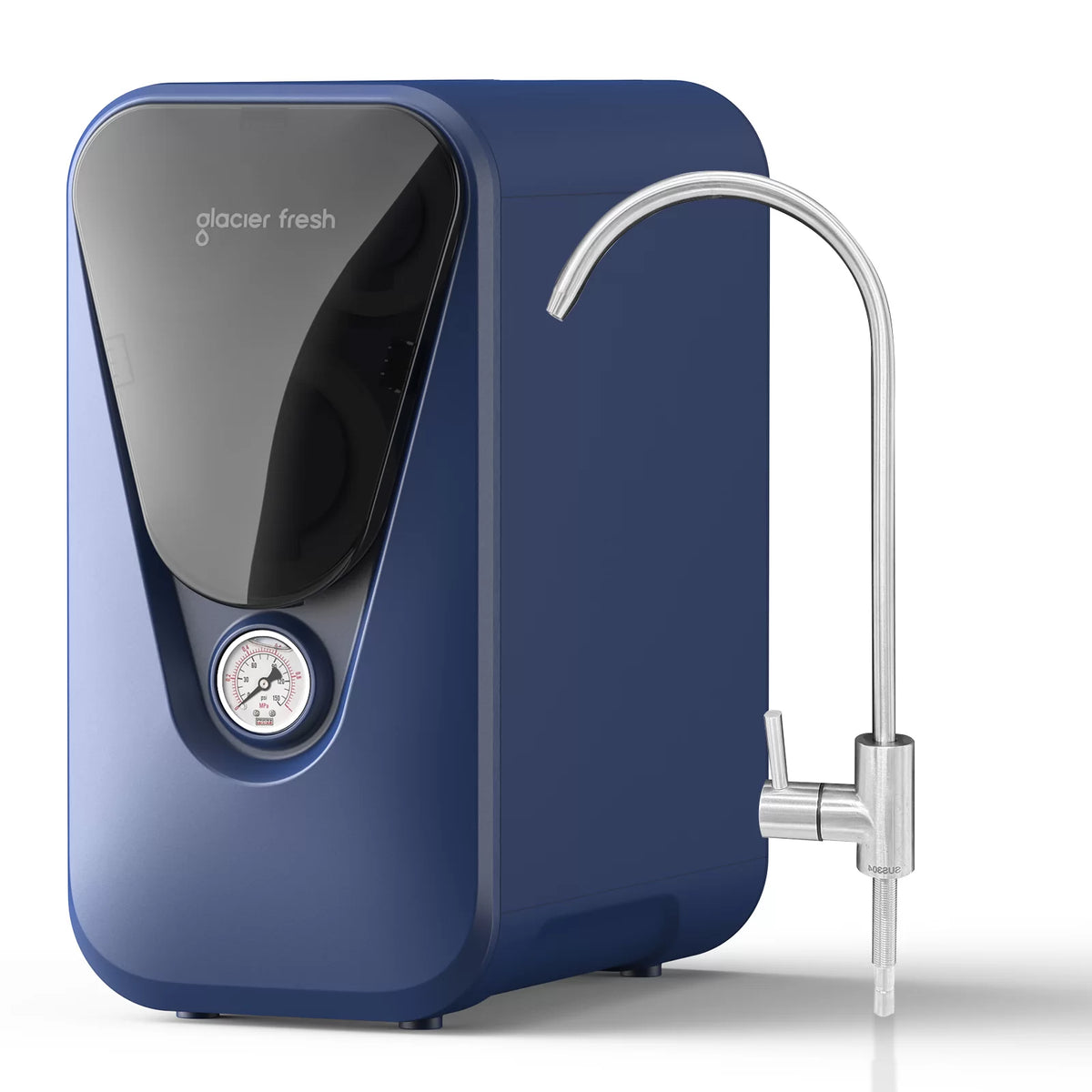
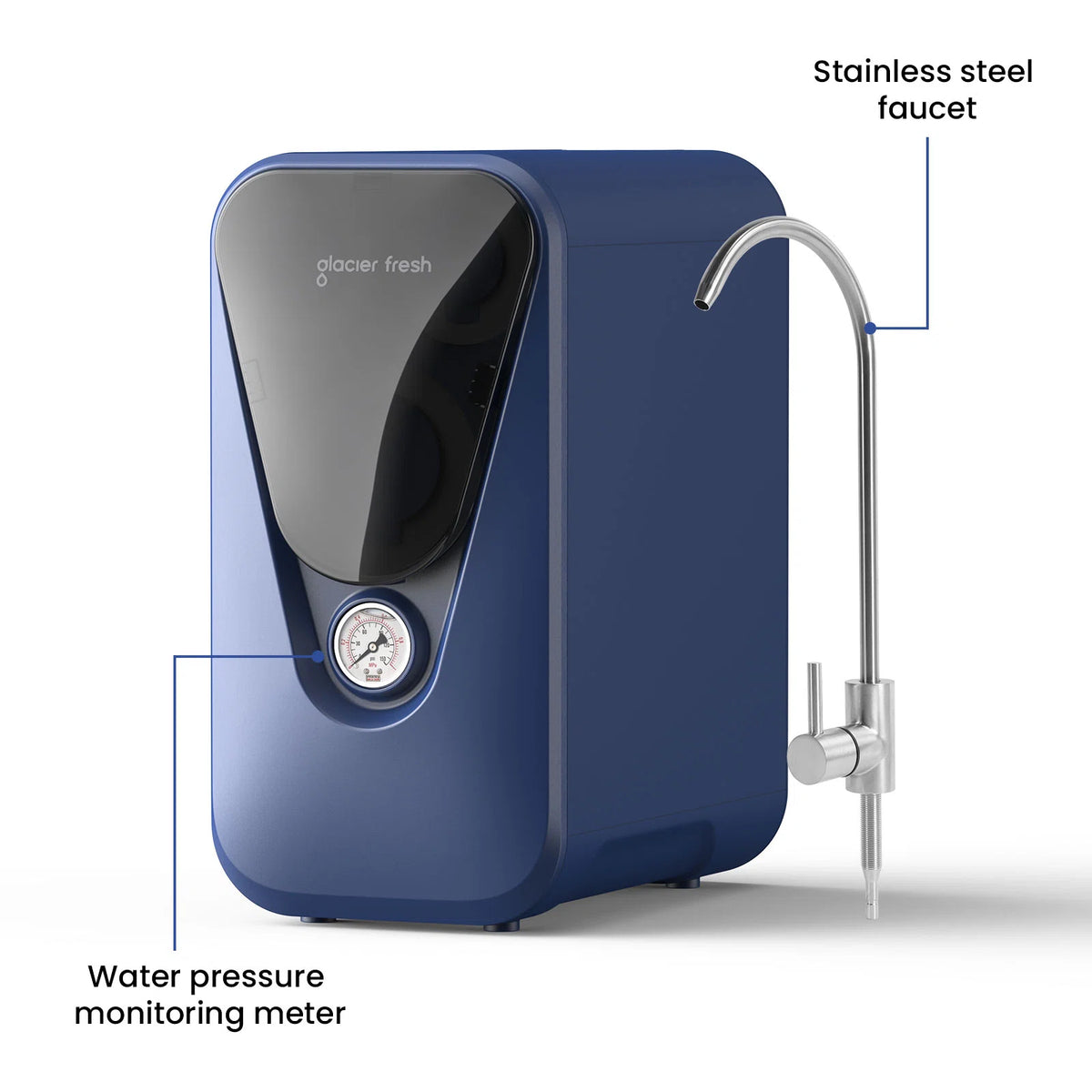
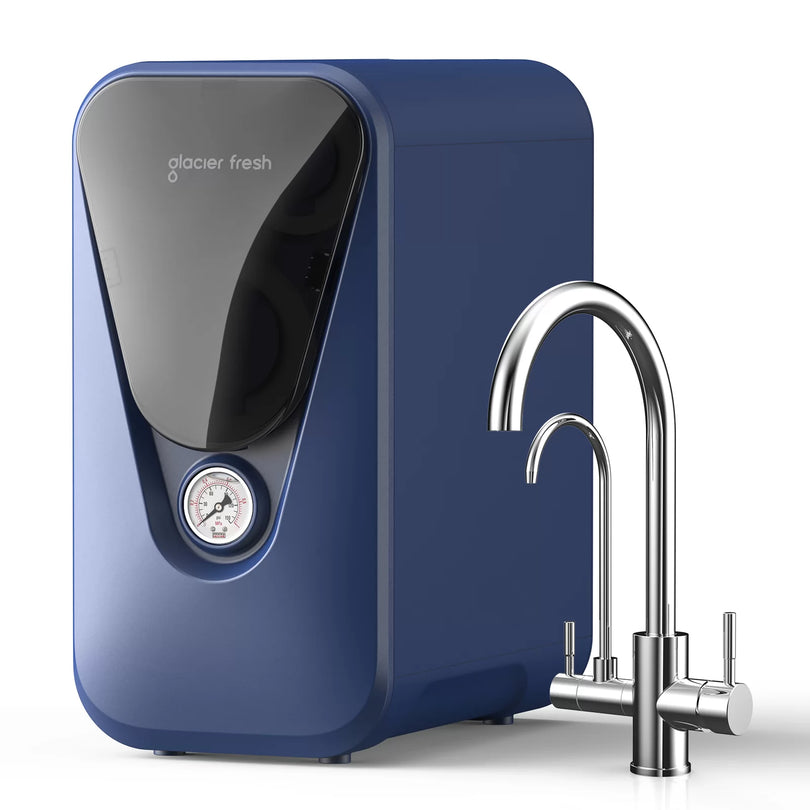
Alkaline bottled waters (e.g., Essentia, Evamor, Core) have a pH between 8 and 9.5 and are widely available at grocery retailers. Compared to structured water, alkaline water has a more plausible mechanism (higher pH may briefly buffer stomach acidity), though evidence for significant health benefits is also limited. In terms of price, alkaline premium bottles typically run $2–$4 per bottle. Neither alkaline nor structured water has been shown to outperform filtered tap water for everyday hydration. Filtered systems like the Glacier Fresh U06 Under-Sink Ultra Filtration System provide clean, great-tasting water at a fraction of the per-liter cost of any premium bottled water.
5. What types of bottled water are available — and which are worth the premium price?
Common bottled water types include: spring water, purified water, mineral water, alkaline water, and so-called structured or hexagonal water. Of these, spring and mineral waters provide the most transparent value — their mineral profiles are regulated and labeled. Structured/hexagonal water commands the highest price premium with the least scientific justification. For most households, a home filtration system offers superior cost-effectiveness compared to any premium bottled water category.
Conclusion
So, is structured water a miracle cure or a marketing myth? The jury's still out on the broader science of water structure — but for commercially sold "structured water" products, the evidence is clear: the claims far outpace the science. Some fascinating research hints at potential effects in niche laboratory conditions, but science has not given its full endorsement to structured water molecule products on the consumer market.
It's wise to approach structured water with a healthy dose of skepticism. Stay curious but also critical. Keep an eye on the evidence, and balance any potential benefits with the cost and availability of these products. After all, staying informed is always the best policy. Find more information about water and water filtration by following Glacier Fresh.
Recommended Resources from Glacier Fresh
For evidence-backed information on water filtration and real water quality concerns, explore these guides:
- Glacier Fresh U06 Under-Sink Ultra Filtration System — Removes bacteria, chlorine, and sediment while preserving beneficial minerals. A practical alternative to pricey structured water products.
- The Truth About PFAS in Your Tap Water and How to Remove It — Understand real, evidence-documented water contaminants that filtration can address.
- Reverse Osmosis, Nanofiber, and Ultrafiltration — Which Is Right for You? — A science-based comparison of proven filtration technologies.