
Table of Contents:
The role of refrigerator water filter
How do refrigerator water filters work?
Decision framework: choosing the right refrigerator or RV water filter
The benefits of clean drinking water from a fridge filter
Filter capabilities: a practical contaminant matrix
What`s the connection between refrigerator water filters and food quality?
How can refrigerator water filters ensure your food safety?
Installation and maintenance checklist
FAQs
Conclusion
The role of refrigerator water filter

Clean water for food storage
Clean water matters most when it touches produce, ice trays, and prepared foods. Using a compatible filter, such as an lg lt1000p refrigerator water filter, can help reduce unwanted tastes and odors while supporting water quality expectations aligned with EPA water quality standards. This is especially useful when tap water has a noticeable disinfectant smell, mineral taste, or visible particles.
Filtered water on food taste
Filtered water can make flavors cleaner because it limits off-notes from disinfectants, sediment, and aging pipes. When cooking pasta, rinsing berries, brewing tea, or making ice, better-tasting water lets the natural flavor of ingredients stand out instead of competing with tap water odor.
How do refrigerator water filters work?
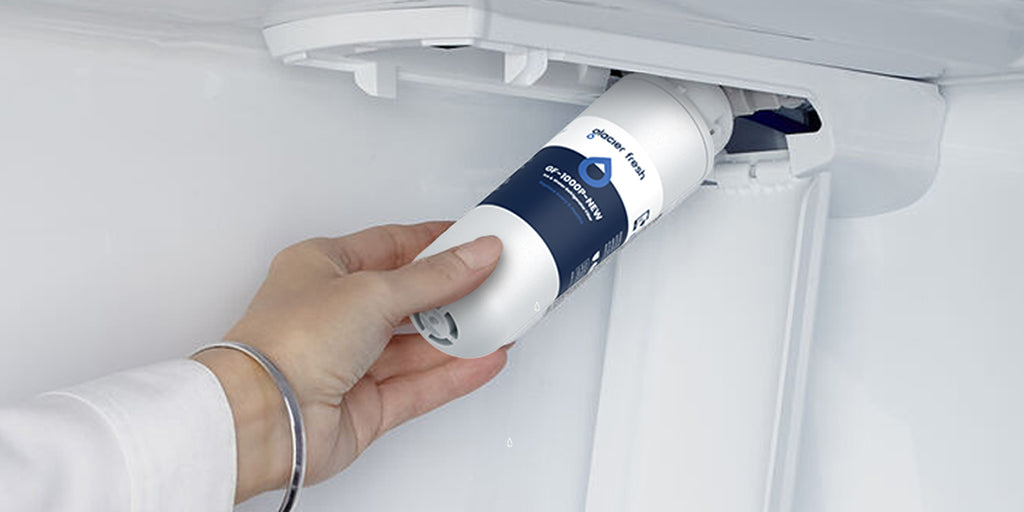 Most refrigerator filters use a compact cartridge that combines physical filtration with adsorption. In plain terms, how does fridge water filter work? Water flows through media such as activated carbon and sediment layers, where particles are trapped and certain chemicals are adsorbed before the water reaches the dispenser or ice maker.
- Activated carbon helps reduce taste and odor issues, especially disinfectant notes from chlorine-based treatment.
- Sediment media captures visible particles such as rust, sand, or fine debris from pipes.
- Some cartridges add microfiltration layers for finer particle reduction, depending on the certified design.
- Performance declines after the rated capacity, so old filters can cause slow flow, cloudy water, or stale taste.
Decision framework: choosing the right refrigerator or RV water filter
Filter choice should start with your water source, not just the appliance. Municipal water, well water, campground hookups, and older home plumbing all create different risks. Use this concise framework when deciding between a standard fridge filter, a portable RV filter, multi-stage filtration, or reverse osmosis.
| Use Case | Best-Fit Filter Type | What It Handles Well | Watch-Outs |
| City water with chlorine taste | Refrigerator carbon filter | Taste, odor, chlorine-related issues, light sediment | Check fridge compatibility and cartridge certification |
| Older plumbing or lead concern | Certified lead-reduction filter or RO system | Lead reduction when specifically certified | Not all filters remove lead; testing recommended for high-risk homes |
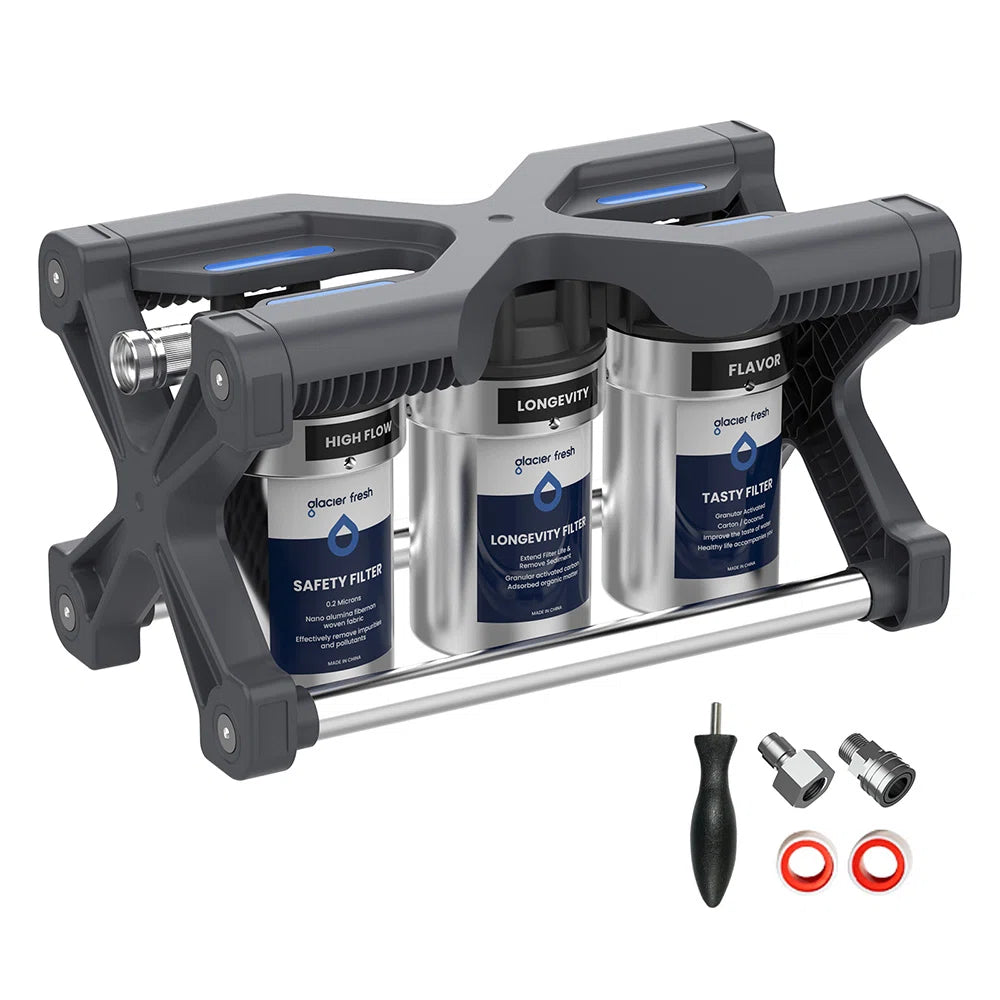
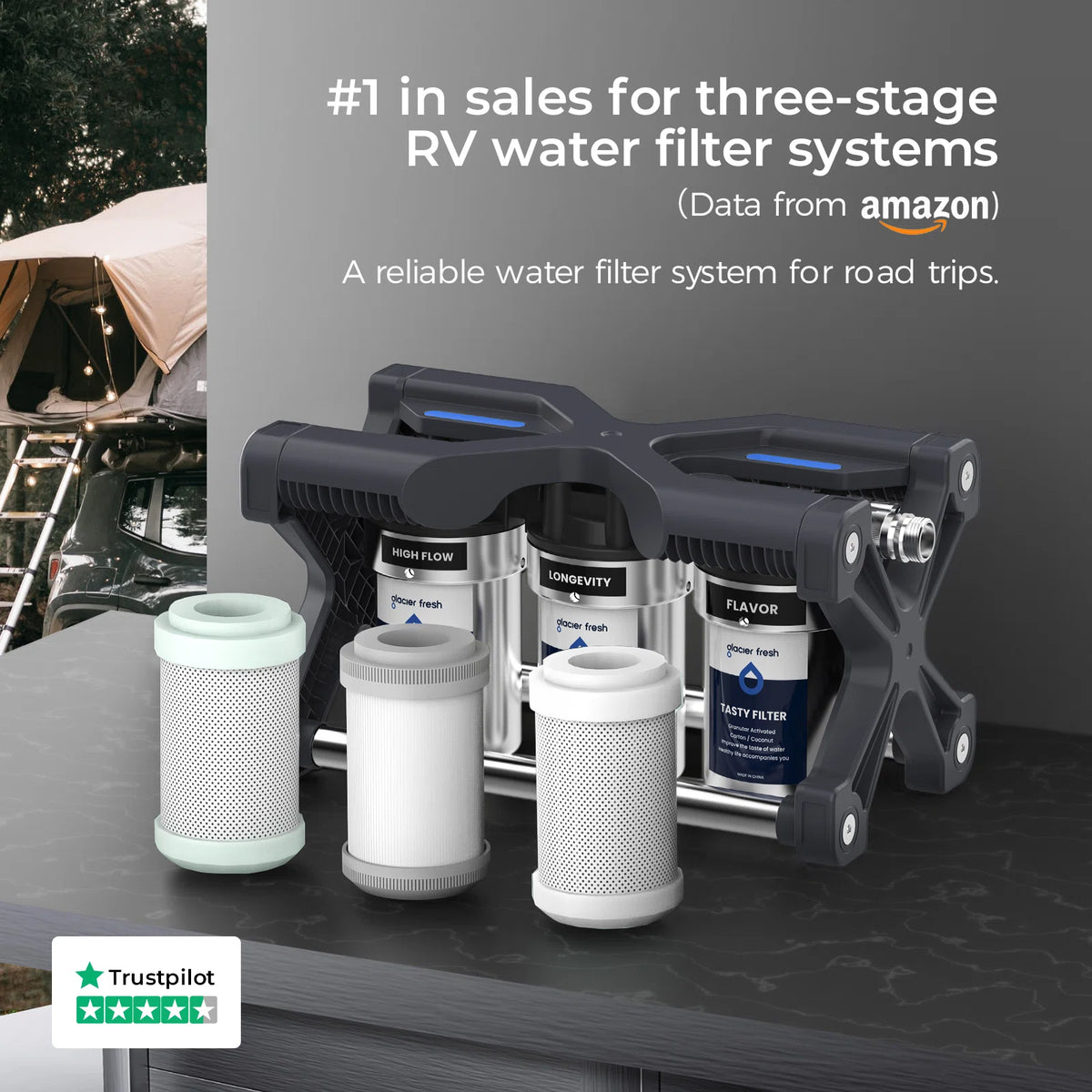
| RV or campground water | Inline carbon + sediment, or portable RO for higher risk | Variable taste, sediment, some chemicals; RO expands contaminant coverage | RO may reduce flow and produce wastewater |
| Well water | Sediment prefilter + lab-based treatment plan | Sand, rust, turbidity as first-stage protection | Bacteria, nitrates, arsenic, or PFAS require testing and targeted treatment |
| Small kitchen or rental | Fridge filter or countertop dispenser | Easy installation and improved daily water convenience | Lower capacity than under-sink filtration systems |
The benefits of clean drinking water from a fridge filter
A fridge filter helps make better water more convenient, which can improve daily drinking habits and reduce reliance on bottled water. It also supports kitchen routines where water quality affects ingredient preparation, beverage flavor, cleaning, and ice quality.
Freshwater for cooking and cleaning: Benefits to consider
 Filtered water is useful beyond drinking. Rinse produce under running filtered water, rub firm fruits and vegetables by hand, drain them well, and dry with a clean towel before storage. For leafy greens, discard damaged outer leaves and avoid soaking produce in standing water for long periods. Filtered water can also improve soups, broths, rice, tea, coffee, and ice by reducing unwanted taste and odor.
Safe drinking water in your home: A necessity for human health
Safe water supports hydration, digestion, and everyday cooking. It also reduces the chance that unwanted contaminants affect foods prepared at home. Because some waterborne diseases are linked to contaminated water, households using private wells, RV hookups, or disaster-affected water supplies should test and disinfect water when needed rather than relying on a fridge filter alone.
Less bottled water and less waste
When the dispenser tastes clean and the ice smells fresh, families are more likely to use filtered water from the refrigerator instead of bottled water. That can lower plastic waste, save storage space, and keep chilled water available without repeatedly running the tap.
Filter capabilities: a practical contaminant matrix
Many shoppers ask what do refrigerator filters filter out. The answer depends on the filter media and certifications. Always check the exact cartridge claims because two filters that look similar may perform very differently.
| Contaminant | Typical Concern | Fridge Carbon Filter | Sediment Filter | Reverse Osmosis / Multi-Stage |
| Chlorine taste/odor | Unpleasant taste, odor, changes in food and beverage flavor | Strong when designed for it | Low | Strong with carbon stage |
| Lead / heavy metals | Health risk, especially from older plumbing | Only if certified for lead reduction | Low | Strong when properly certified system is used |
| Sediment / rust | Cloudy water, particles, clogged fixtures | Moderate | Strong | Strong with prefilter |
| Bacteria | Illness risk in wells or unsafe sources | Limited unless specifically certified | Low | May require UV or disinfection in addition |
| PFAS / PFOA | Emerging chemical concern in some regions | Varies by certified carbon design | Low | Often stronger with RO or specialized media |
| Minerals / hardness | Scale, spots, appliance buildup | Limited | Low | RO reduces many dissolved solids |
What`s the connection between refrigerator water filters and food quality?
Food quality depends on ingredient freshness, storage temperature, hygiene, and the water used in preparation. A refrigerator filter contributes by making daily water contact cleaner and more consistent, particularly for ice, rinsed produce, cooked grains, soups, and beverages.

You can improve the quality of your food by using a refrigerator water filter. Here's how it works:
- Better rinsing: Filtered water can reduce off-odors and visible particles on produce before storage or preparation.
- Cleaner ice: Ice made from filtered water is less likely to carry chlorine odor into drinks or chilled foods.
- Improved cooking results: Rice, pasta, soups, and coffee can taste cleaner when the water has fewer taste and odor issues.
- Fewer nuisance problems: Replacing filters on schedule helps prevent slow flow, stale taste, and loose carbon fines after installation.
How can refrigerator water filters ensure your food safety?

A refrigerator filter is most effective as part of a broader kitchen safety routine. It can improve the water used around food, but it does not replace correct refrigeration, handwashing, surface cleaning, or testing when water quality is uncertain.
- Use filtered water when rinsing produce, filling ice trays, preparing baby-food ingredients, or making drinks.
- If the fridge has been unused for several days, run and discard several cups of water before drinking.
- After replacing a filter, flush it according to the manufacturer’s instructions to remove trapped air and carbon fines.
- If water becomes cloudy, metallic, earthy, or slimy, stop using it for food preparation until the cause is identified.
- For wells, RV tanks, or water advisories, test and disinfect the source before depending on appliance filtration.
Installation and maintenance checklist
Correct installation matters because a loose seal, wrong cartridge, skipped flushing step, or overdue replacement can reduce filter performance. The checklist below keeps maintenance simple without adding unnecessary steps.
Before installation
- Confirm the refrigerator model and filter part number before buying a replacement.
- Inspect the O-rings and connection point for cracks, debris, or old filter residue.
- Turn the cartridge firmly until it locks; do not force a mismatched filter into place.
After installation
- Flush the new cartridge until water runs clear and air bubbles settle.
- Check for leaks around the filter housing during the first hour of use.
- Discard the first batch of ice after replacement if the fridge manual recommends it.
Ongoing Schedule
As a practical rule, replace the filter every 6 months or sooner if the rated gallon capacity is reached, flow slows, water tastes stale, or the indicator light turns on. A simple estimate is: replacement interval in months = filter capacity in gallons / average daily filtered-water use / 30. For example, a 200-gallon filter used at 1.5 gallons per day lasts about 4.4 months. During heavy summer use, illness recovery, frequent cooking, or RV travel, shorten the interval.
FAQs
Can using a refrigerator water filter improve the lifespan of fruits and vegetables?
If you are wondering do fridges filter water, the practical answer is yes, when the refrigerator has a properly installed and maintained filter. It can help indirectly. Filtered water may reduce off-odors, sediment, and some chemical tastes during rinsing, but produce lifespan still depends most on freshness at purchase, drying after washing, proper refrigerator temperature, and storage humidity.
Is it safe to consume unfiltered water from the refrigerator for cooking and drinking?
It may be safe if your source water is already safe, but unfiltered water can carry taste, odor, sediment, or plumbing-related contaminants. If you use a private well, have old pipes, or notice sudden changes in water quality, test the water before using it for drinking or cooking.
How can I improve the taste of water from my fridge?
Replace an overdue filter, flush the new cartridge fully, clean the dispenser area, discard old ice, and confirm that the filter is properly seated. Chlorine odor, stale ice, and plastic-like taste often improve after correct flushing and timely replacement.
What are the common causes of cloudy water from a fridge filter?
Cloudiness is often trapped air after installation and may clear in a few seconds. If it persists, check for a loose cartridge, clogged filter, sediment in the water line, or a filter that has exceeded its rated life.
How can I tell if my refrigerator water filter needs to be replaced?
Warning signs include slow water flow, odd taste or smell, cloudy water that does not clear, small particles, weak ice quality, or a filter indicator light. Most households should replace the filter about every 6 months, but heavy use may require sooner replacement.
Conclusion
Refrigerator water filters help connect better drinking water with better kitchen results. They can improve taste, reduce odor, support produce washing, improve ice quality, and make filtered water easier to use every day. The best results come from matching the filter to your water source, checking certifications, replacing cartridges on schedule, and testing water when risks go beyond what a standard fridge filter is designed to handle.
For broader contaminant concerns, remember that chlorine is only one possible issue; wells, RV hookups, and aging pipes may also involve sediment, metals, nitrates, or bacteria and viruses that require targeted testing and treatment.