
Table of Contents:
What Are Microplastics and Why Should You Care?
How Do Filtration Systems Handle Micro-Level Contaminants?
Countertop Reverse Osmosis vs Carbon Water Filter: Which Works Better for Microplastics?
How Do Countertop Water Filters Compare to Under-Sink Filtration Systems?
What About Gravity-Fed Countertop Filters?
How Do Different Pure Water Filtration Systems Compare in Terms of Filtration Quality?
FAQs
Conclusion
Tap water across North America is treated before it reaches your home, but it doesn't come out identical everywhere. Pipes, local sources, and aging infrastructure all play a role in what actually ends up in your glass.
Microplastics are now part of that picture. And switching to bottled water doesn't really solve it. One report found people who rely only on bottled water may ingest up to 90,000 microplastic particles per year, compared to about 4,000 from tap water. That's why more households are looking at countertop reverse osmosis filtration instead of just switching sources.
What Are Microplastics and Why Should You Care?

Microplasticsare plastic particles smaller than 5 millimeters. Some you can see if you look closely. Others are microscopic and move through water systems without much resistance.
They usually come from a few everyday sources:
- Plastic waste breaking down over time
- Synthetic clothing fibers released in the wash
- Industrial runoff and manufacturing processes
In the U.S., most drinking watercomes from surface water or groundwater. As it moves through soil and pipes, it can pick up both natural and man-made contaminants. Microplastics are just one piece of that mix.
Are Microplastics Harmful?
Research here is still catching up. Early studies point to possible links with inflammation and endocrine disruption, but nothing is fully settled yet.
At the same time, water quality concerns go beyond microplastics. The CDC estimates that at least 1.1 million people in the U.S. get sick each year from germs in drinking water. Another report shows that over 97 million peopleare exposed to unregulated contaminants.
So the goal for most households isn't perfection, but reduction. You lower exposure where you can and make the water you drink every day a bit safer. That's usually how people approach it in real life.
How Do Filtration Systems Handle Micro-Level Contaminants?
Filtration systems don't all work at the same scale. Some are designed for visible particles and taste, while others are built to handle contaminants you can't see at all.
Physical filtration vs adsorption
Most basic systems rely on carbon water filter technology, which uses adsorption to trap contaminants on the surface of activated carbon. This works well for chlorine, odors, and some larger particles.
Physical filtration, on the other hand, depends on pore size. The smaller the pores, the smaller the particles the filter can block. This is where membrane-based systems start to stand out.
Why pore size matters for microplastics
Microplastics exist across a wide size range, from visible fragments to particles that behave almost like dissolved solids. That range makes them harder to remove consistently with a single method.
If the pore size is larger than the particle, it passes through. If it's smaller, it gets blocked. It sounds simple, but in practice it means only certain systems can reliably capture the smallest microplastics.
Multi-stage filtration in real use
Many modern systems combine different methods to cover more ground. You might see a setup that includes:
- Carbon filtration for taste and chemicals
- Sediment filters for larger particles
- Membranes for ultra-fine contaminants
That layered approach is what allows filtration systems to handle both everyday water issues and smaller contaminants like microplastics.
Countertop Reverse Osmosis vs Carbon Water Filter: Which Works Better for Microplastics?
If you're comparing filtration types, this is where the difference becomes more obvious.
How Reverse Osmosis Removes Microplastics
A countertop reverse osmosis system uses a semi-permeable membrane with pores around 0.0001 microns. That's extremely small, small enough to block most contaminants you'd find in household water.
A reverse osmosis water filter for microplastics can remove:
- Microplastics across a wide size range
- acteria and viruses
- Dissolved solids and many chemicals
The CDC recognizes reverse osmosisamong technologies that remove bacteria and viruses because of how fine the membrane is. It can also reduce contaminants like lead, arsenic, and fluoride.
That's why RO systems are often seen as the most complete option at home. They don't just target one category, but they also handle a broader range.
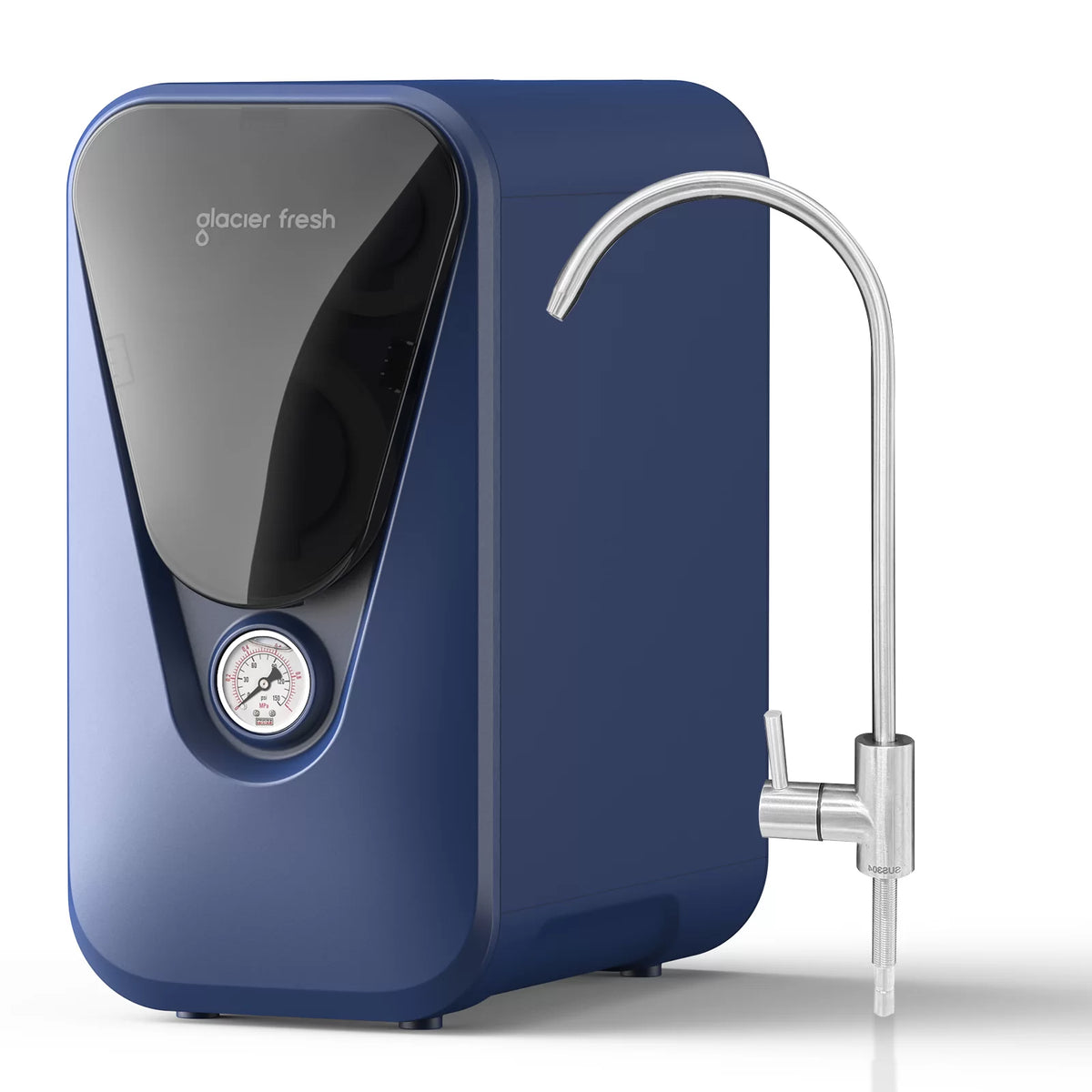
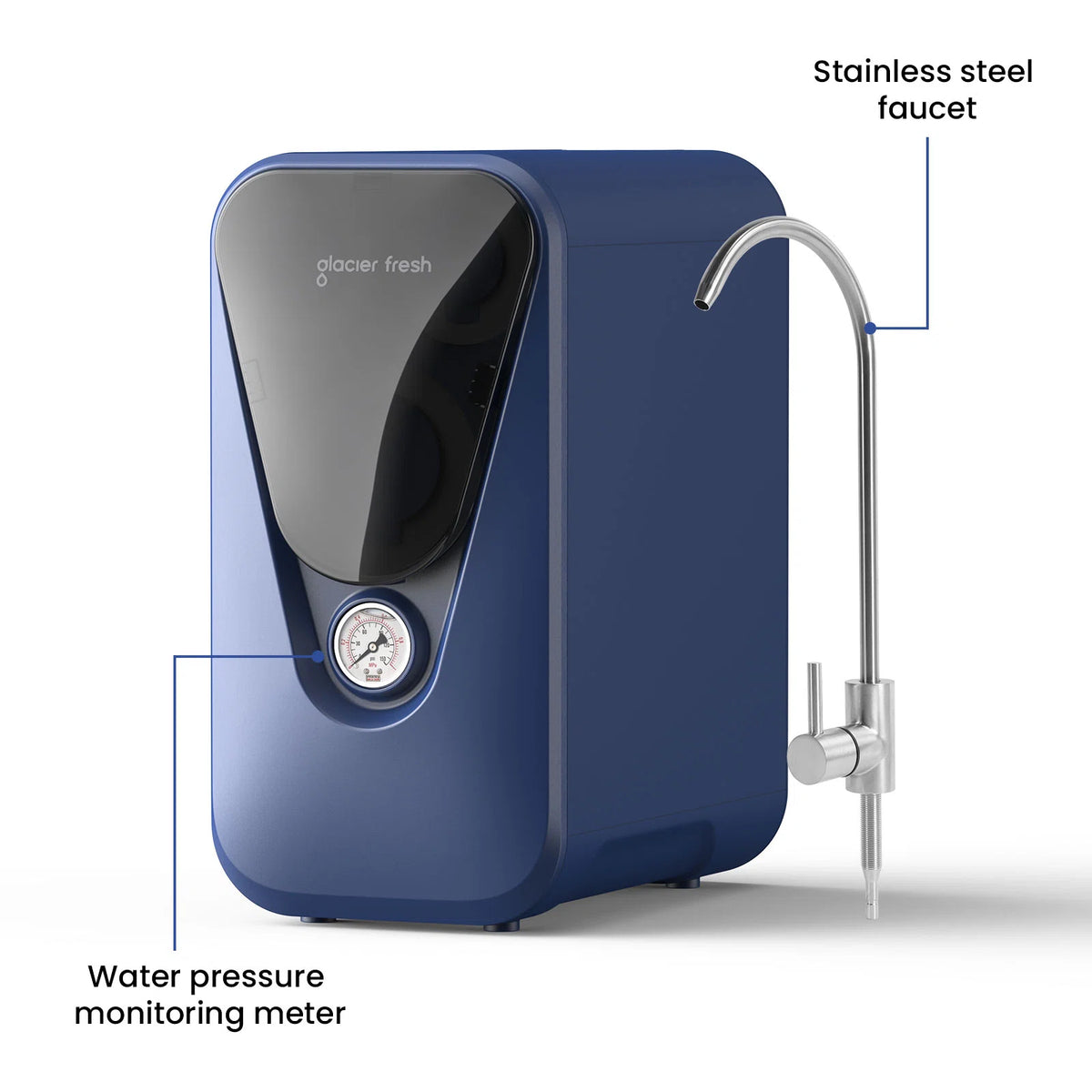
The Glacier Fresh U03 RO System features a high flow rate of 800 GPD and requires neither a water tank nor electricity. It also offers a filtration precision of 0.0001 microns and is capable of filtering out up to 99.99% of microplastics.
💡Note: If you rent and don’t want to drill holes, the U03 Tankinside RO system is the perfect solution for you. It requires no installation—it’s plug-and-play—and is compact yet has a large capacity.
How Carbon Water Filters Perform
A carbon water filter works differently. It uses adsorption, which means contaminants stick to the surface of activated carbon as water passes through.
It works well for:
-
Chlorine and taste issues
-
Some organic compounds
-
Larger particles, including certain microplastics
But it's not built for ultra-fine filtration. Smaller microplastics may pass through, depending on their size and the filter structure. You still get improvement, just not the same level of certainty as RO.
What the Science Says
When you put both methods side by side, the pattern is fairly consistent:
- Reverse osmosis offers the highest removal efficiency for very small particles
- Carbon filtration reduces some microplastics but not all
- Multi-stage systems often combine both for broader coverage
If microplastics are your main concern, RO gives you more confidence. If you're focused on overall water quality, carbon filtration still plays a useful role.
How Do Countertop Water Filters Compare to Under-Sink Filtration Systems?
Both options use similar technology, but how they fit into your home can feel very different.
Filtration Capability
Under-sink systemsusually have more space for multiple filtration stages and operate with steady water pressure. That helps keep performance consistent over time.
Modern countertop reverse osmosis systems have improved quite a bit. Some now deliver similar filtration in a smaller format, though performance still depends on the specific model.
Convenience vs Performance
Countertop systems are easier to work with day to day:
- No installation needed
- Easy to move or replace
- Works well in rentals or smaller kitchens
Under-sink systems are more permanent. You install them once and they run in the background, which some people prefer.
The Trade-Off
It usually comes down to how you use water. If you want high-volume, consistent filtration, under-sink systems like the GlacierFresh U03 800GPD RO Systemsetups make sense.
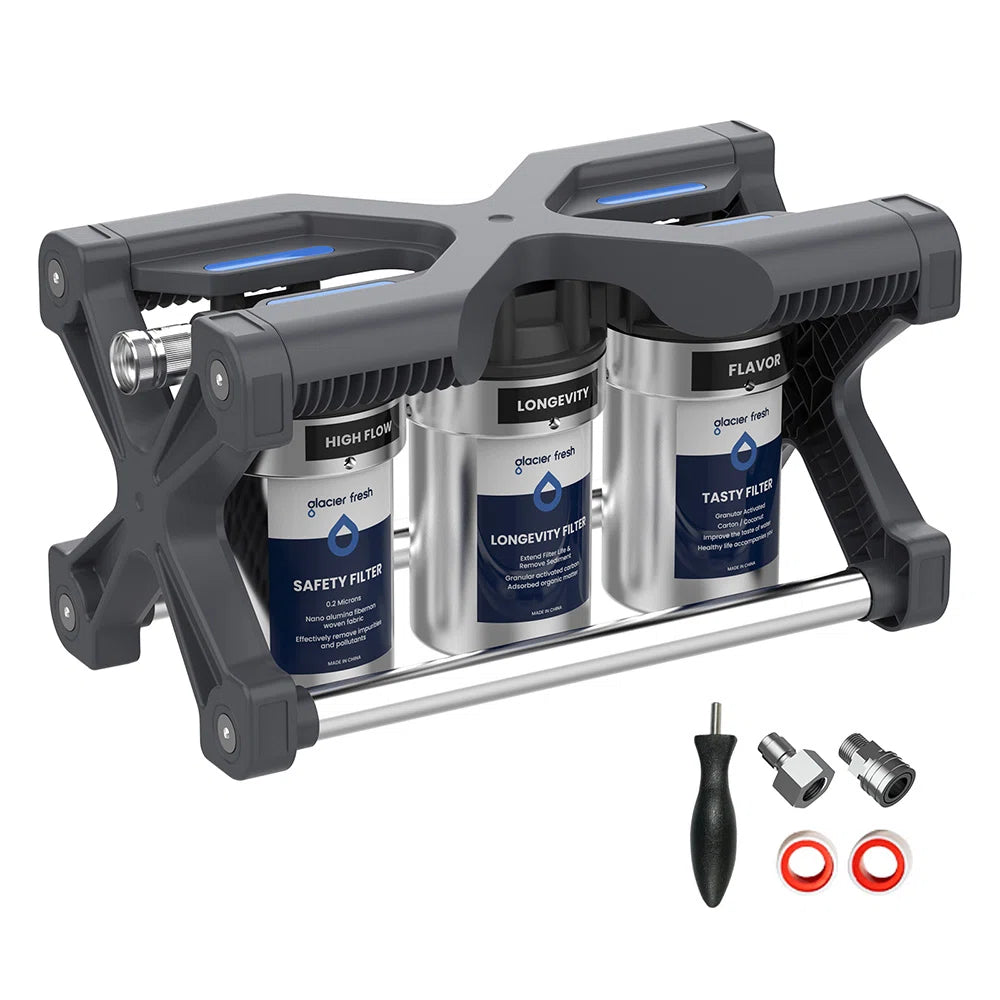
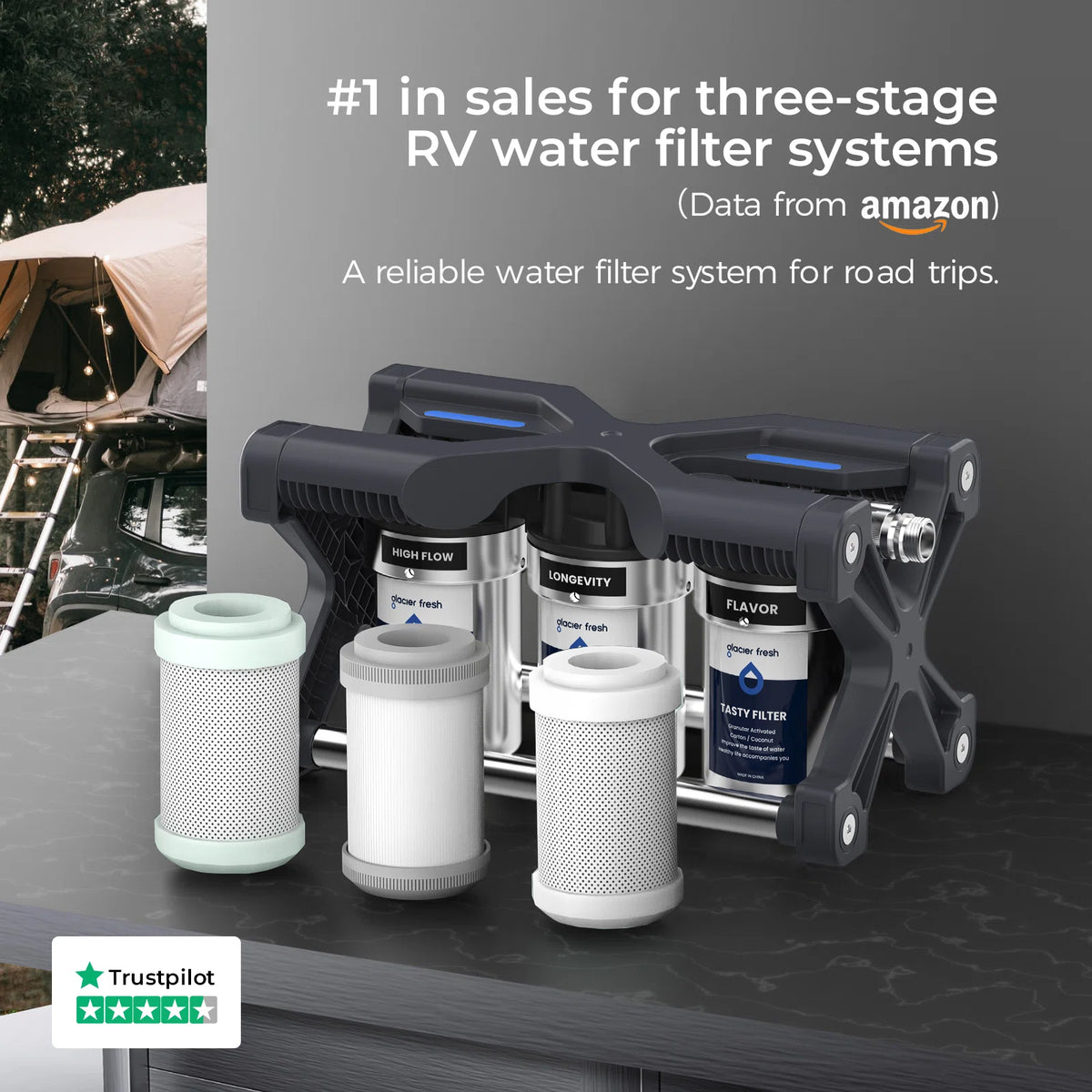
If you need flexibility, a countertop option or even an RV-compatible RO systemgives you more control without changing your plumbing.
What About Gravity-Fed Countertop Filters?

Gravity systems take a slower, simpler approach. No pumps, no electricity, just time and natural pressure.
They often combine carbon filtration with ceramic or nanofiber membranes. That setup can reduce:
- Sediment and visible particles
- Chlorine and odor
- Some larger microplastics
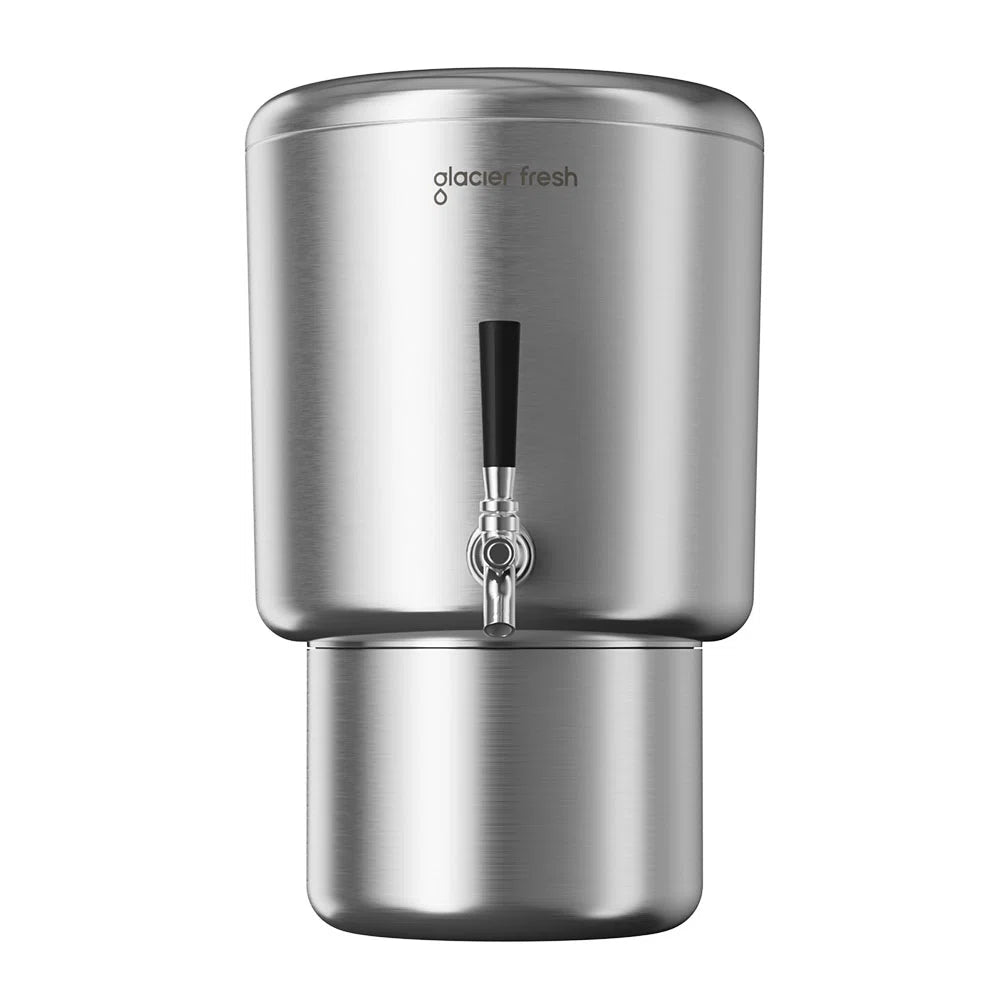
A system like the GlacierFresh PC04 2.25-gallon countertop filter uses multi-stage filtration with a positively charged membrane and carbon media. You just pour water in and let it filter. It's straightforward, and for a lot of households, that's the appeal.
Because gravity systems rely on physical filtration and slower flow, they don't reach the same ultra-fine level as RO. Still, they strike a balance between ease of use and everyday performance.
How Do Different Pure Water Filtration Systems Compare in Terms of Filtration Quality?
|
System |
Filtration method |
Typical pore size |
Microplastics removal |
Strengths |
Limitations |
|
Semi-permeable membrane |
~0.0001 microns |
High (including very small particles) |
Broad contaminant removal, consistent results |
Higher cost, more maintenance |
|
|
Carbon-based |
Adsorption (activated carbon) |
Not pore-based (surface capture) |
Partial (larger particles) |
Improves taste, reduces chlorine and chemicals |
Not effective for ultra-fine particles |
|
Gravity/ multi-stage |
Carbon + membrane layers |
Varies by design |
Moderate (depends on stages) |
No electricity, simple setup, balanced filtration |
Slower flow, less precise than RO |
In practice, RO gives you the highest filtration quality, while carbon and gravity systems improve everyday water in a simpler way.
FAQs
What is the most effective water filtration system?
Reverse osmosis is generally considered the most effective household filtration method because it removes a wide range of contaminants, including microplastics, bacteria, and dissolved solids. It works at a much finer level than most other systems.
Which water filter is best for removing contaminants in drinking water?
It depends on what you're trying to remove. A countertop reverse osmosis system is best for broad contaminant removal, while a carbon water filter is better for improving taste and reducing chlorine and some chemicals.
What factors affect filtration performance for small contaminants?
The main factors are pore size, filtration method, and system design. Smaller pore sizes and membrane-based systems perform better for very fine particles like microplastics.
Are microplastics worse in bottled water than tap water?
Some studies suggest bottled water can contain more microplastics than tap water, which is why filtration is often a better long-term option.
Do gravity filters make water safe to drink?
They can reduce many contaminants and improve taste. The exact level of protection depends on the filter design and your source water.
Conclusion
Microplastics are part of a bigger water quality picture, and most homes are dealing with more than one contaminant at a time. There isn't a single system that solves everything.
A countertop reverse osmosis system gives you the highest level of filtration for very small particles, including microplastics, while carbon and gravity systems still improve everyday water quality in a noticeable way.
If you're ready to improve your daily water quality, explor GlacierFresh filtration systems designed for real household use.
References
-
The Washington Post. Plastic Water Bottles and Microplastics.
https://www.washingtonpost.com/wellness/2026/01/26/plastic-water-bottles-microplastics/ -
United States Environmental Protection Agency. Drinking Water.
https://www.epa.gov/report-environment/drinking-water -
Centers for Disease Control and Prevention. Drinking Water Facts and Stats.
https://www.cdc.gov/drinking-water/data-research/facts-stats/index.html -
Silent Spring Institute. Over 97 Million US Residents Exposed to Unregulated Contaminants in Their Drinking Water.
https://silentspring.org/news/over-97-million-us-residents-exposed-unregulated-contaminants-their-drinking-water -
Centers for Disease Control and Prevention. About Choosing Home Water Filters.
https://www.cdc.gov/drinking-water/prevention/about-choosing-home-water-filters.html -
Centers for Disease Control and Prevention. About Home Water Treatment Systems.
https://www.cdc.gov/drinking-water/about/about-home-water-treatment-systems.html