
Table of Contents:
What Are PFAS, Lead, and Chlorine, and Why Are They in Your Tap Water?
What Contaminants Can Water Filtration Systems Remove from Tap Water?
Does Reverse Osmosis Remove PFAS, Lead, and Chlorine? Simple Removal Matrix
What Are the Main Differences Between Sediment and Carbon Water Filters?
What Are the Most Effective Water Filters for Removing Nitrates?
What Are the Best Water Purification Methods for Home Use?
Which Water Filter Is Best for Removing Contaminants in a Household?
How to Know If Your Tap Water Needs a Reverse Osmosis Filter
FAQs
Conclusion
Most households assume their tap water is clean, but concerns about PFAS and aging pipes suggest otherwise. If you’re looking for a reliable water filter for PFAS, it helps to know what actually works. This guide shows what’s in your water and why a reverse osmosis filter for PFAS is often the most complete fix.
What Are PFAS, Lead, and Chlorine, and Why Are They in Your Tap Water?

PFAS ("Forever Chemicals")
PFAS, over 5,000 man-made chemicals, show up in non-stick pans, stain-resistant fabrics, firefighting foam, and food packaging. The problem is simple: they don’t break down. Not in the environment, not in your body.
They’re now estimated to be in about 45% of U.S. tap water, with roughly 165 million Americans potentially exposed. That scale matters. So do the risks, PFAS have been linked to cancer, liver damage, immune disruption, and hormone issues. In 2024, the EPA set its first enforceable limits for PFOA and PFOS, which says a lot about how serious this has become.
Lead
Lead usually comes from older pipes and plumbing, especially in homes built before 1986. And even at very low levels, it’s a problem.
It’s a neurotoxin, meaning it affects the brain. For children and pregnant women, that can mean lasting developmental and cognitive impacts. The EPA’s action level is 15 ppb, but in reality, there’s no proven safe level.
Chlorine and Chloramine
Chlorine and chloramine are added on purpose to kill bacteria. That part works, but there’s a trade-off.
They can react with organic matter to form byproducts like THMs, which have been linked to long-term health concerns. And on a day-to-day level, they’re often why your water smells or tastes like a swimming pool.
What Contaminants Can Water Filtration Systems Remove from Tap Water?
Here’s a simple breakdown of what different technologies can handle:
| Contaminant | Sediment Filter | Carbon Block | GAC | RO Membrane | UV | Ion Exchange |
|---|---|---|---|---|---|---|
| PFAS | None | Moderate (NSF-certified only) | Low | High | None | Moderate |
| Lead | None | Moderate (certified systems) | Low | Very high | None | Moderate |
| Chlorine | None | High | High | Low | None | None |
| Nitrates | None | None | None | High | None | High |
| Fluoride | None | None | None | High | None | None |
| Arsenic | None | None | None | High | None | Moderate |
| Sediment | High | Partial | Partial | Partial | None | None |
| Bacteria | None | None | None | High | Very high | None |
| VOCs | None | High | Moderate | Partial | None | None |
A few certifications you’ll want to look for when comparing systems:
-
NSF/ANSI 42 (taste, odor, chlorine)
-
NSF/ANSI 53 (health contaminants like lead)
-
NSF P473 (PFAS reduction)
-
NSF/ANSI 58 (reverse osmosis performance)
-
NSF/ANSI 401 (emerging contaminants)
The key insight here is pretty straightforward: removal depends on both the technology and whether it’s actually certified to do the job.
And this is where multi-stage systems start to stand out. When you combine sediment filtration, carbon filtration, and an RO membrane, you’re covering a much wider range of contaminants in one setup.
Does Reverse Osmosis Remove PFAS, Lead, and Chlorine? Simple Removal Matrix
Let’s make this as clear as possible:
| Contaminant | RO Membrane Alone | Multi-Stage RO System | Activated Carbon Only | Sediment Filter Only |
|---|---|---|---|---|
| PFAS (long-chain) | High (90–99%) | Very high (up to 99%) | Moderate | None |
| PFAS (short-chain) | Good (90%+) | High | Low to moderate | None |
| Lead | Very high (up to 99%) | Very high | Moderate | None |
| Chlorine | Low | High | High | None |
| Chloramine | Low | High | Moderate | None |
Individual filters tend to solve one problem at a time. A multi-stage reverse osmosis filter for PFAS, on the other hand, handles a much broader range.
EPA research has shown that point-of-use RO systems can significantly reduce PFAS levels in drinking water. The CDC also notes that reverse osmosis systems can remove contaminants like lead, chromium, and sodium, and may reduce arsenic, fluoride, and others as well.
What Are the Main Differences Between Sediment and Carbon Water Filters?
Sediment filters are mechanical. They trap physical particles, sand, rust, and silt. That’s it. They’re measured in microns (usually 1–5), and they’re mainly there to protect the rest of your system.
Carbon filters, on the other hand, work through adsorption. They grab onto chemicals like chlorine, VOCs, and some organic compounds. That’s why they’re so good at improving taste and odor.
Between the two types of carbon filters, carbon block is generally more effective than GAC (granular activated carbon). It allows for longer contact time and finer filtration.
Still, it’s important to be realistic: carbon on its own isn’t a dependable water filter for PFAS, unless it’s specifically certified, and even then, results can vary.
In most RO systems, the setup looks like this:
-
Stage 1: Sediment filter
-
Stage 2–3: Carbon filters
-
Core: RO membrane
-
Final stage: Post-carbon polishing
Each stage has a role, and together they create a more complete system.
What Are the Most Effective Water Filters for Removing Nitrates?

Nitrates are a different kind of problem. They’re often linked to agricultural runoff, fertilizers seeping into groundwater, especially in rural or Midwest regions.
The EPA limit is 10 mg/L, and high levels can be dangerous, particularly for infants. There’s even a condition called methemoglobinemia, sometimes referred to as “blue baby syndrome.”
Here’s what actually works:
-
Reverse osmosis: removes about 90–95%
-
Ion exchange (anion resin): highly effective when designed for nitrates
-
Distillation: effective but slow and not very practical for day-to-day use
What doesn’t work?
-
Carbon filters
-
Sediment filters
-
Boiling water (this actually makes nitrates more concentrated)
If you’re on well water or you live in an agricultural area, this is where a reverse osmosis filter for PFAS with nitrate reduction becomes a very practical solution.
What Are the Best Water Purification Methods for Home Use?
Reverse Osmosis (RO)
If you’re looking for broad protection, reverse osmosis is hard to beat. It removes PFAS, lead, nitrates, fluoride, arsenic, microplastics, and a wide range of dissolved solids.
It’s not perfect, though. Filtration is slower than standard filters, and there’s some wastewater involved. That said, newer systems have improved quite a bit in efficiency.
Some systems also add a remineralization stage, which can help restore minerals for better taste.
Activated Carbon Filtration
Great for taste, chlorine, and VOCs. Not so great for heavy metals, nitrates, or PFAS unless specifically certified.
Ion Exchange
Best known for water softening, but also useful for nitrates and certain PFAS compounds when using the right resin.
UV Purification
Excellent for bacteria and viruses, but it doesn’t remove chemical contaminants. So it works best alongside something like RO.
Distillation
Very effective in theory, but in practice it’s slow, energy-intensive, and not ideal for everyday household use.
Which Water Filter Is Best for Removing Contaminants in a Household?
For most city households dealing with PFAS, lead, or chlorine concerns, an under-sink multi-stage RO system is usually the strongest fit.
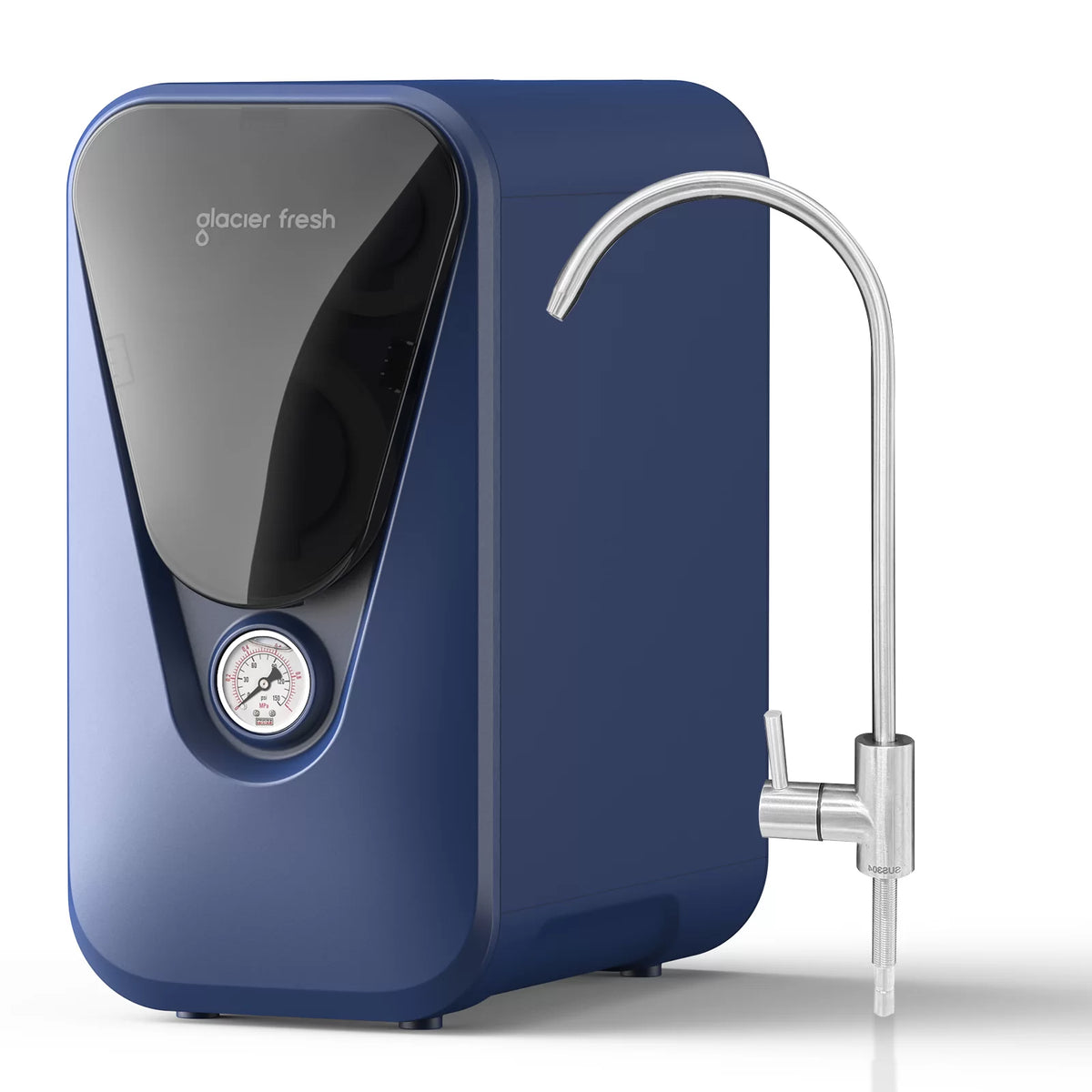
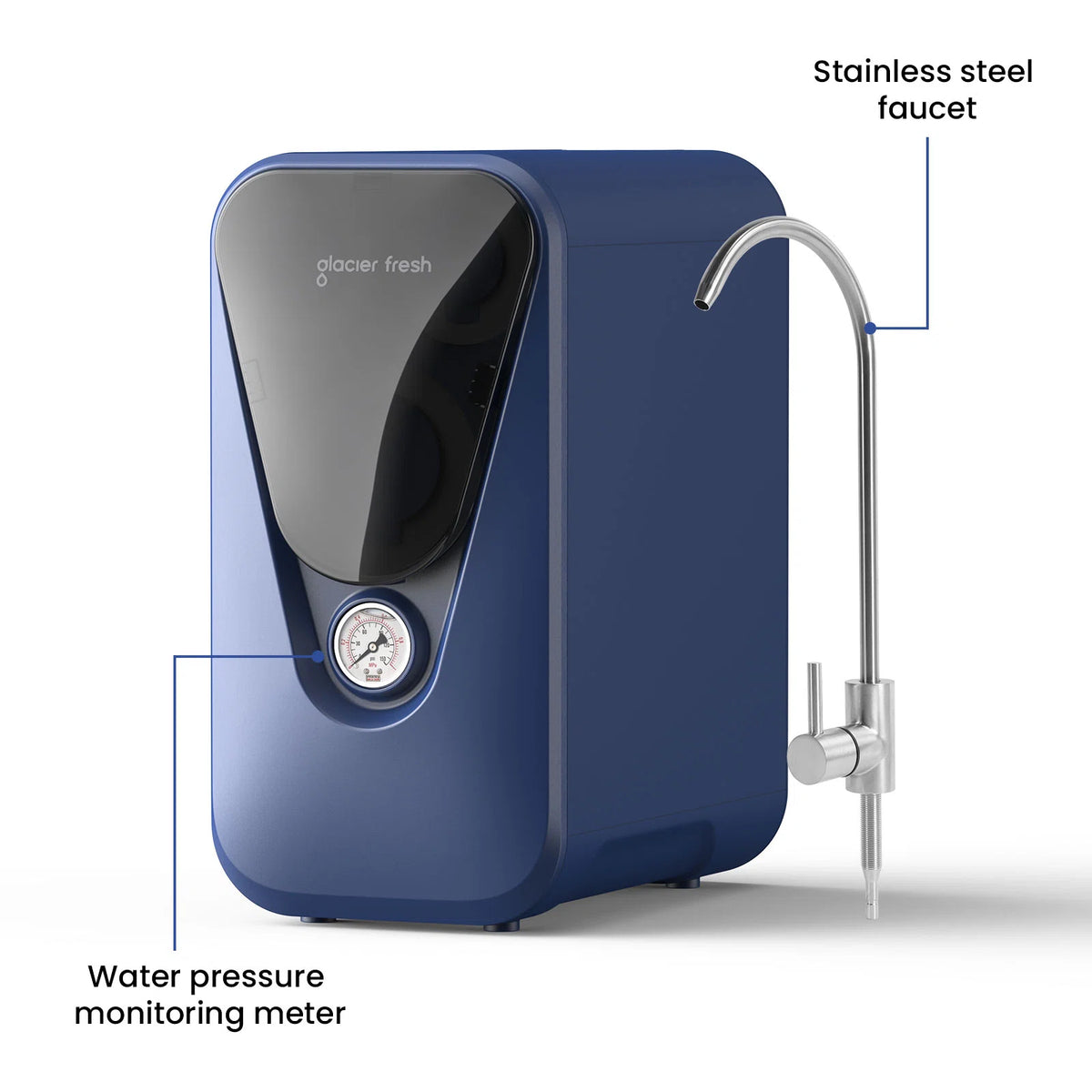
The GlacierFresh U03 800GPD Undersink Reverse Osmosis System is designed for exactly this kind of scenario. It combines high-capacity filtration with multi-stage protection, making it a solid choice if you’re looking for a dependable water filter for PFAS without overcomplicating things.
If you’re on well water, you may need additional pre-treatment, like sediment or iron filtration, depending on your local water conditions.
And if you’re renting or can’t modify plumbing, countertop RO systems or certified pitchers can still help. Just keep in mind, they usually come with limitations in capacity or scope.
How to Know If Your Tap Water Needs a Reverse Osmosis Filter

Start with your Consumer Confidence Report (CCR). It’s published annually by your local utility and gives a snapshot of detected contaminants.
You can also order a professional test from labs like Tap Score or National Testing Labs, especially useful if you’re concerned about PFAS.
Another quick option is the EWG Tap Water Database, where you can look up results by ZIP code.
And then there are the everyday clues:
-
A metallic taste
-
A noticeable chlorine smell
-
Living near industrial areas, airports, or farms
-
A home built before 1986
Even though the EPA introduced PFAS regulations in 2024, utilities have until 2029 to fully comply. That’s a long window. For many households, installing a reverse osmosis filter for PFAS offers a way to take control now instead of waiting.
FAQs
Do PFAS filters remove all types of PFAS?
Not always. Some filters target long-chain PFAS more effectively than short-chain versions, so certification matters.
Is reverse osmosis better than bottled water?
In many cases, yes. RO systems can provide consistent filtration at home without the cost and environmental impact of bottled water.
Can a pitcher filter remove PFAS?
Some certified models can reduce certain PFAS, but performance is usually limited compared to RO systems.
Does reverse osmosis waste a lot of water?
Older systems did, but newer designs are significantly more efficient and reduce waste.
How do I know if my filter is actually working?
Look for NSF certifications and follow the recommended filter replacement schedule to maintain performance.
Conclusion
Water quality isn’t as simple as it used to be. PFAS exposure and aging infrastructure mean municipal treatment alone may not feel like enough.
You do have options. No system is perfect, but multi-stage reverse osmosis comes closest, covering PFAS, lead, nitrates, and more.
If you’re upgrading your water, GlacierFresh systems offer a practical, high-capacity solution for everyday use.
References
-
United States Geological Survey. Tap Water Study Detects PFAS ‘Forever Chemicals’ Across the US. https://www.usgs.gov/news/national-news-release/tap-water-study-detects-pfas-forever-chemicals-across-us
-
Environmental Working Group. New EPA Data Shows 165M People Exposed to Forever Chemicals in US.
https://www.ewg.org/news-insights/news-release/2025/06/new-epa-data-shows-165m-people-exposed-forever-chemicals-us -
United States Environmental Protection Agency. EPA Notifications of Lead Action Level Exceedances.
https://www.epa.gov/ground-water-and-drinking-water/epa-notifications-lead-action-level-exceedances -
NSF. NSF/ANSI 42, 53 and 401 Filtration Systems Standards.
https://www.nsf.org/knowledge-library/nsf-ansi-42-53-and-401-filtration-systems-standards
-
United States Environmental Protection Agency. Identifying Drinking Water Filters Certified to Reduce PFAS.
https://www.epa.gov/water-research/identifying-drinking-water-filters-certified-reduce-pfas -
Centers for Disease Control and Prevention. About Home Water Treatment Systems.
https://www.cdc.gov/drinking-water/about/about-home-water-treatment-systems.html -
United States Environmental Protection Agency. Estimated Nitrate Concentrations in Groundwater Used for Drinking.
https://www.epa.gov/nutrientpollution/estimated-nitrate-concentrations-groundwater-used-drinking