
Table of Contents:
Why Families with Kids and Pets Need a Reverse Osmosis System in 2026
What Is the Best Drinking Water System for Home? Roundup
Which Water Purifier Is Recommended for Home Use?
How to Choose the Best RO Water Filter System for Your Home
What Factors Affect Water Filtration System Performance at Home?
FAQs
Conclusion
You fill a glass from the kitchen tap, pour water into your child’s bottle, or top up your dog’s bowl. You probably don’t think twice about it, but concerns around aging pipes and contaminants like PFAS have made that simple habit feel a bit less certain.
Across the U.S., water treatment plants do their job, but what happens between the plant and your faucet still matters. If you’re managing a busy household, you want something that’s safe, quick to use, and not another thing to keep track of. For many families, that’s where choosing the best reverse osmosis system starts to make sense.
Why Families with Kids and Pets Need a Reverse Osmosis System in 2026

Tap water in North America is regulated, but by the time it reaches your home, it isn’t always consistent. Aging infrastructure still plays a role, especially in older neighborhoods where pipes can introduce contaminants after treatment.
Lead exposure is one example. A reported 9,000 children in the most vulnerable age group were exposed to lead, which can lead to long-term developmental issues, including learning and behavioral problems.
PFAS contamination is another growing concern. The EPA estimates that 165 million Americans are exposed to these chemicals through drinking water. A U.S. Geological Survey study also found that at least 45% of tap water contains one or more PFAS compounds.
There’s also the issue of microorganisms. The CDC estimates that about 1 in 44 people in the U.S. get sick from waterborne diseases each year.
Children and pets are more sensitive to these exposures. Their smaller body weight means contaminants have a bigger impact, and their systems are still developing. Even low levels can add up over time, which is the part most families worry about.
Microplastics have also entered the conversation. Studies suggest people drinking bottled water may ingest up to 90,000 microplastic particles annually. This shows that switching sources doesn’t automatically solve the problem.
What Is the Best Drinking Water System for Home? Roundup
There are several types of home water filtration systems, and they differ quite a bit in what they actually remove.
| System Type | Contaminant Coverage | Best For | Limitations |
|---|---|---|---|
| Reverse Osmosis (Under-sink) | Broadest coverage (PFAS, lead, nitrates, microplastics) | Families and high-risk tap water areas | Requires installation |
| Carbon pitcher filter | Chlorine, odors, and some VOCs | Basic taste and odor improvement | Cannot reliably remove PFAS or lead |
| Refrigerator filter | Chlorine and sediment | Everyday convenience | Limited contaminant reduction |
| UV filter | Bacteria and viruses | Biological contamination risks | Does not remove chemicals or heavy metals |
| Whole-house filter | Sediment and chlorine | Multi-tap household protection | Limited effectiveness against PFAS and nitrates |
Most home filters rely on carbon and focus on taste and odor. According to the CDC, most of them don’t remove germs or a full range of contaminants.
That’s where the best reverse osmosis system stands out. RO membranes are designed to filter down to extremely small particles, allowing them to remove both chemical contaminants and microorganisms.
Which Water Purifier Is Recommended for Home Use?

Different households have different constraints, so the best RO system for home depends on your space, water usage, and installation flexibility.
Best Reverse Osmosis System for Large Families: High-GPD Undersink RO
If you’ve got kids or pets, water demand adds up quickly. You’re filling glasses, cooking, making ice, and refilling pet bowls all day. It doesn’t slow down much.
This is where high-capacity systems start to make sense. An 800 GPD reverse osmosis system can keep up with repeated use without much lag, even during busy hours.
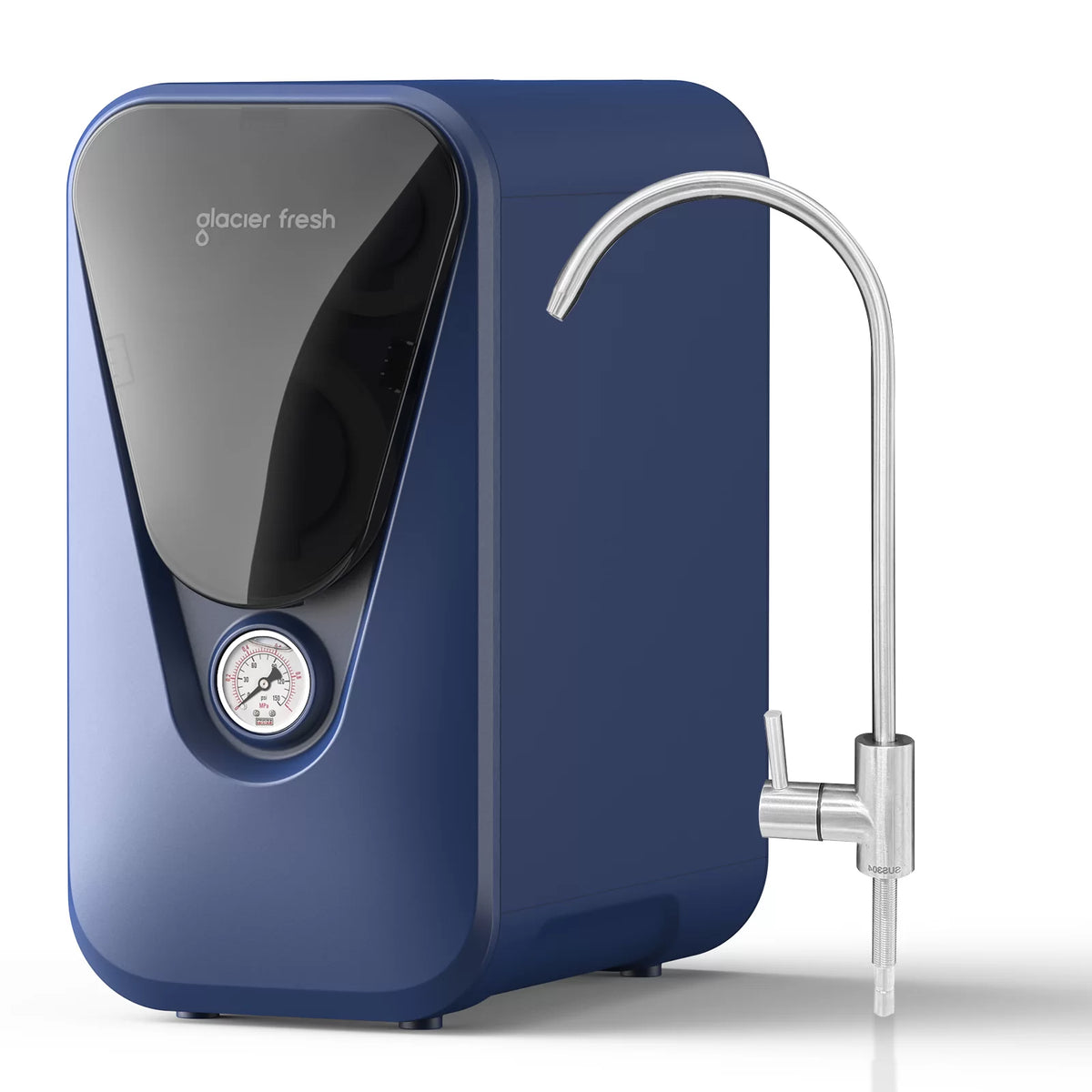
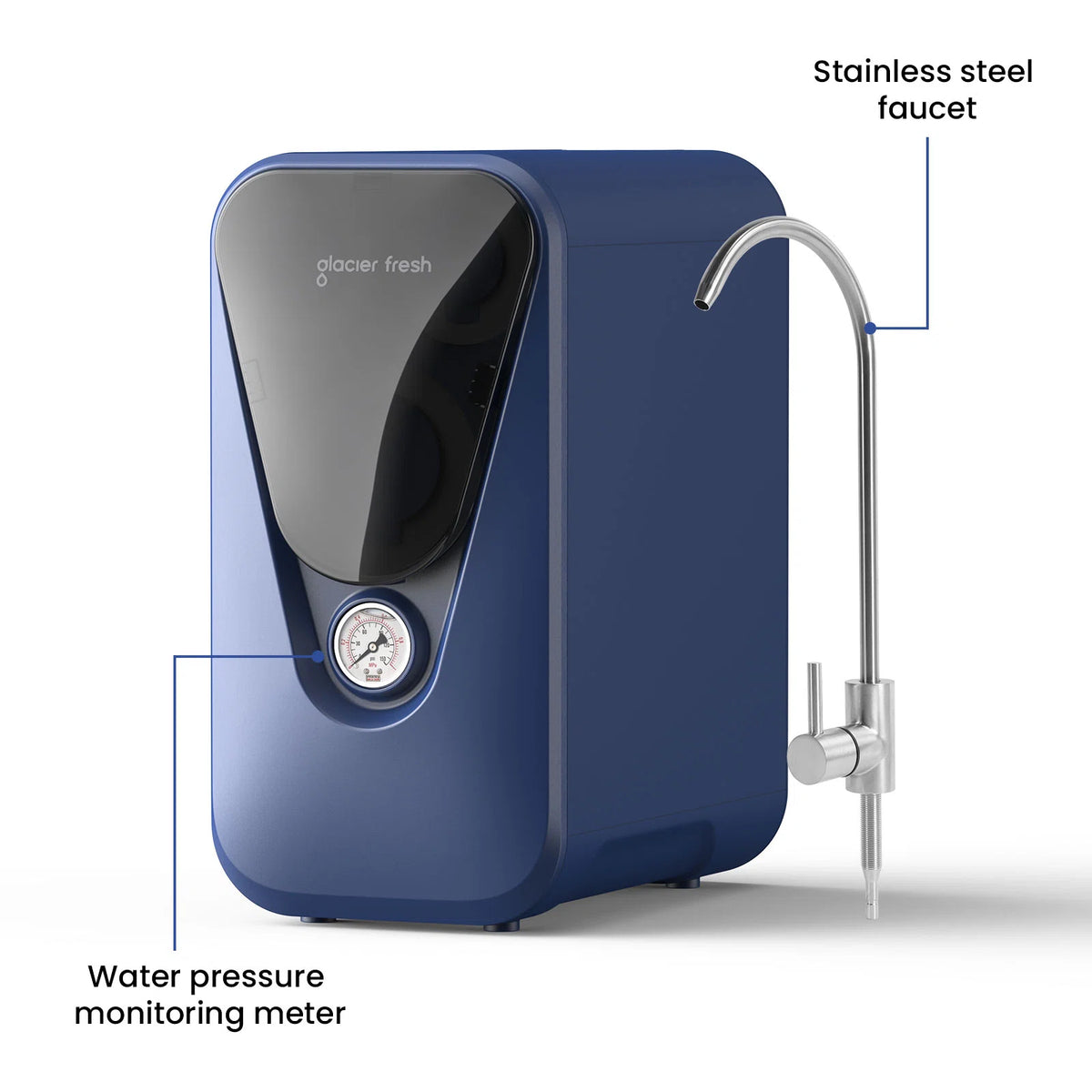
The GlacierFresh U03 800GPD reverse osmosis system is designed for that level of demand. It uses a 5-stage filtration process with a 0.0001-micron membrane to target PFAS, heavy metals, chlorine, and microplastics. The tankinside design also saves under-sink space, which makes installation easier in tighter kitchens.
Best RO Water Filter System for Renters or Small Spaces: Countertop or Portable RO
Not every household can modify plumbing. Renters, apartment dwellers, and people who move frequently often need flexible options.
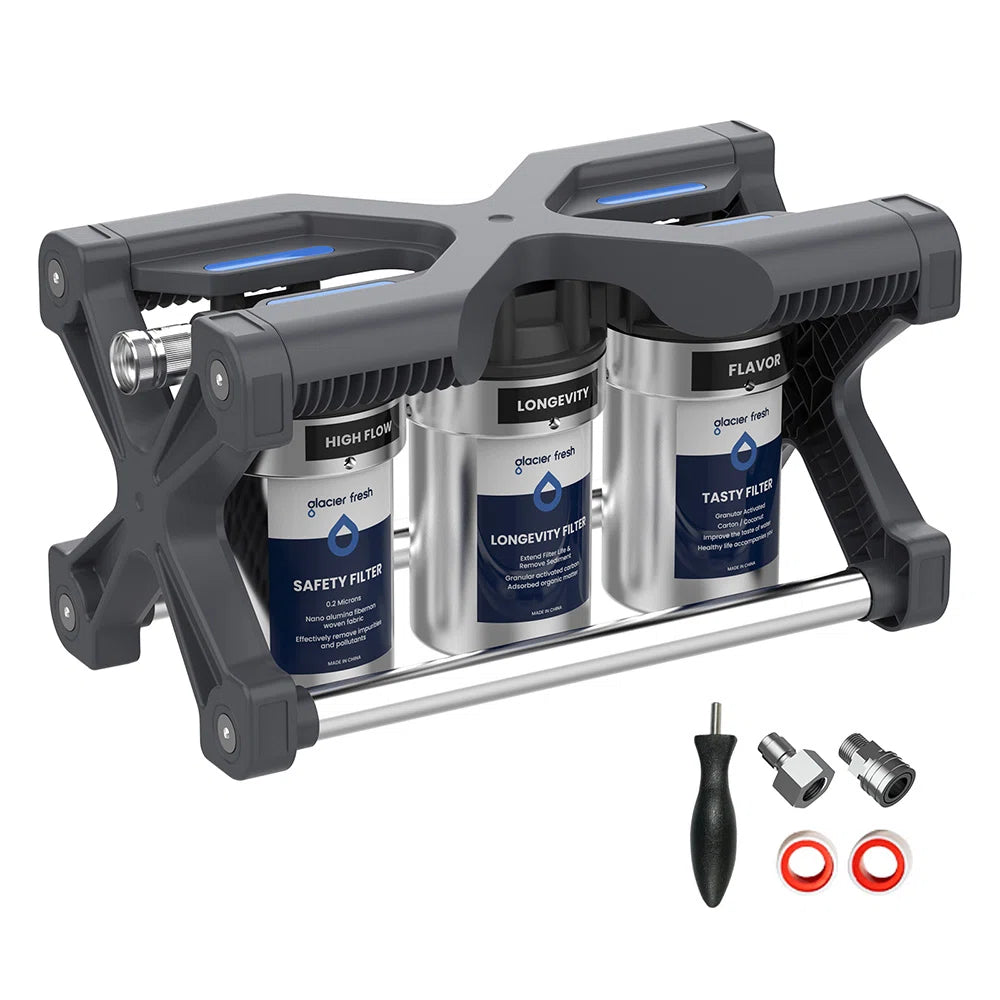
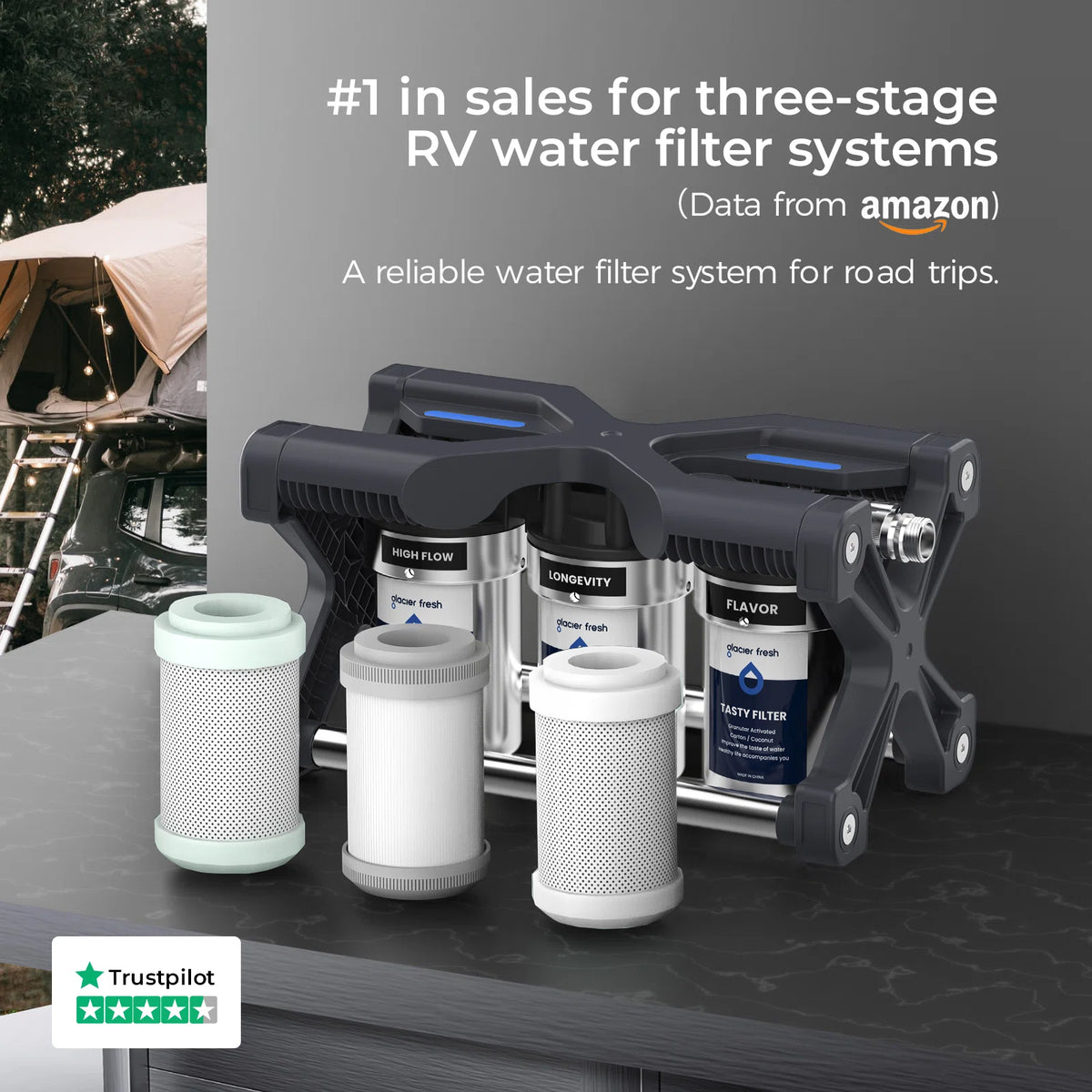
Portable RO systems offer a practical alternative. The GlacierFresh RV reverse osmosis system is built for travel and off-grid use, but it also works well in temporary living situations. It uses multi-stage filtration to handle variable water quality from campgrounds, marinas, or municipal hookups.
Setup is straightforward, and you don’t need permanent installation. You can set it up and use it without changing your plumbing, which makes it a good fit if you still want a reverse osmosis drinking water system.
Best Water Filtration for Well Water Households
Well water often contains higher levels of sediment, iron, or naturally occurring contaminants. In these cases, an RO system works best when paired with pre-treatment like sediment filters or water softeners.
Without that step, filters may clog faster and performance can drop over time.
How to Choose the Best RO Water Filter System for Your Home
Choosing the best RO water filter system usually comes down to your household needs and your water conditions. There isn’t one perfect setup for everyone.
1. Test Your Water First
Start with a water quality report from your local municipality. Many areas now include PFAS data as part of updated reporting requirements.
You can also use independent lab testing or tools like the Environmental Working Group’s PFAS contamination map.
This step tells you what you actually need to remove.
2. Match GPD Output to Household Size
Daily water use varies more than most people expect. A rough guide can help you narrow down the right capacity:
-
1–2 people: 400–600 GPD
-
3–4 people with pets: 600–800 GPD
-
5+ people or heavy use: 800–1200 GPD
Keep in mind that actual output depends on water pressure and temperature, so real-world performance can be lower than rated capacity.
3. Decide: Tankinside vs. Tank-Based
Tankinside systems give you continuous flow, so you’re not waiting for a tank to refill. They also take up less cabinet space, which helps if your kitchen storage is already tight.
Tank-based systems are more traditional. They don’t require electricity and tend to have a lower upfront cost, but recovery time is slower, and they need more room.
4. Look for NSF/ANSI Certifications
Certifications provide independent verification of performance. Key standards include:
-
NSF/ANSI 58 for RO contaminant reduction
-
NSF/ANSI 372 for lead-free materials
-
NSF/ANSI 42 for taste and odor improvements
These benchmarks help ensure the system performs as expected.
5. Consider Remineralization
RO systems remove a wide range of dissolved solids, including beneficial minerals. Some systems include a remineralization stage to add back calcium and magnesium.
This can improve taste and may be useful for families with growing children.
6. Factor in Maintenance and Filter Costs
Maintenance is part of owning any system long-term. Typical replacement timelines look like this:
-
Pre-filters: every 6–12 months
-
RO membrane: every 2–3 years
-
Post-filters: around 12 months
The CDC has also emphasized that replacing filters on schedule is important to maintain performance.
What Factors Affect Water Filtration System Performance at Home?
A few real-world factors affect how well your system performs:
-
Incoming water pressure: Low pressure reduces output. Booster pumps can help in older homes.
-
Water temperature: Colder water slows filtration speed, especially in winter months.
-
Source water quality: Higher levels of dissolved solids can shorten filter life.
-
Maintenance habits: Delayed filter replacement reduces effectiveness.
-
Disinfection method: Chlorine and chloramine require different pre-filter setups.
FAQs
What are the best home water filtration systems available today?
Reverse osmosis systems are generally considered the most effective because they remove a wide range of contaminants, including PFAS, heavy metals, and microorganisms. Other systems, like carbon filters, can help with taste, but they’re more limited.
How do I choose the best water filtration system for my home?
Start by testing your water, then match system capacity to your household size. Consider installation constraints, certifications, and maintenance requirements before deciding.
How does water filtration system performance vary by household needs?
Performance depends on water usage, incoming water quality, and system capacity. Larger households need higher output systems to avoid delays.
Is reverse osmosis water safe for pets?
Yes. Reverse osmosis systems remove many contaminants that can affect both humans and animals, making the water safer for daily consumption.
Does reverse osmosis remove bacteria and viruses?
Yes. According to the CDC, reverse osmosis systems can remove bacteria and viruses due to their extremely small membrane pore size.
Conclusion
Clean drinking water at home isn’t just about taste anymore. If you’ve got kids or pets, it’s really about reducing exposure to contaminants that can build up over time.
A well-chosen best reverse osmosis system gives you a consistent way to manage that risk. GlacierFresh focuses on practical solutions that fit real households, from high-capacity under-sink systems to portable options that work wherever you need them.
You can explore more options directly on GlacierFresh to find a setup that matches your space and daily routine.
References
-
Forbes. NSF International Sets Standards High to Protect Public Health.
https://www.forbes.com/sites/oracle/2019/07/23/nsf-international-sets-standards-high-to-protect-public-health/ -
Environmental Working Group. New EPA Data Shows 165M People Exposed to Forever Chemicals in US.
https://www.ewg.org/news-insights/news-release/2025/06/new-epa-data-shows-165m-people-exposed-forever-chemicals-us -
United States Geological Survey. Tap Water Study Detects PFAS ‘Forever Chemicals’ Across the US.
https://www.usgs.gov/news/national-news-release/tap-water-study-detects-pfas-forever-chemicals-across-us -
Centers for Disease Control and Prevention. Waterborne Disease in the United States Results.
https://www.cdc.gov/healthy-water-data/waterborne-disease-in-us/results.html -
The Washington Post. Plastic Water Bottles and Microplastics.
https://www.washingtonpost.com/wellness/2026/01/26/plastic-water-bottles-microplastics/ -
Centers for Disease Control and Prevention. About Choosing Home Water Filters.
https://www.cdc.gov/drinking-water/prevention/about-choosing-home-water-filters.html -
Environmental Working Group. PFAS Contamination Map.
https://www.ewg.org/interactive-maps/pfas_contamination/