
Table of Contents:
What Is an RO System?
How Does Reverse Osmosis Work? The Science, Simply Explained
How Do I Interpret a Reverse Osmosis System Diagram?
Is Reverse Osmosis Water Safe for Home Use?
Reverse Osmosis System vs. Other Home Water Filtration Methods
What Should I Consider When Choosing a Reverse Osmosis Water Treatment System?
Can I Install a Reverse Osmosis System at Home Myself?
What Are the Best Types of Flow Restrictors for RO Systems?
What Are the Signs That Reverse Osmosis Filters Need to Be Replaced?
FAQs
Conclusion
Tap water in the U.S. is regulated, but it isn’t always as clean as you’d expect. The CDC reports that at least 1.1 million Americans get sick each year from germs in drinking water. A reverse osmosis system gives you a much deeper level of filtration at home, removing contaminants that basic filters usually leave behind.
What Is an RO System?
A reverse osmosis filtration system is a multi-stage device that pushes water through a semipermeable membrane to remove dissolved contaminants. That membrane is extremely fine, about 0.0001 microns, so it lets water through but blocks things like heavy metals, salts, and some microorganisms.
That’s the key difference from common filters. Pitchers and carbon filters mostly improve taste and reduce chlorine, but they often don’t deal with germs or dissolved solids very well. In households, RO systems show up where water quality is less predictable, like well water, high mineral content, or when a softener adds sodium.
How Does Reverse Osmosis Work? The Science, Simply Explained

In natural osmosis, water moves toward higher concentrations of dissolved material. Reverse osmosis pushes water the other way using pressure, forcing it through a membrane that blocks contaminants.
A typical reverse osmosis system runs through several stages:
-
Stage 1: Sediment filter removes dirt, sand, and rust
-
Stage 2: Carbon block reduces chlorine and VOCs, protecting the membrane
-
Stage 3: RO membrane removes up to 99% of dissolved solids, including lead and PFAS
-
Stage 4: Post-carbon filter improves taste before drinking
-
Stage 5+: Optional stages like remineralization or UV treatment
The CDC notes that RO systems can remove contaminants such as lead, copper, chromium, and sodium, and may also reduce arsenic and fluoride.
Water that passes through the membrane is called permeate. What’s left behind, carrying the rejected contaminants, is called brine or concentrate. Not the nicest name, but it’s just the waste stream going to the drain.
You’ll also hear about recovery rate. That’s how much incoming water turns into usable drinking water. Most home systems sit around 20-35%, though newer high-output systems do better than that.
How Do I Interpret a Reverse Osmosis System Diagram?
RO diagrams are actually pretty straightforward once you follow the flow. You’ll usually see these parts:
-
Feed water line connected to your cold supply
-
Pre-filter housings for sediment and carbon stages
-
Membrane housing where the main filtration happens
-
Storage tank holding filtered water
-
Post-filter and dedicated faucet
-
Drain line carrying wastewater away
Arrows show the direction water moves. It goes from your supply line, through the pre-filters, into the membrane, then into the tank, and finally out through a polishing filter to your faucet.
Layouts can vary between brands, and tubing colors aren’t standardized. It’s worth checking the installation diagram for your exact model before you buy. Saves you from surprises under the sink.
Is Reverse Osmosis Water Safe for Home Use?

RO water is considered safe for everyday use in U.S. homes, and it’s widely used for drinking and cooking.
The CDC lists reverse osmosis as a method that can remove bacteria and viruses because of its extremely small pore size. That matters when you look at how many illnesses are still linked to drinking water each year.
It also handles chemical contaminants well. The EPA reports that point-of-use RO systems can significantly reduce PFAS levels in drinking water, which is important since millions of Americans are exposed to these compounds.
Put simply, a reverse osmosis filtration system can reduce:
-
Lead and heavy metals
-
Arsenic and nitrates
-
PFAS and industrial chemicals
-
Chlorine and byproducts
-
Bacteria and some viruses
Many systems remove up to 99% of total dissolved solids, which is why the water often tastes noticeably cleaner.
Reverse Osmosis System vs. Other Home Water Filtration Methods
Different systems solve different problems. Here’s a quick comparison so you can see where RO fits.
| System Type | What It Removes | Limitations | Best Use Case |
|---|---|---|---|
| Reverse Osmosis | Dissolved solids, heavy metals, PFAS, bacteria | Slower flow rate and wastewater production | Drinking and cooking water |
| Carbon Pitcher | Chlorine, odor, taste, and some metals | Limited contaminant reduction capability | Basic taste and odor improvement |
| Water Softener | Hardness minerals such as calcium and magnesium | Does not purify or disinfect water | Protecting plumbing and appliances |
| UV Filtration | Bacteria and viruses | Does not remove chemicals or dissolved solids | Microbial disinfection |
| Whole-House Filter | Sediment, chlorine, and large particles | Limited removal of dissolved contaminants | General whole-home water treatment |
What Should I Consider When Choosing a Reverse Osmosis Water Treatment System?
Choosing a system comes down to your water, your household, and how much filtered water you actually use in a day.
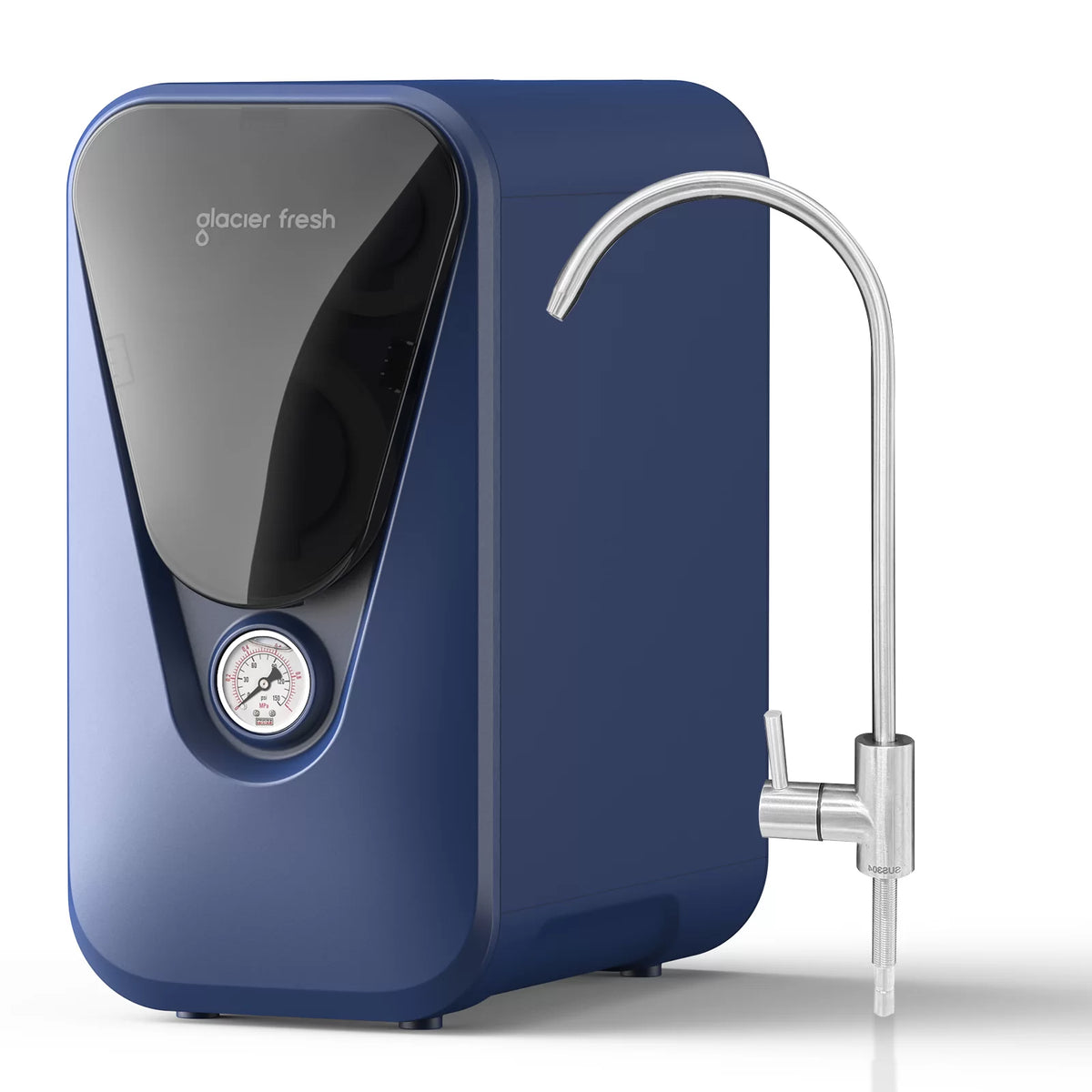
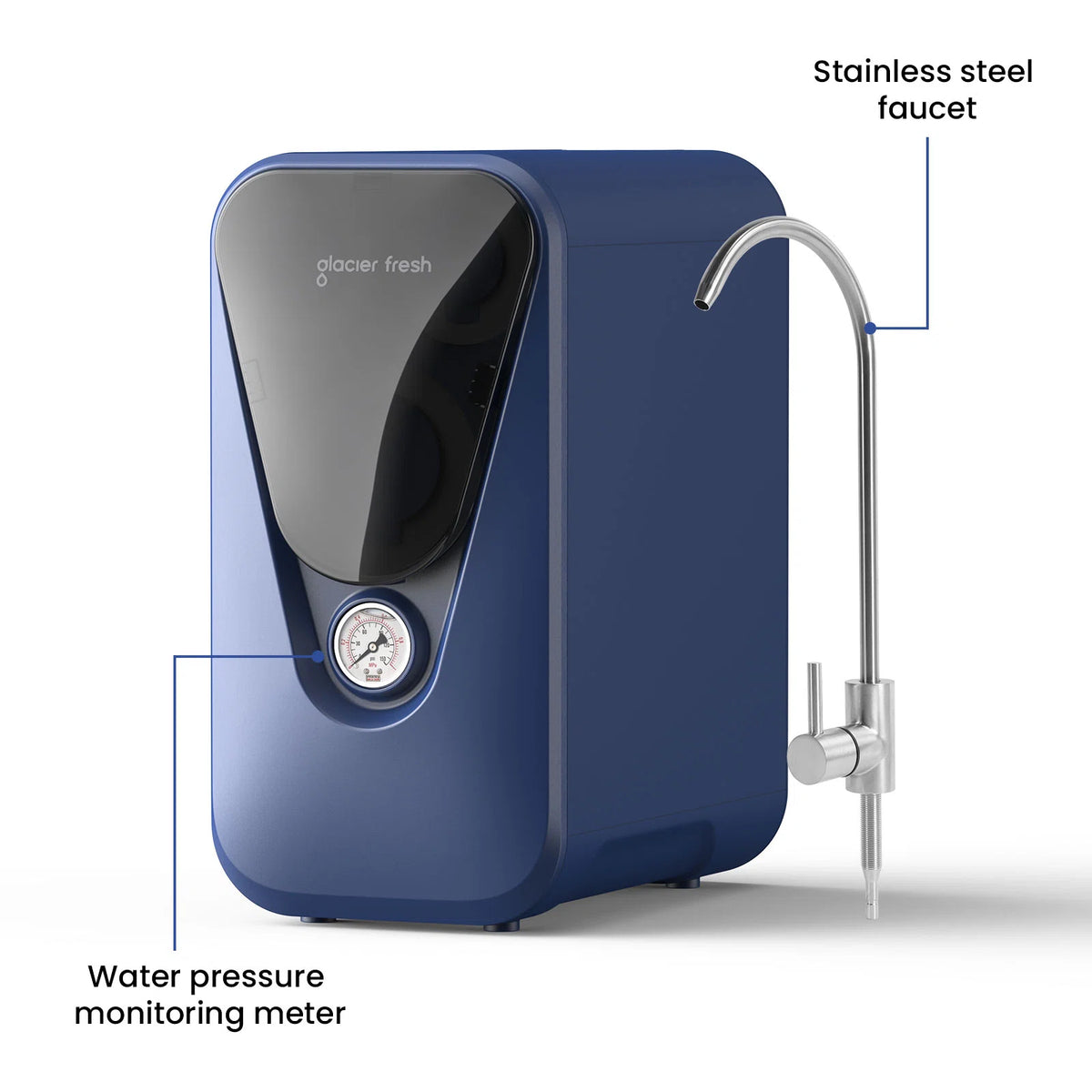
A high-capacity option like the GlacierFresh U03 800GPD system is built for steady, everyday use. It keeps output high without making installation complicated, which is honestly what most people care about once they start using one.
Water Source and Quality
Your water source matters more than anything. City water is treated, but it can still carry chlorine byproducts or PFAS. Well water can bring in sediment, iron, or naturally occurring arsenic.
Testing your water gives you a baseline. The EPA suggests keeping total dissolved solids under 500 ppm for acceptable taste.
GPD (Gallons Per Day) Capacity
Standard systems produce around 50 to 100 gallons per day. That works for smaller households, but it can feel slow if you use a lot of filtered water.
Higher-capacity systems, like 800 GPD models, refill faster and keep up better with daily use. You notice the difference when you don’t have to wait at the faucet.
Tank vs. Tankinside Design
Tanked systems store water so it’s ready when you need it, but they take up space. Tankinside systems give you water on demand and usually fit more easily under the sink.
Number of Filtration Stages
Most systems fall between 3 and 5 stages. More stages can help target specific concerns, but it’s not always about having the most but having the right combination.
Certifications to Look For
Look for recognized standards such as:
-
NSF 58 for reverse osmosis systems
-
NSF 42 for taste and odor
-
EPA WaterSense for efficiency
-
BPA-free materials
Water Efficiency
Older systems can waste 3 to 4 gallons for every gallon you drink. Newer designs improve that quite a bit, which makes a difference over time.
Can I Install a Reverse Osmosis System at Home Myself?

Most under-sink systems are built for DIY installation, and you can usually get it done in about an hour or two.
If your plumbing is unusual or you’re dealing with older pipes, calling a plumber might save you time. But for a typical kitchen setup, it’s manageable.
What Tools and Materials Are Needed for Reverse Osmosis System Installation?
-
Adjustable wrench
-
Drill if you need a faucet hole
-
Teflon tape
-
Screwdriver
Most systems include the fittings you need. A small tip, a bit of food-grade silicone grease on O-rings helps prevent leaks later.
Quick Step-by-Step Installation
-
Turn off the cold water supply and relieve pressure.
-
Mount the system bracket inside the cabinet.
-
Connect the feed water adapter.
-
Install the drain saddle.
-
Install the faucet if needed.
-
Connect tubing according to the diagram.
-
Attach the storage tank and turn the system on.
-
Flush through two to three full cycles before using the water.
What Are the Best Types of Flow Restrictors for RO Systems?
Flow restrictors help control how much water goes to waste, so they play a bigger role than they look like.
There are two common types:
-
Capillary style: sits inside the drain tubing, cheaper but harder to check
-
Inline style: installed on the waste line, easier to see and swap out
Picking the right one depends on your system and pressure. When it’s matched properly, you get better efficiency without hurting performance.
What Are the Signs That Reverse Osmosis Filters Need to Be Replaced?
The CDC recommends replacing filters regularly to keep systems working properly.
Pre-filters usually need replacing every 6 to 12 months. You’ll notice slower flow or chlorine taste coming back.
The RO membrane lasts longer, often 2 to 3 years. If your TDS starts creeping up or output drops, that’s a sign.
Post-carbon filters are typically replaced yearly. If the water starts tasting flat, that’s often it.
Tracking your baseline TDS when you first install the system helps more than people expect.
FAQs
Is reverse osmosis water safe to drink every day?
Yes, it’s widely used for daily drinking water in homes across the U.S.
Does reverse osmosis remove healthy minerals?
It removes most dissolved minerals. Some systems add small amounts back for taste.
How long does a reverse osmosis system last?
The system can last for years, but filters and membranes need regular replacement.
Is reverse osmosis better than filtered water?
It depends on what you need, but RO handles more types of contaminants than basic filters.
Do I need a plumber to install a reverse osmosis system?
In most cases, you don’t. Under-sink RO systems are designed for DIY setup, and many homeowners install them in under two hours with basic tools.
Conclusion
A reverse osmosis system is one of the most effective ways to improve drinking water at home, removing contaminants that standard filters often miss. GlacierFresh systems offer a practical, high-capacity option that’s easy to live with day to day.
References
-
Centers for Disease Control and Prevention. Drinking Water Facts and Stats. https://www.cdc.gov/drinking-water/data-research/facts-stats/index.html
-
Centers for Disease Control and Prevention. About Home Water Treatment Systems. https://www.cdc.gov/drinking-water/about/about-home-water-treatment-systems.html
-
Centers for Disease Control and Prevention. About Choosing Home Water Filters. https://www.cdc.gov/drinking-water/prevention/about-choosing-home-water-filters.html
-
United States Environmental Protection Agency. Identifying Drinking Water Filters Certified to Reduce PFAS. https://www.epa.gov/water-research/identifying-drinking-water-filters-certified-reduce-pfas
-
United States Environmental Protection Agency. Drinking Water. https://www.epa.gov/report-environment/drinking-water
-
ANSI Blog. NSF/ANSI 58-2022: Reverse Osmosis Drinking Water Treatment Systems. https://blog.ansi.org/ansi/nsf-ansi-58-2022-reverse-osmosis-for-drinking-water/
- United States Environmental Protection Agency. WaterSense Program. https://www.epa.gov/climate-change-water-sector/watersense-program