
Table of Contents:
What is hard water?
What is soft water?
Soft water vs hard water for car washing: side-by-side comparison
Why hard water leaves water spots on cars?
How to get a spot-free car wash at home?
What is a soft water car wash system and is it worth it?
What to look for in a car wash water filter?
FAQs
Final verdict: soft water is better for car wash
You spend time washing your car carefully. The paint looks glossy, the windows sparkle, and everything seems perfect—until the sunlight hits. Suddenly, white spots, streaks, and cloudy residue appear across the surface. For millions of drivers across the United States and Europe, this frustrating problem has little to do with soap or technique. The real culprit is often the water itself.
In hard water regions, minerals like calcium and magnesium can leave stubborn deposits on vehicle surfaces after every wash. Over time, these deposits may contribute to dull paint, etched clear coats, and expensive detailing corrections.
That’s why more homeowners, mobile detailers, and automotive enthusiasts are switching to a soft water car wash system to achieve a cleaner, safer, and more professional finish.
In this guide, we’ll break down the real difference between soft water and hard water for car washing, explain why water quality matters, and show how modern softening technology can help create a true spot free car wash experience at home.
What is hard water?
 Hard water contains high levels of dissolved minerals, primarily calcium and magnesium. These minerals naturally enter groundwater as water passes through limestone, chalk, and mineral-rich soil.
According to the United States Geological Survey, hard water is extremely common throughout many parts of the U.S., especially in states such as:
- Arizona
- Texas
- California
- Nevada
- Florida
Water hardness is typically measured in parts per million (ppm). In many residential areas, tap water can range from 150–300 ppm or higher. While this water is generally safe for household use, it can create significant problems during a hard water car wash.
When hard water evaporates from your vehicle’s surface, the minerals remain behind. This is what creates the familiar:
- white spotting
- chalky residue
- streaking
- mineral buildup
These deposits are commonly known as water spots on car surfaces.
What is soft water?
Soft water has significantly reduced mineral content. This is typically achieved through a filtration or ion exchange process that removes calcium and magnesium ions from the water supply. A modern soft water car wash system often uses:
- ion exchange resin
- multi-stage filtration
- water softening cartridges
- TDS monitoring technology
The result is water that rinses cleaner and dries with far fewer mineral residues. For car owners, this means:
- fewer spots
- smoother paint surfaces
- cleaner glass
- easier drying
- improved detailing results
Professional detailers often rely on soft water for car detailing because it helps produce a more consistent finish while reducing the risk of mineral staining.
Soft water vs hard water for car washing: side-by-side comparison

| Feature | Hard Water Car Wash | Soft Water Car Wash |
|---|---|---|
| Water Spots | Common | Minimal |
| Paint Safety | Higher mineral risk | Safer for clear coat |
| Soap Efficiency | Lower | Higher |
| Drying Time | Longer | Faster |
| Glass Clarity | Often streaky | Cleaner finish |
| Residue Buildup | Frequent | Greatly reduced |
| Detailing Results | Inconsistent | Professional-quality |
| Long-Term Paint Condition | May deteriorate faster | Better maintained |
For anyone seeking a true spot free car wash, water quality matters just as much as the soap or washing technique.
Why hard water leaves water spots on cars?
When water evaporates, any dissolved minerals remain behind. Under sunlight or heat, these minerals bond to the vehicle`s surface and create visible spotting. The higher the mineral concentration, the worse the potting becomes. Here are the three main types of water spots:
· Mineral deposits: Calcium and magnesium remain on the paint after drying and leave visible white marks.
· Etching damage: If minerals sit on hot paint for too long, they may begin to etch into the clear coat itself. This damage can become difficult to remove without polishing.
· Contaminant-based spots: Acid rain, industrial fallout, and environmental contaminants may combine with hard water minerals, creating even more aggressive staining.
Over time, repeated exposure to hard water stains on car paint can reduce gloss and make paint surfaces appear aged or neglected.
How to get a spot-free car wash at home?
 A professional-looking wash is possible even in hard water regions — if the right process is used.
Step 1: Wash in the shade
Direct sunlight accelerates evaporation and increases mineral spotting.
Step 2: Use a soft water car wash system
A proper filtration system dramatically reduces mineral residue during rinsing.
Step 3: Use automotive-safe soap
High-quality pH-balanced shampoos improve lubrication and rinsing.
Step 4: Rinse quickly
Avoid allowing water to sit on hot panels.
Step 5: Dry properly
Use:
- microfiber towels
- filtered air blowers
- drying aids
Combining proper technique with a home car wash system can significantly improve results while reducing the need for expensive detailing appointments.
What is a soft water car wash system and is it worth it?
A soft water car wash system is designed to reduce mineral content before water reaches the vehicle surface. Most systems use ion exchange technology, where specialized resin beads replace calcium and magnesium ions with sodium ions.
While a filtration system requires an initial investment, it may help reduce:
- detailing costs
- paint correction frequency
- ceramic coating maintenance
- water waste
- rewashing time
A quality system is especially beneficial for:
- luxury vehicle owners
- black car owners
- ceramic-coated vehicles
- RV owners
- mobile detailers
- drivers living in hard water regions
The convenience of cleaner rinsing and reduced spotting often makes the upgrade worthwhile for enthusiasts who care about paint appearance.
What to look for in a car wash water filter?
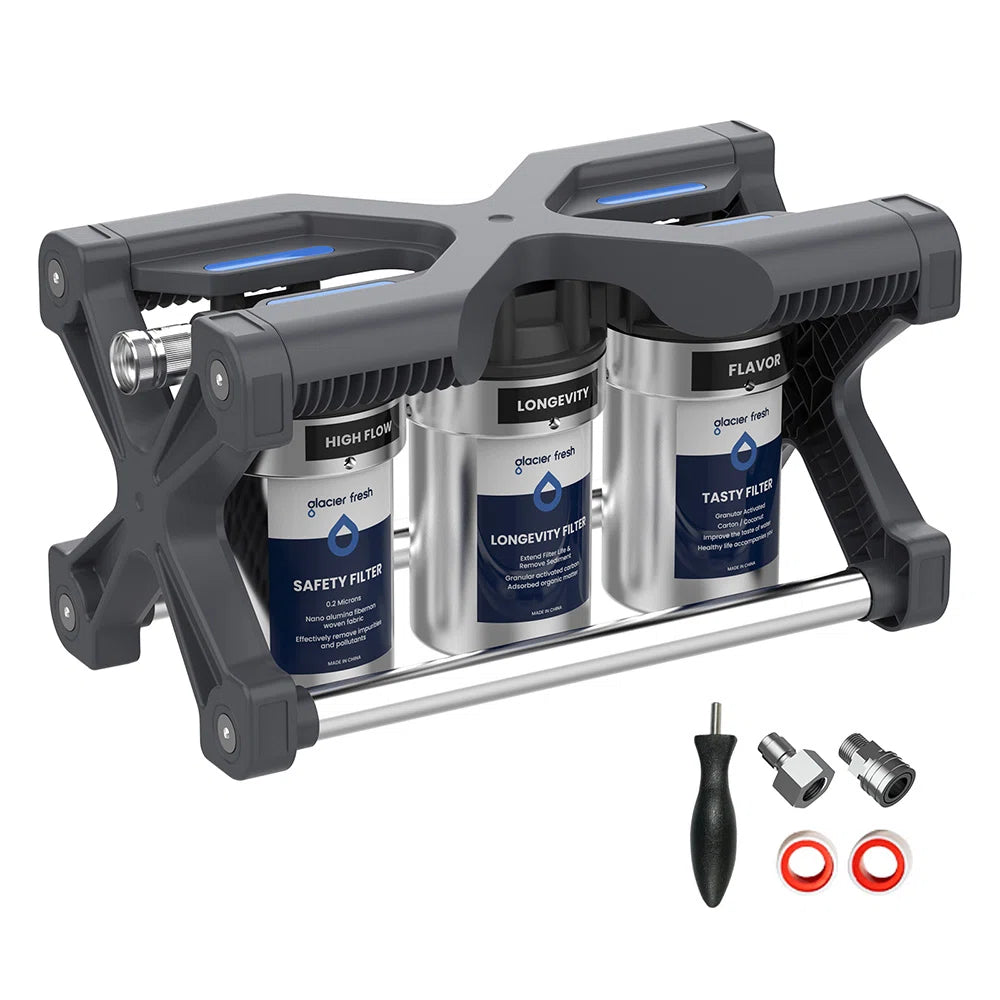
Not all systems offer the same performance. When choosing a car wash water filter, important considerations include:
· Resin capacity: Higher-capacity resin systems generally last longer between regenerations.
· Water flow rate: Strong flow rates improve washing efficiency.
· Portability: A lightweight portable car wash softener is easier to transport and store.
· Smart monitoring: TDS displays and hardness sensors help users monitor filtration effectiveness.
· Water efficiency: Efficient systems reduce water waste while improving rinse quality.
· Certifications: Look for recognized certifications such as NSF, WRAS, CE, and Energy Star. These standards can help verify quality and safety.
FAQs
Is hard water bad for car paint?
Over time, hard water minerals may contribute to staining, etching, and clear coat deterioration.
What ppm is best for spot-free car washing?
Many detailing professionals aim for water below 30 ppm for improved spot-free rinsing.
Does soft water really prevent water spots on cars?
Soft water significantly reduces mineral residue, which helps minimize water spotting during drying.
Do professional detailers use soft water?
Yes. Many professionals use softened or deionized water systems to improve finish quality and reduce spotting.
Are portable car wash softeners worth it?
For users in hard water areas, portable systems can greatly improve wash quality while reducing mineral spotting.
Final verdict: soft water is better for car wash
For drivers living in mineral-heavy water regions, investing in a quality soft water car wash system can dramatically improve washing performance while helping preserve the appearance of the vehicle over time.
Whether you’re a weekend enthusiast, a mobile detailer, or simply someone tired of seeing water spots on car surfaces after every wash, upgrading your water quality may be one of the smartest improvements you can make to your car care routine.
References
- U.S. Geological Survey(USGS) — Hardness of Water Explain water hardness classifications, mineral content, and hard water distribution across the United States
- NSF International — NSF/ANSI 44 Technical Requirements Details certification standards for residential water softeners using ion exchange resin technology.
- NSF International — Standards for Water Treatment Systems Details certification standards for residential water softeners using ion exchange resin technology.
- Better Homes & Gardens — Signs of Hard Water and Solutions Discusses mineral buildup, appliance scaling, and common hard water symptoms.
- Good Housekeeping — How to Remove Hard Water Stains Expert-backed overview of how mineral-rich water creates stains and buildup on surfaces.