
Table of Contents:
Which RO Designs Can Work Away From an Electrical Hookup?
How Does a Battery-Powered Portable RO Unit Work?
What Power Does the GlacierFresh OSMOGO Need?
How Long Can a Battery Keep the System Running?
What Else Limits RO Use While Boondocking?
Conclusion
FAQs
Yes—some portable reverse osmosis systems can run away from a campground electrical hookup, provided the unit has a compatible power source and usable feed water. “Off-grid” does not mean every RO design is battery-ready: powered countertop units, AC household systems, and pressure-driven systems have different requirements. The distinction matters in an RV, where battery capacity, available water, and space for concentrate can all limit how much water you make. Check the exact unit’s electrical specifications and instructions before choosing a power bank or adapter.
Which RO Designs Can Work Away From an Electrical Hookup?
The power source depends on the RO design. A portable powered unit needs a battery or adapter that meets the manufacturer’s voltage, output, and connector requirements. An AC-only household model may require an inverter sized for its operating load and startup draw. Pressure-driven household units use no electric pump, but still need adequate feed pressure and a suitable plumbed installation.
A power bank’s milliamp-hour figure does not tell the whole story unless you also know its voltage. Watt-hours provide a more useful basis for comparison; actual usable energy will be lower after conversion losses and depends on how the purifier cycles. The calculation below is only a planning example, not a prediction of water output. Temperature, feed conditions, filter condition, and pauses between runs all affect production, so leave capacity for the RV’s other loads.
| System Design | Energy Source | Water Requirement | Off-grid Consideration |
|---|---|---|---|
| Powered portable RO | Compatible battery or adapter | Usable source water and concentrate outlet | Check voltage, output, connector, and battery capacity |
| AC household RO | AC supply or specified inverter | Pressurized feed water and drain | Inverter and installation must suit the unit |
| Pressure-driven household RO | Feed-water pressure | Connected plumbing and drain | No electricity does not mean no operating requirements |
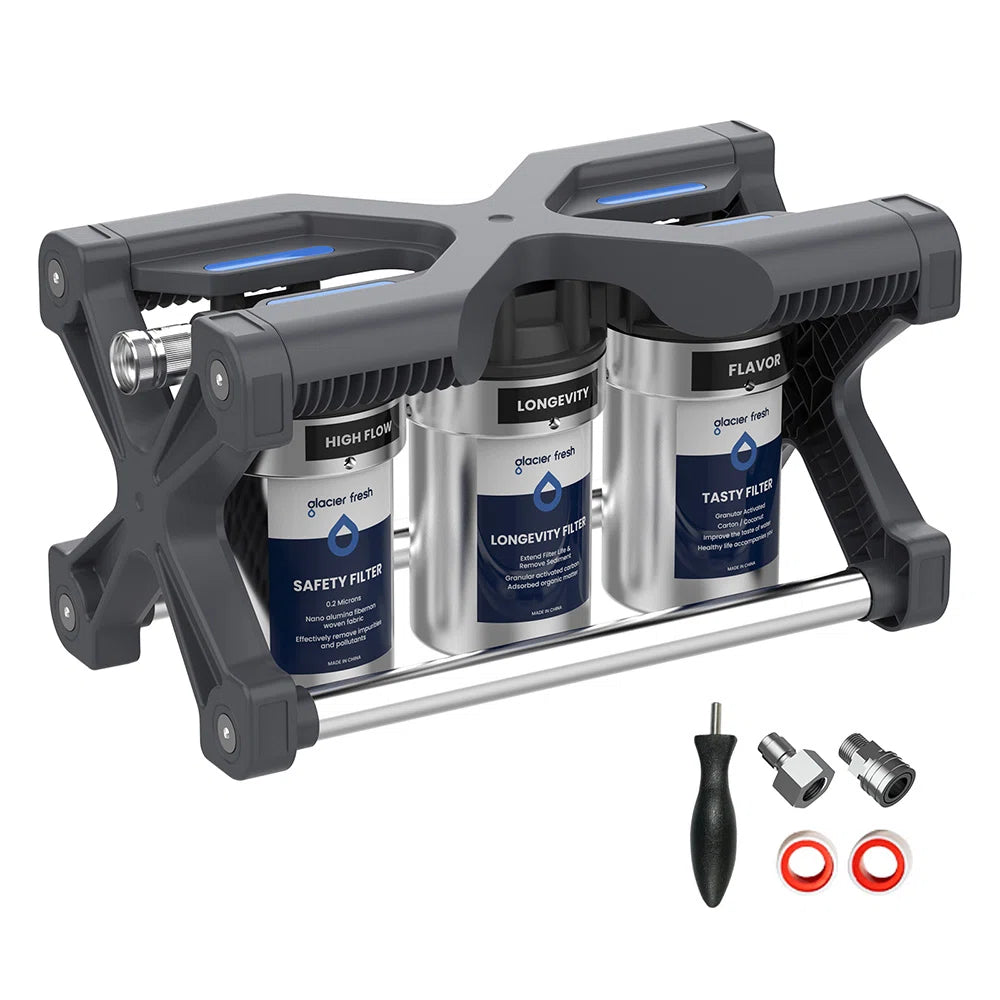
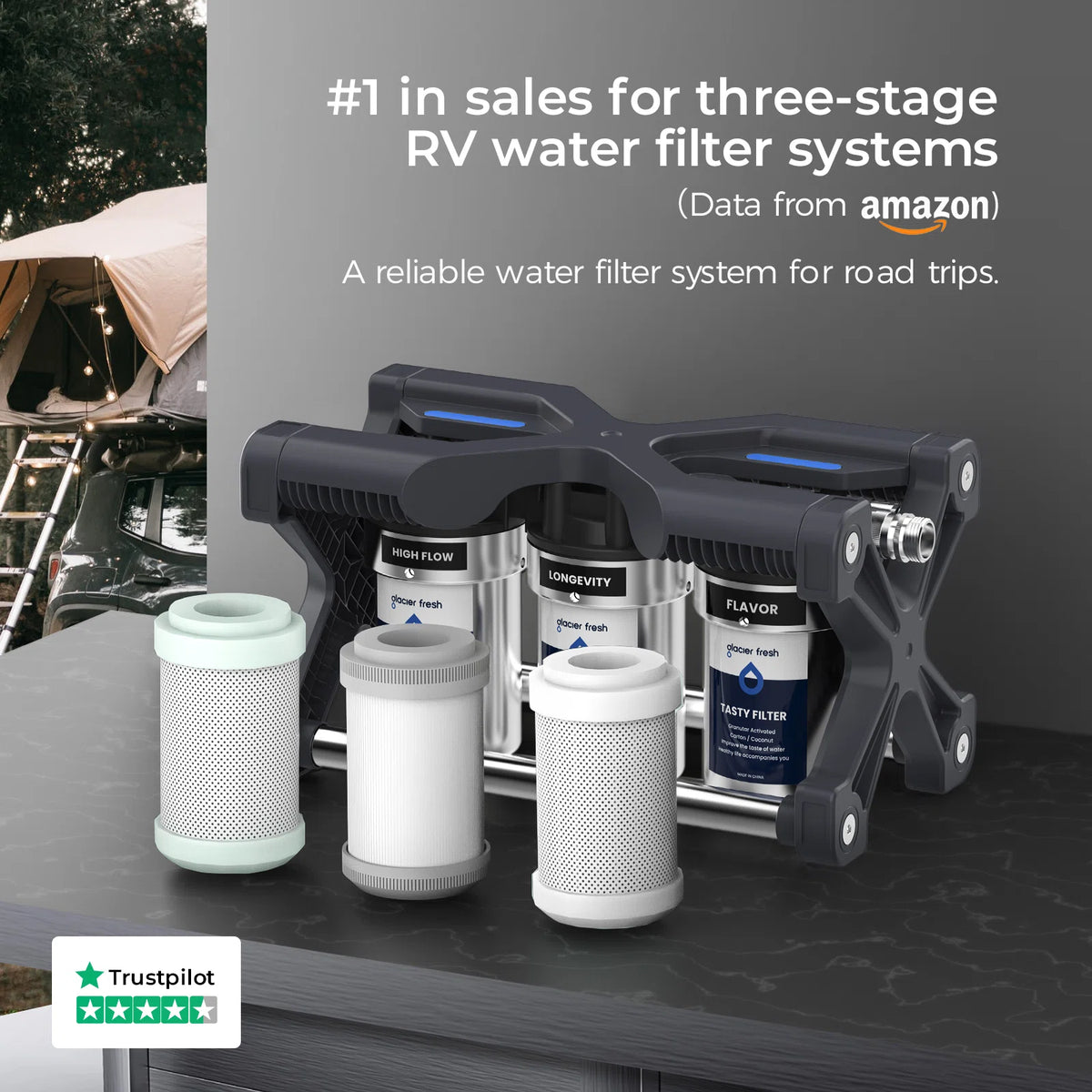
An inline RV hose filter treats water as it enters the vehicle’s plumbing. A portable RO unit is a separate point-of-use setup for producing drinking water at its own outlet; it does not automatically treat every RV faucet or shower.
How Does a Battery-Powered Portable RO Unit Work?
A powered portable unit uses an electric pump to provide the pressure needed for water to pass through its RO membrane. Treated water and concentrate leave through separate paths. The battery runs the unit; it does not replace source water, keep the reject-water outlet clear, or remove the need to handle concentrate properly.
RO produces a treated stream and a separate concentrate stream, so the feed volume must exceed the amount of water collected. The recovery ratio is specific to the system and its operating conditions; use the product instructions for planning rather than applying a single ratio to every unit. Before starting, make sure the concentrate outlet can drain as directed and set the collection vessel on a stable surface. A full battery will not prevent an interruption caused by a blocked drain or spill.
Before a trip, check that the source water is within the manufacturer’s stated conditions and that you can collect or dispose of concentrate as directed. If you are treating water from a source other than a regulated campground supply, portability alone does not establish that the water is safe. Match the equipment to the actual risks and follow public-health guidance for outdoor water treatment. Store finished water in a clean, covered container so collection does not undo the treatment.
Key Considerations for Using an RO System Off-Grid
Confirm that the battery or power source is compatible, including voltage, output capacity, and connector. Plan how much treated water you need and how you will store it. Account for concentrate, too: an off-grid campsite may need a collection plan. Filter service, membrane protection, and storage instructions still apply without an electrical hookup.
What Power Does the GlacierFresh OSMOGO Need?

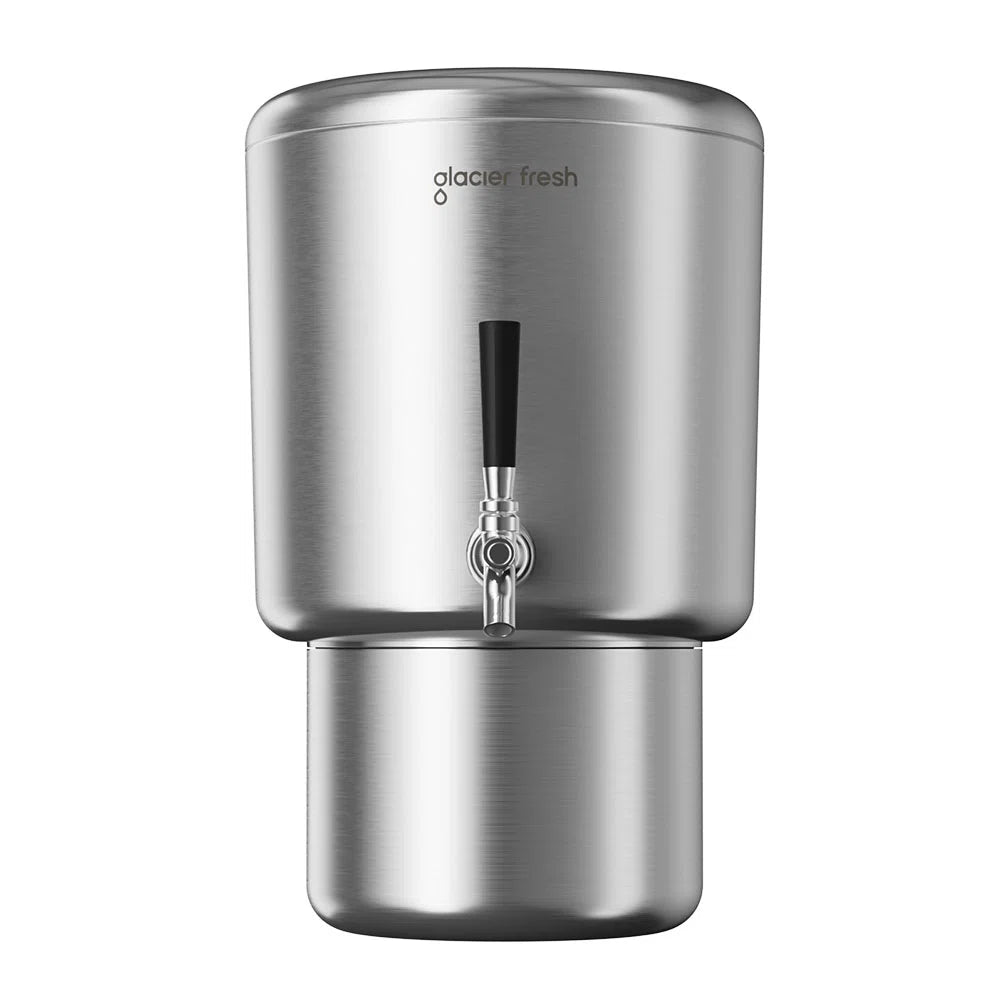
The GlacierFresh RVRO01 product page lists compatibility with a 24V/30W power bank and an included power adapter. That specification is the starting point: a generic USB battery pack or the RV’s 12V battery is not automatically a direct match. Check the package version, voltage, output, connector, and the instructions supplied with the exact unit before connecting a third-party source.
The product page distinguishes Basic and Elite bundles by whether a mobile power bank is included. Confirm the selected bundle rather than assuming the battery comes with every version. Use the included adapter where an appropriate outlet is available, and disconnect the unit before changing its power arrangement. GlacierFresh lists a replacement RO filter for the system, so use the compatible cartridge and follow its replacement and startup procedure.
Set up the complete system at home before relying on it at camp. Check the adapter or compatible battery, water inlet, concentrate outlet, and clean-water container together. A trial run can expose a missing cable, mismatched connector, or awkward collection arrangement while you still have other options. Bring the manual so the startup, flushing, cleaning, and storage directions are available on the road.
How Long Can a Battery Keep the System Running?
Watt-hours make battery capacity easier to compare than milliamp-hours alone, which need a voltage to describe energy. For illustration, a 100 Wh battery divided by a continuous 30 W load gives about 3.3 hours before conversion losses. This calculation is not an OSMOGO runtime specification. Actual operation depends on usable battery capacity, the purifier’s measured load, its operating cycle, and power-conversion efficiency.
Rated battery capacity alone cannot be converted into liters of treated water. That estimate would require production and power-use data collected under matching conditions. Until those figures are available for your setup, plan conservatively and keep a reserve instead of relying on the number printed on the battery.
During a first run, note the battery’s starting charge, operating time, volume collected, source water, and any pauses. Repeat the test under similar conditions before using it to plan a longer stay. Your own measurements will be more relevant than a theoretical runtime, but still leave reserve capacity for lights, communications, and other essential RV equipment.
What Else Limits RO Use While Boondocking?
Power is only one constraint when boondocking. The setup also needs a suitable water source, acceptable inlet conditions, room for concentrate, and a clean way to store the treated water. A portable drinking-water purifier does not supply filtered water to every faucet in the RV. Confirm that the source falls within the unit’s stated use; test or add treatment if the water presents hazards the product is not documented to address.
If the supply is interrupted or the purifier cannot run, keep an adequate reserve of previously treated water or identify a reliable refill point. Store drinking water in a sealed, food-safe container and keep it separate from raw source water, hoses, and concentrate. A simple label and dedicated containers reduce the chance of mixing the streams when you are filling up in a small campsite or vehicle.
Before leaving, estimate how much water the group will need for drinking and cooking. Compare that demand with the purifier’s documented output under conditions similar to your source, and account for the time needed to collect it. For well, surface, or other untreated water, identify the hazards before choosing a treatment method. Keep source-water and finished-water containers separate and label them to avoid mixing them during a refill.
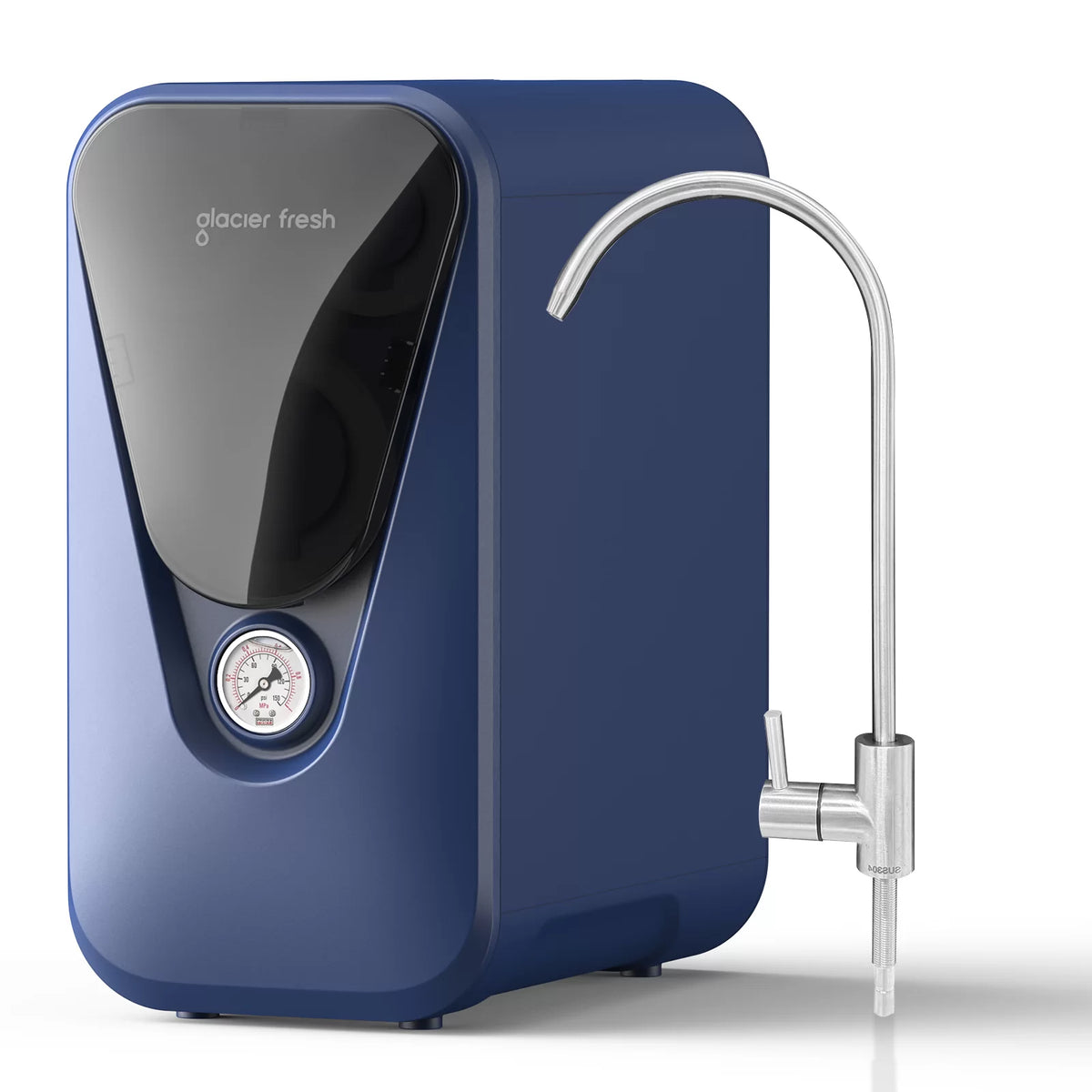
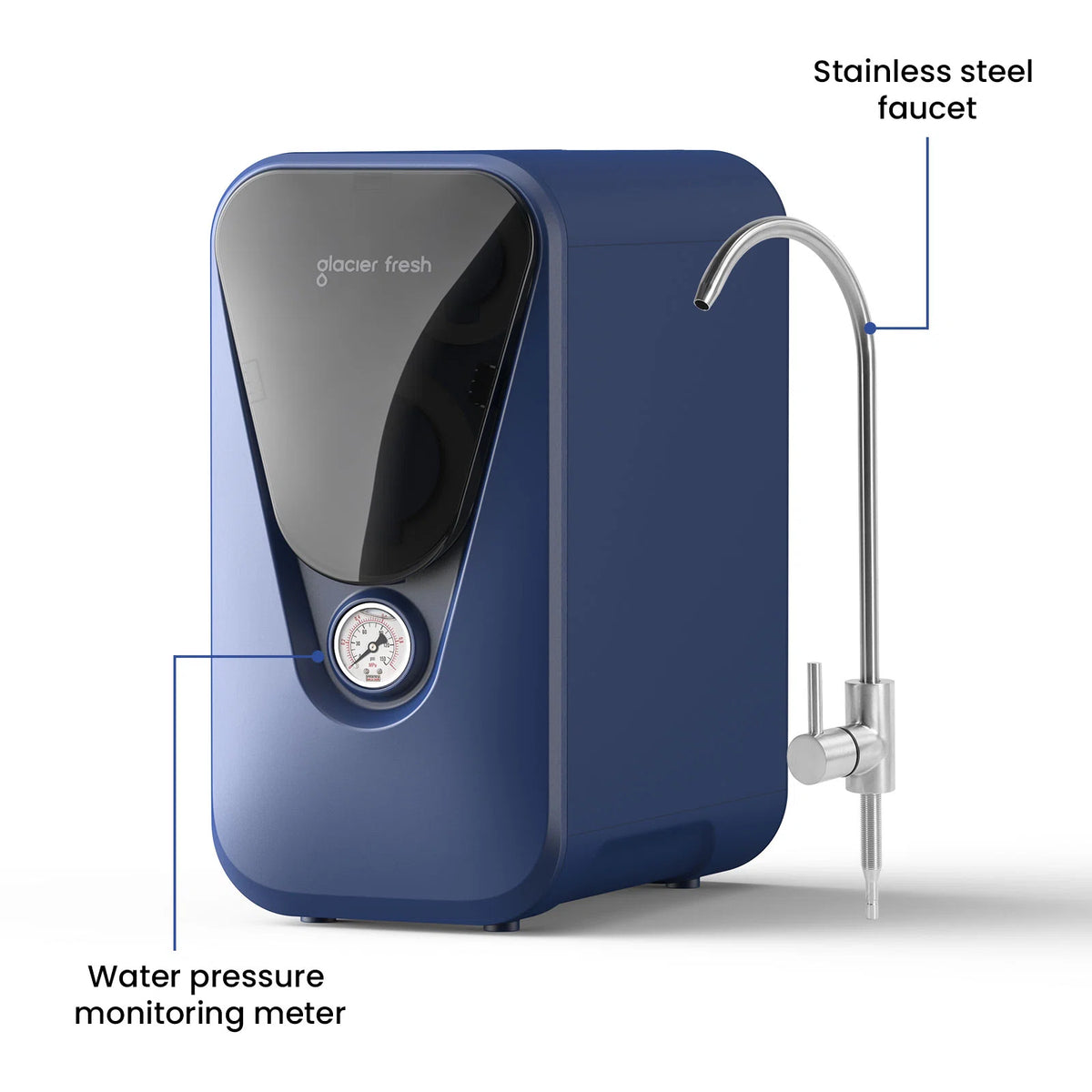
GlacierFresh’s U03 under-sink RO system is a different, pressure-driven household design. Its product information specifies a feed-water pressure range, so operation depends on suitable and stable inlet pressure. It should not be treated as an automatic RV substitute: adapting a household system to a vehicle requires checking plumbing, pressure, drainage, and installation requirements. Choose a system based on its actual power design and water needs, not only on a “no shore power” claim.
Conclusion
A portable RO system can run without shore power when its power source matches the unit, but that alone does not make it practical for every trip. Check the electrical requirements, water supply, concentrate handling, and expected demand together. Use real operating information where available, then decide whether the setup fits your travel style.
FAQs
Can a portable RV RO system turn seawater into drinking water?
No, not unless the equipment is specifically designed for seawater desalination. A freshwater RO unit’s compatibility with campground or surface freshwater does not establish that it can handle seawater’s higher salt concentration and operating requirements.
Can an RO membrane freeze if it is stored in an RV?
Water remaining inside a membrane or housing can be damaged by freezing. Follow the exact unit’s winterization and storage directions; draining an exterior tank does not confirm that the membrane and internal passages are dry.
Does portable reverse osmosis remove calcium and magnesium?
RO can reduce dissolved mineral ions, including calcium and magnesium, with results depending on the membrane and operating conditions. A separate remineralization stage may add minerals back after RO treatment.
References
Water Quality Association — POU RO Performance and Sizing
https://wqa.org/wp-content/uploads/2022/09/Article-4-POU-RO-Performance-and-Sizing.pdf
U.S. Environmental Protection Agency — Point-of-Use Reverse Osmosis Systems
https://www.epa.gov/watersense/point-use-reverse-osmosis-systems
Centers for Disease Control and Prevention — Water Treatment Options When Hiking, Camping, or Traveling
https://www.cdc.gov/drinking-water/prevention/water-treatment-hiking-camping-traveling.html
NSF — NSF/ANSI 58: Reverse Osmosis Drinking Water Treatment Systems
https://www.nsf.org/knowledge-library/nsf-ansi-58-reverse-osmosis-drinking-water-treatment-systems
CDC — Safe Water Storage
https://www.cdc.gov/global-water-sanitation-hygiene/about/about-safe-water-storage.html