
Table of Contents:
What Makes a Portable Water Filter Worth Using?
Inline Filters vs Canister Systems Comparison at a Glance
RV Inline Water Filters Explained
Canister Water Filter Systems Explained
Water Filters for Parasites and Microorganisms
Water Filters for PFAS and Microplastics Removal
How Do I Install an Inline Water Filter in My RV?
Which Is the Best Portable Water Filter Setup for You?
FAQs
Conclusion
You pull into a new campground after a long drive, connect the water hose, and immediately notice the water smells different than the last stop. Sometimes it tastes heavily chlorinated. Other times, there’s visible sediment in the sink or mineral buildup around faucets after only a few days.
That unpredictability is exactly why many RV owners and campers start looking for the best portable water filter setup before longer trips. Campground water quality can vary widely depending on local infrastructure, seasonal demand, pipe condition, and source water treatment.
For most travelers, portable filtration usually falls into two categories: inline RV water filters and larger canister-style filtration systems. Both can improve water quality, but they solve different problems and fit different travel styles.
What Makes a Portable Water Filter Worth Using?

RV water systems deal with more water variability than most homes.
Why RV and Campground Water Quality Varies
Campground water may come from municipal systems, private wells, or older local infrastructure. Common issues include sediment, chlorine taste, hard water minerals, bacteria, parasites, and heavy metals from aging pipes.
The EPA notes that groundwater can naturally pick up contaminants like arsenic and heavy metals as it moves through rock and soil. The CDC also estimates millions of illnesses occur annually from germs in drinking water.
The Difference Between Water Filters and Water Purifiers
A standard water filter mainly reduces sediment, chlorine, and taste issues. A purifier goes further by reducing microorganisms like bacteria, viruses, and protozoa.
Many RV owners combine both approaches. A sediment and carbon filter improves taste and protects plumbing, while reverse osmosis, ultrafiltration, or UV treatment targets microorganisms and dissolved contaminants.
That combination matters when choosing reliable portable water purification systems for longer RV trips or off-grid camping.
Inline Filters vs Canister Systems Comparison at a Glance
The biggest difference between these systems is the depth of filtration versus simplicity.
|
Inline RV Filters |
Canister Systems |
|
|
Installation |
Quick hose connection |
More involved setup |
|
Filtration Depth |
Basic sediment and chlorine reduction |
Multi-stage contaminant reduction |
|
Water Pressure Impact |
Usually minimal initially |
Depends on system size and stages |
|
Portability |
Very portable |
Larger and heavier |
|
Maintenance |
Often, replace the entire unit |
Replace cartridges individually |
|
Cost |
Lower upfront cost |
Higher initial investment |
|
Best For |
Weekend trips and casual RV use |
Full-time RVing and inconsistent water quality |
RV Inline Water Filters Explained

Inline filters connect between the campground spigot and your RV water inlet. Most use sediment and activated carbon filtration to improve taste and reduce visible contaminants.
Many RV owners choose inline systems because they are lightweight, affordable, and easy to install without tools. Looking for systems with NSF/ANSI-certified filtration standards can also help travelers compare filtration performance more confidently.
|
Advantages |
Limitations |
|
Lightweight and compact |
Limited microorganism removal |
|
Fast installation |
Reduced flow rate over time |
|
Budget-friendly |
Limited PFAS reduction |
|
Good for occasional RV use |
The entire unit may need replacement |
Inline filters also vary by micron rating, carbon quality, flow rate, and cartridge design. Lower micron ratings generally capture smaller particles.
For many RV owners, inline systems are also easier to winterize and replace during long trips. If a cartridge becomes clogged from sediment-heavy campground water, you can usually swap it quickly without changing the rest of the setup. That convenience makes inline filters popular with families who travel seasonally or take shorter weekend trips throughout the year.
Canister Water Filter Systems Explained
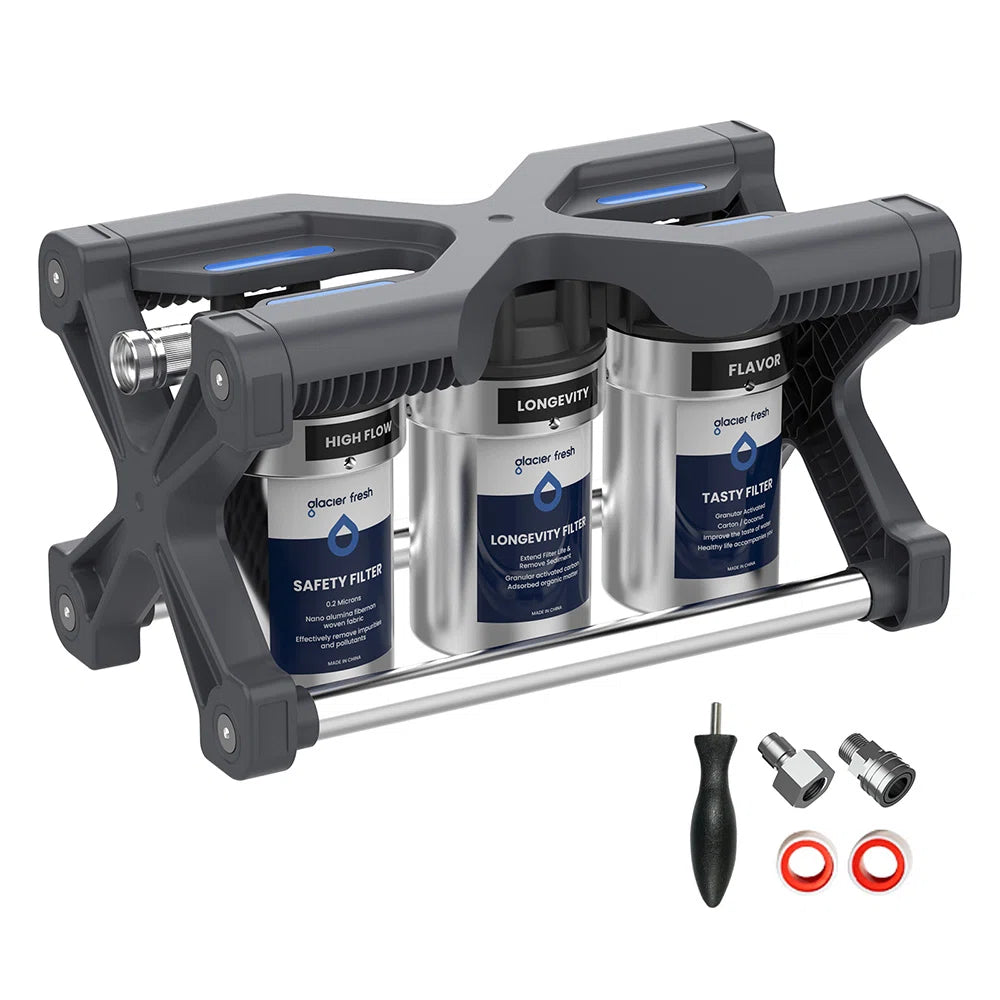
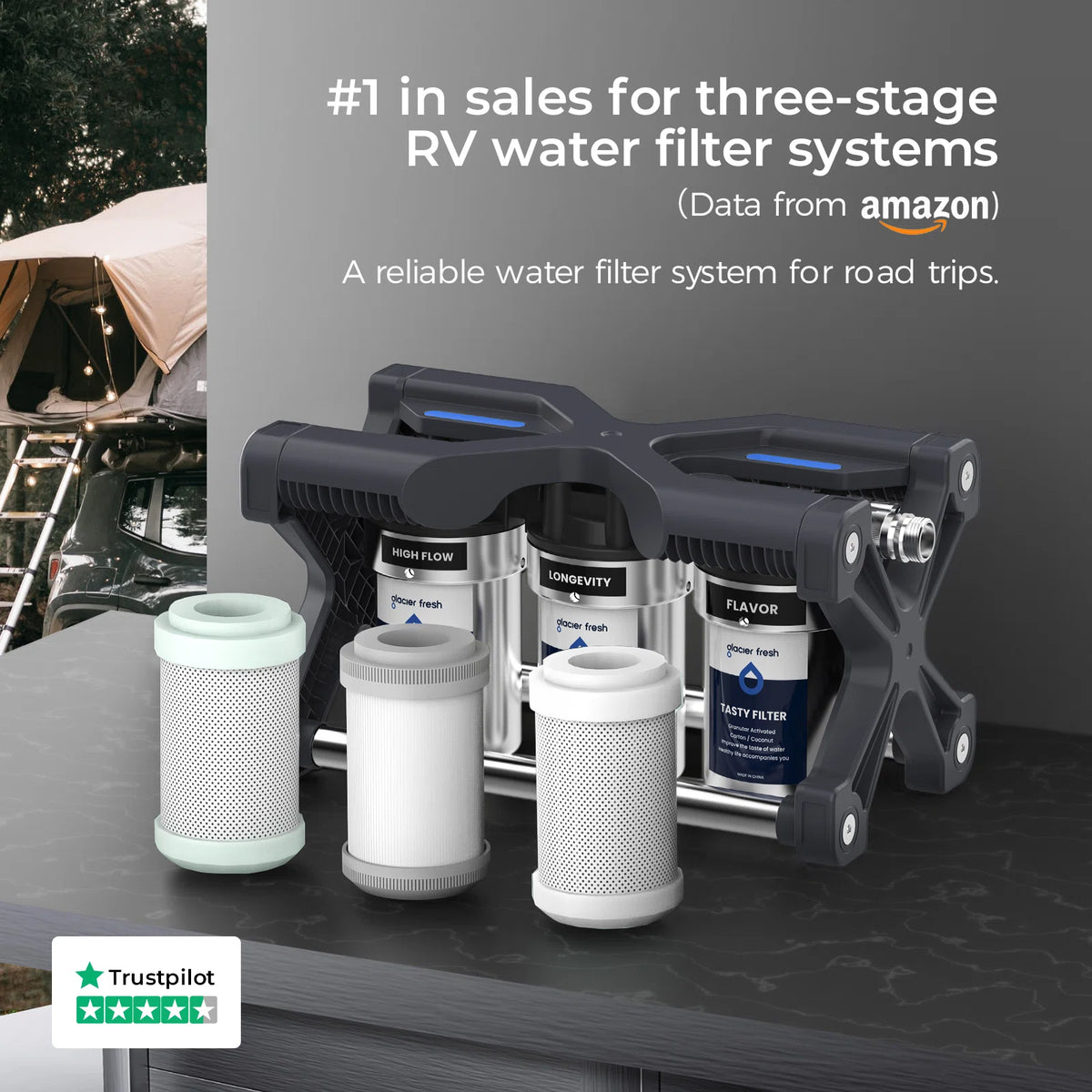
Canister systems use multiple filtration stages instead of a single cartridge.
Most setups include a sediment pre-filter, carbon block filter, and reverse osmosis, ultrafiltration, or UV stage. This layered setup improves contaminant reduction and extends filter life.
Full-time RVers often prefer canister systems because they handle inconsistent campground water more effectively.
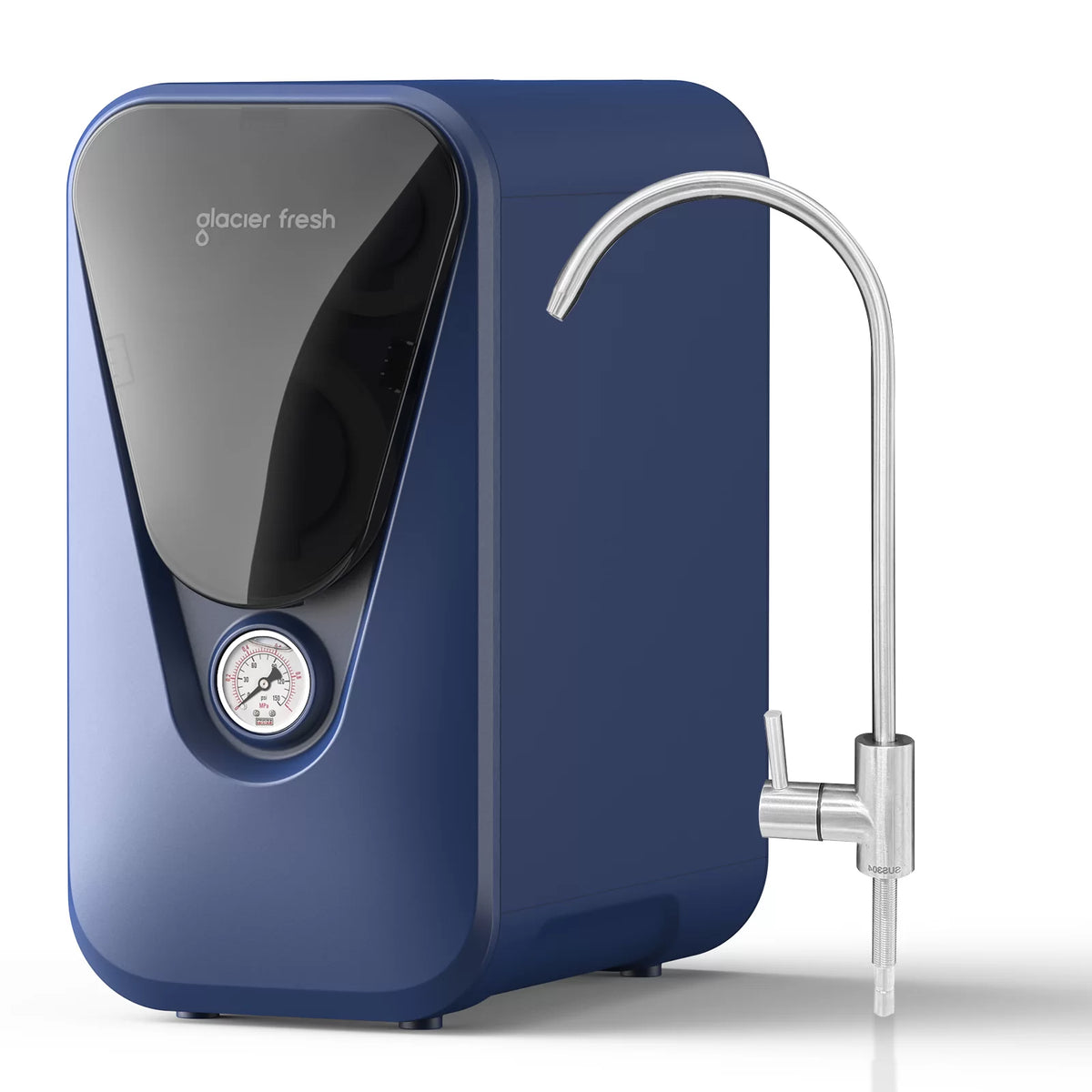
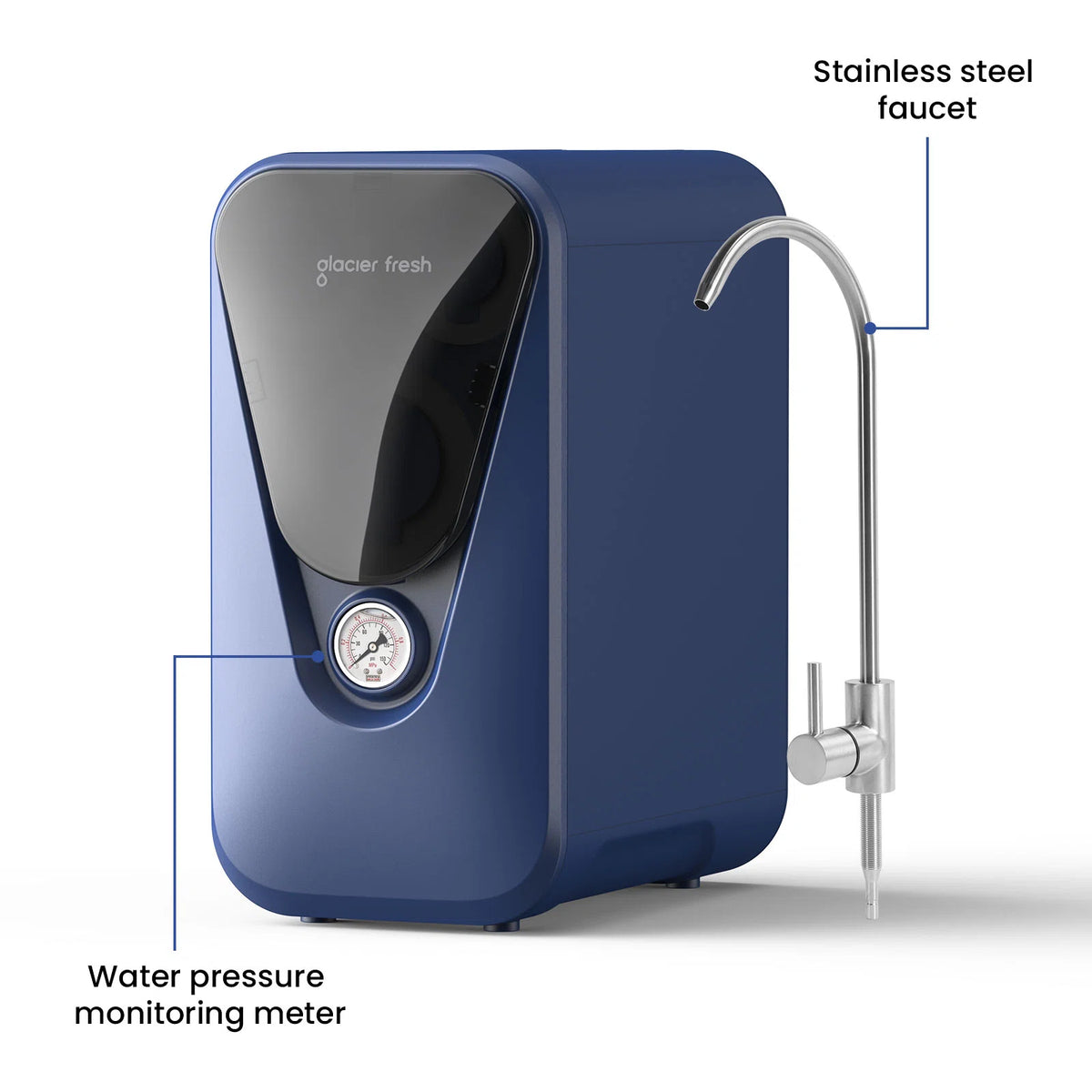
The GlacierFresh RV Reverse Osmosis System combines portable multi-stage filtration with reverse osmosis technology designed for RVs and off-grid travel.
The trade-off is additional maintenance, higher upfront cost, and more storage space.
Still, many travelers consider the extra filtration worth it when visiting multiple campgrounds across different states. Water that tastes fine in one location may contain stronger chlorine levels or higher sediment in another. Multi-stage systems provide more consistent performance across changing water conditions.
Water Filters for Parasites and Microorganisms
Campground hookups, untreated freshwater sources, and rural well systems can occasionally contain Giardia and Cryptosporidium.
The CDC notes that many home water filters mainly improve taste and odor rather than removing germs effectively.
That’s why many travelers choose reverse osmosis, ultrafiltration, or UV purification when selecting portable water purification systems.
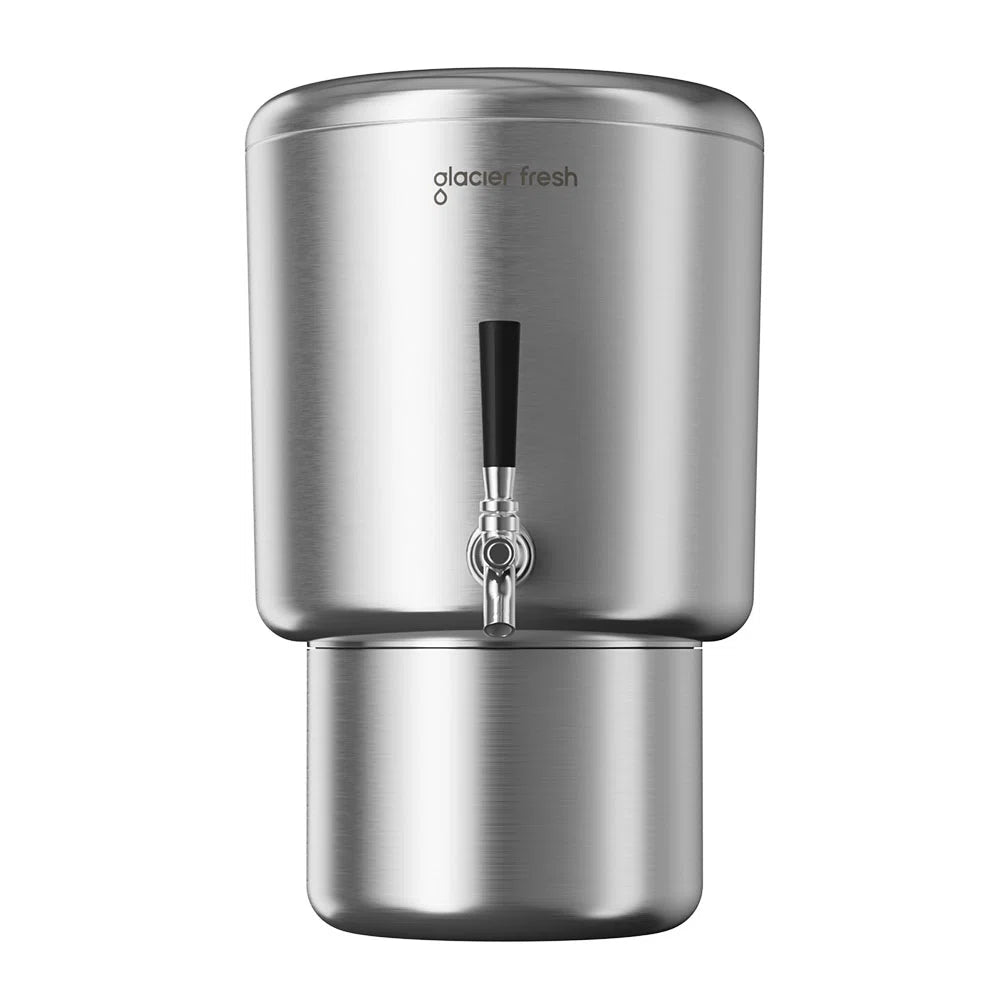
For outdoor travel, GlacierFresh gravity-fed stainless steel systems provide off-grid filtration without electricity.
The GlacierFresh PC04 countertop gravity purifier also uses nanofiber membrane filtration designed to reduce PFAS, bacteria, heavy metals, and microplastics.
Water Filters for PFAS and Microplastics Removal
PFAS are often called “forever chemicals” because they break down very slowly in the environment.
According to U.S. Geological Survey research, at least 45% of U.S. tap water contains one or more PFAS compounds.
Reverse osmosis and nanofiltration are among the most effective options for PFAS reduction. The EPA notes that point-of-use reverse osmosis systems can significantly reduce PFAS levels in drinking water. Multi-stage filtration also helps reduce microplastics more effectively than basic inline filters.
This matters for RV owners who rely heavily on campground hookups or refill stations during long trips. While no portable system removes every possible contaminant under all conditions, combining sediment filtration, carbon filtration, and membrane technology usually provides broader protection than single-stage systems alone.
Portable multi-stage systems are especially useful for RV travelers who move between campgrounds with very different water conditions. GlacierFresh RV and gravity filtration systems are designed for those situations, combining portable designs with deeper filtration for travel use.
How Do I Install an Inline Water Filter in My RV?
Most inline RV filters are designed for quick setup.
Basic RV Inline Filter Installation Steps
-
Connect the filter to the campground water spigot
-
Attach the RV water hose to the filter outlet
-
Connect the hose to your RV water inlet
-
Flush the filter before first use
Many modern systems use quick-connect fittings that simplify installation even further.
Common Installation Mistakes
Common problems include installing the filter backward, skipping the flush step, exposing filters to freezing temperatures, and ignoring high campground water pressure.
Should You Add a Pressure Regulator or Water Softener?
Many RV owners eventually add a pressure regulator alongside filtration.
Pressure regulators help protect RV plumbing, fittings, appliances, and filter lifespan. Water softeners can also help reduce mineral buildup in hard-water regions.
Which Is the Best Portable Water Filter Setup for You?

Inline filters are often the best choice for weekend RV trips and casual campground stays.
Canister systems work better for full-time RV living and inconsistent water quality.
For boondocking and outdoor travel, portable reverse osmosis systems and gravity-fed filters provide stronger purification.
Families concerned about PFAS, microorganisms, and microplastics should generally look for multi-stage filtration with reverse osmosis or ultrafiltration.
A reliable water purifier portable setup should match how you actually travel.
FAQs
Can you recommend the best stainless steel gravity water filter for outdoor use?
For camping and RV travel, stainless steel gravity systems are popular because they require no electricity or plumbing. GlacierFresh gravity-fed stainless steel systems are designed for portability and contaminant reduction.
Can RV water filters remove bacteria and parasites?
Basic inline filters mainly improve taste and reduce sediment. For bacteria and parasites, look for reverse osmosis, ultrafiltration, or UV-assisted systems.
How often should RV water filters be replaced?
Inline RV filters are commonly replaced every 3 to 6 months, depending on water quality and travel frequency. Multi-stage systems may require separate cartridge replacement schedules for sediment, carbon, and membrane filters.
What is the best setup for a water filter purifier camping setup?
For campground hookups, an inline filter may be enough. For uncertain water sources, many travelers combine gravity filtration with portable reverse osmosis or multi-stage purification systems.
Conclusion
For travelers focused on safer drinking water during camping or off-grid travel, advanced portable water purification systems like reverse osmosis, nanofiltration, and gravity-fed filtration provide stronger protection than basic inline filters alone. A reliable water purifier portable setup should match your travel habits, storage space, and water quality concerns.
GlacierFresh offers portable RV and gravity-fed filtration systems designed for campground hookups, cabins, outdoor travel, and everyday RV use without making installation overly complicated.
References
-
Environmental Protection Agency (EPA). Drinking Water.
https://www.epa.gov/report-environment/drinking-water
-
Centers for Disease Control and Prevention (CDC). Drinking Water Facts and Statistics.
https://www.cdc.gov/drinking-water/data-research/facts-stats/index.html
-
Centers for Disease Control and Prevention (CDC). About Choosing Home Water Filters.
https://www.cdc.gov/drinking-water/prevention/about-choosing-home-water-filters.html
-
ANSI Blog. NSF/ANSI Drinking Water Treatment Standards.
https://blog.ansi.org/ansi/nsf-ansi-drinking-water-treatment-standards/
-
U.S. Geological Survey (USGS). Tap Water Study Detects PFAS “Forever Chemicals” Across U.S.
https://www.usgs.gov/news/national-news-release/tap-water-study-detects-pfas-forever-chemicals-across-us
-
Environmental Protection Agency (EPA). Identifying Drinking Water Filters Certified to Reduce PFAS.
https://www.epa.gov/water-research/identifying-drinking-water-filters-certified-reduce-pfas