
Table of Contents:
Why Proper Installation and Maintenance Matter
Whole Home Water Filtration System Installation Checklist
Maintenance Checklist for Keeping Your System Running Efficiently
Water Filtration and Replacement Filters
Water Filter Replacement Parts and Models
Water Cleaning and Maintenance Equipment
Maintaining Reverse Osmosis Systems in Home Filtration Setups
Common Installation and Maintenance Mistakes to Avoid
FAQs
Conclusion
Whole home water filtration system installation done correctly usually performs better and needs fewer repairs over time. Small details like water pressure, filter placement, and drainage access directly affect long-term efficiency.
Many homeowners focus on filtration performance but overlook maintenance planning during installation. That often leads to reduced water flow, clogged filters, or inconsistent water quality later on.
Why Proper Installation and Maintenance Matter

How Installation Affects Filtration Performance
System placement affects water pressure stability and filter accessibility. Reverse osmosis systems also depend on consistent incoming pressure to maintain contaminant reduction.
Reverse osmosis systems can reduce contaminants such as lead, arsenic, fluoride, and certain microorganisms when operating correctly.
How Regular Maintenance Keeps Your System Running Efficiently
Maintenance keeps filters operating within their designed capacity. Sediment buildup restricts water flow, while exhausted carbon filters gradually lose effectiveness.
The CDC recommends replacing filters regularly to maintain water safety and filtration performance.
Signs Filtration System Needs Attention
Several small changes usually appear before major system problems:
-
Reduced water pressure at faucets
-
Slower RO dispensing speed
-
Changes in water taste or odor
-
Moisture around fittings or housings
-
Pressure gauge fluctuations
Ignoring these early signs often shortens filter life and places additional strain on RO membranes.
Whole Home Water Filtration System Installation Checklist
Choose the Right Installation Location
The installation area should provide direct access to the main water line and enough room for servicing.
Homeowners should look for:
-
Easy access to shutoff valves
-
Protection from freezing temperatures
-
Enough clearance for filter replacement
-
Nearby drainage access if needed
-
Stable, dry flooring
Check Household Water Pressure Before Installation
Most residential filtration systems perform best between 40 and 80 PSI. Low water pressure can reduce filtration speed, while excessive pressure increases wear on fittings and membranes.
Pressure becomes especially important for home reverse osmosis water filtration systems because RO membranes rely on stable water flow to reduce dissolved contaminants effectively. RO membranes rely on pressure to separate dissolved contaminants from water. Low-pressure homes sometimes require a booster pump to maintain consistent flow.
Select the Right Filtration System for Your Water Quality
Different water sources create different filtration needs. Municipal water often contains chlorine, while well water may introduce sediment or bacteria. At least 45% of tap water samples tested by USGS contained one or more PFAS compounds.
Choosing filtration based on actual water quality matters more than choosing the largest system.
Common examples include:
-
Municipal water: carbon filtration for chlorine taste and odor
-
Well water: sediment filtration and annual sanitization
-
Sediment-heavy water: multi-stage sediment pre-filtration
-
PFAS concerns: reverse osmosis or certified specialty filtration
-
Hard water areas: optional water softener integration
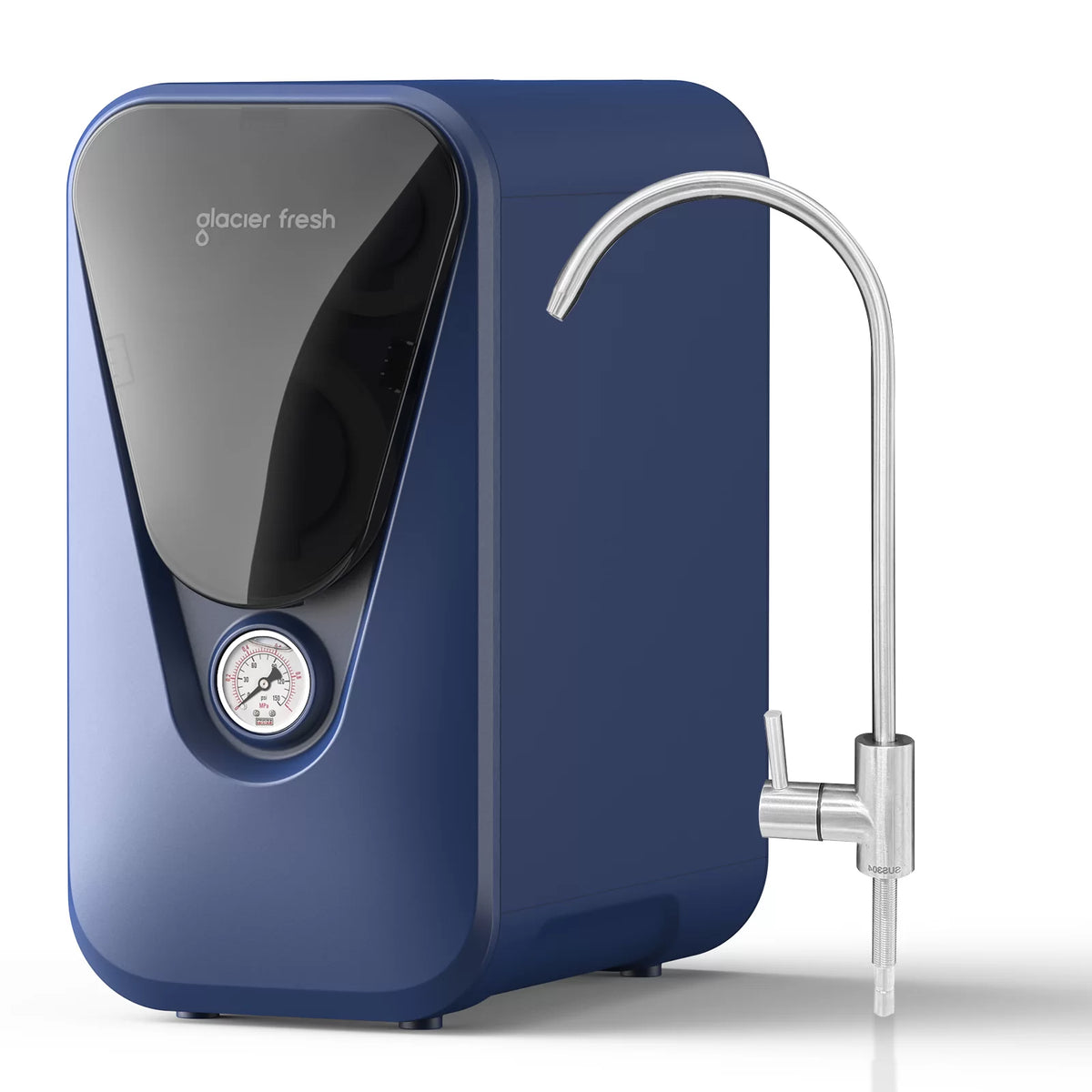
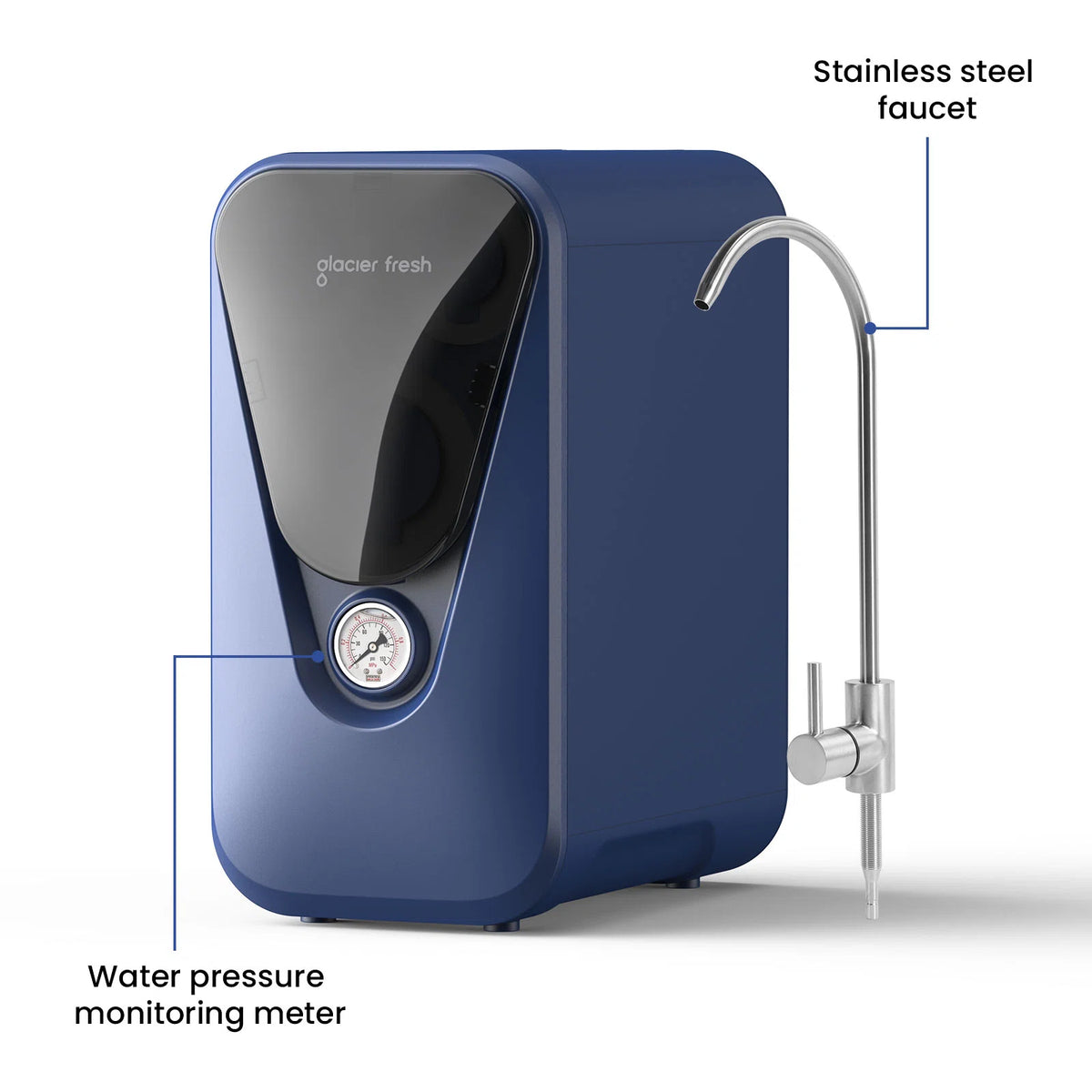
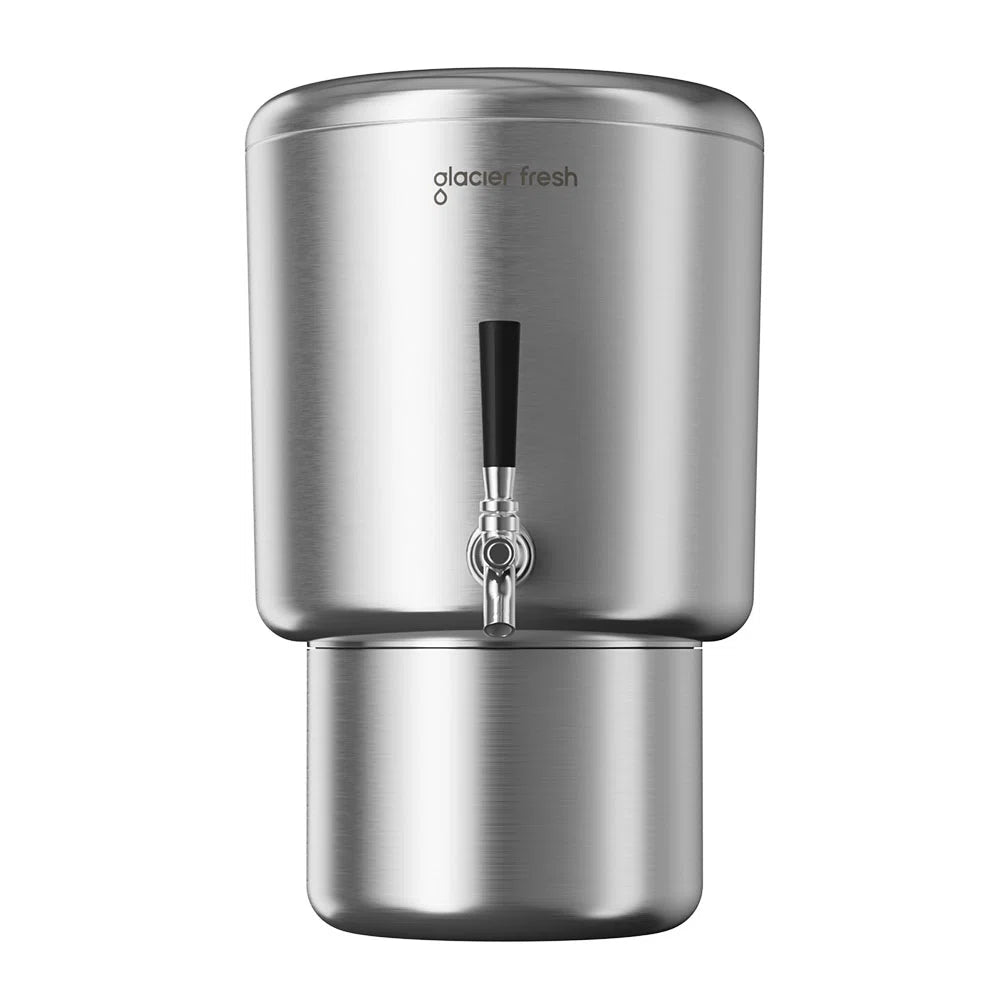
Compact systems like the GlacierFresh U03 can work well in apartments or homes where homeowners want a simpler DIY installation process without sacrificing RO filtration performance.
Flush the System After Installation
New systems should always be flushed before regular use. Flushing removes carbon fines, stabilizes flow, and gives homeowners time to inspect fittings and drain lines for leaks.
Keep Installation Records and Filter Specifications
Many homeowners forget filter model numbers within the first year. Keeping a simple maintenance record avoids confusion during replacements.
Important information to store includes:
-
Filter sizes and model numbers
-
Replacement schedules
-
Installation date
-
Warranty information
-
Water test results
Maintenance Checklist for Keeping Your System Running Efficiently

Check Water Pressure Monthly
Pressure changes often reveal filter problems before water quality noticeably changes. Most residential systems operate normally between 40 and 80 PSI.
Inspect Filter Housings and Fittings
Small cracks or worn seals can eventually create leaks.
Homeowners should inspect:
-
O-rings
-
Tubing connections
-
Shutoff valves
-
Moisture buildup
Replace Filters on Schedule
Every filtration stage has its own service life. Delaying replacements reduces efficiency and places extra stress on downstream filters.
General replacement schedules include:
-
Sediment filters: every 3 to 6 months
-
Carbon filters: every 6 to 12 months
-
RO membranes: every 1 to 3 years
-
UV bulbs: annually if applicable
EPA WaterSense guidance notes that RO membranes are designed around regular replacement intervals to maintain proper performance standards.
Sanitize the System Annually
Annual sanitization helps reduce bacteria buildup inside housings and tubing. This step is especially important for well water systems.
Test Your Water Once a Year
Annual testing confirms whether the filtration system still matches local water conditions.
|
Maintenance Task |
Recommended Frequency |
Purpose |
|
Sediment filter replacement |
3-6 months |
Maintain flow rate |
|
Carbon filter replacement |
6-12 months |
Reduce chlorine and odor |
|
RO membrane inspection |
1-3 years |
Protect purification efficiency |
|
Housing cleaning |
During filter changes |
Prevent contamination |
|
Water testing |
Annually |
Verify water quality |
Water Filtration and Replacement Filters
How Often Should Water Filters Be Replaced?
Most residential filters follow manufacturer replacement schedules, but actual lifespan depends heavily on incoming water quality.
Sediment filters in homes with older plumbing or well systems often clog faster than expected. Carbon filters handling high chlorine levels may also wear out sooner.
Typical ranges include:
-
Sediment filters: 3 to 6 months
-
Carbon filters: 6 to 12 months
-
RO membranes: 1 to 3 years
-
Specialty cartridges: based on certified gallon capacity
Factors That Affect Filter Lifespan
Several factors change replacement frequency:
-
Household size
-
Daily water use
-
Sediment concentration
-
Chlorine levels
-
Well water conditions
Why Delayed Filter Replacement Reduces Efficiency
Old filters restrict water flow and reduce contaminant removal performance. Over time, sediment and chlorine buildup place extra strain on downstream filters and RO membranes, which can shorten system lifespan.
Delayed replacement may also increase the risk of bacterial growth inside exhausted filters.
Water Filter Replacement Parts and Models
Some replacement parts wear gradually and are easy to overlook during routine maintenance.
Common Replacement Parts Homeowners Should Monitor
Filters are only part of the maintenance picture.
Common replacement parts include:
-
O-rings
-
Filter housings
-
Pressure gauges
-
Tubing
-
RO membranes
-
Shutoff valves
Using incompatible parts can create pressure problems or leaks, especially in RO systems.
Tips for Organizing Replacement Schedules
Many homeowners use:
-
Labels directly on filter housings
-
Phone calendar reminders
-
Digital notes with model numbers
-
Printed maintenance logs near the system
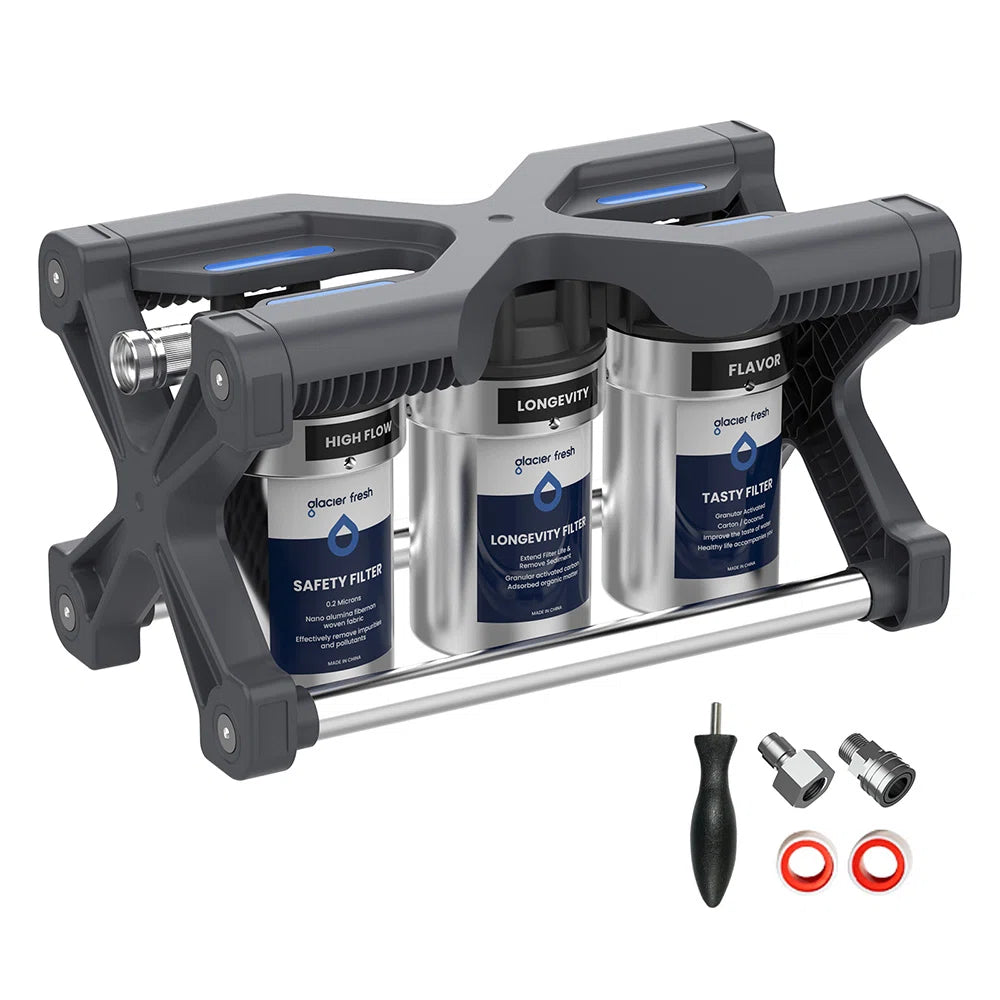
Systems designed with easier filter access and clearly labeled cartridges can simplify long-term maintenance. GlacierFresh systems are designed with straightforward DIY servicing in mind, which helps reduce maintenance confusion for busy households.
Water Cleaning and Maintenance Equipment
Basic maintenance tools make servicing faster and reduce the chance of damaging fittings or housings.
Basic Tools That Simplify Maintenance
Useful items include:
-
Filter wrench
-
Pressure gauge
-
Food-safe lubricant
-
Sanitizing solution
-
Microfiber towels
Keeping these nearby saves time during scheduled filter changes.
Cleaning Products To Avoid
Some cleaning products damage filtration components or leave chemical residue behind.
Avoid using:
-
Abrasive cleaners
-
Bleach on incompatible materials
-
Non-food-safe chemicals
-
Harsh solvents
Warm water and food-safe cleaning products usually work best for housings and reservoirs.
When To Choose Professional Servicing
Professional servicing may be worthwhile for:
-
Recurring leaks
-
Severe pressure loss
-
Persistent contamination issues
-
Complex multi-stage installations
-
Contaminated private wells
Large whole home water filtration system installation projects with multiple treatment stages may also require occasional professional inspection.
Maintaining Reverse Osmosis Systems in Home Filtration Setups

Reverse osmosis systems require slightly more maintenance than basic carbon filtration systems because they rely on membrane performance.
How Reverse Osmosis Systems Differ From Standard Filtration
Standard carbon filters mainly target chlorine, taste, and odor. RO systems use membranes capable of reducing dissolved contaminants at a much smaller scale.
The CDC identifies reverse osmosis as a technology capable of reducing bacteria, viruses, lead, and fluoride. A properly maintained home reverse osmosis water filtration system can reduce a wide range of contaminants while improving water taste and odor.
RO Membrane Maintenance Requirements
RO membranes depend heavily on clean pre-filtration. Most homeowners should inspect membrane performance every 1 to 3 years depending on usage and water quality.
Common Reverse Osmosis Maintenance Mistakes
A few maintenance habits shorten RO system lifespan faster than almost anything else.
Common mistakes include:
-
Skipping pre-filter replacement
-
Ignoring low water pressure
-
Delaying membrane replacement
-
Using incompatible replacement parts
-
Forgetting annual sanitization
The GlacierFresh U03 reverse osmosis system simplifies some of these maintenance concerns with compact cartridge access, non-electric operation, and DIY-oriented filter replacement.
Common Installation and Maintenance Mistakes to Avoid
Most long-term filtration problems come from a handful of avoidable installation or maintenance issues.
Common mistakes include:
-
Installing the system without checking water pressure
-
Choosing filters that don’t match local water conditions
-
Ignoring replacement schedules
-
Forgetting annual sanitization
-
Using incompatible replacement components
FAQs
What are the maintenance requirements for under sink water filters?
Most under-sink systems require sediment and carbon filter replacement every 6 to 12 months, periodic pressure checks, and annual sanitization. RO membranes typically last 1 to 3 years depending on water quality and usage.
How often should a whole home water filtration system be serviced?
Most systems benefit from inspection every few months and annual servicing. Sediment-heavy water conditions may require more frequent filter changes.
Does reverse osmosis reduce PFAS contamination?
Yes. The EPA notes that certified reverse osmosis systems can significantly reduce PFAS contamination in drinking water.
What water pressure is best for a home filtration system?
Most residential systems perform best between 40 and 80 PSI. Pressure below that range may reduce flow rate and filtration efficiency.
Why does my filtration system lose water pressure over time?
The most common cause is clogged sediment or carbon filters. Pressure loss can also result from membrane scaling, damaged fittings, or aging plumbing.
Is annual water testing necessary if filters are replaced regularly?
Yes. Annual testing helps confirm filtration performance and identifies changes in local water conditions that may require different filtration stages.
Conclusion
Long-term filtration performance depends on proper installation, routine maintenance, and consistent filter replacement. Systems that simplify servicing and installation are often easier to maintain over time.
GlacierFresh systems focus on practical features like non-electric operation, compact installation, and DIY-friendly maintenance that fit naturally into modern households.
References
-
Centers for Disease Control and Prevention (CDC). About Home Water Treatment Systems.
https://www.cdc.gov/drinking-water/about/about-home-water-treatment-systems.html -
Centers for Disease Control and Prevention (CDC). About Choosing Home Water Filters. https://www.cdc.gov/drinking-water/prevention/about-choosing-home-water-filters.html
-
Environmental Protection Agency (EPA) WaterSense. Point-of-Use Reverse Osmosis Systems. https://www.epa.gov/watersense/point-use-reverse-osmosis-systems
-
U.S. Geological Survey (USGS). Tap water study detects PFAS ‘forever chemicals’ across the US.
https://www.usgs.gov/news/national-news-release/tap-water-study-detects-pfas-forever-chemicals-across-us -
Environmental Protection Agency (EPA). Identifying Drinking Water Filters Certified to Reduce PFAS.
https://www.epa.gov/water-research/identifying-drinking-water-filters-certified-reduce-pfas