
Table of Contents:
What Makes Hard Water a Serious Problem in RVs?
Signs Your RV Is Already Suffering From Hard Water
How Hard Water Damages RV Water Heaters
Choosing a Water Purifier System for Camping in Hard Water Conditions
What Equipment or Filters Are Best for Preventing Sediment in Well Water?
Recommendation of Reliable Brands for Well Water Filtration?
Simple Maintenance Habits That Extend RV Plumbing Life
FAQs
Conclusion
Hard water can slowly wear down your RV plumbing, especially if you travel through regions with high mineral content. A dependable water purifier system for camping helps reduce scale buildup, sediment, and contaminants that can shorten the lifespan of your RV heaters, faucets, and appliances.
What Makes Hard Water a Serious Problem in RVs?

RV plumbing systems are smaller and more sensitive than the plumbing you have at home, so mineral buildup tends to cause problems faster.
Hard water contains calcium, magnesium, sediment, and dissolved solids commonly found in groundwater or campground hookups. When hot water moves through compact RV plumbing, those minerals stick to pipes and heating components and slowly turn into limescale.
Tankless RV water heaters are especially vulnerable because they rely on narrow heat exchanger tubes. Once scale develops, water flow and heating efficiency begin dropping quickly.
Some campground water systems also rely on wells or aging municipal infrastructure. The EPA notes that groundwater can naturally contain elevated levels of dissolved minerals and heavy metals depending on local geology.
Signs Your RV Is Already Suffering From Hard Water
Reduced Water Pressure
Scale buildup narrows water pathways inside RV plumbing.
Showerheads and faucets typically clog first because their openings are small. Uneven spray patterns, sputtering faucets, and weak sink pressure are all common symptoms.
Many RV owners install a water filter purifier for camping with sediment filtration to help reduce debris before water enters the RV.
Water Heater Noises and Slower Heating
Rumbling or popping sounds inside the water heater often point to sediment buildup near heating components.
As mineral layers grow thicker, heaters work harder and consume more propane or electricity. Scale also traps heat against internal components, creating hot spots that increase wear.
White Residue Around Fixtures
White chalky spots around sinks, coffee makers, faucets, and hose connections usually indicate excess calcium and magnesium.
Cloudy dishes, mineral stains, and buildup around showerheads are also common signs.
Appliances Wearing Out Earlier Than Expected
Hard water can reduce the lifespan of:
-
Ice makers
-
Coffee makers
-
Portable washing machines
-
Tankless water heaters
-
Water pumps
Replacing RV appliances repeatedly gets expensive pretty quickly.
How Hard Water Damages RV Water Heaters

Tank Water Heaters vs Tankless RV Water Heaters
Traditional tank heaters tolerate some sediment because they have larger internal chambers. Tankless RV heaters are more sensitive because compact heat exchangers clog faster.
In hard water states like Texas, Arizona, and Nevada, scale buildup can appear within a single travel season.
Scale Buildup Reduces Heating Efficiency
Mineral deposits act almost like insulation inside the heater. The system has to run longer to heat water, which increases energy use and puts extra strain on heating elements.
The CDC explains that some home water treatment systems help reduce dissolved contaminants and minerals that affect water quality.
Sediment Causes Corrosion and Premature Failure
Sediment buildup contributes to:
-
Corrosion
-
Leaks
-
Cracks
-
Heater hot spots
-
Sensor malfunctions
Modern tankless RV systems are especially sensitive to sediment because of their compact internal design.
Why Regular Flushing Is Essential
Routine flushing removes sediment before it hardens into scale.
Most RV manufacturers recommend flushing water heaters yearly. In hard water regions, flushing every few months is usually smarter.
Many RV owners use vinegar flushing or manufacturer-approved descaling solutions as preventive maintenance.
Choosing a Water Purifier System for Camping in Hard Water Conditions
Different filtration systems solve different water problems, so understanding filtration and softening matters.
Water Descaling and Filtration Solutions
Filtration removes contaminants like sediment, chlorine, heavy metals, PFAS, and microplastics. Water softeners mainly reduce calcium and magnesium that create scale buildup.
A complete water filtering for camping setup may include:
-
Sediment filtration
-
Carbon filtration
-
Portable water softeners
This combination helps protect both RV plumbing and drinking water quality.
Inline RV Water Filters for Everyday Camping
Inline filters are commonly used at campground hookups to reduce sediment, rust, chlorine taste, and odor.
The GlacierFresh Replacement for RV Inline Water Filter works well for everyday camping because it installs quickly between the water hookup and RV inlet.
Activated carbon filtration is widely used because it improves taste and helps reduce chlorine.
Reverse Osmosis Systems for RV Camping
Reverse osmosis systems provide deeper filtration for RV travelers dealing with questionable campground or well water.
RO systems can help reduce:
-
Dissolved solids
-
PFAS
-
Heavy metals
-
Fluoride
-
Microplastics
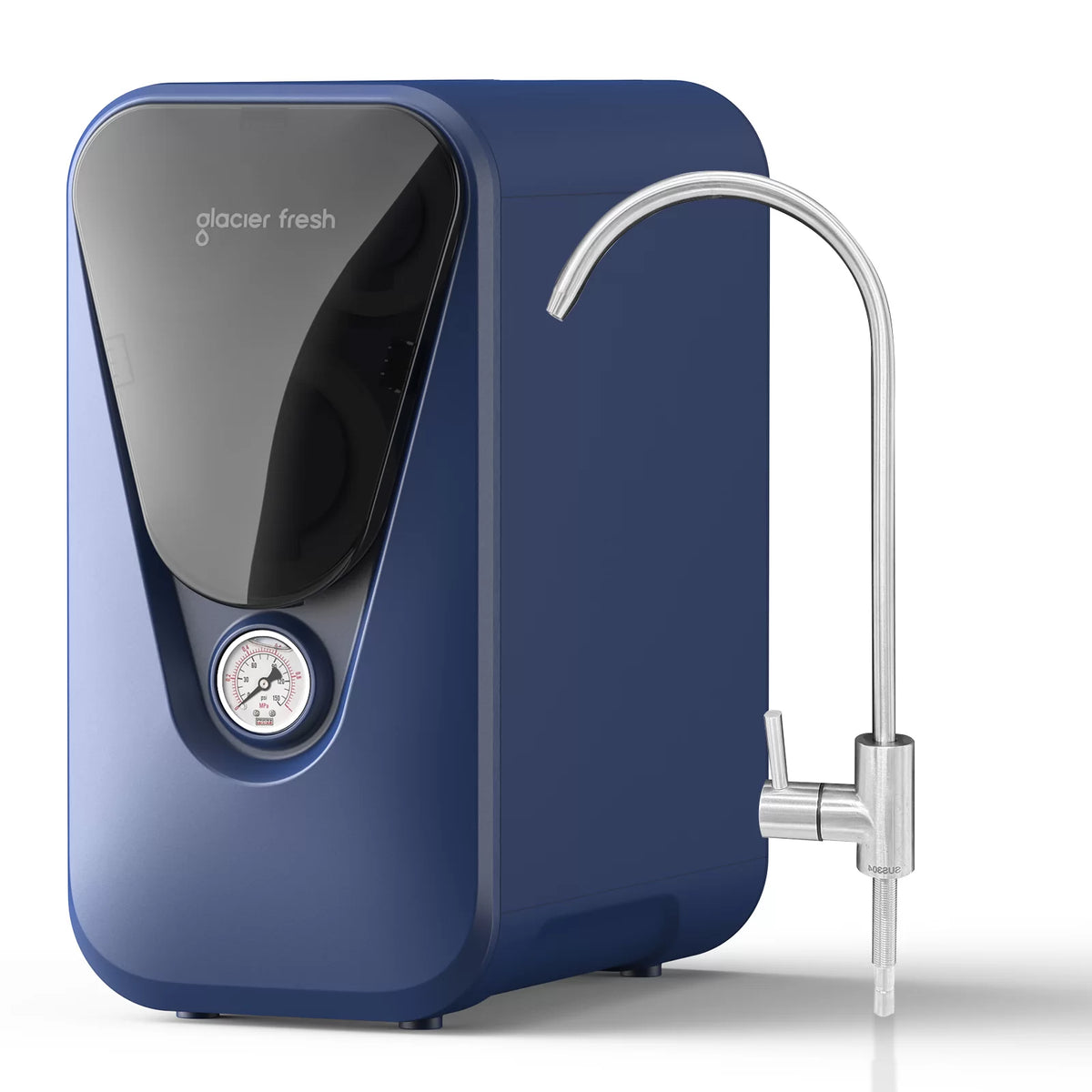
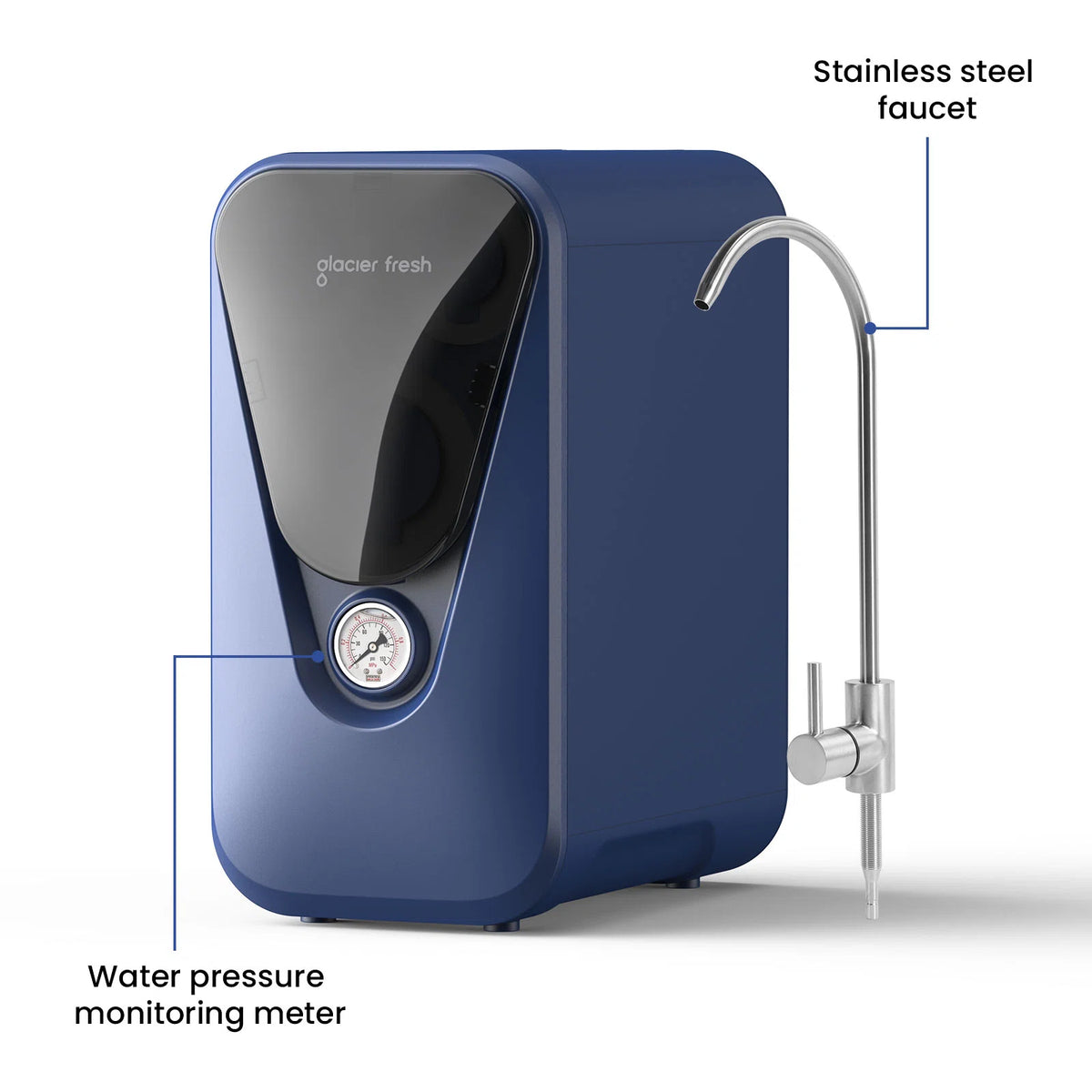
The GlacierFresh RV Reverse Osmosis System is designed for RV travel and off-grid use, making it useful for boondocking and long-term camping.
The CDC identifies reverse osmosis as an effective technology for reducing many dissolved contaminants and microorganisms in drinking water.
Portable Water Softeners for RVs
Portable RV softeners help prevent calcium buildup before minerals enter the plumbing system.
This helps protect water heaters, showerheads, faucets, and appliances during long trips through hard water regions.
The GlacierFresh Portable RV Water Softener is designed for portable installation and regular campground use.
Descaling Treatments for RV Water Heaters
Even with filtration systems, regular descaling still matters.
Many RV owners use diluted vinegar flushes or manufacturer-safe descaling products to reduce mineral accumulation before serious blockage develops.
What Equipment or Filters Are Best for Preventing Sediment in Well Water?

Well water often contains additional sediment that can damage RV plumbing.
Sediment Pre-Filters
Sediment pre-filters help trap larger particles before they reach faucets or appliances.
Common options include:
-
Spin-down sediment filters
-
Multi-stage sediment cartridges
-
Inline hose filters
-
Mesh pre-filters
These systems help reduce sand, rust, dirt, and suspended particles commonly found in campground or well water hookups.
Reverse Osmosis vs Carbon Filtration for RV Use
RO and carbon filtration solve different problems.
Reverse osmosis is better for dissolved contaminants like fluoride, PFAS, salts, and heavy metals. Carbon filters mainly improve taste and reduce chlorine.
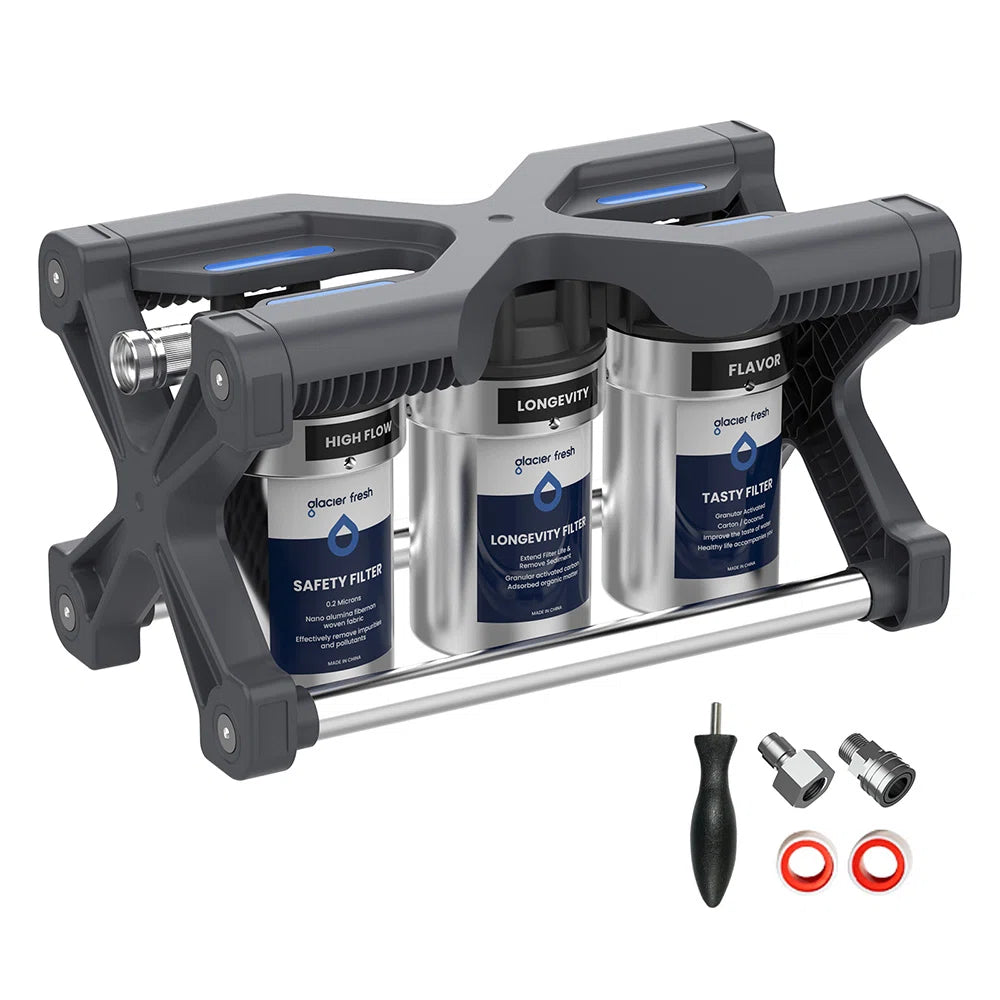
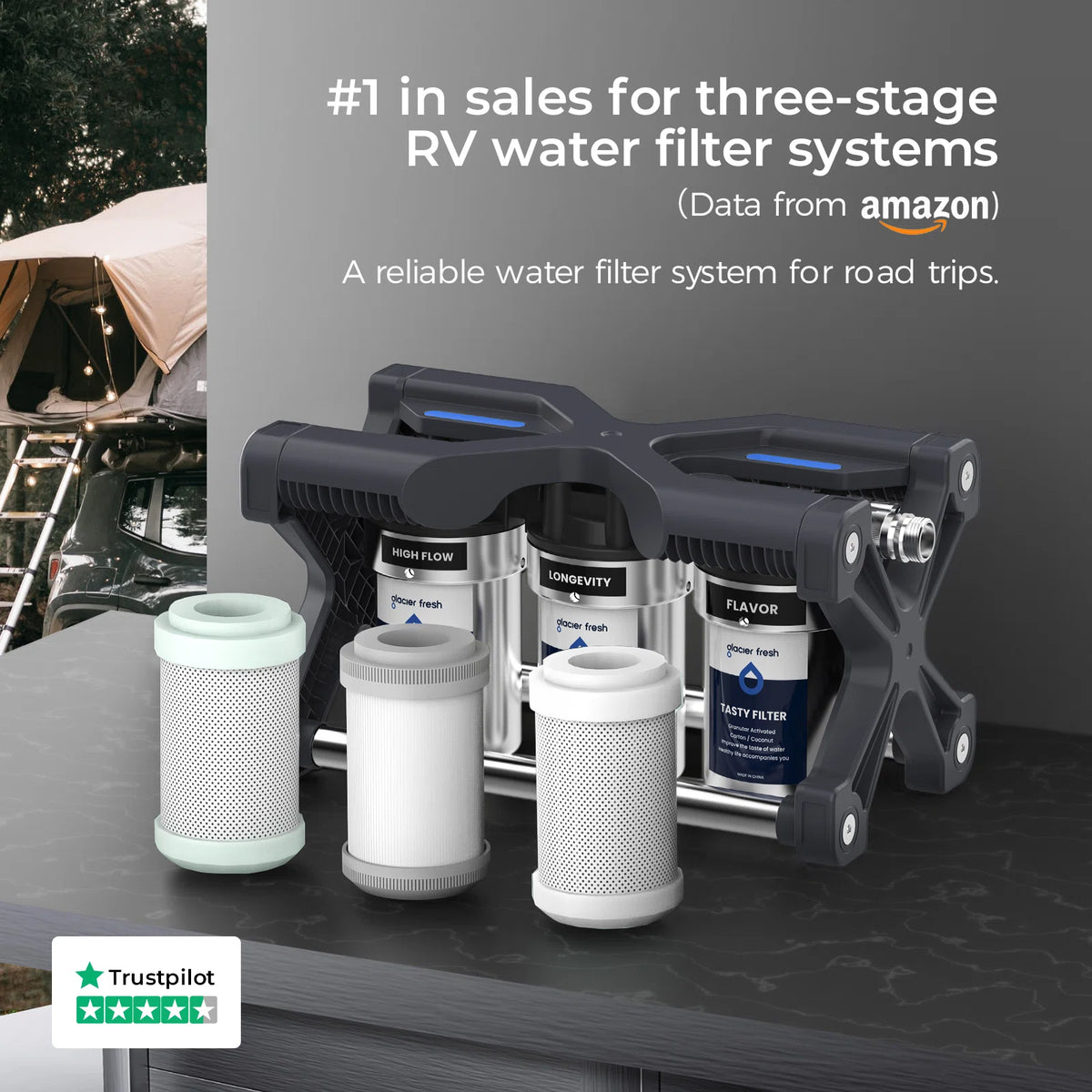
The GlacierFresh RV Reverse Osmosis System works well for drinking water purification, while the GlacierFresh AUQAGO 3-Stage RV Water Filter System provides broader campground filtration for sediment and chlorine reduction.
Recommendation of Reliable Brands for Well Water Filtration?
Reliable RV filtration systems should balance portability, durability, and verified filtration performance.
What to Look for in a Reliable RV Filtration Brand
Key features include:
-
NSF/ANSI certifications
-
Easy filter replacement
-
Portable installation
-
Campground compatibility
-
Durable outdoor materials
NSF/ANSI standards help verify water filtration safety and performance claims.
Popular Options RV Owners Commonly Consider
-
GlacierFresh is commonly considered for portable RV filtration, reverse osmosis systems, and gravity-fed outdoor systems.
-
Waterdrop is often used for residential under-sink RO systems.
-
Berkey is known for gravity-fed filtration popular in off-grid situations.
-
Clearsource focuses heavily on RV sediment filtration systems, while Camco is widely used for entry-level campground filtration.
Some RV owners also use a hard water filter for kitchen sink at home before transitioning to portable RV filtration.
Simple Maintenance Habits That Extend RV Plumbing Life
Simple maintenance habits can significantly reduce hard water damage.
Helpful habits include:
-
Flush water heaters regularly
-
Replace filters on schedule
-
Use pressure regulators at campgrounds
-
Inspect hose connections often
-
Avoid storing hard water inside tanks for long periods
The CDC also recommends replacing filters regularly to maintain water filtration performance and safety.
FAQs
What are the best water systems available in Texas for residential use?
Texas homeowners often deal with very hard water, so reverse osmosis systems combined with water softeners are commonly recommended. Systems that reduce dissolved solids, sediment, and calcium buildup usually perform best in high-hardness regions.
Does an RV water softener really work?
Yes. Portable RV softeners help reduce calcium and magnesium before they enter the plumbing system, which can lower scale buildup inside water heaters and fixtures.
How often should you flush an RV water heater?
Most RV water heaters should be flushed at least once per year. In hard water regions or during frequent travel, flushing every few months is often recommended.
Can reverse osmosis remove hard water minerals?
Reverse osmosis systems can reduce many dissolved minerals, including calcium and magnesium, that contribute to hard water.
What filter is best for campground water?
A multi-stage RV filtration setup with sediment filtration, carbon filtration, and optional reverse osmosis usually provides the best protection for campground water hookups.
Conclusion
Hard water damage develops gradually, but it can seriously shorten the lifespan of RV plumbing, heaters, and appliances. Using the right combination of filtration, softening, and regular maintenance helps protect your RV while improving water quality during travel.
Whether you need simple campground filtration or a more advanced water purifier system for camping setup, GlacierFresh offers portable filtration systems designed for practical RV use, easy installation, and dependable water protection.
References
-
Environmental Protection Agency (EPA). Drinking water and groundwater contaminants.
https://www.epa.gov/report-environment/drinking-water -
Centers for Disease Control and Prevention (CDC). Home water treatment systems.
https://www.cdc.gov/drinking-water/about/about-home-water-treatment-systems.html -
Centers for Disease Control and Prevention (CDC). Home water filter guidance and replacement recommendations.
https://www.cdc.gov/drinking-water/prevention/about-choosing-home-water-filters.html -
NSF/ANSI drinking water treatment standards.
https://blog.ansi.org/ansi/nsf-ansi-drinking-water-treatment-standards/