
Table of Contents:
What Do NSF/ANSI 42, 53, and 58 Actually Certify?
What Contaminants Can Each Certified Filter Remove?
Which Certification Actually Protects Your Household?
Does Filter Material Affect Safety and Durability?
How to Compare Water Filters and Choose a Recommended Purifier
FAQs

Grab two filter boxes off the shelf. NSF 42 on one, NSF 58 on the other. Both stamped with the same NSF logo, both priced and packaged with equal confidence. Neither tells you what the number is for, and neither tells you whether it covers the thing you're actually worried about drinking.
The number is not a quality score. Spending more on a 58-certified product when your water problem is chlorine taste doesn't get you a better outcome — it gets you the wrong tool. Each of those three numbers marks off a separate testing program, built around a separate category of water treatment. Understanding which one addresses your situation is the whole decision. This article maps out what 42, 53, and 58 were each designed to verify, why certification alone doesn't tell the full story about material safety, and how to trace a path from what your water report says to the filter that actually belongs in your system.
What Do NSF/ANSI 42, 53, and 58 Actually Certify?
NSF International and the American National Standards Institute (ANSI) jointly publish all three. That's where the commonality ends. Each program tests a distinct slice of filter performance, and passing one carries no implication about the others — a product holding two of these certifications has been tested twice, for two unrelated things.
| Standard | What It Tests | Typical Product Type |
|---|---|---|
| NSF/ANSI 42 | Aesthetic effects: chlorine taste, odor, and particulate reduction | Carbon pitcher, faucet, and refrigerator filters |
| NSF/ANSI 53 | Health effects: lead, cysts (Giardia, Cryptosporidium), VOCs, and other regulated contaminants | Carbon-based filters marketed for health-effect claims |
| NSF/ANSI 58 | Complete reverse osmosis system performance: materials, structure, TDS reduction, and specific contaminant claims | Under-sink and countertop RO systems |
Clearly distinguish between "Certified by NSF" and "Tested against NSF standards":
- NSF Certified: Subject to independent audits by the official NSF/IAPMO organization, random factory sampling, and laboratory verification.
- Tested to meet NSF: Refers only to testing conducted by third-party laboratories or the manufacturer itself; no official certification has been granted.
NSF/ANSI 42: Aesthetic Effects
The boundary 42 draws is taste and smell. Chlorine, sediment, particulates that make water unpleasant to drink — that's the scope. Nothing in this standard touches contaminants with health implications; it tests the sensory side only. The whole filtration assembly gets evaluated, not just the cartridge inside it, and 42 is by a wide margin the most commonly encountered certification on carbon filter products.
NSF/ANSI 53: Health Effects
Think of 53 as picking up where 42 leaves off. The contaminants it addresses — lead, Giardia and Cryptosporidium cysts, select volatile organic compounds — are ones with toxicological profiles, not just taste consequences. A carbon block can carry both 42 and 53 at once if the manufacturer submits it for testing under both programs, but each claimed reduction still needs its own independent verification. Neither certification inherits anything from the other.
NSF/ANSI 58: Reverse Osmosis Systems
58 operates in a different lane entirely. It doesn't apply to filter cartridges. This standard evaluates complete, assembled point-of-use reverse osmosis systems — assessing material safety, structural soundness, documentation accuracy, total dissolved solids reduction, and a configurable list of additional contaminants a manufacturer can optionally add to their certified claims. RO as a technology and carbon filtration as a technology answer different questions, and their respective standards reflect that divide.
What Contaminants Can Each Certified Filter Remove?
Side-by-side, the contaminant scope looks like this:
| Standard | Example Contaminants Covered |
|---|---|
| NSF/ANSI 42 | Chlorine, particulates, general taste and odor |
| NSF/ANSI 53 | Lead, cysts (Giardia, Cryptosporidium), select VOCs, mercury |
| NSF/ANSI 58 | TDS, arsenic, barium, radium 226/228, hexavalent and trivalent chromium, nitrate/nitrite, cadmium, copper, cysts, lead |
One thing marketing copy rarely makes clear: certification doesn't grant blanket protection across a standard's full theoretical scope. A model certified under 53 for lead reduction has been tested for lead. That's the boundary of what the certification confirms. Cadmium, mercury, another VOC on the 53 list — none of those are covered unless they appear by name in that model's specific certified claims. The standard number on the packaging is the starting point; the actual claims list for that model number is what counts.
Which Certification Actually Protects Your Household?
Three scenarios where this plays out practically:
1. Chlorine taste and odor from treated city water — 42 was built for exactly this. It handles aesthetic water quality concerns, and for most municipal water situations, it's the only certification that's relevant.
2. Lead, cysts, or specific VOCs — 53 is the standard that applies, but "NSF/ANSI 53 certified" on a box still isn't enough on its own. The contaminant you're targeting has to appear by name in that model's certified claims, not just somewhere in the standard's broader scope.
3. Dissolved solids, arsenic, fluoride, private well with elevated mineral content — this is where 58 enters the picture. An RO system is the only product format among the three that addresses TDS and the dissolved-contaminant list that standard covers; a carbon filter, however well-certified, cannot close that gap.
The decision process runs in reverse: gather real data on what's in your water — either through your municipality's Consumer Confidence Report or a certified lab result for well water — and then find the certification that matches it. Choosing a standard first and fitting the water problem to it afterward reliably produces mismatches. For more on the testing mechanics behind these programs, GlacierFresh's guide to NSF certification for water filters walks through how the process works.
Does Filter Material Affect Safety and Durability?
The Material-Safety Layer Underneath 42, 53, and 58
Passing a performance standard and being safe to drink through are related but not identical questions. NSF/ANSI 372 addresses whether the materials that contact drinking water are lead-free. NSF/ANSI 61 goes further — covering the housing itself, the O-rings, every component that water touches as it moves through the filter — and confirms that none of it leaches harmful substances into the output. A product can clear NSF/ANSI 53 for lead reduction performance while its housing remains untested under 61. Performance certification and material certification together constitute a complete picture; either one alone leaves a gap.
Carbon Source and Housing Quality
Activated carbon from coconut shells and activated carbon from coal are not the same material, even though both appear on ingredient lists without distinction. The pore structure in coconut-derived carbon is denser and more uniform, giving it a higher adsorption surface area per gram and keeping it effective longer before saturation forces replacement. The casing matters for a parallel reason: plastics that aren't rated for food contact can leach compounds into the water stream over months of continuous exposure. Neither issue shows up in the performance certification — which is exactly why material provenance is worth asking about separately.
How to Compare Water Filters and Choose a Recommended Purifier

Two products from GlacierFresh show how the certification programs map onto actual purchase decisions:
| Product | Certification | Best For |
|---|---|---|
| GFXWFE™ (GE-compatible refrigerator filter) | NSF/ANSI 42 & 53 | Chlorine taste/odor plus lead and cyst reduction at the fridge dispenser |
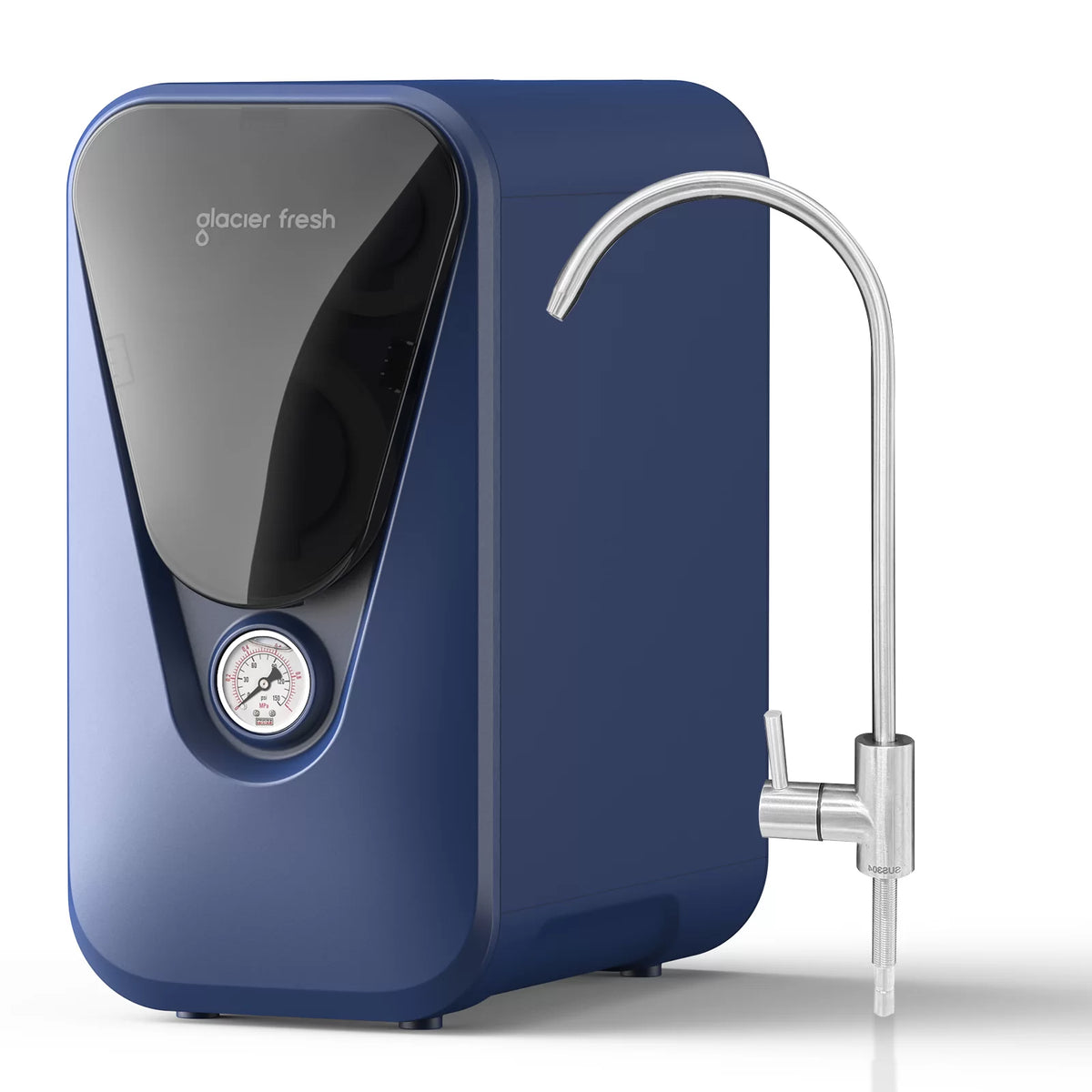
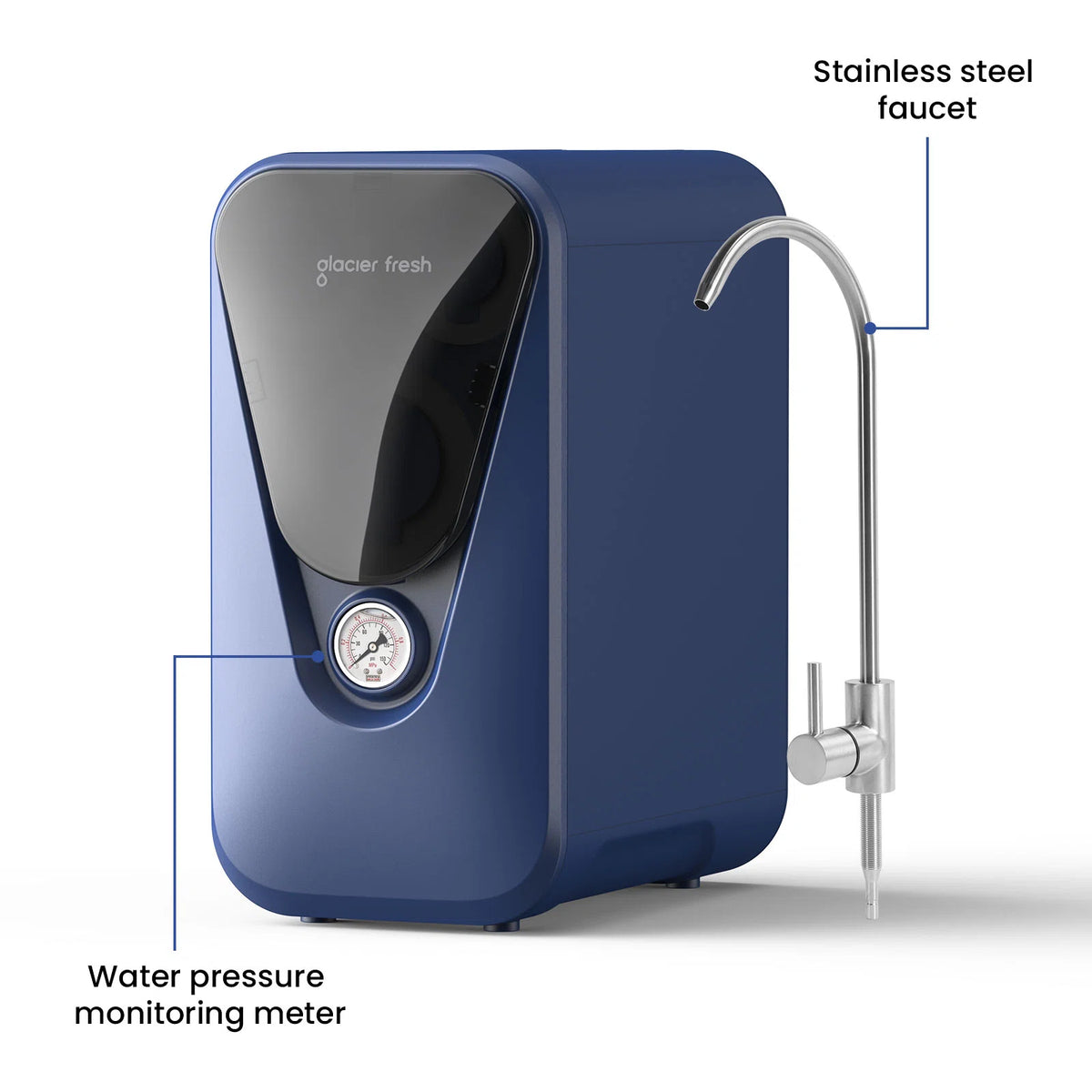
| U03 800GPD Tankinside RO System | NSF/ANSI 58 | TDS, arsenic, and broader dissolved-contaminant reduction at the kitchen tap |
A practical comparison checklist before buying:
● Pull your household's actual water quality report before shopping, rather than choosing a standard first.
● Match the certification to the contaminant you actually need addressed, not the highest available number.
● Verify the specific model, not just the brand, against NSF's certified product database.
● Confirm the exact contaminant claims listed for that model, since certification is claim-specific rather than a blanket guarantee.
NSF 42, 53, and 58 are not a hierarchy from entry-level to premium. They're three independent tests covering three different jobs: taste and odor, health-effect contaminants, and complete reverse osmosis performance. The right certification is whichever one matches what's actually in your water, verified against the specific model rather than assumed from a number on the box.
GlacierFresh's lineup covers all three standards across its product range. Read more about the GlacierFresh story or explore the full lineup at glacierfreshfilter.com.
A reliable comparison process, in order:
Water quality data first. Running through certification options without a water report in hand is guesswork; the report determines which contaminants are actually present.
● Contaminant to certification, not certification to product. Once the contaminant is identified, the relevant standard becomes obvious — and that standard points to the right product format.
● Model-level database check. NSF maintains a searchable certified product database. A current listing for the specific model number — not the brand, not the product line — confirms active certification status.
● Certified claims, not standard labels. Two filters can both carry NSF/ANSI 53 certification and have entirely different contaminant reduction lists. Read what the model is specifically certified for, not what the standard could theoretically cover.
42, 53, and 58 exist in parallel, not in sequence. Each one answers a different question about water treatment. The right certification is determined by the question your water is actually asking.
GlacierFresh carries products certified across all three programs. Learn more about GlacierFresh story or browse the full lineup at glacierfreshfilter.com.
FAQs
Q1: Is NSF 53 better than NSF 42?
Not "better," but different. NSF 42 handles taste and chlorine, while NSF 53 filters health hazards like lead and cysts.
Q2: Does NSF 58 remove lead?
Yes, NSF 58 certified RO systems can reduce lead along with TDS, arsenic, and nitrates.
Q3: How can I verify if my filter is genuinely NSF certified?
Search the manufacturer's brand name and exact model number directly in the NSF or IAPMO online listings database.
References:
● NSF International. What Is NSF Certification? https://www.nsf.org/knowledge-library/what-is-nsf-certification
● NSF International. Standards for Water Treatment Systems. https://www.nsf.org/consumer-resources/articles/standards-water-treatment-systems
● NSF International. NSF/ANSI 58: Reverse Osmosis Drinking Water Treatment Systems. https://www.nsf.org/knowledge-library/nsf-ansi-58-reverse-osmosis-drinking-water-treatment-systems
● NSF International. Certified Drinking Water Treatment Units. https://info.nsf.org/Certified/dwtu/listings_leadreduction.asp
● U.S. EPA. WaterSense Specification for Point-of-Use Reverse Osmosis Systems. https://www.epa.gov/system/files/documents/2024-11/ws-products-watersense-ro-systems-specification.pdf
● U.S. EPA. Overview of Drinking Water Treatment Technologies. https://www.epa.gov/sdwa/overview-drinking-water-treatment-technologies