
Table of Contents:
Two Systems, One Country
The Regulatory Divide Under the Safe Drinking Water Act
The Regulatory Divide Under the Safe Drinking Water Act
The Geography of Groundwater Risk
Matching Your Region to the Right Filter
What's Actually in the Water
Who Bears the Burden
Treatment When Regulation Falls Short
FAQs

Picture two houses, half a mile apart in the same rural county. One is on a municipal line. The other draws from a private well. Their water comes from the same general aquifer. But one household is covered by mandatory federal monitoring, violation reporting, and consumer notification under the Safe Drinking Water Act — and the other isn't covered by any of it. That gap, multiplied across 40 million Americans on private wells, is what this article is about.
Two Systems, One Country
What the SDWA Covers — and What It Doesn't
The Safe Drinking Water Act (SDWA) gives the EPA authority over public water systems: roughly 148,000 utilities serving around 286 million people, held to mandatory testing schedules, required to report violations, required to notify consumers. The statute has a floor, though — it applies to systems serving at least 25 people or 15 connections for 60 days per year. Below that threshold, federal jurisdiction ends. An estimated 13 million private domestic wells fall below it entirely, supplying over 40 million people, predominantly in rural areas, with no federal obligation to test, report, or disclose.
This isn't an oversight. It's the structure. And the practical implications run deep: a nitrate concentration high enough to force a public utility into violation and remediation has no equivalent trigger for a private well. The household above it absorbs every cost themselves — testing, equipment, treatment — and has no external mechanism prompting them to act. The CDC recommends annual well testing for coliform bacteria and nitrate, but a recommendation nobody enforces is easy to skip. Many wells are never retested from the day they're drilled.
The Regulatory Divide Under the Safe Drinking Water Act
The Scenario Nobody Track
Under the SDWA, the U.S. Environmental Protection Agency (EPA) sets enforceable MCLs for approximately 90 contaminants. Public systems must monitor these on prescribed schedules and issue annual consumer confidence reports. Private wells are excluded unless they serve at least 25 people or 15 connections for 60 days per year. Well owners therefore assume full responsibility for testing, interpreting results, and installing treatment. The Centers for Disease Control and Prevention (CDC) recommends annual testing for coliform bacteria, nitrates, and local contaminants, but these are guidelines, not mandates. Many private wells are never retested after installation, leaving households unaware of contamination.
Here's what the regulatory gap looks like on the ground: a well is drilled in 1994 into clean groundwater. Over the following three decades, the neighboring parcel shifts to intensive corn and soy production. Fertilizer applications add nitrate to the soil year after year; some fraction percolates through the vadose zone and enters the shallow aquifer. By 2024, the nitrate concentration near that well has climbed toward the U.S. Environmental Protection Agency (EPA)'s 10 mg/L threshold — or past it. No agency is tracking that change. No law requires the household to retest. They've been drinking from this well for 30 years and have no reason to assume anything has changed.
This scenario isn't hypothetical. U.S. Geological Survey (USGS) National Water Quality Assessments, conducted across multiple decades of sampling, have found roughly 23% of private wells above at least one human-health benchmark — one in four. Arsenic, uranium, nitrate, manganese, and radon account for most exceedances, distributed geographically according to what's in the rock and what's been applied to the land, not according to who owns the property.
The Geography of Groundwater Risk
Why Zip Code Matters More Than State Law
USGS groundwater assessments found that approximately 23% of sampled private wells contained at least one contaminant exceeding a human-health benchmark. The most frequently detected analytes included arsenic, uranium, nitrate, manganese, and radon. These benchmarks are not legally enforceable for private wells, but they signal that roughly one in five rural households faces elevated chronic exposure risk.
For emerging contaminants, data remain spatially clustered. PFAS have been documented in public systems and private wells near industrial facilities, military installations, and airports. As of early 2026, EPA finalized enforceable MCLs for PFOA and PFOS in public systems at 4.0 ng/L each, but these do not extend to private wells. The Water Research Foundation (WRF) continues funding studies on PFAS transport in groundwater, underscoring that plumes can migrate for decades.
State-level water safety generalizations don't hold up under USGS mapping. What shapes groundwater chemistry is bedrock composition, precipitation, and land use history — none of which align with political borders. A property in central Iowa and a property in coastal Maine face completely different contamination profiles, regardless of which state they're in.
Regional Groundwater Risk Profiles:
| Region | Primary Geologic Driver | Key Contaminants | Dominant Land Use |
|---|---|---|---|
| New England / Upper Midwest | Crystalline / Metamorphic bedrock | Arsenic, Uranium, Radon | Forestry, Low-density residential |
| High Plains / Western Basins | Arid evaporative concentration | Arsenic, Uranium, Fluoride, Nitrate | Intensive agriculture, grazing |
| Agricultural Corridors | Shallow unconfined aquifers | Nitrate, Pesticides | Row-crop farming, CAFOs |
| Industrial / Military Zones | Surface-source infiltration | PFAS, VOCs, Solvents | Manufacturing, Defense, Aviation |
The crystalline metamorphic formations underlying New England and the Upper Midwest release arsenic, uranium, and radon through geochemistry inherent to the rock — no surface activity required. In the arid High Plains and western basins, low precipitation means dissolved minerals concentrate rather than dilute; arsenic, fluoride, and uranium reach elevated background levels, and a century of agricultural nitrogen application has added nitrate to the High Plains Aquifer on top. Farming corridors in the Midwest and California's Central Valley carry subsurface nitrate plumes built over decades — contamination that outlasts changes in current surface practice because it's already embedded in the shallow aquifer. Industrial and military zones present a different problem: PFAS and volatile organic compounds anchored to specific facilities and fire-training sites, with EPA groundwater monitoring confirming detections in all 50 states.
PFAS warrants separate treatment because its spatial logic differs from the others. Where arsenic and nitrate track geology and agriculture, PFAS contamination fans outward from discrete point sources — an air base where aqueous film-forming foam was used for decades, a manufacturing facility that discharged fluorinated compounds, a landfill that accepted industrial waste. The compounds don't break down. They don't attenuate meaningfully in groundwater. They migrate slowly and steadily until something intercepts them — or until monitoring catches up. EPA rules finalized in early 2026 set enforceable limits for PFOA and PFOS in public systems at 4.0 nanograms per liter. Private wells adjacent to contaminated sites remain outside that standard entirely.
Matching Your Region to the Right Filter
Regional risk profiles don't just describe a problem — they point toward a specific category of treatment. A household in rural New England dealing with naturally occurring arsenic faces a fundamentally different treatment requirement than a farming family in Iowa with elevated nitrate, or a household near a decommissioned military airfield with PFAS in the well. The contaminant defines the technology, and the region gives the first strong signal about which contaminants are most likely in play.
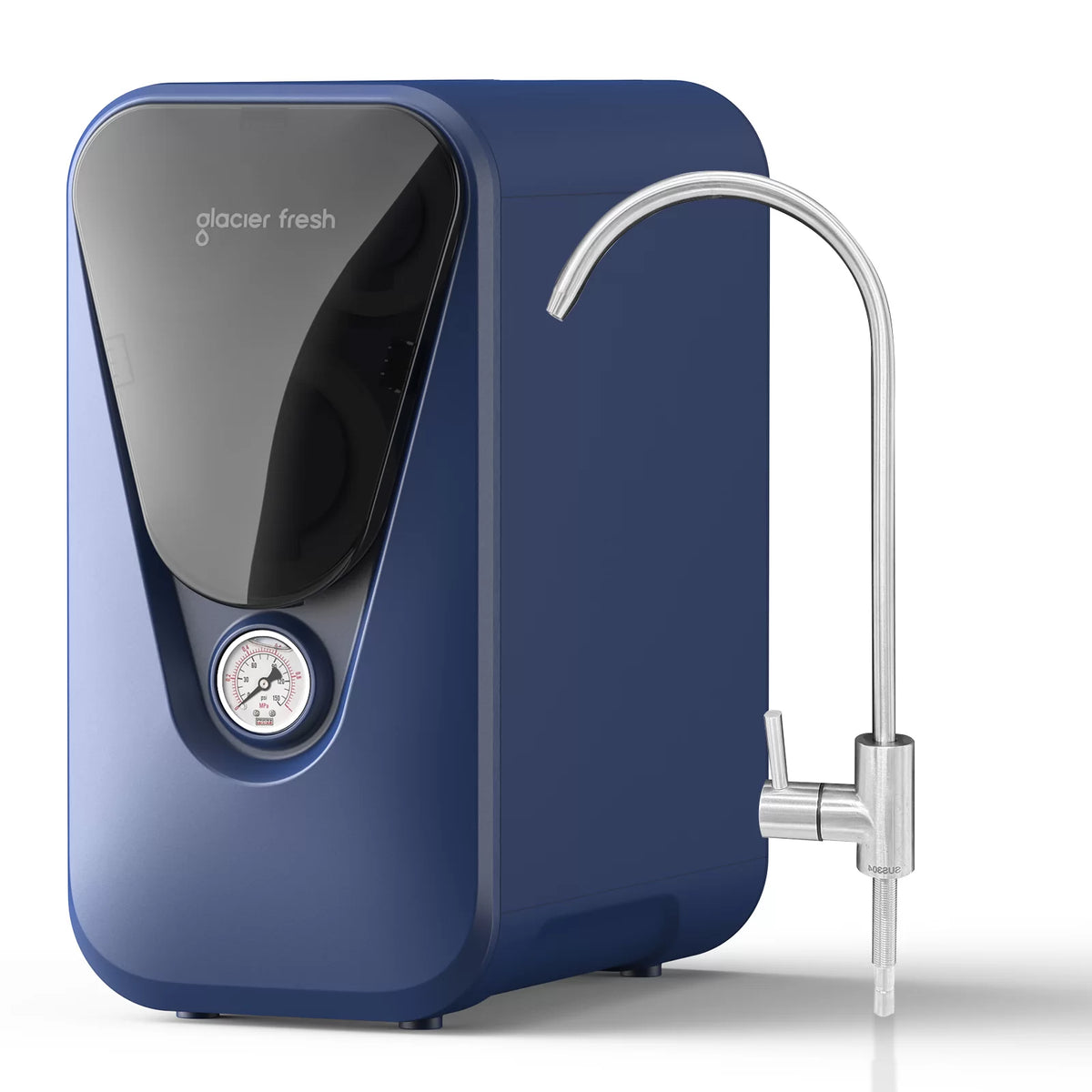
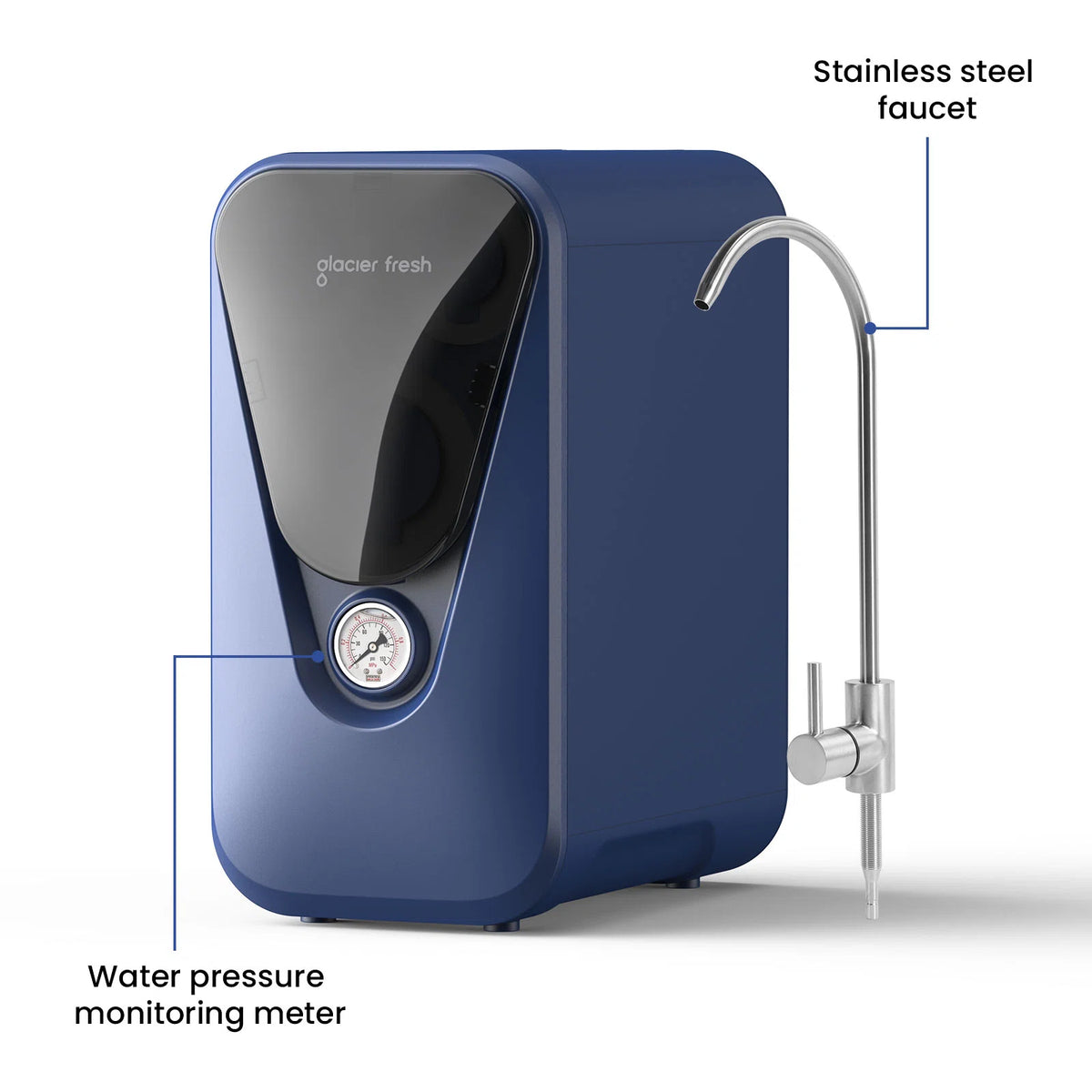
For crystalline bedrock regions where arsenic and uranium dominate, reverse osmosis is the baseline — specifically a system certified to NSF/ANSI 58, which is the only standard that validates performance against dissolved inorganic contaminants at that level. GlacierFresh's U Series tankless RO system addresses arsenic, uranium, TDS, and a range of heavy metals under that certification, without requiring a storage tank. In agricultural corridors where nitrate is the primary concern, the same NSF/ANSI 58 RO certification covers nitrate reduction specifically — carbon-based systems don't touch dissolved nitrate, which is a distinction that matters when the well is surrounded by crop fields.
For PFAS near industrial or military zones, the treatment picture is more compound-specific. GlacierFresh's C Series countertop filters carry NSF/ANSI 42 and 53 certifications covering chlorine, taste, and certain health-effect contaminants, and work well in apartments or rental properties where under-sink installation isn't permitted. For PFAS specifically, however, RO remains the most validated residential option — the U Series covers PFOA and PFOS under NSF/ANSI 58, which is the standard that matters for that contaminant class.
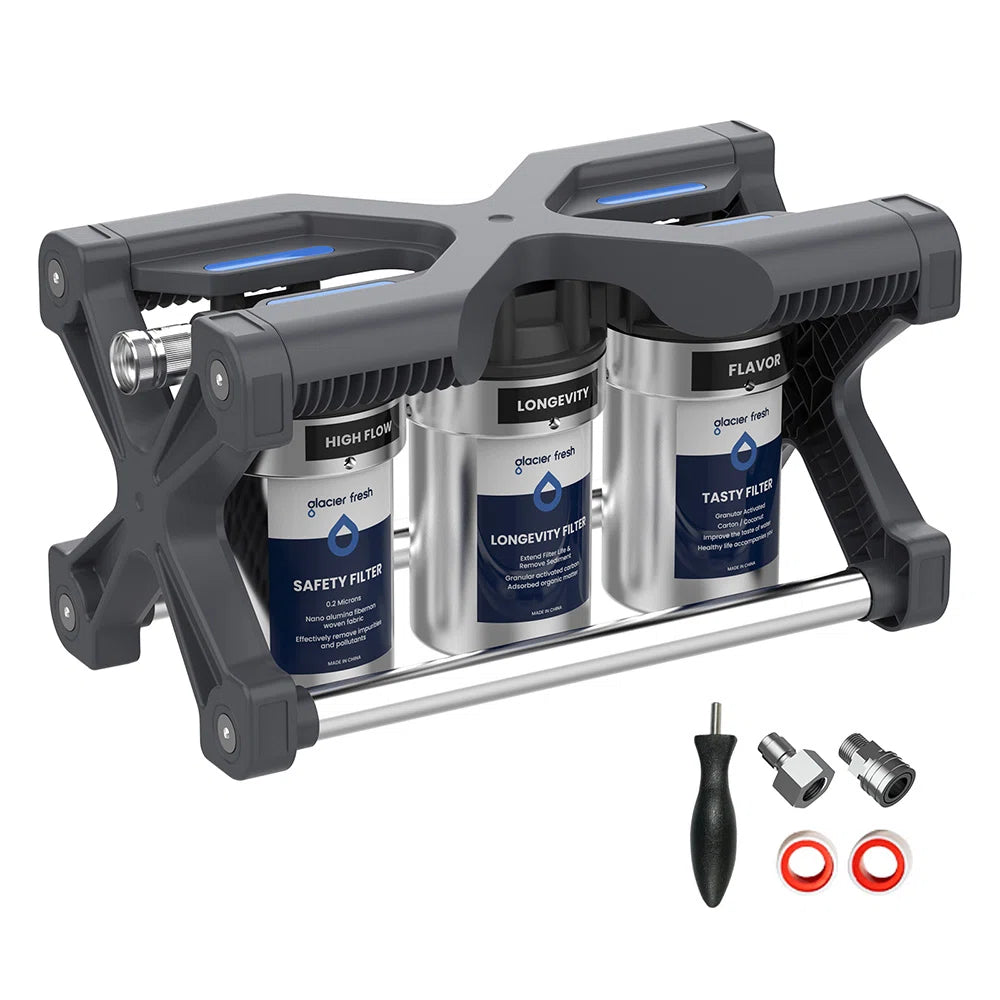
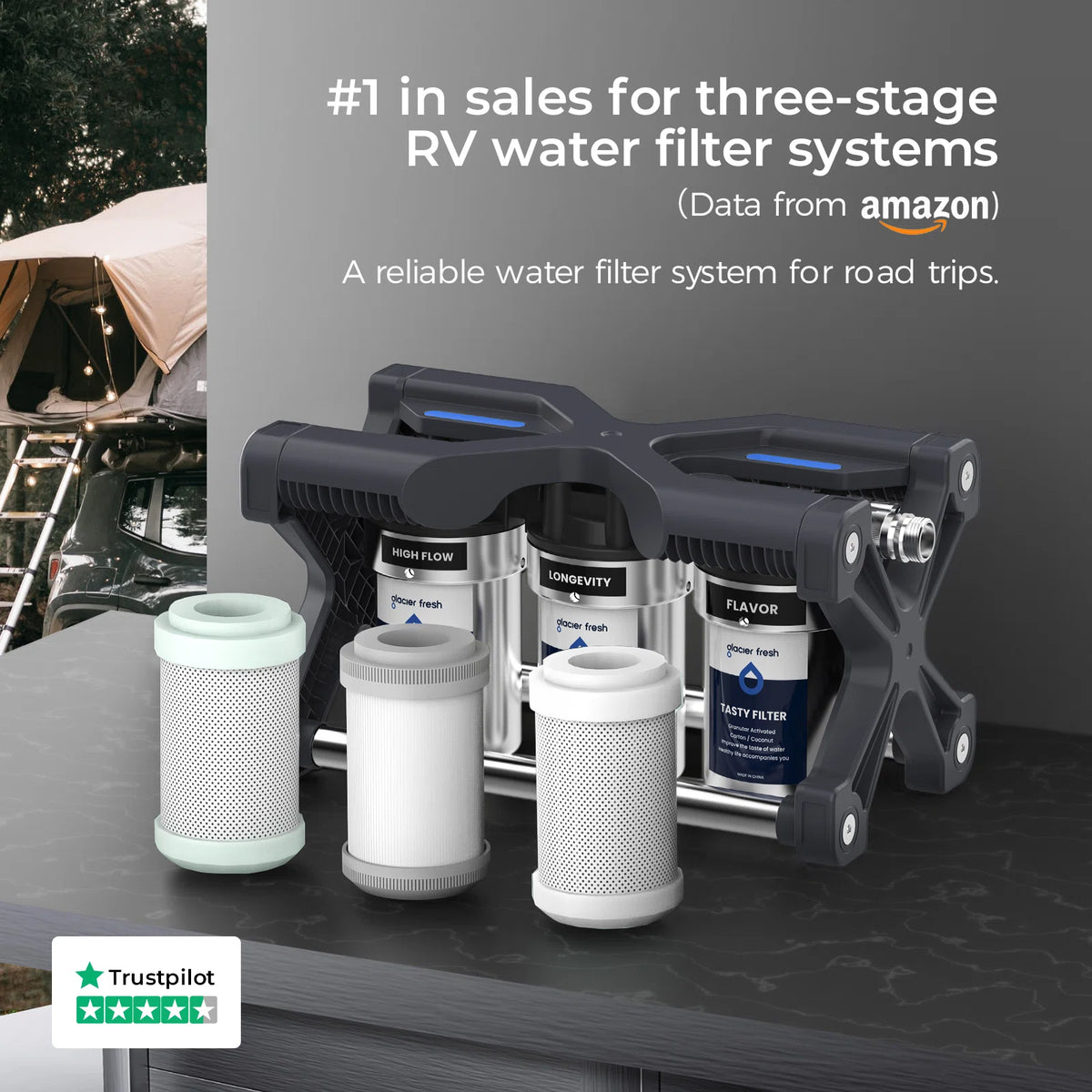
RV and mobile households moving across multiple regional risk zones have a different problem: their source water changes with every campground or hookup. GlacierFresh's O Series addresses that variability with NSF/ANSI 42, 53, and 401 certification across a filter designed for variable incoming water quality rather than a fixed home source. The 401 certification — emerging contaminants — is particularly relevant for travelers who can't predict what's in the local water supply from one site to the next.
The table below maps GlacierFresh product lines directly against the contamination profiles these regional risk patterns produce:
GlacierFresh Filter Selection by Regional Risk Profile:
| Region | Primary Contaminants | Recommended Series | Key Certification |
|---|---|---|---|
| Crystalline bedrock (NE / Upper Midwest) | Arsenic, Uranium, Radon | U Series (Tankless RO) | NSF/ANSI 58 |
| Agricultural corridors (Midwest / CA) | Nitrate, Pesticides | U Series (Tankless RO) | NSF/ANSI 58 |
| Industrial / Military zones | PFAS, VOCs | U Series (Tankless RO) | NSF/ANSI 58 |
| No plumbing modification possible | Chlorine, Sediment, Emerging | C Series (Countertop) | NSF/ANSI 42, 53 |
| Mobile / RV / variable source water | Variable, Emerging contaminants | O Series (RV/Outdoor) | NSF/ANSI 42, 53, 401 |
What's Actually in the Water
Contaminants That Come From Pipes, Not Aquifers
Lead is worth addressing separately because its source is misunderstood. Most lead in tap water doesn't originate underground — it enters the water column from the distribution infrastructure between the source and the tap. Service line joints, solder used before 1986 SDWA amendments restricted lead content, old brass fixtures: any of these can dissolve lead into water that left the aquifer entirely clean. Public water systems manage this through corrosion control programs that adjust pH and alkalinity. Private well systems don't have that layer — water chemistry is whatever the geology produces, and soft or low-pH water is particularly aggressive against metal plumbing components.
Nitrate, Arsenic, and the Slow Accumulation Problem
Nitrate is the agricultural footprint in groundwater. Fertilizer and animal waste applied to the land surface eventually find their way through the soil into shallow aquifers, where concentrations build over years of cumulative input. The immediate health risk falls almost entirely on infants under six months: their gut bacteria convert nitrate to nitrite at rates that adult digestive systems don't replicate, interfering with blood oxygen transport and producing methemoglobinemia. In adults, the chronic exposure picture is more contested, but some research has pointed toward associations with colorectal cancer and adverse pregnancy outcomes at long-term low-level exposure.
Arsenic, uranium, and radium trace back to bedrock rather than land use. USGS has mapped the geologic formations that release them — crystalline rock, certain sedimentary deposits — and the health consequences at chronic exposure are well-documented: bladder, lung, and skin cancers for arsenic; kidney toxicity and carcinogenicity for uranium and radium. These are slow-developing risks, which is precisely what makes them hard to catch. Any individual test is a snapshot; the harm accumulates across years of daily ingestion.
Bacteria: The Fast Risk
Microbial contamination works on a different clock than chemical exposure — illness within hours, not years of accumulation. Shallow well casings and deteriorating seals let surface water in after heavy rainfall or septic system failures nearby. Total coliform bacteria in a well sample indicate that surface water has bypassed the casing. E. coli specifically means fecal material has reached the supply. With no regulatory testing requirement, a bacterial contamination event can persist in a private well for weeks or months with no external trigger to identify it.
Major Contaminants, Sources, and Health Effects:
| Contaminant | Primary Source | Health Impact | At-Risk Groups |
|---|---|---|---|
| PFAS | Industrial discharge, AFFF, landfills | Immunotoxicity, elevated cholesterol, cancer | Fetuses, infants |
| Lead | Corrosive plumbing (service lines, solder) | Neurodevelopmental deficits, no safe level | Children, pregnant people |
| Nitrate | Agricultural runoff, septic systems | Methemoglobinemia (blue baby syndrome) | Infants under 6 months |
| Arsenic | Local geology (bedrock aquifers) | Skin lesions, cardiovascular disease, cancer | All populations (chronic) |
| Uranium / Radium | Local geology (sedimentary formations) | Nephrotoxicity, carcinogenicity | All populations (chronic) |
Who Bears the Burde
Age, Biology, and Unequal Exposure
Young children don't experience contaminants the way adults do — their bodies are smaller relative to the water they consume, their developing systems are more permeable to toxins, and many of the health consequences take decades to surface. Per kilogram of body weight, children drink more water and receive proportionally higher doses from identical tap concentrations. An infant's blood-brain barrier hasn't finished forming, which is why lead causes measurable neurodevelopmental harm at blood concentrations that produce no detectable effect in adults. The nitrate-to-nitrite conversion that produces methemoglobinemia happens in infants specifically because gut bacterial populations in the first six months of life differ from those in older children and adults. PFAS detected in umbilical cord blood confirm that exposure begins before the first drink of water. And for all of these — lead, PFAS, arsenic — the consequences often don't manifest until midlife, decades removed from the exposures that initiated them.
The structural inequity compounds this. Private well reliance is highest among rural households, Tribal nations, and lower-income families — the populations least positioned to absorb remediation costs, most likely to have older wells in shallower aquifers, and furthest from certified testing laboratories. NRDC has documented that drinking water violations concentrate in lower-income and minority communities. A minority of states respond with mandatory testing programs, subsidized equipment, or rebate programs for low-income owners. Most don't. Which side of a state border a household sits on shapes their access to any safety infrastructure more than the actual contamination risk beneath them.
Treatment When Regulation Falls Short

PFAS: The Treatment Calculus
For private well households near PFAS sources, three residential technologies have documented performance. Granular activated carbon reduces longer-chain PFAS compounds through adsorption, but the media saturates — ongoing monitoring for breakthrough is required, and performance across the full PFAS compound range is uneven. Anion exchange resins bind specific PFAS molecules through ion affinity; performance varies by resin type and the exact compound profile in the water. Reverse osmosis provides the most reliable broad-spectrum reduction — NSF/ANSI 58 testing covers PFOA and PFOS specifically — and for sites with significant contamination, stacking pre-filtration, RO, and post-carbon polishing builds in the layered redundancy that single-technology approaches can't offer.
Validated Residential PFAS Treatment Technologies:
| Technology | Mechanism | Notes |
|---|---|---|
| Granular Activated Carbon (GAC) | Adsorption | Effective for longer-chain PFAS; monitor for breakthrough |
| Anion Exchange Resins | Ion affinity | Performance varies by resin type and water chemistry |
| Reverse Osmosis (RO) | Membrane rejection | Broadest spectrum; NSF/ANSI 58-validated for PFOA/PFOS |
| Hybrid Systems | Multi-barrier | Pre-filter + RO + carbon polish for high-contamination zones |
Point-of-Use Filtration as the Practical Backstop
Federal law draws its line, states fill in inconsistently, and individual households sit with whatever gap remains. For confirmed multi-contaminant situations — arsenic, nitrate, PFAS, lead together — reverse osmosis is the appropriate technology, not because it's the most convenient option but because it's the one with validated performance across that contaminant range. GlacierFresh's U Series removes up to 99% of dissolved contaminants under NSF/ANSI 58 certification in a single under-sink installation. Where plumbing modification isn't an option, countertop units with nanofiber or carbon stages address chlorine, sediment, and emerging contaminants. RV and outdoor systems handle variable source water. Pitcher filters address the basic taste-and-chlorine use case.
GlacierFresh Product Line Contamination Response Matrix:
| Product Series | Target Contaminants | Use Case | NSF/ANSI Validation |
|---|---|---|---|
| U Series (Tankless RO) | PFAS, Arsenic, Nitrate, Lead, Uranium, TDS | Under-sink residential | NSF/ANSI 58 (RO) |
| C Series (Countertop) | Chlorine, Sediment, Emerging contaminants | Apartments, no plumbing mod | NSF/ANSI 42, 53 |
| O Series (RV/Outdoor) | Bacteria, Sediment, Variable source water | Camping, RV, off-grid | NSF/ANSI 42, 53, 401 |
| P Series (Glass Pitcher) | Chlorine, Taste/odor, Basic filtration | Travel, single-user entry-level | NSF/ANSI 42 |
FAQs
Is U.S. tap water federally regulated for all households?
Public systems above the SDWA threshold — 25 people or 15 connections — are covered. Private wells supplying over 40 million Americans are not: no federal testing mandate, no reporting chain, no notification if a nearby aquifer is contaminated.
What percentage of private wells contain contaminants above health benchmarks?
Roughly 23% across USGS assessment cycles — one in four above at least one benchmark. Arsenic, nitrate, uranium, and radon appear most often. No enforceable limits exist for private wells, so exceedances carry health risk with no regulatory consequence.
Can PFAS be removed from well water by standard carbon filters?
GAC reduces certain longer-chain PFAS but performance degrades as media saturates and is uneven across the full compound range. Reverse osmosis — validated under NSF/ANSI 58 for PFOA and PFOS — is the more reliable option for confirmed PFAS situations. Anion exchange resins address specific profiles but need matching to compounds actually present.
Which U.S. regions carry the highest private well contamination risk?
Four zones: agricultural corridors with layered nitrate plumes; New England and Upper Midwest crystalline bedrock with naturally occurring arsenic and uranium; arid western basins where evaporation concentrates minerals; and a nationally dispersed PFAS pattern from military installations, airports, and industrial sites. Individual risk within any zone turns on well depth, casing condition, and proximity to specific sources.
Why are infants and children more vulnerable to well water contaminants?
Higher water intake per kilogram means higher doses. An incomplete blood-brain barrier makes lead and neurotoxins more penetrating. Infant gut bacteria convert nitrate to nitrite in ways adults don't, triggering methemoglobinemia at otherwise-harmless concentrations. PFAS appear in cord blood. And latency periods of decades mean childhood exposures can surface as adult disease long after the exposure window closes.
What is the most effective home treatment for a private well with multiple contaminants?
Reverse osmosis certified to NSF/ANSI 58 covers the widest dissolved-contaminant range — PFAS, arsenic, nitrate, heavy metals, TDS — in one validated system. Pre-filtration protects the membrane; post-carbon handles taste. For a single confirmed contaminant, targeted treatment may cost less — but that determination requires a water test first.
Reference
-
U.S. Geological Survey (USGS) https://www.usgs.gov/mission-areas/water-resources
-
Safe Drinking Water Act (SDWA) https://www.epa.gov/sdwa
-
Water Research Foundation (WRF) https://www.waterrf.org/
-
Safe Drinking Water Act https://en.wikipedia.org/wiki/Safe_Drinking_Water_Act