
Table of Contents:
What is ultra-filtration(UF)?
How ultra-filtration works: the science explained simply
Inside the Glacier Fresh U06 ultra-filtration water filter system
Mineral retention: a key advantage of ultra-filtration
Who should choose an ultra-filtration system like the U06?
Ultra-filtration vs. reverse osmosis: which is better?
Conclusion
Clean drinking water is something many of us take for granted—until we start paying closer attention to what might actually be in our tap water. From chlorine and sediment to microplastics and bacteria, even treated municipal water can contain contaminants that affect both taste and safety. As awareness about water quality grows, more homeowners are turning to advanced filtration technologies that can provide reliable, everyday protection.
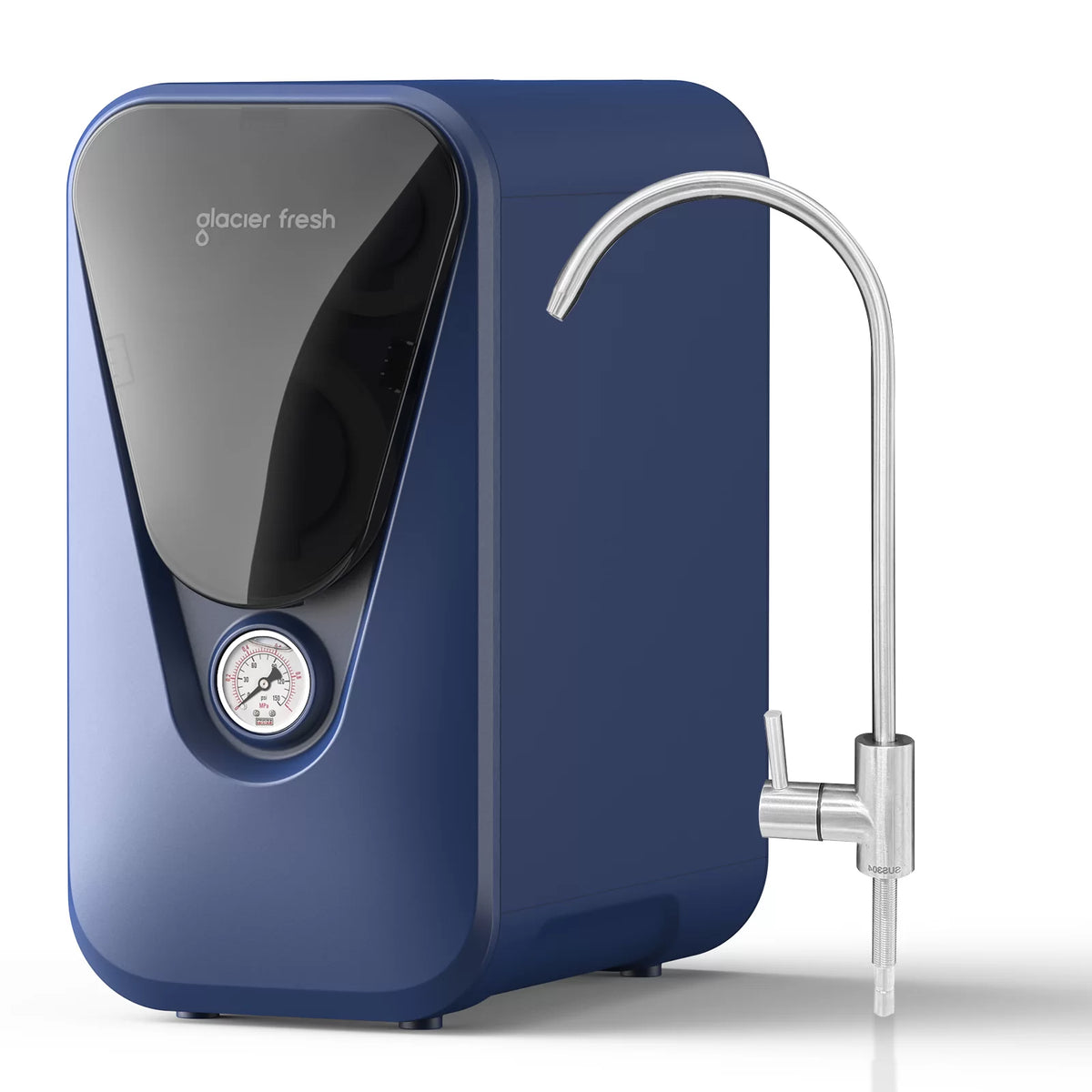
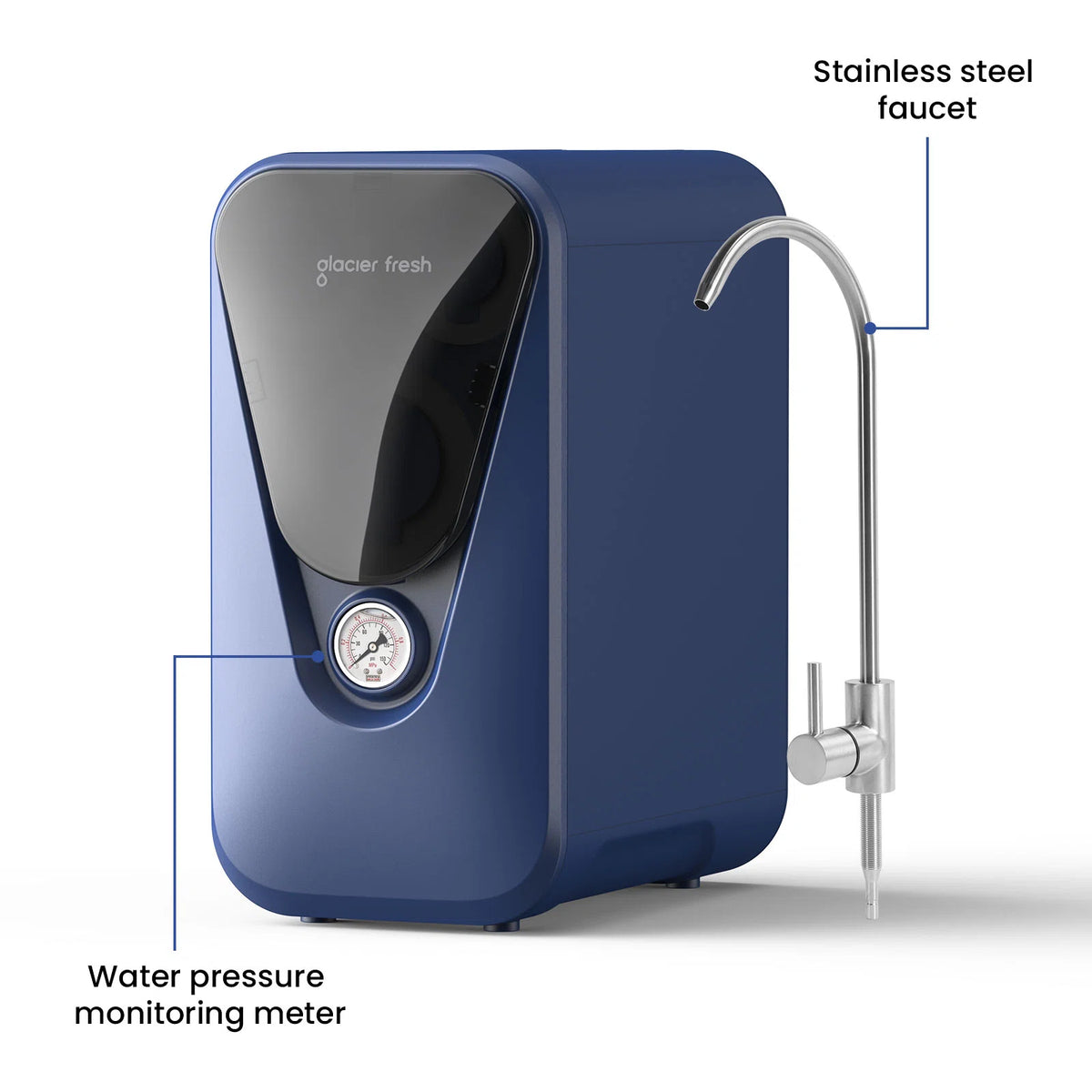
One solution gaining popularity is ultra-filtration (UF)—a highly effective membrane filtration method that removes microscopic contaminants without wasting water or stripping beneficial minerals. Modern systems like the Glacier Fresh U06 Ultra-Filtration Water Filter System bring this technology into the home in a compact, under-sink design.
In this guide, we’ll explain what ultra-filtration is, how it works, and how the Glacier Fresh U06 uses this technology to deliver cleaner, better-tasting water for everyday use.
What is ultra-filtration(UF)?

Ultra-filtration is a membrane-based water filtration technology that removes extremely small contaminants from water by forcing it through a semi-permeable membrane. Unlike traditional filters that rely mainly on adsorption or chemical reactions, UF works through precise physical separation.
At the heart of ultra-filtration systems is a membrane with microscopic pores typically around 0.01 microns in size. To put that into perspective, a human hair is roughly 70 microns wide—meaning these pores are thousands of times smaller. When water passes through the membrane, contaminants larger than the pores are blocked, while clean water flows through.
What ultra-filtration removes?
Ultra-filtration systems are designed to remove a wide range of common contaminants, including:
- Sediment, rust, and suspended particles.
- Bacteria.
- Some viruses (depending on membrane rating).
- Microplastics.
- Cysts and organic matter.
- Chlorine, odors, and bad taste (when paired with activated carbon).
Because of this precision, UF filtration can significantly improve both water safety and taste.
What ultra-filtration does not remove?
Unlike reverse osmosis systems, ultra-filtration does not remove dissolved minerals or salts. This means it typically does not reduce:
- Total dissolved solids (TDS).
- Dissolved heavy metals (unless additional filters are used).
- Fluoride.
While that might sound like a limitation, many households actually prefer this approach because it preserves beneficial minerals such as calcium and magnesium that naturally occur in water.
How ultra-filtration works: the science explained simply
Although ultra-filtration is based on sophisticated membrane technology, the basic process is surprisingly straightforward.
Hollow fiber membrane technology
Most UF systems use hollow fiber membranes, which look like bundles of extremely tiny straws. Thousands of these fibers are packed together inside a cartridge. Water flows through the membrane walls of these fibers, and the tiny pores allow clean water molecules to pass while blocking contaminants. This process is purely mechanical filtration, meaning it doesn’t rely on chemicals or electricity.
Pressure-driven filtration
Ultra-filtration systems like U06 under sink ultrafiltration water filter typically use normal household water pressure to push water through the membrane. This eliminates the need for pumps or electrical components. As a result, UF systems are often:
- Simpler to operate.
- More energy-efficient.
- Less prone to mechanical failure.
No wastewater production
One major advantage of ultra-filtration is that it does not create wastewater. In reverse osmosis systems, a portion of the incoming water is discharged as reject water to remove dissolved solids. Ultra-filtration, on the other hand, filters water directly without producing this byproduct. This makes UF systems a more water-efficient and environmentally friendly option.
Inside the Glacier Fresh U06 ultra-filtration water filter system

The Glacier Fresh U06 ultra-filtration water filter system is designed to combine the strengths of ultra-filtration technology with practical features of modern kitchens.
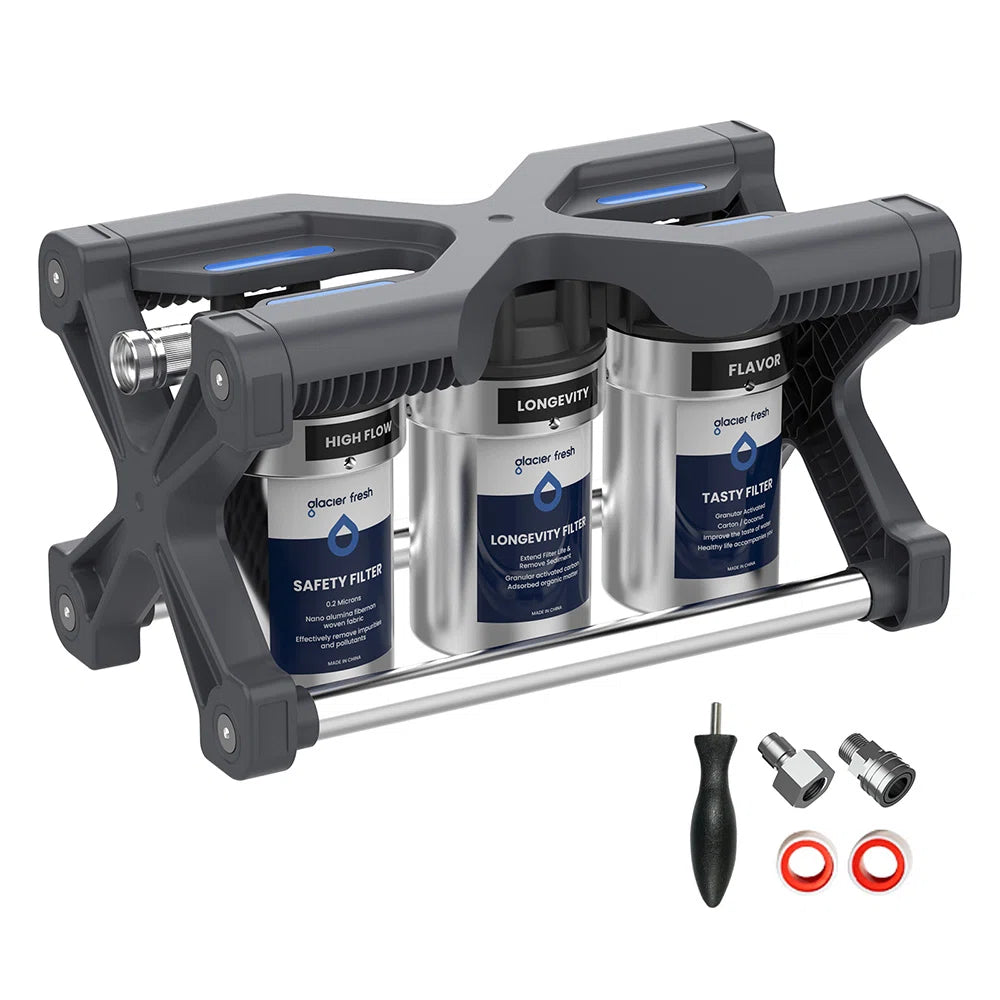
Multi-stage filtration design
Rather than relying on a single filter, the U06 uses a multi-stage filtration process to ensure comprehensive water purification.
Stage 1: Sediment filtration
The first stage removes larger particles such as:
- Sand
- Rust
- Dirt
- Suspended solids
This step protects downstream filters and extends the overall system's longevity.
Stage 2: Activated carbon filtration
The second stage uses activated carbon to reduce:
- Chlorine
- Unpleasant tastes and odors
- Certain organic chemicals
Activated carbon is particularly effective at improving the flavor and smell of tap water, which is often affected by chlorine used in municipal treatment.
Stage 3: Ultra-filtration membrane
The final stage is the UF membrane, which removes microscopic contaminants such as:
- Bacteria
- Microplastics
- Colloids
- Fine suspended particles
With 0.01-micron filtration precision, this membrane forms the core of the system’s protective capability.
Why 0.01 micron filtration matters
The filtration precision of 0.01 microns allows ultra-filtration membranes to capture contaminants that traditional filters may miss. For example:

Because these contaminants are larger than 0.01 microns, they are effectively blocked by the UF membrane. This level of filtration helps provide clearer, safer, and better-tasting drinking water without requiring extremely high pressure or energy use.
No electricity, no wastewater
One of the standout benefits of the Glacier Fresh U06 system is its simple, efficient design. Unlike some advanced water purification systems that require electricity or produce wastewater, this system operates entirely through water pressure and membrane filtration.
This means homeowners can enjoy:
- Lower energy consumption.
- Minimal environmental impact.
- Consistent water output.
- Reliable filtration without complex components.
For many households, this simplicity makes ultra-filtration an attractive alternative to more complicated systems.
Tankless and space-saving design
Kitchen space is valuable, especially under the sink, where plumbing, garbage disposals, and storage compete for room. The U06 system features a compact, tankless design, which provides several advantages:
- Fits easily under most sinks.
- Saves cabinet space.
- Delivers water on demand.
- Eliminates the need for bulky storage tanks.
Because water is filtered instantly when the faucet is turned on, users can enjoy freshly filtered water whenever they need it.
Mineral retention: a key advantage of ultra-filtration
One of the most frequently discussed differences between ultra-filtration and reverse osmosis systems is mineral retention.
Reverse osmosis removes nearly all dissolved substances—including beneficial minerals. Ultra-filtration, however, allows naturally occurring minerals to remain in the water. These may include:
- Calcium
- Magnesium
- Potassium
Many people prefer mineral-containing water because it can contribute to:
- Improved taste
- A more natural water profile
- Balanced hydration
For households using municipal water that is already treated and relatively low in contaminants, ultra-filtration often provides an ideal balance between purity and mineral retention.
Who should choose an ultra-filtration system like the U06?

Ultra-filtration systems like the Glacier Fresh U06 Ultra-Filtration Water Filter System are particularly well-suited for certain types of households. Ideal for:
Homes with municipal tap water
City water is already treated to remove many contaminants, so UF systems can provide an additional layer of filtration.
Households wanting mineral-rich water
UF preserves natural minerals that contribute to taste and hydration.
Eco-conscious consumers
Because ultra-filtration produces no wastewater, it’s a more sustainable option.
Apartments or rental homes
Compact systems are easier to install and maintain in smaller spaces.
Ultra-filtration vs. reverse osmosis: which is better?
Both ultra-filtration and reverse osmosis are highly effective filtration technologies, but they serve slightly different purposes.

In many urban households with moderate TDS levels, ultrafiltration provides excellent filtration without the complexity of RO systems.
Conclusion
Ultra-filtration technology offers a practical and efficient way to improve household drinking water. By combining microscopic membrane filtration with simple operation, UF systems provide strong protection against many common contaminants while preserving beneficial minerals.
The Glacier Fresh U06 Ultra-Filtration Water Filter System brings this technology into a compact, under-sink solution designed for modern homes. With its multi-stage filtration, 0.01-micron precision, tankless design, and water-efficient operation, it offers a reliable way to enjoy cleaner, better-tasting water every day.
For households seeking a balance between performance, simplicity, and sustainability, ultrafiltration may be one of the smartest water filtration choices available today.