
Table of Contents:
What Is a Reverse Osmosis System?
Average Cost Breakdown by RO System Type
The Hidden Costs: What Else Will You Spend Money On?
How Can You Save on Reverse Osmosis System Cost?
Key Factors That Affect the Price of an RO System
Conclusion
FAQs
A reverse osmosis system is essential for ensuring the safety of your family’s drinking water. If you want to purchase a reverse osmosis system that’s right for your home, you won't want to miss this buying guide. We’ll explain everything you need to know about how reverse osmosis systems work, their prices, and our recommended products.
What Is a Reverse Osmosis System?

A reverse osmosis system is a highly efficient water purification technology that uses a semipermeable membrane and high pressure to filter out impurities from water.
RO membranes have extremely small pore sizes, typically around 0.0001 micrometers. As a result, they can effectively remove 95%–99% of impurities from water, including heavy metals, PFAS, microorganisms, TDS, and more.
The RO system consists of multiple filtration stages:
Stage 1. Pre-filter / PP Cotton
Filters out large particles such as silt and rust to protect the subsequent filter stages.
Stage 2. Activated Carbon Filter
Absorbs residual chlorine, odors, and organic compounds from the water.
Stage 3. RO Membrane Core
Provides fine filtration, removing heavy metals, viruses, and dissolved solids.
Stage 4. Post-filter Activated Carbon
Further improves the taste of the filtered water, making it crisp and sweet.
Average Cost Breakdown by RO System Type
There are many types of RO reverse osmosis water purifiers; you can use the comparison chart to choose the one that’s right for your home.
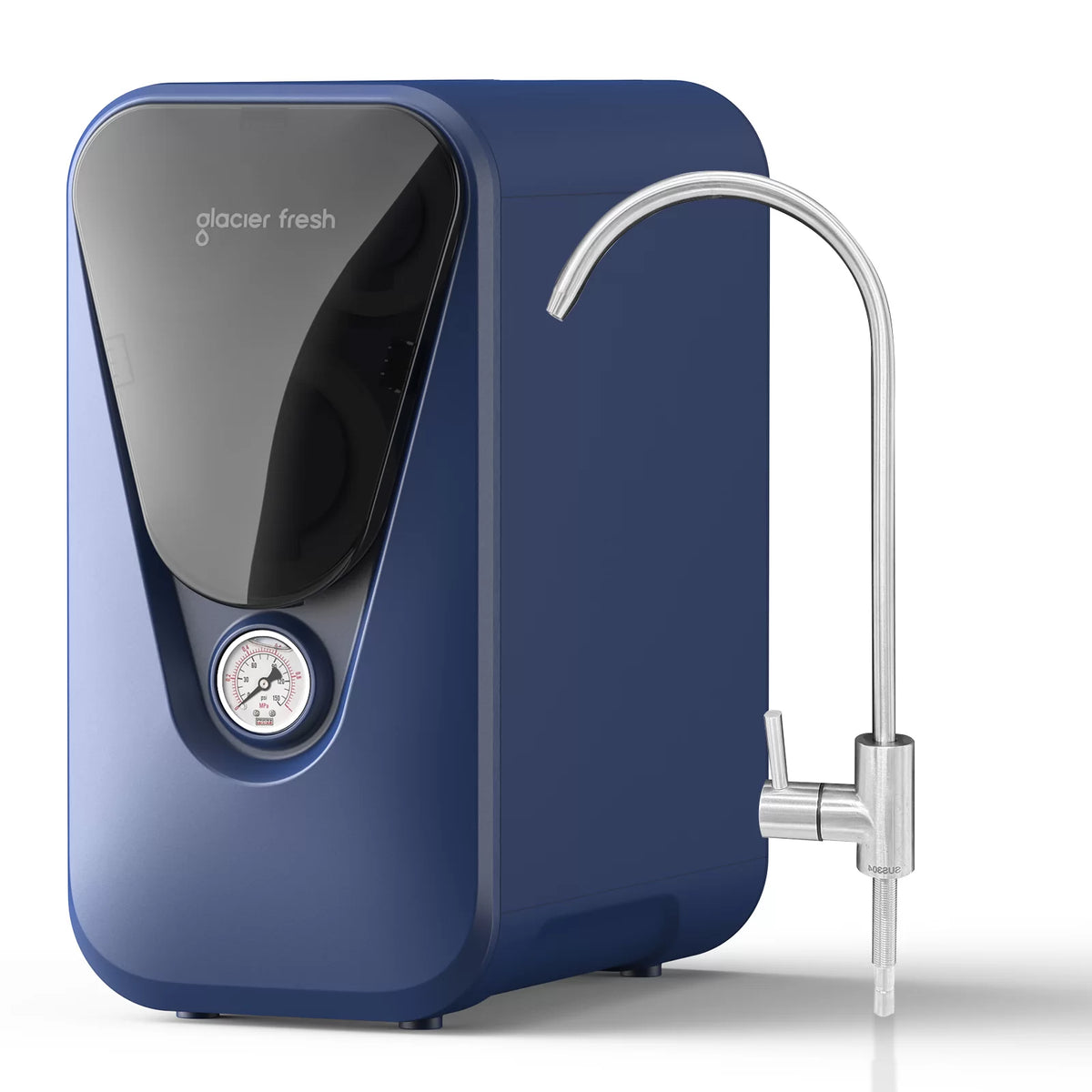
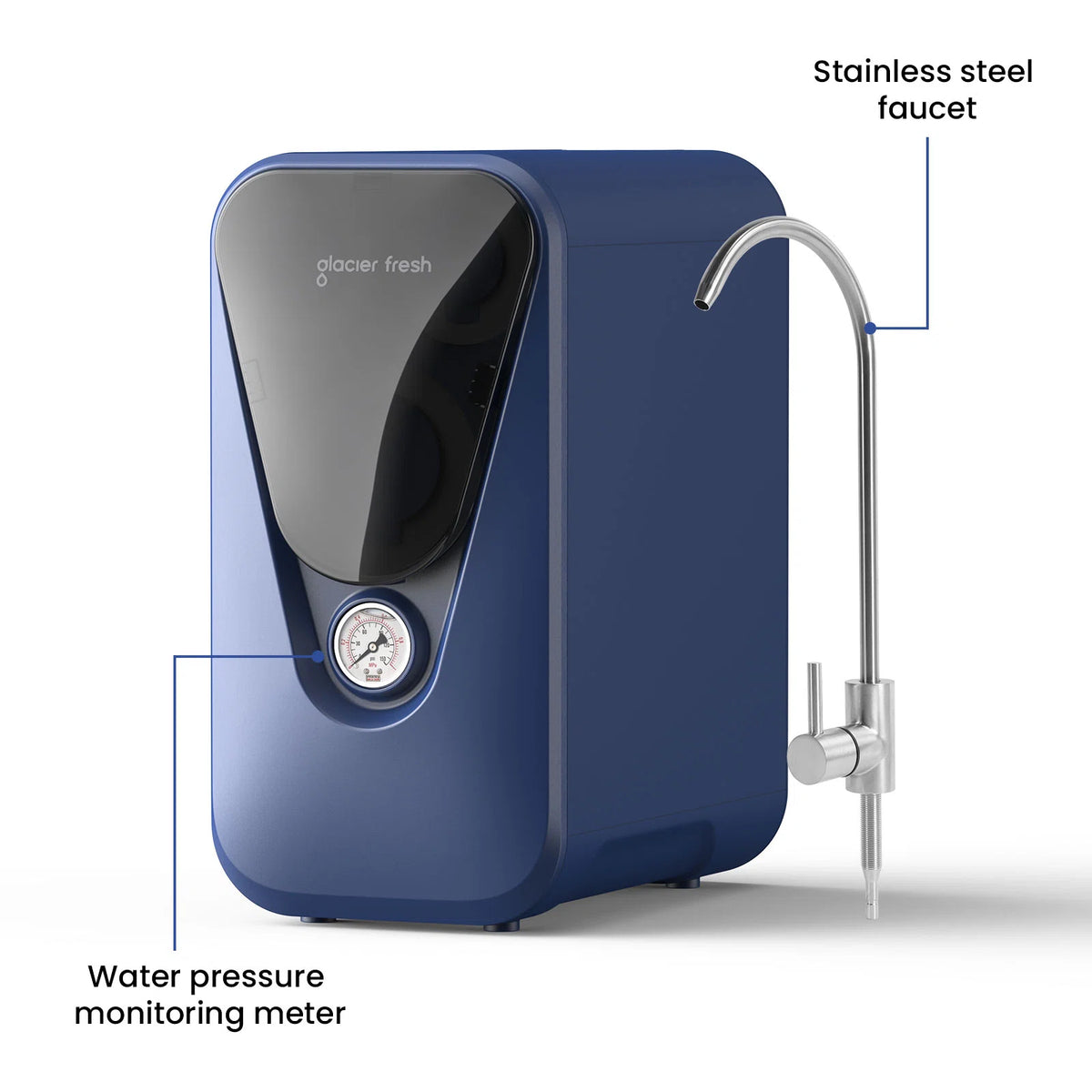
If you're looking for a compact, high-capacity RO system that doesn't require a storage tank, the Glacier Fresh U03 Reverse Osmosis System is definitely your best choice. Plus, its purified water to wastewater ratio is 3:1 (the highest in the industry), which significantly reduces water waste.
The Hidden Costs: What Else Will You Spend Money On?
There are also some additional costs associated with reverse osmosis systems, which is something you need to be aware of before making a purchase.
1.Installation & Plumbing Costs ($0 – $300)
If you purchase a water filter that requires drilling, you may need to hire a plumber to replace the pipes and drill the holes. However, the Glacier Fresh U03 requires no drilling and has no complicated plumbing, so you can save on those costs.
2.Annual Filter Replacements ($30 - $120/year)
Activated carbon filter cartridges typically need to be replaced every 3 to 6 months, while RO membrane cartridges should be replaced every 12 to 24 months. Composite carbon filter cartridges should be replaced every 8 to 12 months. The exact replacement schedule depends on your household’s water usage and water quality.
3.Water Waste & Energy Bills
Most RO systems on the market have a Pure-to-Drain Ratio of 1:1 and require a bit more water, which means you’ll end up paying more for water and electricity. The Glacier Fresh U03, however, has a ratio of 3:1! This significantly reduces your water bill. Plus, since the U03 doesn’t require an electrical connection, it also cuts down on your electricity costs.
How Can You Save on Reverse Osmosis System Cost?

Are you concerned about cost? There are still feasible ways to save money and get good performance:
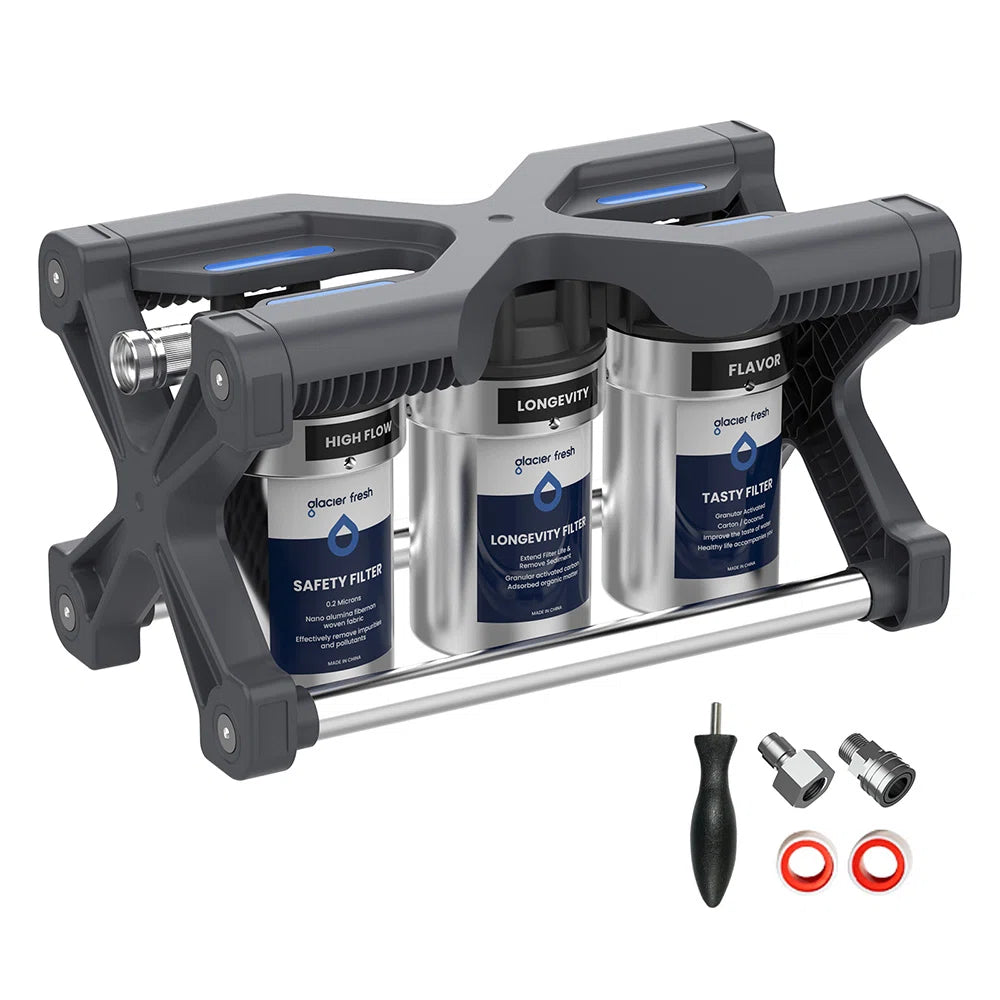
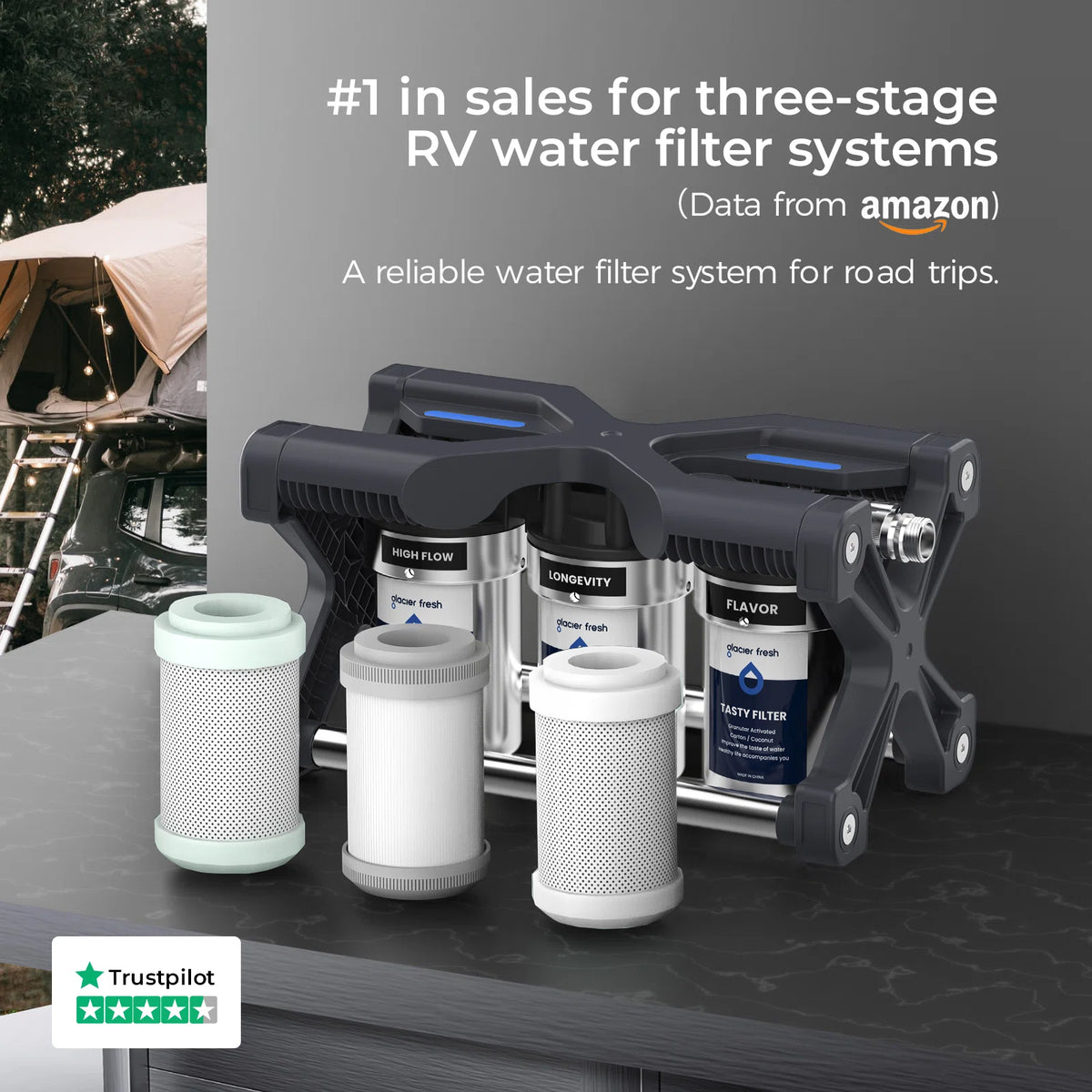
Select the size system that fits your requirements. Purchasing a larger-than-required RO unit may be costly. As an example, when traveling and needing water filters, the Glacier Fresh RV Reverse Osmosis System is adequate and far less expensive than a high-flow under-sink system.
Choose an installation that is friendly to DIY. Systems such as GlacierFresh U03 800GPD do not require any professional installation, making it possible to save up to hundreds of dollars.
Find offers and promotions. Many brands often offer promotions and free shipping, which helps keep the initial cost lower.
Keep the filters clean. Replacing filters on schedule lengthens the system’s lifespan and saves on costly repairs.
With accurate analysis of your household water consumption against your capacity, you can get to save money without compromising on the purified and drinking water.
Key Factors That Affect the Price of an RO System
After going through a series of selection processes, you may have decided to purchase a particular water purifier. Here, you can determine whether this is a worthwhile investment. After all, high-quality water purifiers tend to be a bit more expensive. You can use the following three factors to assess whether a water purifier is worth the price.
Filtration Capacity & Flow Rate (GPD): The higher the flow rate (e.g., 800 GPD), the higher the price, but you won’t have to wait for water to flow.
Safety Certifications: Does it have NSF 42/58/401 certification (authoritative certification ensuring water quality and heavy metal filtration)?
Efficiency & Technical Design: Tankless/Tankinside design, filter life indicator light, and purified water-to-wastewater ratio.
Conclusion
The final decision should, however, be based on water requirements, space, and the budget of your household. To ensure a balance of cost and workable performance, you can obtain a system that is cost-effective to buy, maintain, and install as far as its cost factors are concerned. By investing in a quality reverse osmosis system, you not only save money over bottled water, but you will always have safe, great-tasting drinking water available to your family members.
FAQs
Q1: How much does it cost to maintain a reverse osmosis system per year?
On average, maintaining an under-sink or countertop reverse osmosis (RO) system costs between $30 and $120 per year.
Q2: Does a reverse osmosis system increase your water bill significantly?
Traditional RO systems often had a high 1:3 pure-to-drain ratio (wasting 3 gallons of water for every 1 gallon purified). However, advanced systems like the GlacierFresh U03 800GPD feature a 3:1 pure-to-drain ratio, meaning it wastes 80% less water than older models, adding only a few extra dollars to your annual water bill.
Q3: Can I install a reverse osmosis system myself to save money?
Yes! Most modern under-sink and countertop RO systems are built with DIY installation in mind, allowing you to save $150 to $300 in professional plumbing fees.
Q4: How long does a reverse osmosis system last?
A high-quality reverse osmosis system can last 10 to 15 years or even longer with routine maintenance and timely filter replacements.
Related reading:
Is Reverse Osmosis (RO) Water Safe and Healthy to Drink?
Water Filter Maintenance: What You're Missing
Is It Safe to Use a Reverse Osmosis System for Drinking Well Water?