
Table of Contents:
How Long Does Water Take to Boil?
6 Key Factors That Affect How Long It Takes to Boil Water
4 Quick Tips for Boiling Water Fast in the Kitchen
Water Boiling Guidelines for Health & Safety
Conclusion
FAQs

Whether you're looking to quickly brew your morning coffee, prepare dinner after a long workday, or meet an urgent cooking need, waiting for water to boil can feel as slow as watching grass grow. Generally, it takes anywhere from 2 to 12 minutes to boil 1 liter of water (about 4 cups), depending on your heat source, the shape of your kettle or pot, and your technique.
In this article, we'll take an in-depth look at how long it takes to boil water using different heat sources, share tips for speeding up the boiling process, and cover safety precautions for boiling water.
How Long Does Water Take to Boil?
For a standard volume of 1 liter of room-temperature water (~68°F / 20°C) using a covered vessel, here is how different kitchen heat sources perform at sea level:
| Heat Source | Typical Volume | Boil Time (Covered) | Notes |
|---|---|---|---|
| Electric Kettle | 4 cups (1 Liter) | 2-4 mins | It is a highly efficient and energy-saving way to boil water. |
| Induction Cooktop | 4 cups (1 Liter) | 3-5 mins | The cookware has a large contact surface area at the bottom and heats up very quickly. |
| Gas Stovetop (On High) | 4 cups (1 Liter) | 6-10 mins | Varies depending on the burner's output power and heat loss through the sides. |
| Electric Glass | 4 cups (1 Liter) | 8-12 mins | Since the temperature rises gradually, the heating time is longer. |
| Microwave | 1 cups (250 mL) | 1.5-2.5 mins | Best for small quantities; use microwave-safe containers only. |
| Pasta Water | 4-6 quarts (3.8-5.7 L) | 15-25 mins | The container is large, holds a lot of water, and the process takes a long time. |
6 Key Factors That Affect How Long It Takes to Boil Water
Boiling occurs when the vapor pressure of water equals the surrounding atmospheric pressure. At standard atmospheric pressure, the boiling point of water is 100°C. When using common water-boiling utensils, several factors directly affect how quickly the water reaches its boiling point.
1. Volume
In the vast majority of real-life kitchen situations, bringing twice the amount of water to a boil typically takes more than twice as long as bringing a single portion to a boil, for the following reasons:
- As the amount of water increases, both the surface area of the water and the contact area with the pot’s walls increase.
- The higher the water temperature, the greater the temperature difference between the water and the surrounding air, and the more heat is lost to the air through evaporation, convection, and radiation.
- The longer it takes to boil the water, the more the total amount of heat wasted through “heating while losing heat” increases exponentially.
2. Heat Source Efficiency
In an electric kettle, the heating element is immersed directly in the water, allowing nearly 80% to 90% of its energy to be transferred directly to the liquid. In contrast, a gas stove loses a significant amount of heat to the surrounding air through the sides of the pot. As a result, there is a significant difference in the time it takes to boil water.
3. Lid Cover
Leaving a pot uncovered allows continuous evaporative cooling. As water heats up, energetic surface molecules escape into the air, taking thermal energy with them. Keeping a lid on traps vapor and radiant heat, reducing heating times by 25% to 30%.
4. Pot Material
High-conductivity metals—like copper or aluminum-encapsulated stainless steel—distribute heat across the bottom faster than thick cast iron or lower-grade thin metal.
5. Starting Water Temp
The initial water temperature has a direct impact on the time it takes to boil water. For every 10°C increase in the initial water temperature, it takes approximately 15–30 seconds less to boil 1 liter of water in an electric kettle, or 1–1.5 minutes less on a low-efficiency stove.
6. Altitude
At standard atmospheric pressure, the boiling point of water is 100 degrees Celsius, but it decreases by about 0.5 degrees Celsius for every 150 meters of elevation gain. For example, in Denver, Colorado (elevation approximately 1,524 meters), the boiling point of water is about 94.4 degrees Celsius. However, this also means it takes longer to cook food.
4 Quick Tips for Boiling Water Fast in the Kitchen

If you're wondering how to boil water faster to prepare dinner on a weeknight, here are 5 tips that might come in handy.
1. Pre-Heat Trick
This little trick is very useful when cooking pasta or large pots of food. Boil water in an electric kettle and pour it into the pot instead of bringing cold water to a boil directly on the stove. This can save you about 50% of the time.
2. Keep the Lid Sealed Tight
While waiting for the water to boil, avoid leaving the pot uncovered. This helps trap the steam and minimize heat loss through evaporation.
3. Heats Only What You Need
Look up how much water you'll need before you start cooking; this can also save you some time. For every two additional cups of water, the cooking time may double.
4. Use a Pot That Fits Your Stove
When using a gas or electric stove, make sure the burner diameter matches the size of the pot's base. This is because if the flame extends beyond the edge of the pot, it will only heat the pot's sides and will not effectively heat the liquid inside.
Water Boiling Guidelines for Health & Safety

In addition, when camping outdoors or traveling, it’s essential to know how long to boil water. To avoid the health risks posed by impurities in water, the following tips on boiling times and drinking water safety may be helpful.
What is a "Rolling Boil"?
A rolling boil (or vigorous boil) occurs when steam bubbles rise rapidly from the bottom and cannot be stopped by stirring the liquid. This indicates the entire volume of water has reached maximum temperature.
Safety Standards (CDC / EPA Guidelines)
To make unpasteurized or suspect water safe for drinking, microbial pathogens (viruses, bacteria, and protozoa) must be inactivated by heat:
- At standard elevations (below 6,500 feet / 2,000 meters): Bring water to a full rolling boil for at least 1 minute.
- At high altitudes (above 6,500 feet / 2,000 meters): Maintain a continuous rolling boil for at least 3 minutes to compensate for the lower maximum temperature.
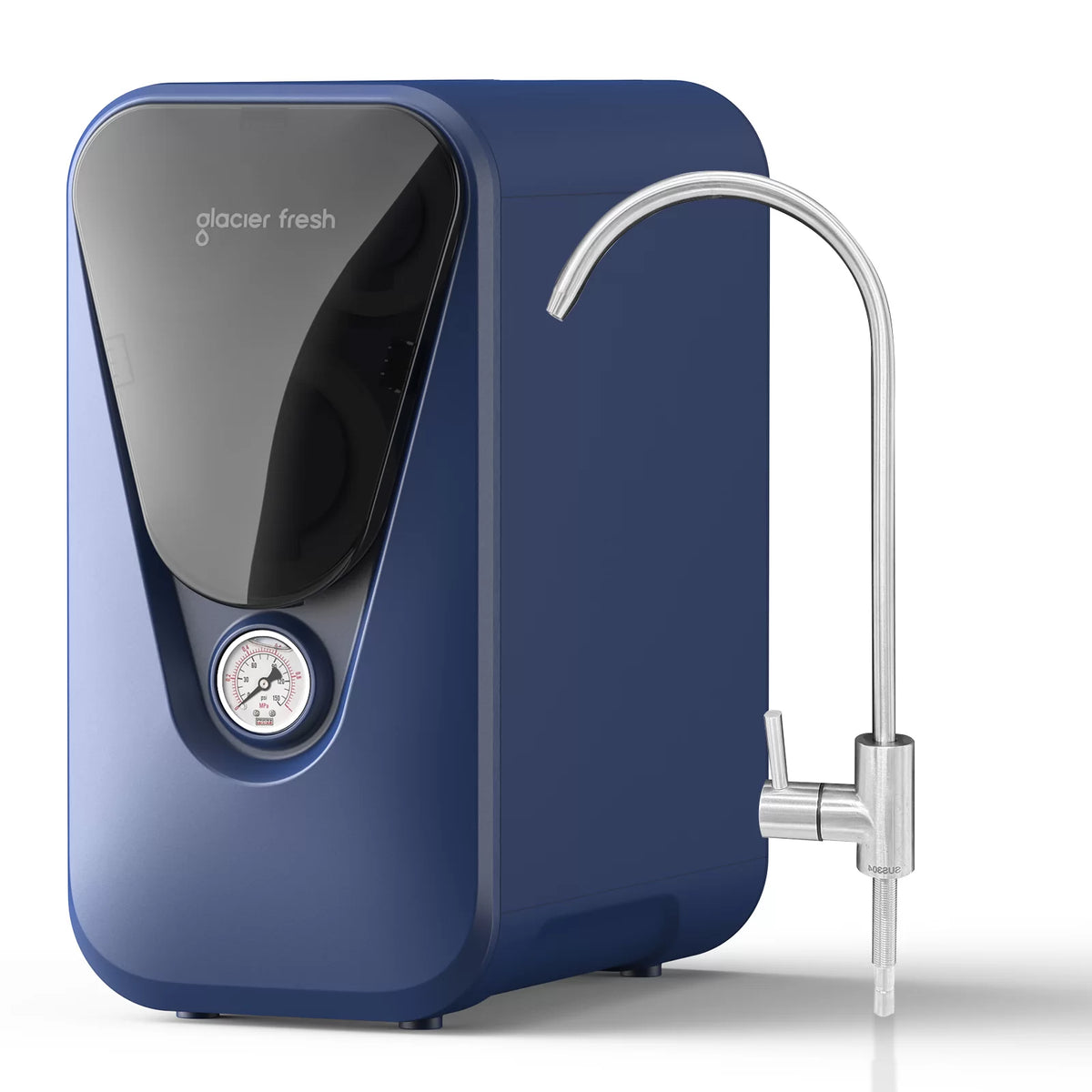
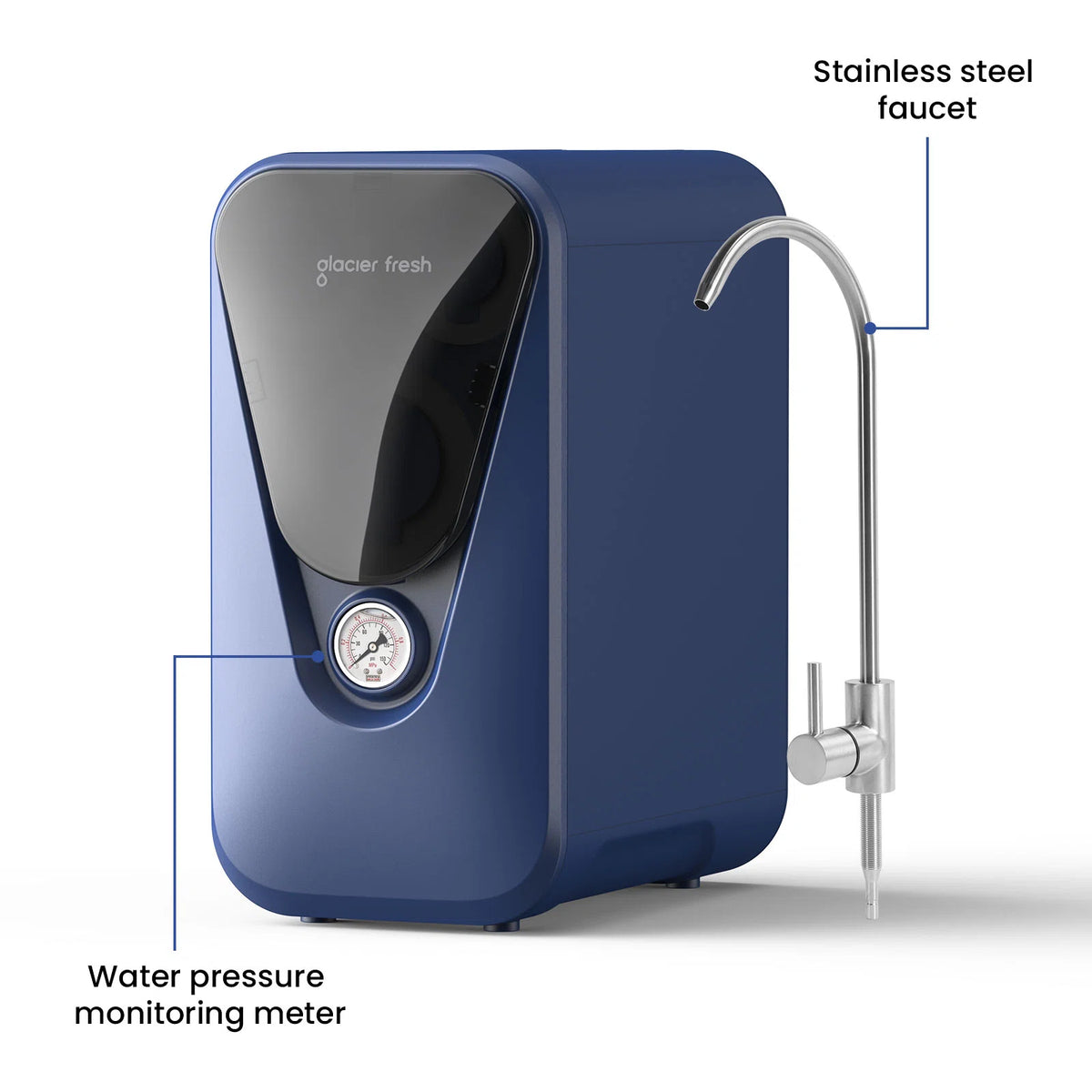
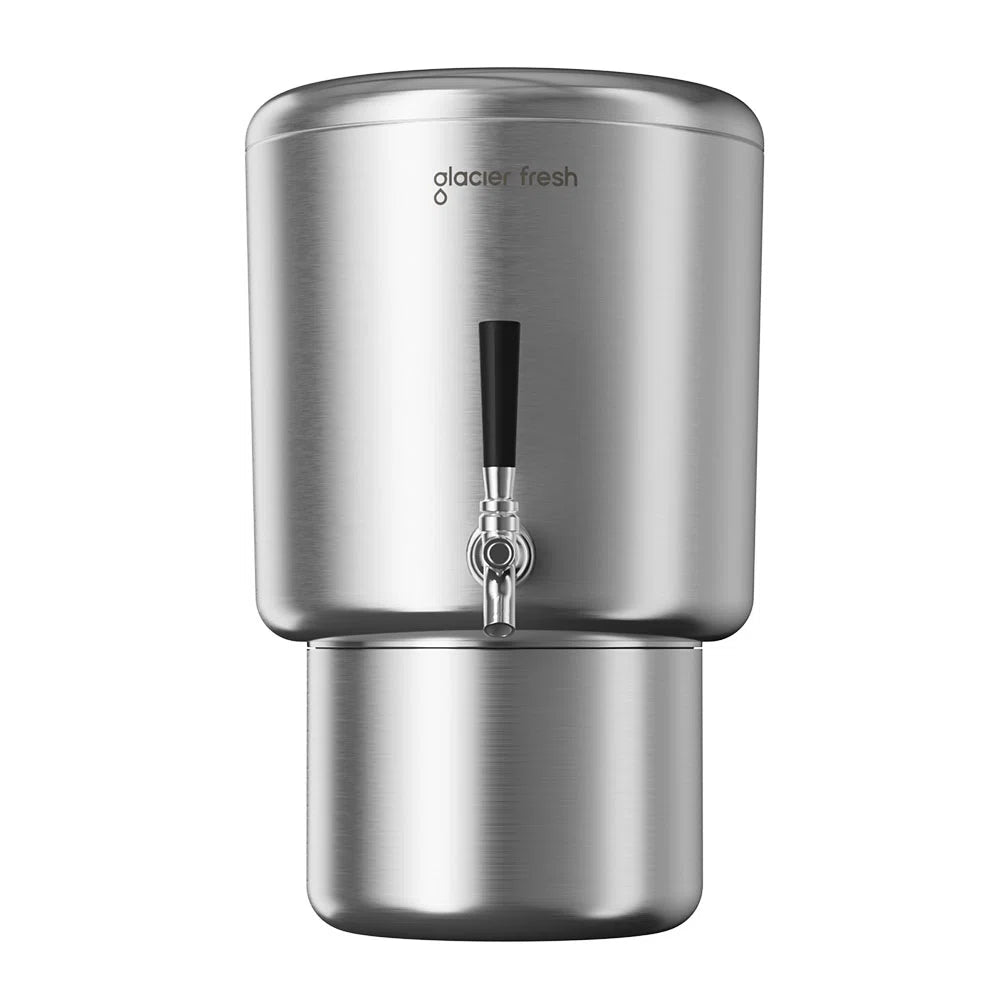
We need to pay special attention to water quality not only outdoors but also at home. There are many cases where aging water pipes cause heavy metal levels in drinking water to exceed safety standards, so we strongly recommend installing a water purifier at home to ensure the safety of your drinking water. A model like the Glacier Fresh U03 can filter out 99% of harmful substances and requires no drilling.
Conclusion
Now you know that the time it takes to boil water can vary significantly depending on factors such as the container, heat source, water temperature, and elevation. We’ve also provided some practical tips for boiling water in everyday life, as well as guidelines for safe water use. We hope this article proves helpful to you.
FAQs
Q1: Can I drawing hot water from the tap for boiling?
We do not recommend doing this. This is because hot water dissolves heavy metals and minerals in your home’s pipes and water heater tank much faster than cold water. It is best to use water from the cold tap when drinking.
Q2: Does adding salt to water make it boil faster?
No. Adding salt to water in everyday culinary amounts does not make it boil noticeably faster. In fact, adding salt actually raises the boiling point of water, meaning the water must reach a higher temperature before it boils.