
Table of Contents:
Why RV Drinking Water Needs Specialized Filtration
What Are the Main Types of RV Water Filter Systems?
Best Water Filter Systems for RV Drinking Water
Are There RV Water Filter Systems That Are Easy to Install and Replace?
Which RV Water Filter Systems Are Best for Frequent Travelers in the US?
How to Choose the Right RV Drinking Water Filter System
FAQs
Conclusion
RV water quality can change from one campground to the next. Some sites connect to treated municipal water, while others rely on private wells or aging distribution lines. For RV travelers, that inconsistency often shows up as cloudy water, off tastes, or visible sediment in sinks and showers.
Sediment, bacteria, and odor issues are among the most common concerns reported by RV owners across the U.S. This guide explains how water filter systems work in an RV setting and how to select a drinking water filter system that fits the way you travel.
Why RV Drinking Water Needs Specialized Filtration

Campground water does not always meet the same standards as residential municipal systems. According to the U.S. Environmental Protection Agency (EPA), private and small-system water sources are more likely to experience variable treatment quality, especially after heavy rain or seasonal demand shifts.
Sediment and microbial contamination are frequent RV issues because hoses, storage tanks, and campground hookups can introduce particles and bacteria before water even reaches your faucet. A proper filtration setup also helps protect RV plumbing by preventing grit buildup in valves, pumps, and appliances.
What Are the Main Types of RV Water Filter Systems?
There are different types of RV water filter systems, differentiated by the level of filtration:
Inline RV Water Filter Systems
Inline RV water filters are attached directly between the campground and your RV’s hose connection. These are great for reducing sediment, chlorine, and unpleasant taste or odor before it enters your RV. They’re lightweight and travel-friendly, perfect for short trips.
Canister-Style RV Water Filter Systems
Meanwhile, canister-style RV water filter systems utilize multi-stage filtration, holding sediment and carbon filters. They handle sediments better and improve taste effectively. They have advanced media, making them more practical for longer trips.
Countertop or Portable Drinking Water Filter Systems
Countertop or portable drinking water filter systems are known for providing better quality water used for drinking and cooking. These systems are specifically designed for RVs for point-of-use filtration, with portable systems that can include carbon block and reverse osmosis units.
How RV Water Filter Systems Remove Bacteria and Sediment
RV water filter systems remove bacteria and sediments in a series of steps. The first line of defense is the sediment filtration, which traps dirt, rust, and other visible particles before they enter the finer media. These help protect not only your health, but also your RV plumbing.
Next is carbon and fine filtration, which captures chlorine, chemicals, and small particulates, reducing microbial risks. Some advanced systems can lower bacteria and contaminants too.
Proper flow rates and filter ratings are crucial in effective filtration. These must balance removing contaminants without slowing water flow, all while ensuring a safe and palatable water.
Best Water Filter Systems for RV Drinking Water

Choosing the best water filter systems ultimately depends on your travel frequency, water source quality, and the level of purification you need:
Best RV Reverse Osmosis System for Deep Water Purification
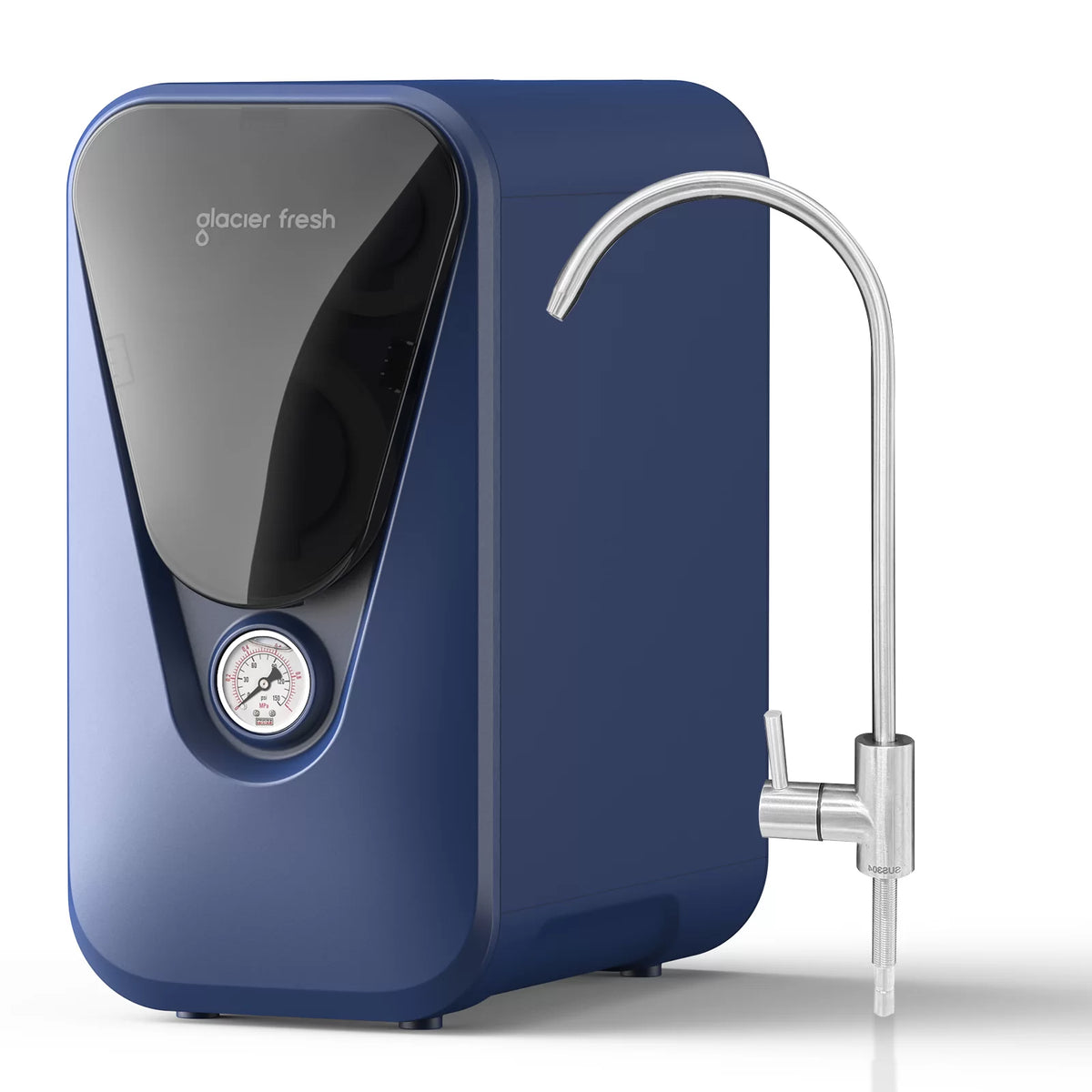
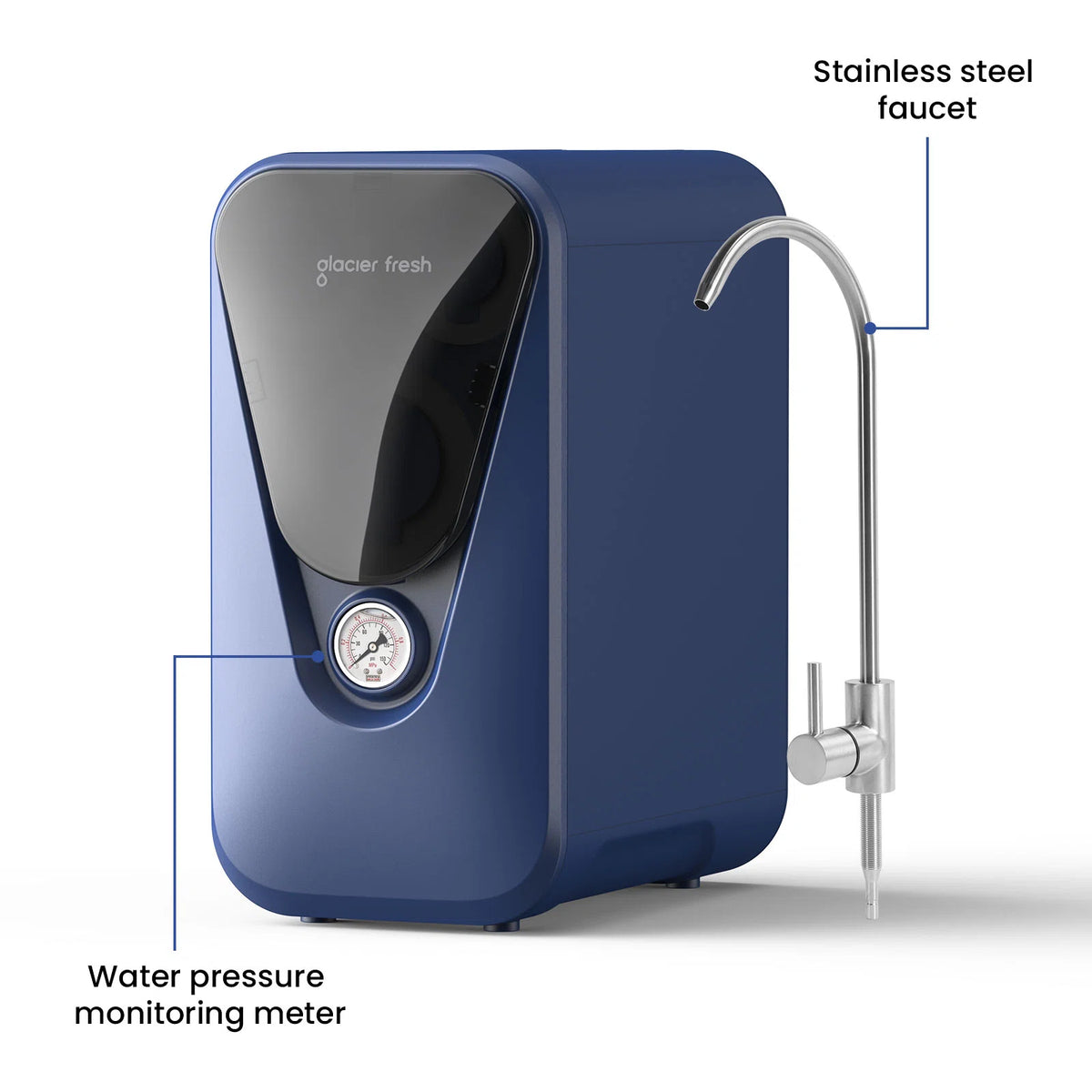
For RVers who need advanced purification across varied water sources, the GlacierFresh RVRO01/OSMOGO RV RO System is ideal for you. This RO system is designed for RVs, boats, cabins, and off-grid use, as it uses a multi-stage reverse osmosis filtration to reduce common contaminants.
Its plug-and-play installation makes it easy to use for travelers who want a device with maximum filtration that’s easy to set up. Plus, its long filter life support is practical and doesn’t need frequent replacements.
Best Space-Efficient RV Water Filter System for Sediment and Taste

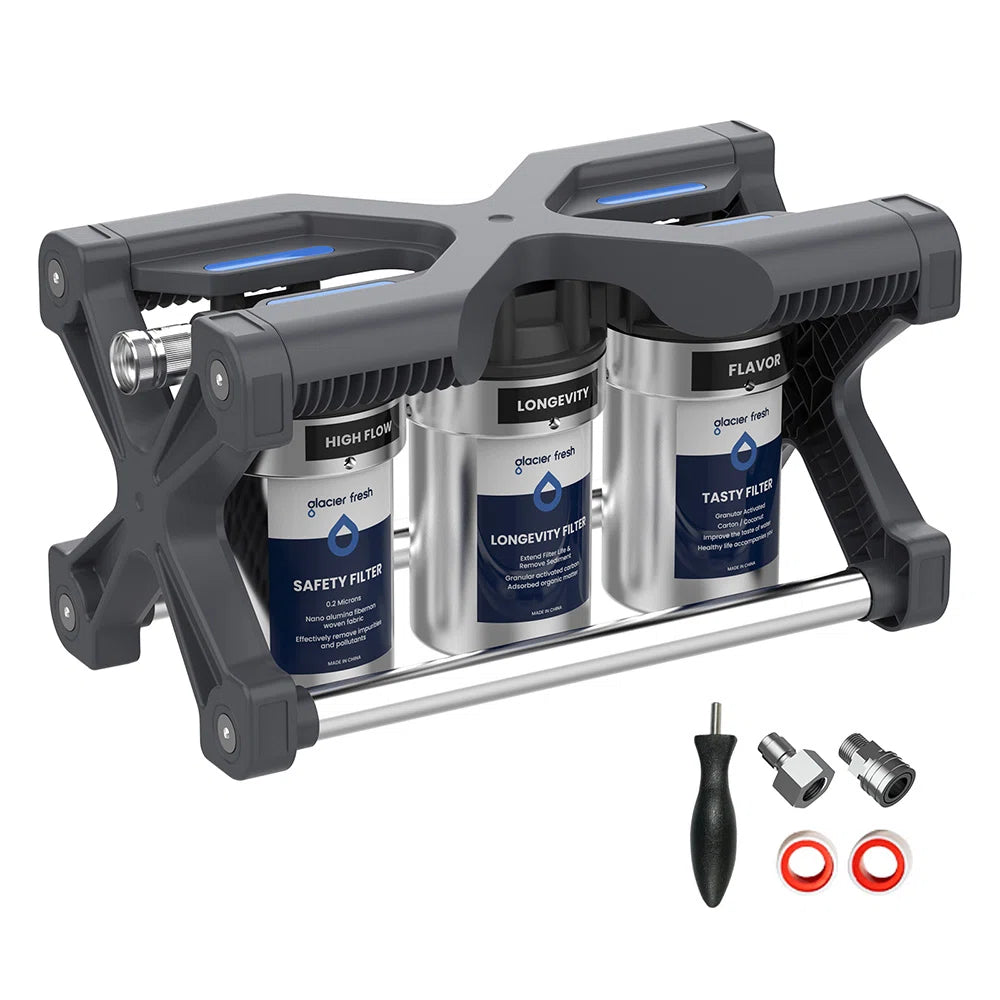
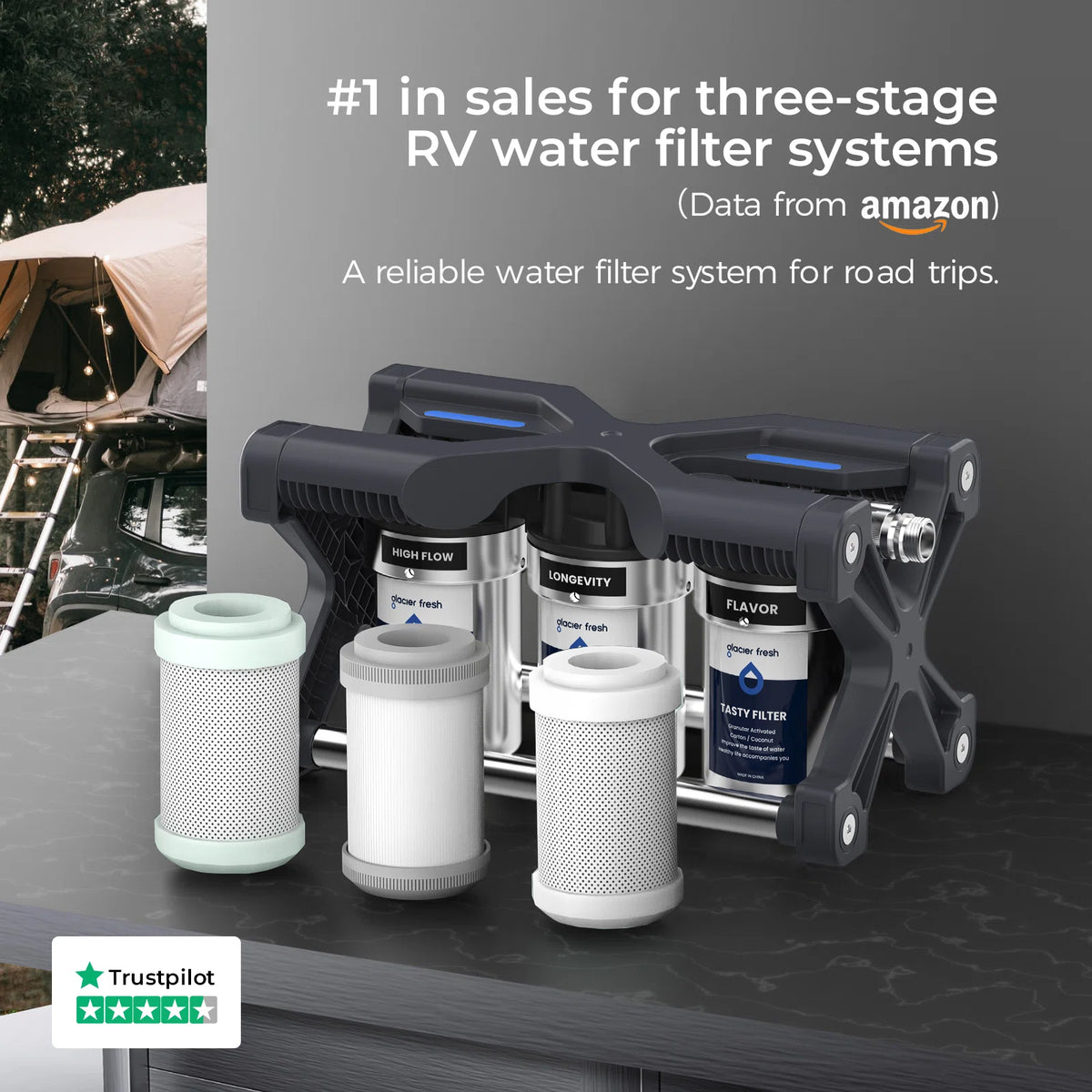
RV travelers who want reliable sediment reduction and taste improvement may opt for the GlacierFresh AUQAGO 3-Stage RV Water Filter System. It has a three-stage filtration that supports sediment reduction, improved odor and taste, and extended filter lifespan.
It’s easy to install at campgrounds and other well water sources, and is compact and lightweight, making it portable.
Smart Addition: RV Water Softener

One add-on you might want to consider along with your water filter system is an RV water softener. While water softeners are not meant to filter drinking water, this can still help purify it when used for cleaning and showering.
The GlacierFresh Portable RV Water Softener With 16,000 Grain Capacity reduces hard water minerals, protects RV plumbing and appliances. It’s also tool-free and portable, perfect for frequent campground changes.
Are There RV Water Filter Systems That Are Easy to Install and Replace?
A lot of RV water filter systems are designed for tool-free installation, making them ideal for travel. Good RV filters attach securely using quick-connect fittings, eliminating the need for a wrench and other plumbing tools. Cartridge replacement is easier, too, by simply twisting the old unit and locking in the replacement.
Modern filters now prioritize easy installation and advanced features like indicator lights once they need replacement. With these ideal features, on-the-road maintenance becomes easy to handle.
Which RV Water Filter Systems Are Best for Frequent Travelers in the US?
If you’re a frequent traveler, you can benefit from durable systems with long filter life and easy access to replacements nationwide.
Full-time RVers often lean toward systems like RVRO01 for deep treatment, while weekend travelers may prefer AUQAGO-style quick-connect setups. Low-maintenance designs reduce downtime and limit the need for specialized tools or service visits.
How to Choose the Right RV Drinking Water Filter System
First, you need to understand your primary water risks on the road. Decide between standard filtration for sediment and taste, or reverse osmosis for deeper purification.
Next, evaluate installation and ease of replacement. Consider how long you travel, and how much effort you’re willing to put in when it comes to installation and replacements.
Also, think about your RV’s space, weight, and storage constraints – you might prefer a more compact design instead. You may want to consider a water softener for additional water treatment, too.
And lastly, when looking for the right RV drinking water filter system, check for certifications and safety standards to ensure quality and performance.
FAQs
Do I really need a water filter on my RV?
Yes, because RV water sources vary, and you may not know if these are regulated or treated correctly. To protect your health from harmful contaminants, a water filter system is needed to make it safe to drink and better-tasting.
Are water filters easy to install?
Most modern filter systems like GlacierFresh are plug-and-play, making them easy for on-the-go RV travelers to install quickly. These do not need tools or drilling, which makes safe drinking water very accessible even when traveling.
Which water filtration system removes the most contaminants?
If you want to remove most contaminants, choose a water filtration system that offers multi-stage filtration. They are specifically built to reduce as many chemicals, odors, and metals through advanced media in their components.
How often should RV water filters be changed?
The frequency with which you change your water filtration depends on your water quality and level of usage. It should be replaced every 3 to 6 months, but if you notice any changes in taste, odor, and flow, then it may be time to replace it sooner.
What does a water softener do?
Water softener helps in removing buildups in the pipes and heaters of your system. These do not filter contaminants, but they are helpful in removing minerals that cause scales. Water softener helps protect appliances as well.
Conclusion
Your key priorities in selecting the right water filter system should be safety. Sediment control and bacteria reduction are your primary lookouts. It should also be easy to install, maintain, and replace for ease of use.
GlacierFresh offers thoughtfully designed water filter system options that make them suitable for RV and on-the-go-use.