
Table of Contents:
What Is a Countertop Water Filter System?
Key Factors to Look for in the Best Countertop Water Filter
5 Best Countertop Water Filter Systems
Installation and Maintenance Tips for Countertop Water Filters
RV Water Filter Buying Guide for Campground Hookups and Family Safety
FAQs
Conclusion
Safe and clean drinking water is now a necessity, not just a preference. More homes are using handy and efficient filtration systems as a result of growing worries about the quality of their water. Countertop water filters have become one of the most popular options among the many available. They are made to eliminate pollutants without the need for intricate plumbing, are portable, and are simple to install.
This guide highlights the five leading selections worthy of consideration if you're searching for the best countertop water filter systems in 2025. Each option is recognized for its simplicity of operation, durability, and purification efficiency. This ensures that you can enjoy pure, crisp water daily.
What Is a Countertop Water Filter System?

A countertop water filter system is a compact, non-permanent filtration unit designed to improve tap water directly from a kitchen counter, tabletop, or similar flat surface. Unlike built-in systems, it can support renters, small households, and users who need flexible access to cleaner drinking water without major plumbing changes.
These devices can help reduce common taste, odor, and contaminant concerns such as chlorine, sediment, certain heavy metals, microplastics, and other impurities depending on the filter media used. The result is water that tastes cleaner while still fitting daily household routines. For readers comparing installation formats, the article Comparing Countertop and Under Sink Water Filtration Systems provides useful context on how countertop and under-sink options differ.
Key Factors to Look for in the Best Countertop Water Filter
Choosing a countertop filtration system requires more than comparing price or appearance. A strong buying decision should evaluate filtration method, contaminant reduction claims, capacity, flow rate, filter life, ease of maintenance, and whether the system fits the space and water-use habits of the household.
Filtration Technology
Look for multi-stage designs that combine activated carbon, ceramic media, gravity filtration, ultrafiltration, or reverse osmosis where appropriate. Multi-stage systems are often more effective because each layer targets a different contaminant group, from sediment and chlorine to fine particles and dissolved impurities.
Contaminant Removal
Review the manufacturer’s performance information before purchase. High-quality systems should clearly state which substances they are designed to reduce, such as chlorine, lead, PFAS, pesticides, sediment, microorganisms, or odor-causing compounds. Compatibility also matters in broader home filtration decisions; for example, understanding the difference between XWF vs. XWFE Water Filters in GE refrigerators helps explain why the correct filter type affects safety and performance.
Capacity and Flow Rate
Capacity determines how much filtered water is available at one time, while flow rate affects how quickly a household can refill glasses, bottles, or cooking containers. A single-person apartment may prioritize compact size, while families should look for larger reservoirs and longer filter life.
Ease of Installation and Maintenance
A practical countertop unit should be easy to assemble, prime, clean, and refill. Systems that require no drilling or permanent installation are especially valuable for renters, students, offices, and users who may move frequently.
Design and Portability
Because countertop systems remain visible, design and footprint matter. Stainless steel, compact dispensers, and gravity-fed formats can fit modern kitchens while also supporting outdoor use, emergency preparedness, or temporary living spaces.
5 Best Countertop Water Filter Systems
The following options represent practical countertop filtration choices for 2026 based on filtration approach, usability, capacity, and household fit. Readers looking for flexible countertop water filter systems should compare not only the system type but also how often filters need replacement and what water-quality problems they are trying to solve.
|
System |
Best For |
Key Strength |
Main Consideration |
|
Glacier Fresh 3G Countertop Water Filter System |
Daily home use and families |
Three-stage filtration with compact stainless-steel design |
Check available counter space and filter replacement schedule |
|
2.25G Gravity-fed Water Filter System |
Medium to large households |
Large reservoir and no-tool setup |
Gravity flow is steady but not instant |
|
Glacier Fresh Gravity-fed Water Filter System |
Outdoor use, backup water, and off-grid settings |
Electricity-free filtration and high-capacity storage |
Requires manual refilling and routine cleaning |
|
AquaTru Classic Countertop Purifier |
RO-level contaminant reduction without under-sink installation |
Four-stage reverse osmosis purification |
Needs power and may produce wastewater |
|
Epic Water Filters |
Eco-conscious households |
Long-lasting filters and broad contaminant reduction positioning |
Confirm the exact model and test data before purchase |
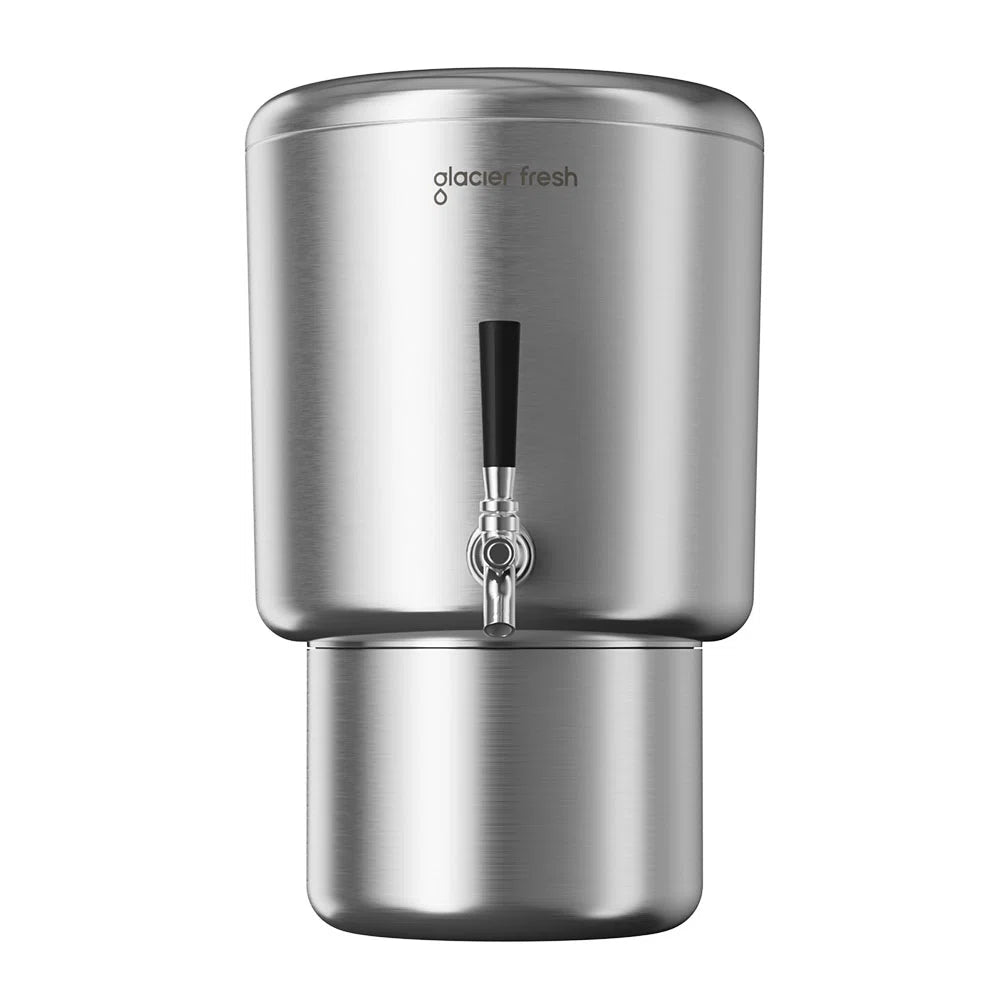
1. Glacier Fresh 3G Countertop Water Filter System

The Glacier Fresh 3G Countertop Water Filter System combines a sleek, compact body with multi-stage filtration designed for everyday drinking water. It focuses on improving taste and odor while helping reduce contaminants such as chlorine, lead, and microplastics depending on water conditions and filter configuration.
Key Features:
-
Three-stage filtration for broad daily contaminant reduction.
-
Compact stainless-steel structure that fits most kitchen counters.
-
Quick, tool-free setup for renters and homeowners.
-
Extended filter life designed to reduce maintenance frequency.
This model is a strong fit for households that want a practical balance of quality, appearance, and convenience without committing to permanent plumbing work.
2. 2.25G Gravity-fed Water Filter System
The 2.25G Gravity-fed Water Filter System is built for users who need more stored water and reliable no-electricity operation. Its stainless-steel body and dual-filter design make it useful for everyday kitchens, temporary spaces, and occasional outdoor use.
Key Features:
-
2.25-gallon storage capacity for steady household supply.
-
Dual filters for improved pollutant reduction.
-
Suitable for both indoor and outdoor settings.
-
No-tool setup that supports easy movement and storage.
This system is ideal for medium-sized households that want dependable filtered water with minimal installation complexity.
3. Glacier Fresh Gravity-fed Water Filter System

The Glacier Fresh Gravity-fed Water Filter System is designed for users who want portable filtration without electricity or plumbing. It filters water gradually through gravity, making it useful for outdoor trips, emergency preparedness, and homes that prefer simple mechanical operation.
Key Features:
-
Gravity-powered operation with no plumbing or power requirement.
-
Large-capacity storage suitable for families or groups.
-
Durable stainless-steel construction for repeated use.
-
Designed to help reduce chlorine, heavy metals, and other common water-quality concerns.
Outdoor users and households focused on backup water planning may appreciate this system because it remains functional even when electricity or built-in plumbing access is limited.
4. AquaTru Classic Countertop Purifier
The AquaTru Classic Countertop Purifier is a countertop reverse osmosis system built for users who want RO-level purification without installing a conventional under-sink unit. It sits on the counter, plugs into power, and uses a multi-stage process to target a wider contaminant profile.
Key Features:
-
Four-stage reverse osmosis purification.
-
Designed to reduce contaminants such as PFAS, lead, arsenic, and dissolved solids.
-
Plug-and-use setup with no permanent plumbing.
-
Compact design with filter status indicators.
This unit suits households that want stronger contaminant reduction and are comfortable with a powered system and RO maintenance requirements.
5. Epic Water Filters
Epic Water Filters offers countertop filtration options for users who value eco-conscious design and long filter life. The brand focuses on reducing a broad range of unwanted substances while maintaining a practical countertop format for everyday use.
Key Features:
-
Multiple countertop models for different usage needs.
-
Independent testing claims for contaminant reduction on selected models.
-
Long-lasting filters that can help reduce plastic waste.
-
Modern designs that fit contemporary kitchens.
Epic Water Filters can be a reasonable choice for households that prioritize sustainability, but buyers should always compare the exact model, replacement filter cost, and available test data.
Installation and Maintenance Tips for Countertop Water Filters

Countertop systems are valued because they are easier to install and maintain than many permanent filtration setups. Even so, performance depends on proper priming, routine cleaning, timely cartridge replacement, and matching the system to actual water quality and household demand.
- Installation: Most systems do not require tools. Gravity-fed models need water poured into the upper chamber, while faucet-connected systems attach to a tap.
- Filter priming: Rinse, soak, or flush filters exactly as directed before first use to remove loose carbon dust and activate the filter media.
- Maintenance: Replace filters on schedule. Overused cartridges can slow flow rate and reduce contaminant reduction performance.
- Cleaning: Clean tanks, lids, spigots, and chambers regularly to limit biofilm or bacterial buildup.
- Storage: For portable gravity systems, empty and dry the unit before long storage periods. These routines apply to many water filters, not only countertop models.
RV Water Filter Buying Guide for Campground Hookups and Family Safety
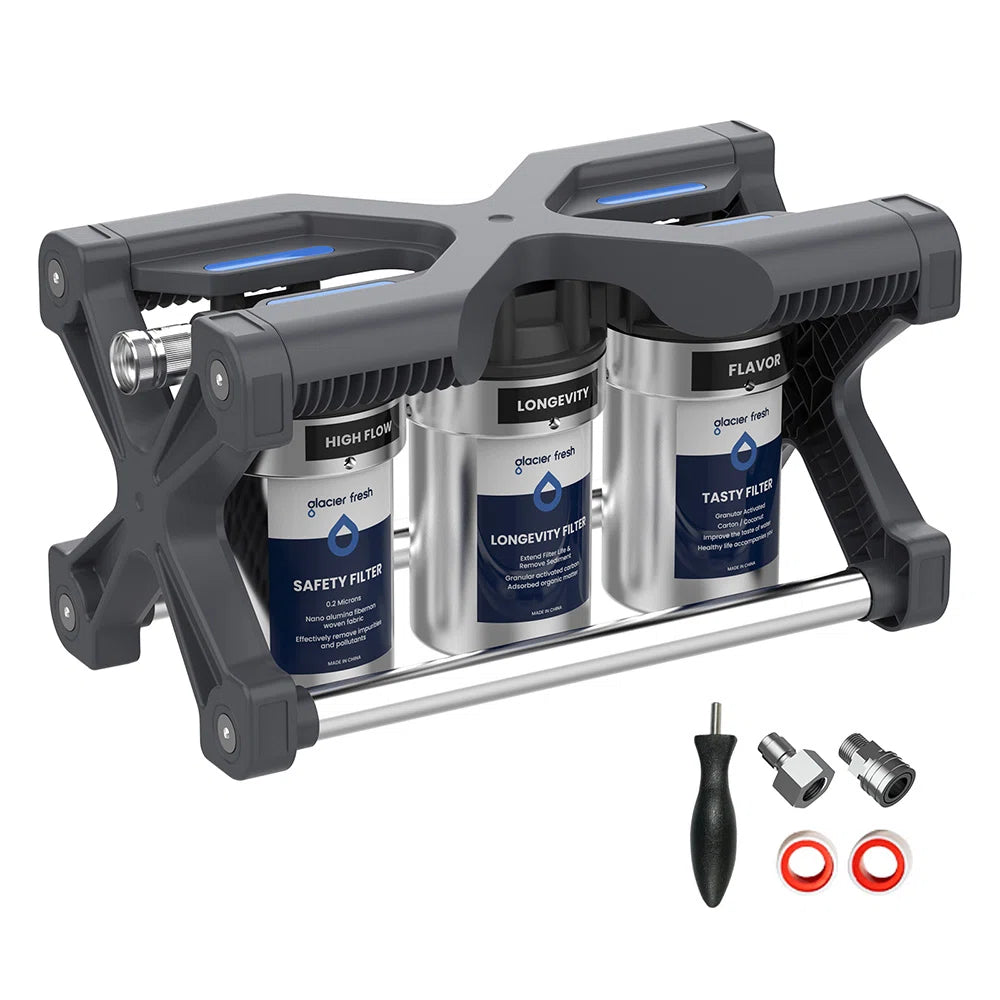
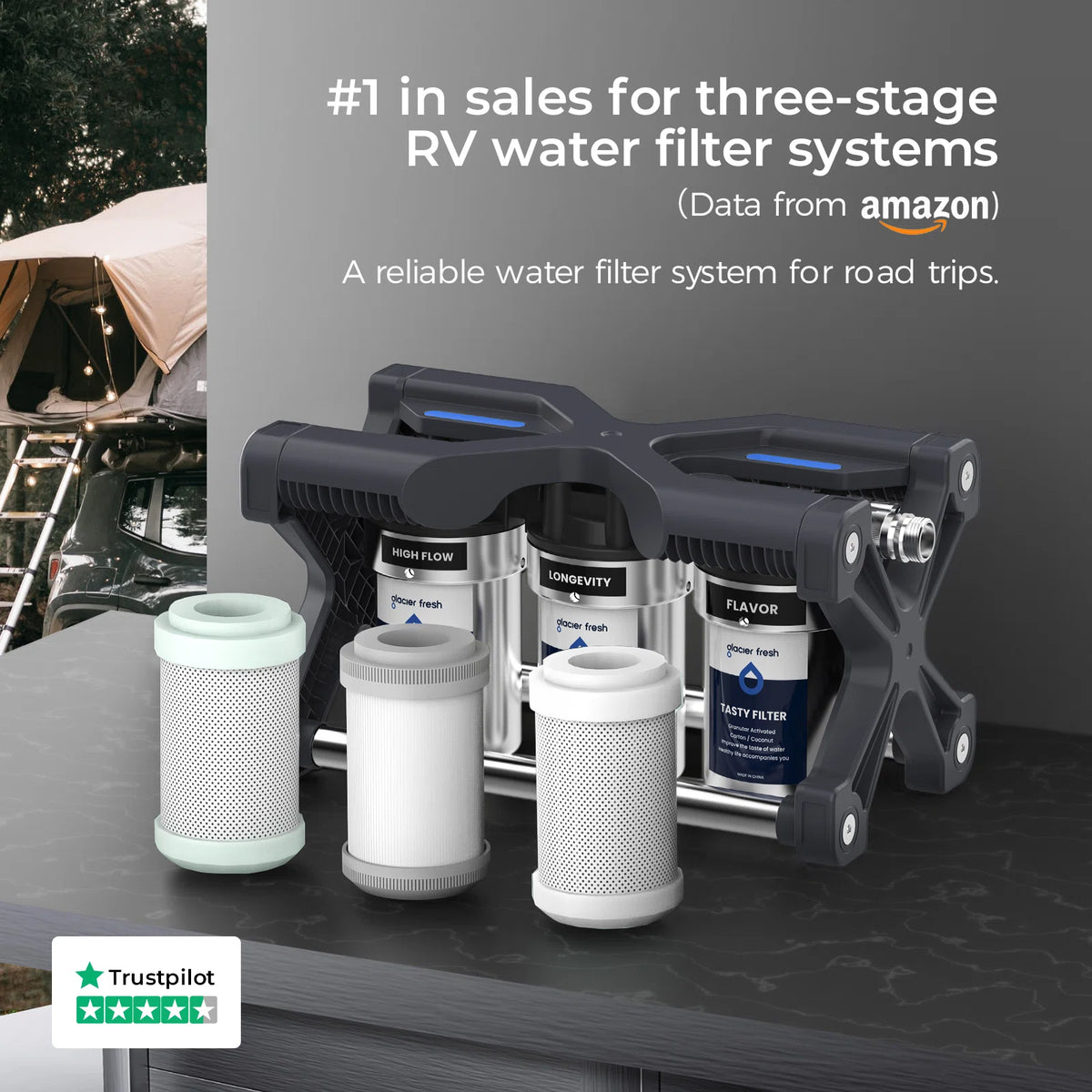
RV filtration needs are different from kitchen countertop use because campground hookups can vary by sediment load, chlorine level, water pressure, hose cleanliness, and source reliability. A smart RV setup often begins with the best inline rv water filter for hose-line protection, then adds multi-stage filtration, softening, or reverse osmosis when families need stronger contaminant reduction.
The most useful setup is not always the most expensive one; it is the system that matches the campsite water source, travel style, and safety expectations.
|
RV Filter Type |
When It Works Best |
What to Check Before Buying |
|
Inline carbon/sediment filter |
Campground hookups, short trips, and basic taste or sediment improvement |
Hose-thread fit, flow rate, micron rating, and whether the model is positioned as the best inline water filter for rv |
|
Multi-stage canister system |
Longer stays, families, and users who want stronger filtration than a basic inline filter |
Sediment stage, carbon stage, replacement cost, housing durability, and whether it supports best rv water filtration needs |
|
Portable RO system |
High-TDS water, questionable campground sources, and users prioritizing dissolved contaminant reduction |
Pure-to-drain ratio, power needs, storage method, and whether it is the best water filtration for rv for the trip |
|
Certified or lab-tested system |
Families with kids or users comparing contaminant removal evidence |
NSF/ANSI or lab-test documentation, contaminant list, pressure limits, and a clear rv water filter review before purchase |
FAQs
What is the lifespan of water filters for countertops?
Filter life depends on water quality, daily usage, filter media, and the manufacturer’s replacement schedule. Many cartridges last three to six months, while some gravity-fed filters may last longer when properly cleaned and used with lower-sediment water.
What are the top 10 RV water filters people buy in the US and how do they compare on price and performance?
Instead of treating one list as universal, US buyers commonly compare ten practical categories: inline carbon filters, sediment pre-filters, multi-stage canisters, portable RO systems, gravity filters, water softeners, UV purifiers, pitcher-style filters, refrigerator-style cartridges, and hybrid systems. Inline options are usually lower cost and easy to install, while RO and multi-stage systems typically cost more but can provide stronger contaminant reduction.
What are the best RV water filters and how do they compare for campground hookups?
For campground hookups, inline carbon/sediment filters are convenient and affordable, multi-stage systems offer better protection for longer stays, and portable RO systems are useful when water quality is uncertain. Campers should compare hose compatibility, pressure rating, flow rate, filter life, and whether the system can handle sediment-heavy water.
What are the best RV water filter systems for families with kids and how do they compare on safety certifications?
Families with kids should prioritize systems with clear contaminant reduction data, transparent filter specifications, and recognized certification or third-party testing where available. Multi-stage and RO-based systems often provide broader protection than basic inline filters, but parents should check the exact contaminant list rather than relying only on marketing claims.
What are the top RV water filters that are certified by testing labs and how do they compare in contaminant removal?
Certified or lab-tested RV filters should be compared by the standards they reference, the contaminants they are tested to reduce, and the actual reduction rates reported. A filter that reduces chlorine and sediment may improve taste, while a system tested for lead, PFAS, microorganisms, or dissolved solids may be more appropriate for higher-risk water sources.
Conclusion
The best countertop water filter systems for 2026 combine convenience, portability, and modern purification technology. Whether a household chooses gravity-fed filtration, activated carbon, or countertop reverse osmosis, the right system should match the home’s water concerns, available space, maintenance expectations, and daily drinking-water demand.
Investing in a countertop purifier can reduce dependence on single-use plastic bottles while making cleaner, better-tasting hydration easier to access. For RV users, a similar decision framework applies: choose filtration based on water source, contaminant risk, installation constraints, and evidence-based performance rather than price alone.
Recommended Related Reading
For deeper product and category research, explore these related resources:
- Water Filters for RV & Camping - useful for portable and multi-stage filtration setups.
- GlacierFresh RV Reverse Osmosis System - relevant for campers considering stronger RO filtration on the road.
- Reverse Osmosis, Nanofiber, Ultrafiltration: Which One Is Right for You - helpful for comparing filtration technologies before buying.