
Table of Contents:
What Regeneration Does Inside an RV Water Softener
Signs an RV Water Softener May Need Regeneration
How Capacity and Water Hardness Affect Regeneration Frequency
How to Regenerate an RV Water Softener Safely
How Long Does Regeneration Take, and How Often Should It Be Done?
Care Between Regenerations
Conclusion
FAQs

A portable RV water softener does not regenerate on a fixed calendar. Its resin has a limited capacity, and the amount of water it can treat depends on incoming hardness and how much water the RV uses. Knowing what changes when that capacity is used helps you regenerate at the right time without wasting salt or interrupting a trip unexpectedly.
What Regeneration Does Inside an RV Water Softener

A softener exchanges hardness minerals, mainly calcium and magnesium, for sodium ions held on the resin. As water passes through the resin bed, the available exchange sites are gradually occupied by hardness minerals. Regeneration restores the resin by passing a salt solution through it, then rinsing away the displaced minerals and excess brine.
This is different from backwashing a sediment filter or replacing a carbon cartridge. Salt does not simply “clean” the filter media; the regeneration process restores the resin’s exchange capacity. The U.S. Geological Survey’s water-hardness overview explains how dissolved calcium and magnesium contribute to hardness.
Signs an RV Water Softener May Need Regeneration
The clearest sign is a return of hard-water effects after a period when the softener was working: soap lathers less readily, spots appear more quickly on fixtures, or scale begins to form. These signs are useful prompts to test or review the unit, but they are not precise measurements. Water temperature, soap type, and the source supply can also affect what you notice.
If you carry hardness test strips, compare untreated and treated water using the directions on the kit. A reading that rises toward the source-water level suggests the resin may be near capacity. Keep in mind that a small portable unit can reach capacity sooner at a campground with very hard water or during heavy use.
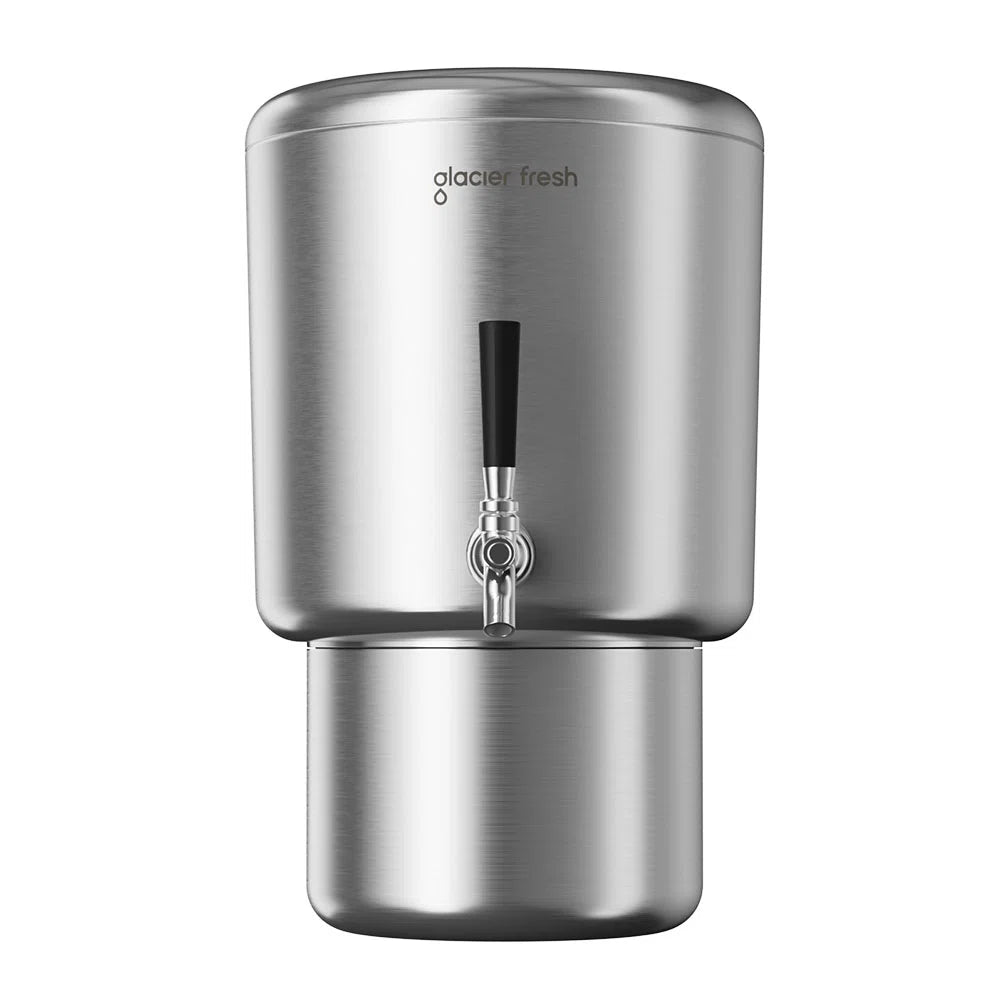
GlacierFresh lists its portable RV softener at 16,000 grains of capacity and indicates standard table salt for regeneration. Those figures are specific to that product page, not a universal value for all RV water softeners. Review the latest instructions supplied with the exact model before adding salt or starting a regeneration cycle. The GlacierFresh portable RV water softener page provides product-specific information.
How Capacity and Water Hardness Affect Regeneration Frequency
Capacity is a practical guide, but actual service life varies with feed-water hardness and consumption. A campground with very hard water uses more of the resin’s capacity per gallon than a site with moderately hard water. Longer stays, showers, dishwashing, and laundry all add to the treated volume.
A simple log can make timing more predictable. Record the source or hardness reading, approximate use, and date of regeneration. The Nebraska Extension guide to water softeners discusses how hardness and household use influence softener demand. For RV use, that principle still applies, even though the portable unit and flow pattern differ.
How to Regenerate an RV Water Softener Safely
Use the procedure for the specific portable model. Disconnect the unit as instructed, prepare the salt solution only if the manual calls for it, and allow the brine to contact the resin for the stated period. Then flush the unit thoroughly in the direction and sequence specified by its manufacturer before reconnecting it to the RV.
Do not guess a salt quantity or soak time from instructions for a whole-house automatic softener. Portable devices can use different valve arrangements and regeneration steps. Use potable-water-compatible fittings, direct wastewater to an appropriate drain, and do not drink or use the first flush as finished water. If a manual is missing, request the instructions for the exact model before proceeding.
The Water Quality Association’s ion-exchange overview describes the underlying resin process, while Penn State Extension’s softener maintenance guidance covers the relationship between maintenance and water quality.
How Long Does Regeneration Take, and How Often Should It Be Done?
The total time depends on the unit’s instructions, including any brining and rinse stages. Do not use a universal duration as a substitute for the model manual. Regenerate when the treated water shows a consistent return of hardness or when the manufacturer’s capacity guidance indicates it is due—not simply because a certain number of days has passed.
When planning a regeneration at a campground, allow time for the full brine and rinse sequence in the unit’s manual, not just the brine-contact period. Some portable units require separate slow-flush and full-flow rinse steps, so reconnect the softener only after the instructions confirm the rinse is complete. Planning for a suitable place to discharge rinse water can also help avoid interrupting water use during the cycle.
Care Between Regenerations
Keep the unit protected from freezing and follow the manufacturer’s storage directions between trips. Check hose washers and connections for leaks, and flush the unit after storage if the manual recommends it. Store salt clean and dry, and use the salt type named for the product.
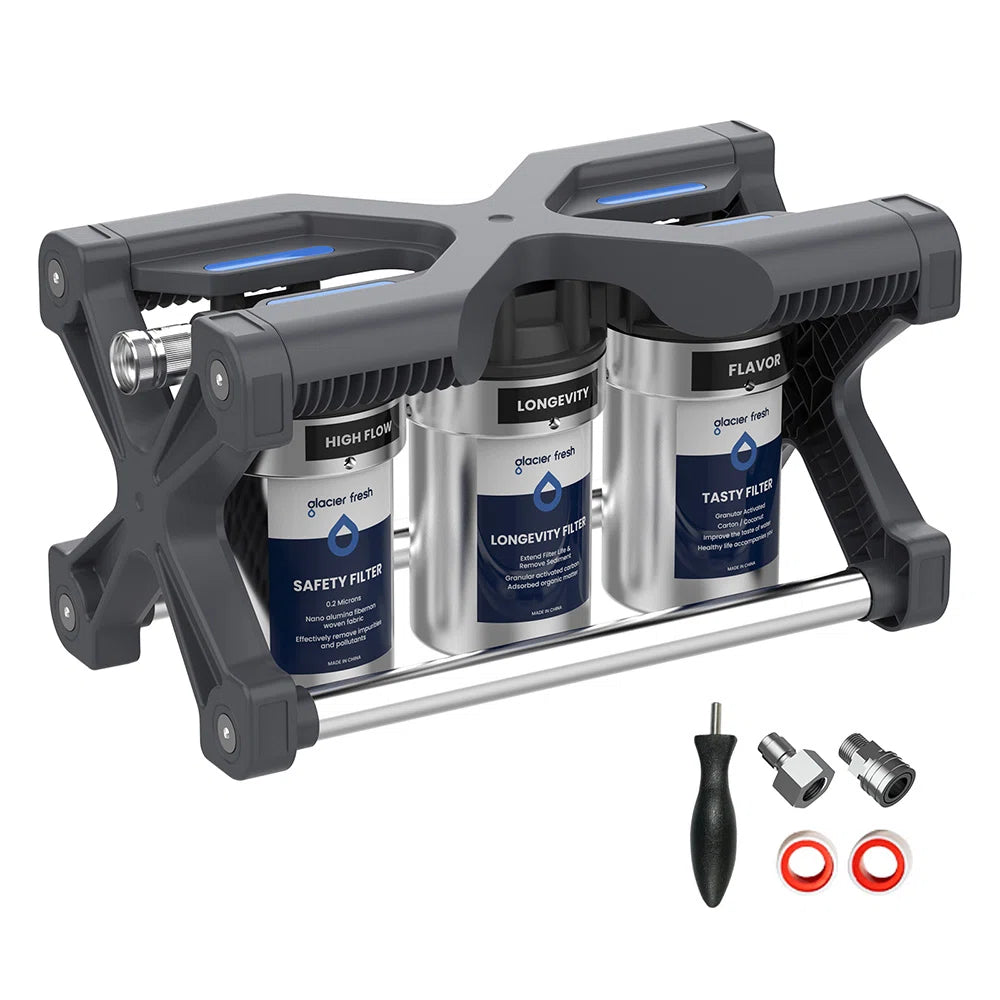
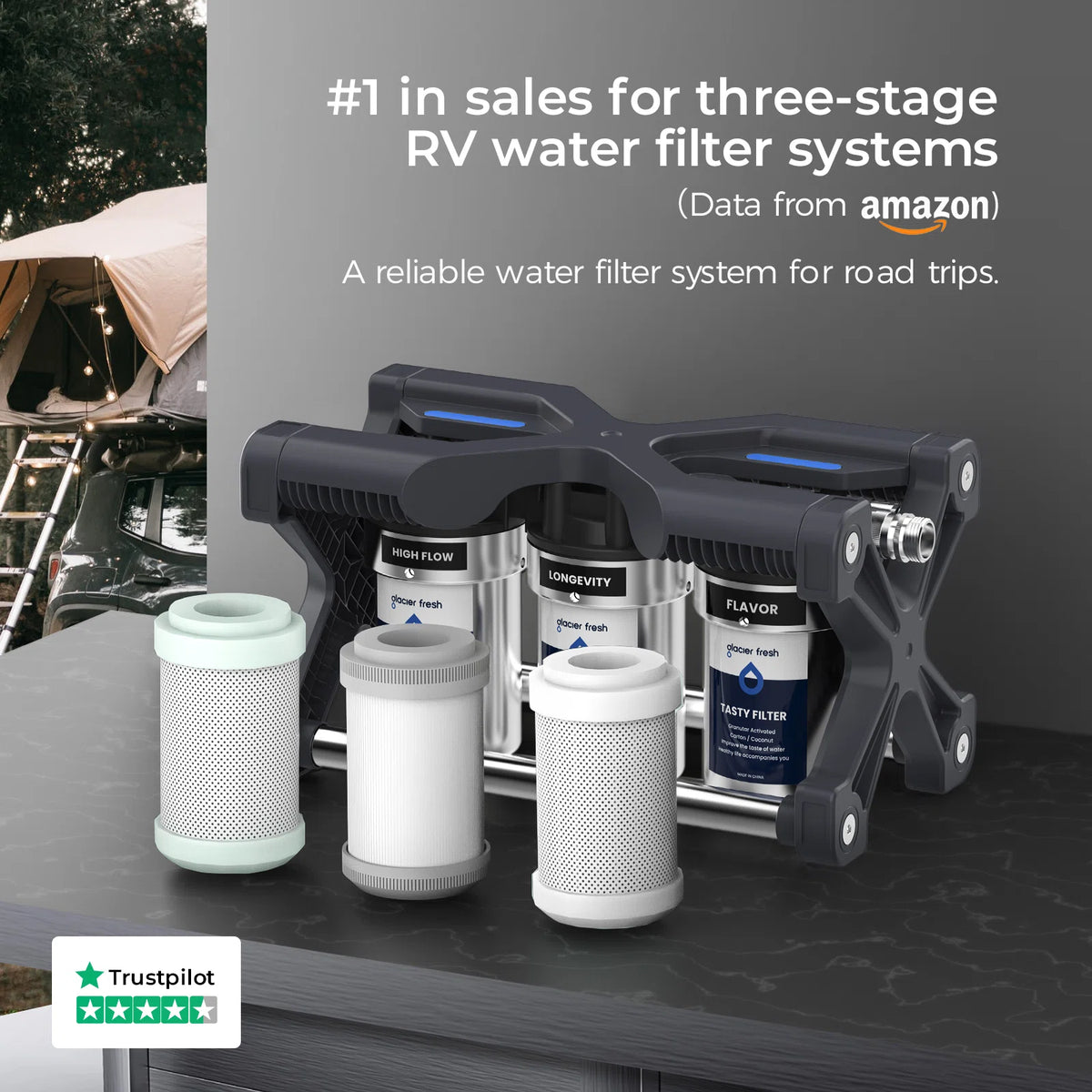
Compare GlacierFresh’s portable RV water softener with its AUQAGO RV filtration system; the former addresses hardness, while the latter is a filter system. For more background, see the USGS overview of water hardness, Penn State’s water-softening guide, WQA’s ion-exchange fact sheet, CDC’s home-treatment overview, and NSF’s standards overview.
Conclusion
Regeneration restores the exchange sites in a softener’s resin, but timing depends on capacity, source-water hardness, and use. Track your water conditions, follow the exact model’s salt and rinse instructions, and avoid borrowing steps or time estimates from a different softener design.
FAQs
What is the process of regenerating an RV water softener?
The resin’s exchange capacity is restored by contact with brine and a rinse. Follow the exact portable unit’s manual for connection direction, salt-solution preparation, and rinse-water disposal; steps vary by model.
How often should I regenerate my water softener?
Use a consistent hardness test on treated water and keep a log of approximate use. Regenerate when hardness returns or the model’s capacity guidance indicates it is due, rather than relying on a fixed calendar interval.
How long does it typically take for a water softener to regenerate?
There is no universal cycle time for portable units. GlacierFresh’s product page lists an initial slow flush and a subsequent full-flow flush after connection; those setup steps are not the same as a complete regeneration cycle. Use the current instructions for your model.
References
U.S. Geological Survey — Hardness of Water: Explains how dissolved minerals contribute to water hardness.
https://www.usgs.gov/water-science-school/science/hardness-water
Penn State Extension — Water Softening: Describes common softening methods and how ion exchange addresses hardness.
https://extension.psu.edu/water-softening
Water Quality Association — Ion Exchange Fact Sheet: Explains ion exchange and the role of regeneration in restoring resin capacity.
https://wqa.org/wp-content/uploads/2023/10/Ion-Exchange-Fact-Sheet.pdf
CDC — About Home Water Treatment Systems: Reviews common household treatment methods and the concerns they address.
https://www.cdc.gov/drinking-water/about/about-home-water-treatment-systems.html
NSF — Standards for Water Treatment Systems: Summarizes how standards apply to water-treatment products and their claims.
https://www.nsf.org/consumer-resources/articles/standards-water-treatment-systems