
Table of Contents:
Is Drinking Water from the Faucet Safe?
Potential Risks in Water from the Faucet
How to Check If Your Faucet Water Is Safe to Drink
Free Ways to Make Faucet Water a Little Safer
Bottled Water vs. Filtered Faucet Water: Which Is Better?
How to Choose the Right Water Filtration System for Your Home
Conclusion
FAQs

The water that flows from a faucet is commonly referred to as tap water. Tap water is generally considered safe to drink straight from the faucet because it meets strict government safety standards. However, what happens between the treatment facility and your glass is where hidden dangers lie. Water from the faucet can still carry trace contaminants—such as microplastics, PFAS, lead from aging pipes, and chemical treatment byproducts that affect its safety, taste, and long-term health impact.
In this article, we'll reveal exactly what's in tap water—and how to ensure you're drinking truly clean water.
Is Drinking Water from the Faucet Safe?
The answer is that it is safe, but not 100% pure. This is because municipal water departments must comply with strict standards set by environmental agencies. These regulations specify “maximum allowable concentrations” for more than 90 different contaminants to ensure that the public water supply does not cause acute illness.
However, water treatment plants have their limitations. As a result, the drinking water from the faucet is not always safe.
- Safety regulations are built around baseline health limits, not optimal health standards. Traces of contaminants may legally remain in your water.
- The water flowing out of the water treatment plant travels through various aging pipes to reach your home. It is highly susceptible to contamination by harmful substances during this process.
- Water quality regulators monitor only a small fraction of chemical residues, even though there are now thousands of synthetic chemicals.
Potential Risks in Water from the Faucet
The following are common contaminants found in tap water:
1. Heavy Metals
Many older homes built in the last century use lead and brass pipes, and these materials can leach toxic heavy metals into your drinking water.
It's especially important to note that because heavy metals are colorless and odorless, they cannot be detected by sight or smell alone. Long-term exposure to lead can cause serious health problems, such as developmental delays in children and kidney problems in adults.
2. Chemical Contaminants
PFAS: Both industrial wastewater and wastewater discharged after treatment contain PFAS, synthetic chemicals that can seep into groundwater or flow into reservoirs. However, conventional water treatment technologies cannot remove PFAS. Long-term exposure to PFAS may lead to diseases such as cancer.
Chlorine and Chloramines: Water treatment plants use these as disinfectants, but they can give the water a pungent, chemical taste and odor, and may react with organic matter to form harmful disinfection byproducts.
Agricultural Runoff: Pesticides, herbicides, and nitrates often seep into groundwater sources.
3. Microplastics & Microorganisms
Microscopic plastic fibers have now been widely detected in tap water around the world, and these fibers may pose unknown long-term risks to cellular health.
A broken pipe can allow bacteria and parasites to enter the tap water.
4. Hard Water Minerals
Hard water contains high concentrations of dissolved minerals such as calcium and magnesium. While hard water does not pose a direct health risk, it can cause limescale buildup in household appliances, damage pipes, leave residue on dishes, and dry out the skin and hair.
How to Check If Your Faucet Water Is Safe to Drink
To ensure that every sip of water you drink is healthy and pure, we recommend that you test your water at home. Here are the specific steps you can follow:
Step 1. Check Your Local Water Quality Report
If you use a public water supply, your water provider is legally required to publish an annual Consumer Confidence Report. You can search online for “[your city/water utility name] + water quality report” to check whether the test results for lead, nitrates, and disinfection byproducts meet regulatory limits.
Step 2. Observe Visual and Smell Signs
If the water coming out of your faucet has any of the following tastes, you need to be on the lookout!
- Chlorine/Bleach Smell: Excess chemical disinfection.
- Rotten Egg Smell: Presence of hydrogen sulfide gas or bacterial growth inside drain/pipes.
- Metallic Taste: Presence of iron, copper, or lead.
- Turbid Water: There may be silt or suspended particles.
- Brown, Orange, or Red Tint: Rust from corroded iron pipes.
Step 3. Use a DIY Home Water Test Kit
Since municipal reports cannot show the condition of the pipes inside your home, we recommend purchasing a DIY water testing kit. These test strips can quickly measure the pH, hardness, chlorine, lead, copper, bacteria, and nitrate levels in your tap water in just a few minutes.
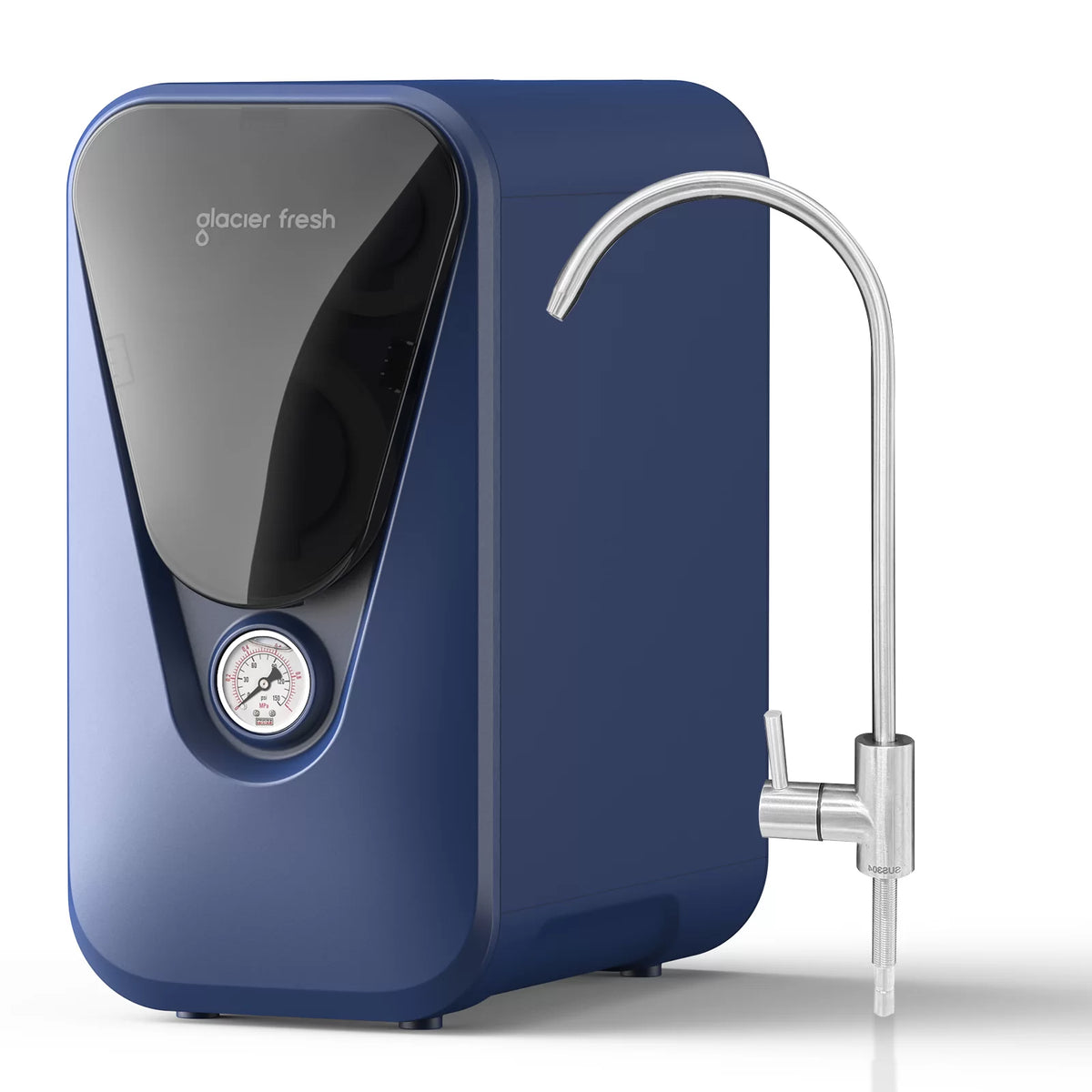
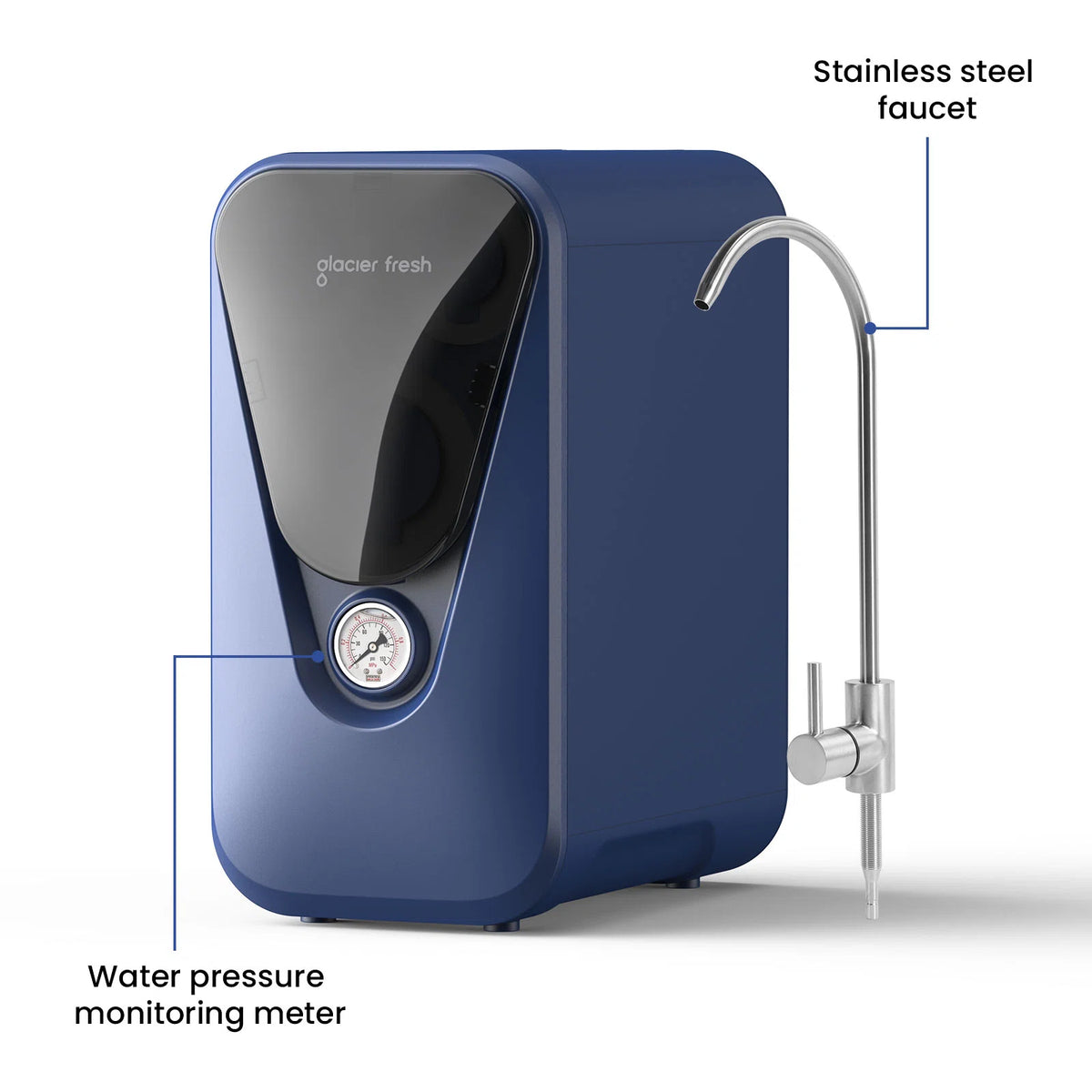
💡Note: What should you do if your home water test results show the presence of heavy metals and PFAS? The best solution, while keeping costs down, is to choose a suitable under-sink water filter. Glacier Fresh U03 uses a reverse osmosis system to filter out 99.9% of bacteria, PFAS, and heavy metals.
Free Ways to Make Faucet Water a Little Safer

While you're waiting for the test results, you can use the following practical tips to make your tap water a little safer.
Way 1. Do not drink the first glass of water
If the faucet has not been used for several hours, let the cold water run for 1 to 2 minutes before drinking. This will flush out any stagnant water that has accumulated in your home's internal pipes, thereby reducing the potential concentration of heavy metals.
Way 2. Boiling Tap Water
Boiling tap water can kill pathogens such as bacteria and parasites. However, it cannot remove lead, heavy metals, or PFAS. On the contrary, it may actually increase the concentration of chemical contaminants.
Way 3. Cleaning the Faucet Aerator
Every few months, unscrew the small mesh screen at the front of the faucet to remove impurities, sediment, and metal particles.
Bottled Water vs. Filtered Faucet Water: Which Is Better?

You might wonder: If I drink bottled water directly, can I avoid these harmful substances? In fact, you can avoid the vast majority of contaminants, but bottled water may still contain small amounts of microplastics. Furthermore, in terms of long-term costs and environmental impact, bottled water is not a good choice.
| Comparison Point | Bottled Water | Filtered Tap Water |
|---|---|---|
| Cost | Extremely High ($1,000+ / year per family) | Low/Economical (Pennies per gallon) |
| Health Risks | High risk of ingesting plastic microparticles leaching from bottles | Removes microplastics, lead, and chemicals on demand |
| Environmental Impact | Severe plastic waste & ocean pollution | Eco-friendly; eliminates single-use plastics |
| Taste & Freshness | Varies; often just processed municipal water | Pure, fresh taste directly from the tap |
How to Choose the Right Water Filtration System for Your Home

Using a home water filtration system is the most effective way to ensure you have pure drinking water straight from the faucet. So, how do you choose the right one? You may find the following suggestions helpful.
1. Reverse Osmosis Systems
Best For: Comprehensive family health protection and absolute water purity.
Pros: The gold standard of home filtration. RO systems use a semi-permeable membrane that removes up to 99% of contaminants, including lead, PFAS, arsenic, microplastics, nitrates, and fluoride. Modern multi-stage RO units fit neatly under your kitchen sink.
Cons: Higher upfront investment, requires under-sink space.
2. Pitchers & Faucet Mounts
Best For: Renters, low budgets, basic taste improvement.
Pros: Low initial cost and easy to install. No plumbing changes required.
Cons: Removes basic chlorine and odors, but often ineffective against complex contaminants like heavy metals, PFAS, or high TDS (Total Dissolved Solids). Requires frequent filter replacements.
Conclusion
This article answers the question of whether the water from your tap is safe to drink and explains how you can enjoy pure, healthy water at home. As you know, water is essential to the human body, and long-term consumption of contaminated drinking water can have a significant impact on your health. So, test your home's water supply and use a reverse osmosis water purifier to ensure your family's drinking water is safe and healthy!
FAQs
Q1: Is tap water safe to drink if it comes from the bathroom faucet?
No. Although the water from both the bathroom and kitchen faucets comes from the municipal water treatment plant, the water in the bathroom is less safe to drink due to differences in the plumbing system or water storage.
Q2: Does boiling tap water remove lead and PFAS?
No. Boiling water can only eliminate some bacteria and parasites. It cannot remove heavy metals and PFAS; in fact, the evaporation of water during boiling can actually increase the concentration of heavy metals.
Q3: What are the side effects of drinking tap water?
If tap water contains a high number of bacteria, short-term consumption may lead to symptoms such as stomach upset, vomiting, and diarrhea. Long-term consumption of tap water containing excessive levels of heavy metals can lead to chronic diseases.