
Table of Contents:
What Makes Water Alkaline?
Is Alkaline Water Good for Dehydration?
Does Alkaline Water Have Electrolytes and How Is It Different from Electrolyte Water?
Does Higher-pH Water Improve Athletic Performance or Recovery?
Does Alkaline Water Filtration Remove More Microplastics?
Regular Water vs Alkaline Water: What Matters Most for Athletes?
Conclusion
FAQs

High-pH bottled water occupies shelf space in most gyms now, positioned beside the protein supplements, and the labeling promises some combination of faster hydration, improved recovery and a measurable training advantage. The research underlying those promises is a good deal less settled than the packaging suggests.
Randomized trials on alkaline water and exercise do exist, and several of them reported statistically significant findings. A systematic review of the wider evidence base concluded that nothing has been demonstrated beyond what ordinary mineral water already provides. Neither summary is wrong. Each describes a different portion of a literature considerably smaller than the commercial category resting on it.
What follows sets out what the studies measured, which outcomes cleared statistical significance and which did not, and why pH, mineral content and filtration performance keep being treated as a single property when they are three unrelated specifications.
What Makes Water Alkaline?
Alkaline water is water measuring above pH 7. That is the whole of the definition, which makes it a narrower descriptor than ordinary usage implies, since it specifies nothing about dissolved mineral content, nothing about the process that raised the pH, and nothing about how the water behaves once consumed.
Producers reach a high pH by several distinct routes. Certain waters acquire alkalinity naturally through prolonged contact with mineral-bearing rock, others are treated by electrolysis, and a third category is purified down to near-zero dissolved solids before being passed through a remineralization stage during final treatment. These processes can converge on an identical pH reading while yielding water of markedly different mineral composition, which is why pH and mineral composition require reading as two separate specifications. A high figure on the label guarantees neither calcium nor magnesium, and a considerable volume of genuinely mineral-rich water measures close to neutral.
Is Alkaline Water Good for Dehydration?

The best-powered study of high-pH water and rehydration returned mostly null results. In a randomized, double-blind trial of 100 healthy adults exercising in heat, high-shear whole blood viscosity fell more on alkaline water than on standard purified water, but plasma osmolality, bioimpedance and body mass change — the three markers that describe hydration status most directly — showed no difference. Sports-science guidance on fluid replacement for active people is built around fluid volume and electrolytes; beverage pH is not listed as a variable.
Does Alkaline Water Have Electrolytes and How Is It Different from Electrolyte Water?

Some alkaline waters carry meaningful electrolyte content and some carry almost none, and the pH figure will not distinguish between them.
The labels describe unrelated properties. Alkaline refers to pH and nothing else, whereas electrolyte water denotes water or a beverage carrying dissolved minerals, typically sodium, potassium, calcium and magnesium, added specifically to replace what sweating removes. The categories overlap often enough in retail settings that the terms get used interchangeably, which accounts for most of the confusion. High-pH water with minimal mineral content nevertheless exists, as does heavily mineralized water sitting at pH 7. Composition traces back to the source aquifer or to a remineralization formulation, and a pH value makes neither visible.
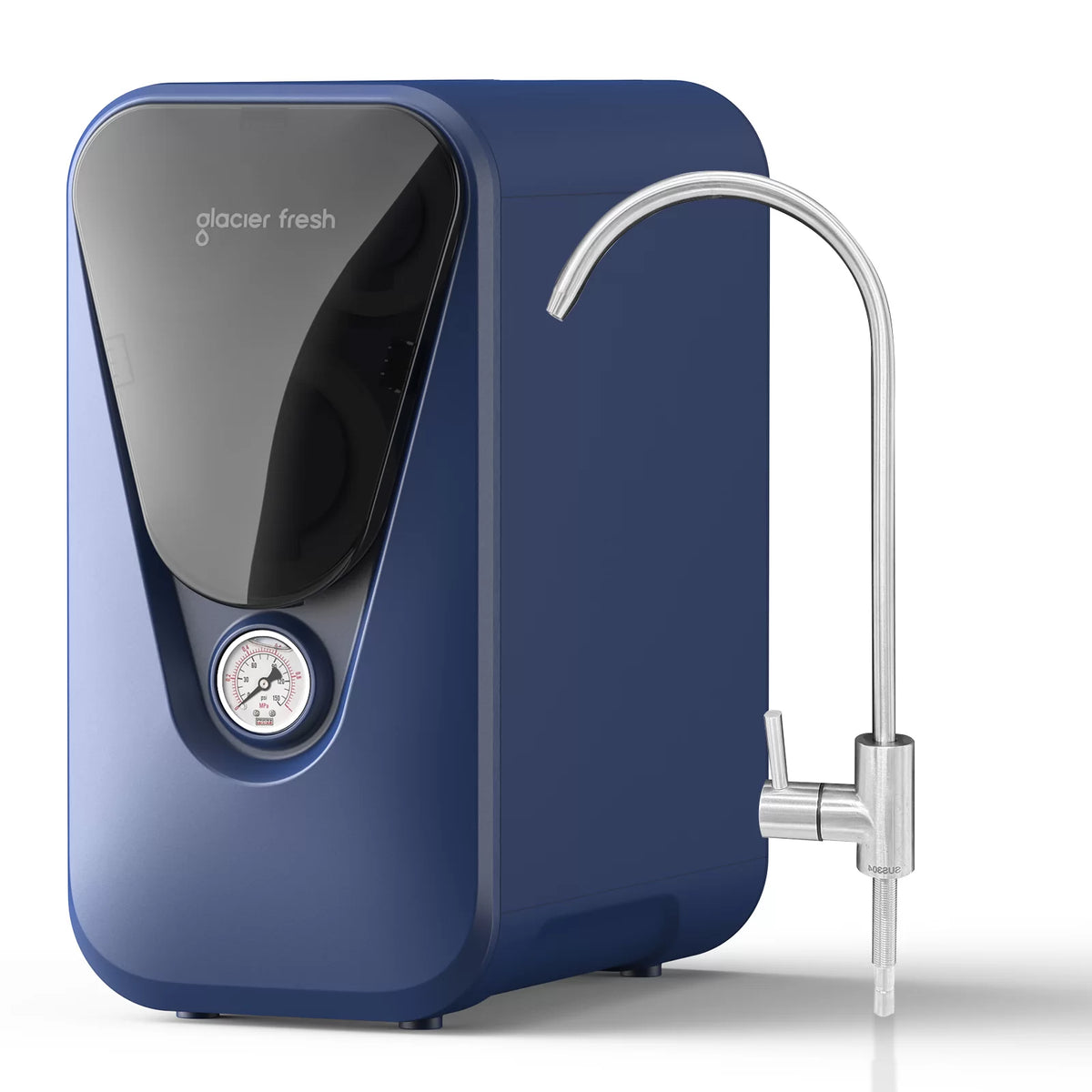
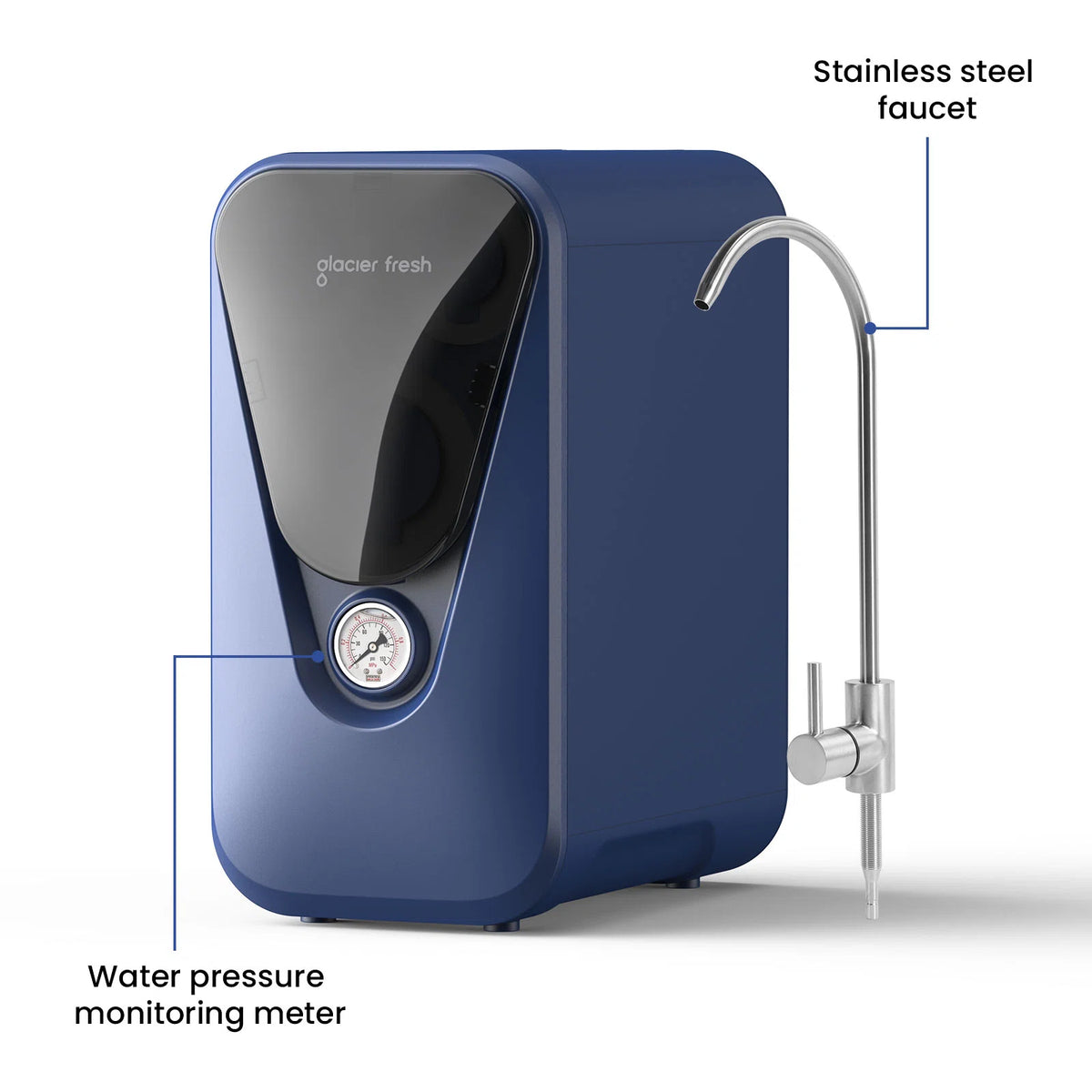
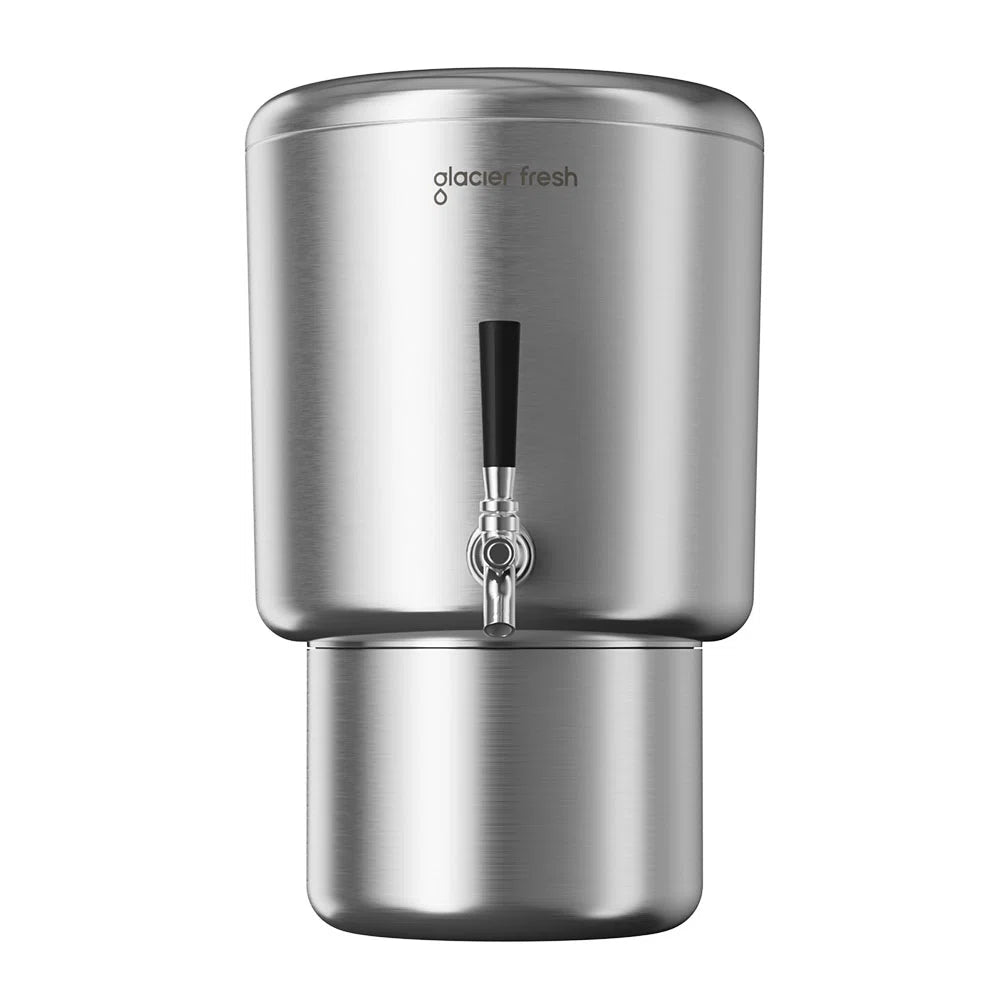
Product specifications are informative up to that boundary and no further. The GlacierFresh U03 Alkaline Reverse Osmosis System runs reverse osmosis as its primary purification stage and then reintroduces calcium, magnesium and potassium ions through a dedicated alkaline stage, with the current product page listing a pH range of 7.5 to 8.5. Those figures describe composition. They are not evidence of an athletic effect and are not offered as one.
Across a prolonged or demanding session, the determining variables are total fluid balance, individual sweat rate and electrolyte replacement. Alkalinity is not among them. Where dissolved minerals are the specific objective, our comparison of carbon filtration, reverse osmosis and alkaline systems covers how each technology treats them, and our guide to remineralizing reverse osmosis water addresses what a remineralization stage contributes.
Does Higher-pH Water Improve Athletic Performance or Recovery?
The evidence from athlete trials is mixed and the studies are small. Two commonly cited papers report favorable changes — one in urine specific gravity and pH among soccer players, another in reported anaerobic performance among combat-sport athletes — but the groups were twelve to sixteen participants each, the protocols differed in duration and exercise type, and the alkaline waters themselves had different mineral content. A systematic review covering ten eligible studies from 2000 to 2022 concluded that alkaline or oxygenated water showed no significant difference from mineral water on gut microbiota, urine pH, blood parameters or fitness outcomes. The practical takeaway: there is no consistently demonstrated performance or recovery advantage for higher-pH water in athletes.
Does Alkaline Water Filtration Remove More Microplastics?
It does not. Alkalinity and particle removal work through unrelated mechanisms: pH is a property of solution chemistry, whereas getting a suspended particle out of water is mechanical separation. Raising one has no bearing on the other.
Pore size decides the outcome. WHO's assessment of microplastics in drinking water notes that conventional drinking-water treatment can remove particles smaller than a micrometre, with the highest removal rates achieved by tertiary processes such as filtration. The same assessment observes that particles above 150 micrometres are unlikely to be absorbed in the human body, while acknowledging that data on very small and nano-scale particles remains extremely limited.
Applied to household equipment, the comparison reduces to technology:
| System | Primary technology | Pore size | Mineral handling | Notes |
|---|---|---|---|---|
| U03 Alkaline RO | Reverse osmosis, then alkaline remineralization | 0.0001 micron RO membrane | Restores calcium, magnesium, potassium; pH 7.5–8.5 | NSF 58 certified components; 800 GPD, 3:1 pure-to-drain, non-electric |
| U03 Reverse Osmosis | Reverse osmosis | 0.0001 micron RO membrane | No dedicated remineralization stage | Same RO base; components meeting NSF 42/53/58/401/372 with CSA and SGS testing |
| U06 Ultrafiltration | 3-stage ultrafiltration | 0.01 micron UF membrane | Preserves dissolved minerals; does not reduce TDS | Meets NSF 42/53/401 (SGS) and NSF 372 (CSA); non-electric, zero wastewater |
The two U03 variants are not distinct filters in this respect. They share a purification stage and the alkaline model simply reintroduces minerals afterward, so comparing the pair on particle removal amounts to comparing one membrane against itself.
U06 supplies the meaningful contrast, and a cleaner reverse osmosis against ultrafiltration comparison than most product marketing permits. Its 0.01-micron membrane is a coarser barrier than the RO membrane by two orders of magnitude, and the system is built specifically to leave TDS unaltered, retaining calcium and magnesium rather than stripping them out and dosing them back downstream. Whether that counts as an advantage depends entirely on the intended application. Our discussion of countertop reverse osmosis and microplastics examines where the pore-size thresholds fall.
Regular Water vs Alkaline Water: What Matters Most for Athletes?
For routine hydration, how much gets consumed matters considerably more than the pH at which it arrives. The conclusion is unremarkable, and it carries more empirical support behind it than anything else in this article.
Under prolonged, high-intensity or high-sweat conditions, the variables that move outcomes are total fluid volume and electrolyte replacement scaled to individual sweat losses. Current evidence-based guidance does not list alkalinity among them.
None of which makes alkaline water a poor choice. Taste preference is a legitimate basis for selecting a beverage, mineral profile is a genuine specification, and where high-pH water increases an athlete's intake during a session, that increase is a real benefit whatever produced it. What has not been established is a broad performance advantage, and that happens to be the claim supporting most of the price premium. Whether RO water is a sound choice for daily drinking is a separate question, and a considerably more tractable one.
Conclusion
Alkaline water tends to be presented either as a significant physiological intervention or as marketing without substance, and most coverage commits to one of those positions inside the opening paragraph. The literature supports neither.
Several small athlete studies did detect favorable physiological changes: reduced urine specific gravity, improved lactate utilization, reported anaerobic gains in a cohort of sixteen. The best-powered rehydration trial identified a blood viscosity difference sitting alongside three null hydration markers, and a systematic review covering ten studies concluded that no additional benefit over mineral water had been demonstrated at all. Divided is the accurate description of that evidence, and it is the description most coverage avoids.
One practice transfers usefully to a purchasing decision: read the specifications separately. Treat the pH figure as a pH figure, assess the mineral analysis on its own, then evaluate filtration performance on its own again. A system can perform strongly in one of those categories and unremarkably in the other two, and the category label printed on the packaging rarely indicates which.
Does alkaline water have electrolytes?
In some products. The pH figure gives no indication, because calcium, magnesium, sodium and potassium content derives from the source water or the remineralization formulation instead. A substantial number of alkaline waters carry very little mineral content. The mineral analysis is the relevant specification, not the pH number.
Is alkaline water the same as electrolyte water?
No. Alkaline water is defined solely by a pH above 7. Electrolyte water refers to water or beverages carrying dissolved minerals intended to replace sweat losses. The two categories overlap frequently, but neither label implies the other.
How do different water filters compare in removing microplastics?
Pore size and membrane type determine performance, and pH plays no part. WHO notes that conventional drinking-water treatment can remove particles smaller than a micrometre, with tertiary filtration achieving the highest removal rates. Among household systems, an RO membrane at 0.0001 micron is a hundred times finer than a 0.01-micron ultrafiltration membrane. An alkaline stage installed after RO alters mineral content and leaves particle removal unchanged.