
Table of Contents:
Why choose a budget-friendly reverse osmosis system?
Cost-benefit framework: affordable RO vs. premium RO
Key features to expect in Glacier Fresh budget reverse osmosis systems
Glacier Fresh reverse osmosis systems compared
DIY installation and maintenance checklist
Regional water quality and RO selection
Environmental impact and water conservation tips
Tips for choosing the right Glacier Fresh reverse osmosis system on a budget
FAQs
Conclusion
Why choose a budget-friendly reverse osmosis system?
 A budget-friendly RO system is best for households that need dependable drinking-water filtration but do not want a large, complex installation. Compared with many premium systems, affordable models often focus on the core priorities: contaminant reduction, compact design, filter life, and simple maintenance. They can help reduce harmful contaminants such as chlorine, lead, fluoride, nitrates, and PFAS while keeping the initial cost easier to manage.
- Lower upfront cost for renters, apartments, dorms, RV users, and smaller kitchens.
- Multi-stage filtration that supports cleaner taste and more consistent drinking water quality.
- Compact installation options for households that cannot modify plumbing heavily.
- Lower bottled-water dependence, which can improve long-term savings and reduce plastic waste.
For many homes, the best value is not the most expensive machine. It is the system that fits the household size, water pressure, available space, local contaminants, and filter replacement budget. If you are looking for the best home reverse osmosis water filter, start with these practical requirements before comparing advanced features.
Cost-benefit framework: affordable RO vs. premium RO
A practical RO purchase should be judged by total ownership cost, not only the price on the product page. Affordable systems can be the better value when they meet your water quality goals and do not add unnecessary electronics, oversized capacity, or specialty filters you will not use.
|
Cost factor |
Budget RO system |
Premium RO system |
What to check |
Value takeaway |
|
Upfront cost |
Lower entry price |
Higher initial price |
Included faucet, tubing, adapters, warranty |
Budget models win if core filtration is enough |
|
Filter replacement |
Usually moderate and predictable |
Can be higher for proprietary cartridges |
Replacement frequency and cartridge bundle price |
Compare annual filter cost, not just system price |
|
Water waste ratio |
Efficient models may offer strong pure-to-drain ratios |
Can be efficient, but varies by design |
Pure water-to-drain ratio and water pressure needs |
Lower waste improves long-term value |
|
Flow rate |
Enough for small to mid-size use |
Often higher for large families |
GPD, tank/tankless design, faucet speed |
Pay for higher flow only if you need it |
|
Space and installation |
Often compact, sometimes DIY-friendly |
May need more space or pro installation |
Under-sink clearance and drilling needs |
Installation limits can outweigh feature lists |
Key features to expect in Glacier Fresh budget reverse osmosis systems
Even when priced for budget-conscious buyers, Glacier Fresh reverse osmosis systems are designed around multi-stage filtration, compact layouts, and everyday usability. Look for these core features before deciding which system fits your home.
- Multi-stage filtration, typically including sediment, carbon, and high-efficiency RO membrane stages.
NSF-certified materials or safety-minded component standards where applicable, especially for water-contact parts.
- Low wastewater design, which matters for households that want RO performance without excessive drain water.
- Tool-free or simplified filter changes to reduce maintenance mistakes.
- LED indicators, leak protection, or reminder features in select models for easier ownership.
These features matter because the best ro purifiers should solve real household problems: better taste, targeted contaminant reduction, stable flow, manageable maintenance, and reasonable annual cost. For users reading reverse osmosis under sink reviews, pay close attention to space requirements and filter access, not just advertised GPD.
Glacier Fresh reverse osmosis systems compared
Choosing between models is easier when you compare capacity, installation style, water efficiency, and household fit side by side. The goal is to match the system to your water source, family size, available space, and maintenance expectations instead of buying more capacity than you need.

| Model / type | Best for | Flow / capacity | Installation | Water efficiency | Main trade-off |
| Glacier Fresh U01 under-sink RO | Renters, dorms, small households | 400 GPD, about 1.5 L/min | Drilling required | 2.5:1 purified water-to-drain ratio | More involved installation |
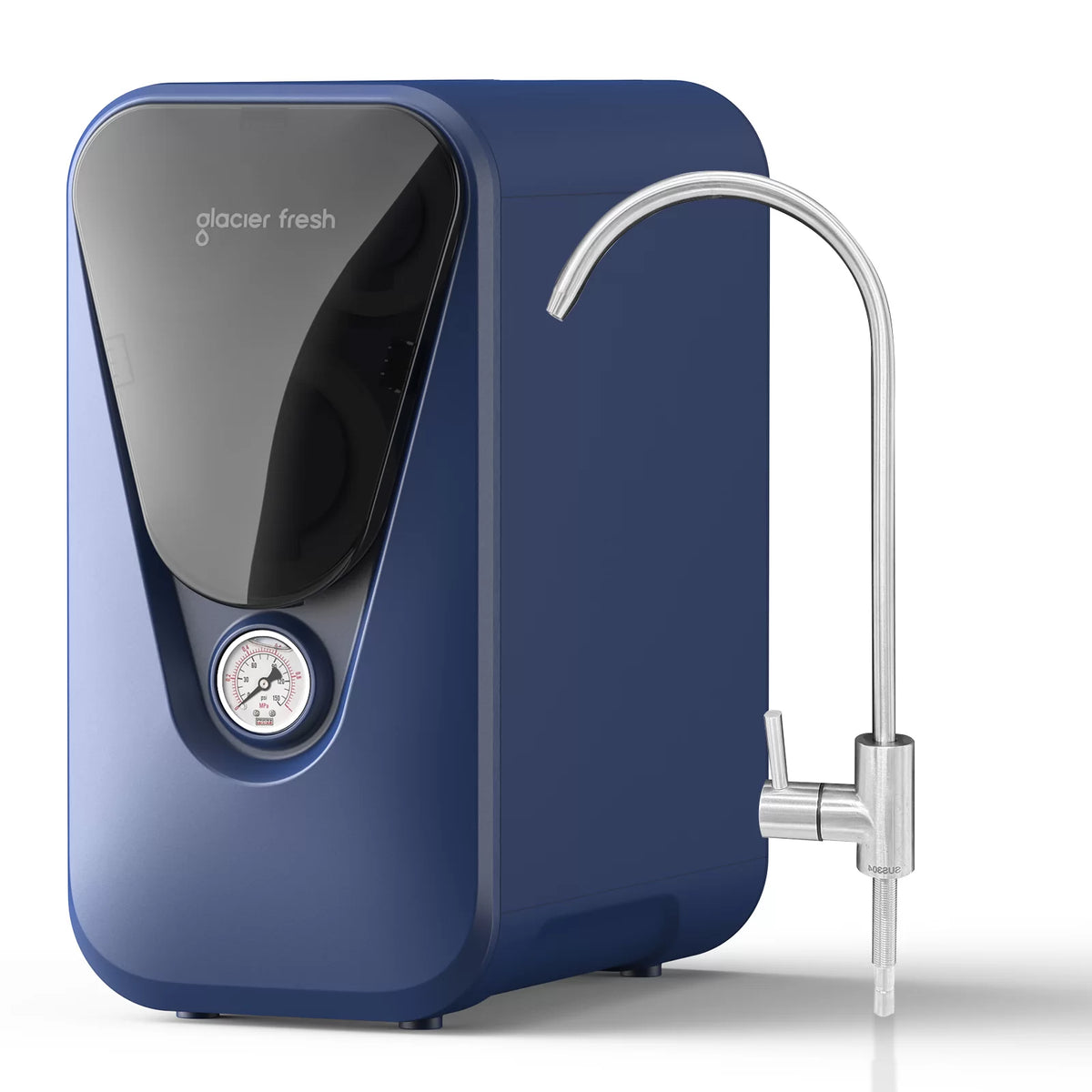
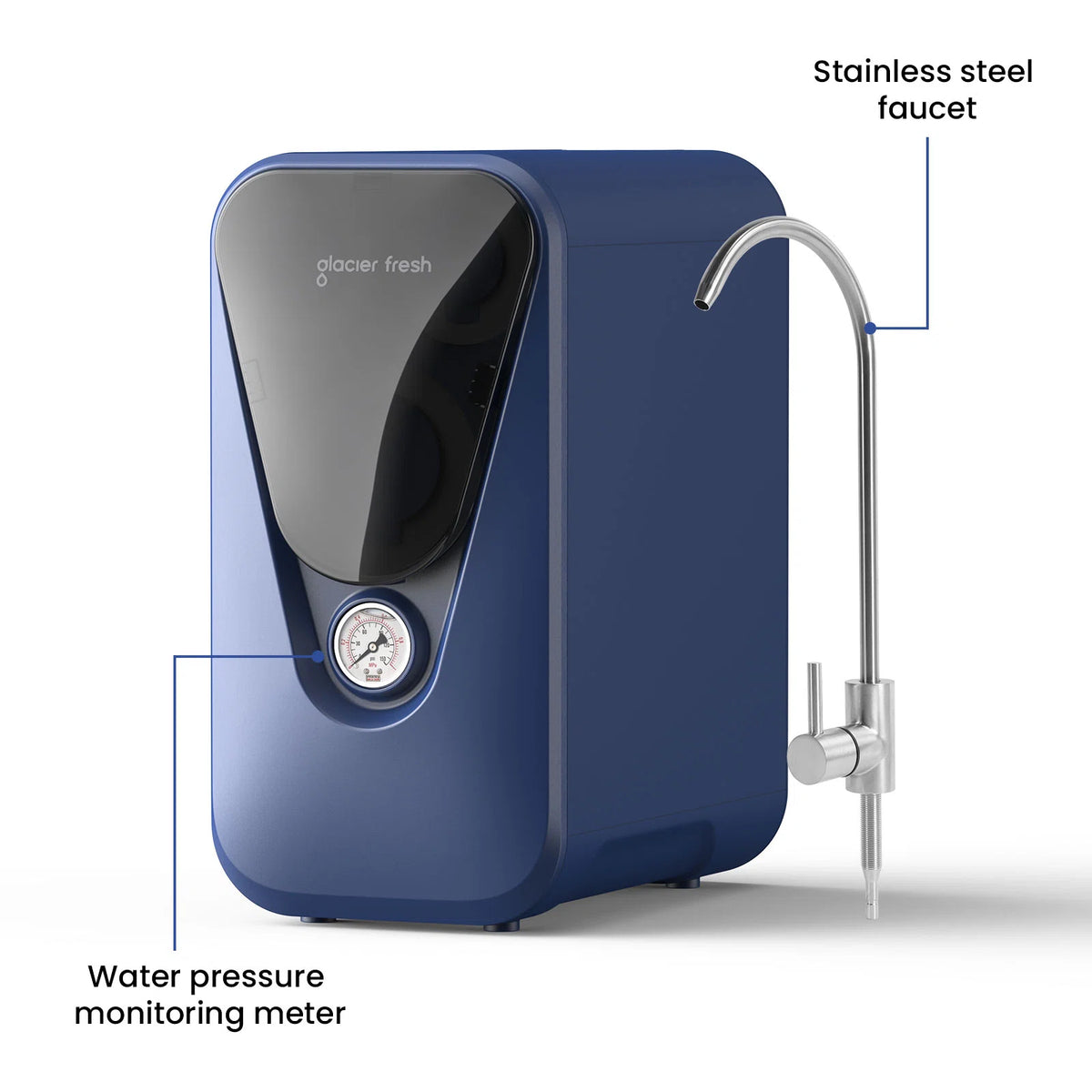
| Glacier Fresh U03 tankless RO | Mid-size to large families | 800 GPD fast flow | No drilling with dual-faucet setup | 3:1 pure water-to-drain ratio | Higher initial cost |
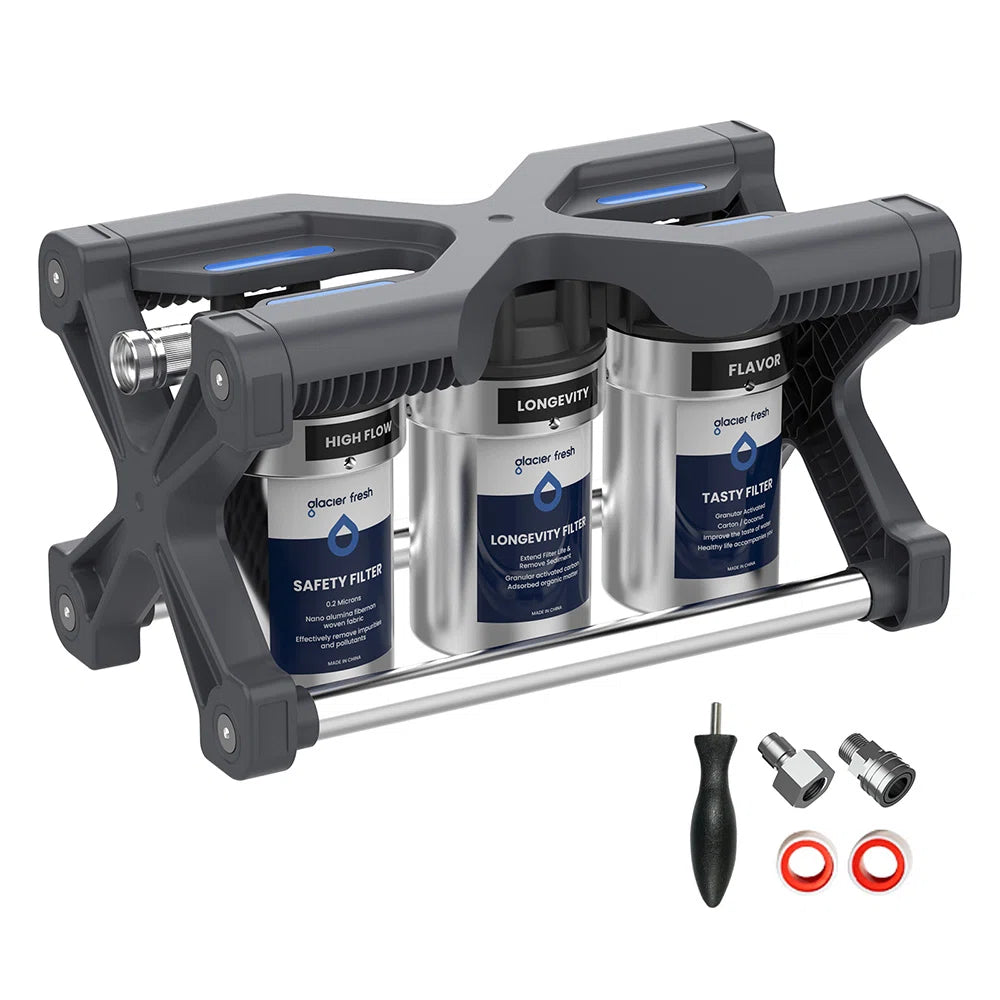
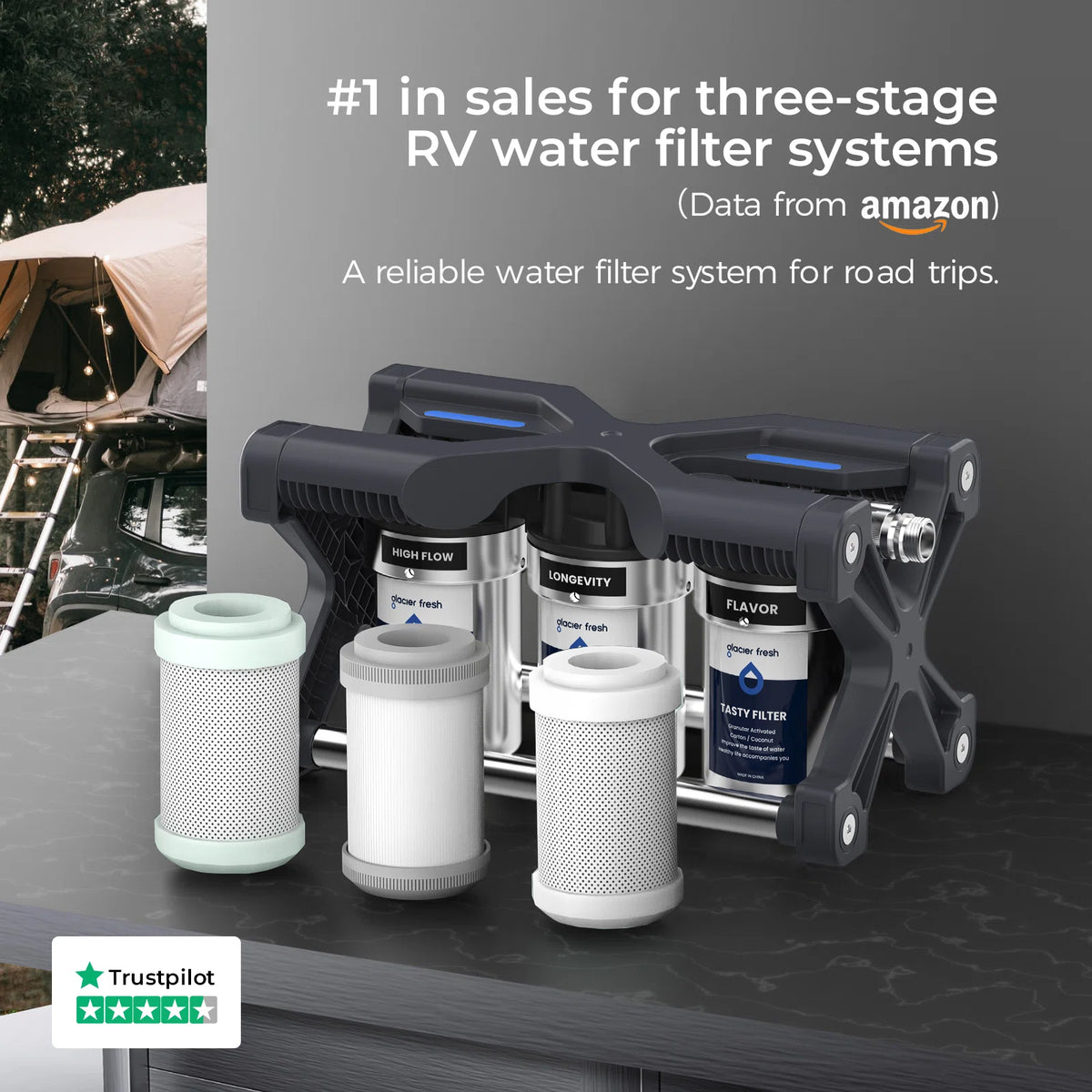
| Countertop / portable RO option | Apartments, RVs, limited plumbing access | Varies by model | Minimal or no plumbing changes | Depends on filter and tank design | May have smaller capacity |
| Premium competitor RO | Large homes or specialty contaminant concerns | Often high capacity | May require pro install | Varies widely | Higher system and cartridge cost |
1.Glacier Fresh U01 reverse osmosis system
- Price Range: 79.99 to 199.99$
- Best for: Renters, dorm rooms, or small households
- Filtration Stages: 5
- Installation: Drilling required
The U01 model is an energy-efficient, noise-free reverse osmosis filter system that requires no electric drive. Its 5-stage process targets contaminants including asbestos, mercury, arsenic, chlorine, nitrates, nitrites, drugs, and heavy metals. With 400 gallons per day output, it offers strong flow for daily drinking and cooking use while helping maintain water purity.
Its 2.5:1 purified water-to-drain ratio can reduce waste and help extend filter life. This makes it a strong option for buyers who want a practical under-sink solution but still need to keep installation and long-term ownership costs controlled.
Pros:
- Space saving, all-in-one design
- High water filtration efficiency
- Very easy to maintain
Cons:
- Drilling required, complex installation
- It May not be ideal for large families
2.Glacier Fresh U03 reverse osmosis system
- Price Range: 49.99 to 399.98$
- Best for: Mid-size to large families
- Filtration Stages: 5
- Installation: Easy installation, no drilling required
The U03 reverse osmosis system stands out with its low 3:1 pure water-to-drain ratio, which translates to a water production rate of up to 75% and compliance with first-level energy efficiency standards. Its sleek, tankless design saves over 70% of the space typically required under the sink, and it is specifically designed to reduce the risk of re-contamination. The recommended maintenance schedule is to replace the RO filter every 1-2 years, while the pre-filters (such as the PPC and carbon filters) should be replaced every 6-12 months.
Pros:
- Space saving, all-in-one design
- Silent & energy-efficient operation
- Higher flow rate with 800 GPD
- Dual faucets, no drilling required
- Up to 99.99% filtration rate
Cons:
- Slightly higher drainage ratio
- Higher initial cost (still affordable long-term)
DIY installation and maintenance checklist
Most RO problems come from rushed installation, skipped flushing, poor tubing cuts, or delayed filter replacement. Before setup, confirm the model, faucet connection, under-sink clearance, feed-water pressure, and drain access. Keep the manual nearby and avoid forcing fittings.
- Prepare basic tools: adjustable wrench, towel, bucket, tubing cutter or sharp utility knife, flashlight, and TDS meter for post-install checks.
- Turn off the cold-water supply, release pressure at the faucet, and place a towel under the connection area.
- Connect feed-water, drain, and filtered-water lines exactly as marked. Push tubing fully into quick-connect fittings.
- Flush the system according to the manual before drinking the water. Early flushing clears carbon fines and manufacturing residue.
- Check for leaks after 10 minutes, after the first full use, and again the next day.
- Replace pre-filters every 6-12 months and RO membranes every 1-2 years, depending on water quality and usage.
Troubleshooting: low flow often points to clogged pre-filters, low inlet pressure, or an unflushed cartridge. Strange taste usually means the system needs flushing or a filter is overdue. If TDS rises sharply, inspect the membrane and seals.
Regional water quality and RO selection
Local water chemistry affects which RO setup is most cost-effective. Hard water, well water, high sediment, colder climates, and regional contaminants can all shorten filter life or require extra pre-treatment.
- Hard water: add sediment and carbon pre-filtration and consider scale control if hardness is high. This helps protect the RO membrane.
- Well water: test for iron, manganese, sulfur odor, bacteria, nitrates, and sediment before choosing a system. Some issues need pre-treatment before RO.
- Municipal water: chlorine, chloramine, PFAS, lead from older pipes, and taste concerns often guide filter selection.
- Cold climates: colder feed water can reduce RO production speed, so a higher-flow model may feel more convenient in winter.
- High-PFAS or heavy-metal concerns: choose a multi-stage system and confirm the filter claims match the contaminants found in your test report.
A simple TDS meter can show dissolved-solid trends before and after filtration, but it does not identify every contaminant. For well water or suspected lead, PFAS, bacteria, or nitrate issues, use a certified lab test before choosing the best water system for your home.
Environmental impact and water conservation tips
RO systems create drain water as part of the purification process, so efficiency matters. Budget-friendly RO can still be a responsible choice when the system has a favorable pure-to-drain ratio, filters are replaced on schedule, and wastewater is reduced or reused where appropriate.
- Choose a system with a strong pure-water-to-drain ratio, such as 2.5:1 or 3:1, when available.
- Replace pre-filters on time; clogged pre-filters can make the RO membrane work harder and waste more water.
- Use rejected water for non-drinking tasks where local rules allow, such as outdoor cleaning, flushing, or watering salt-tolerant plants.
- Fix leaks quickly and check tubing connections during each filter change.
- Avoid oversizing the system; a model matched to real household demand usually wastes less money and space.
Tips for choosing the right Glacier Fresh reverse osmosis system on a budget
 Start with the problem you need to solve, then match the system to your space and use pattern. This keeps the purchase focused and avoids paying for features that do not improve your daily water quality.
- Space available: choose a countertop or compact model if you are short on space or cannot modify plumbing.
- Household size: larger families benefit from high-capacity under-sink systems such as U03.
- Long-term savings: compare filter life, pure-to-drain ratio, and annual cartridge cost.
- Water source: hard water, well water, and regional contaminants may require stronger pre-filtration or testing first.
- Convenience: choose filter-change reminders, easy cartridges, and leak protection if you prefer low-maintenance ownership.
When comparing top water filtration companies, focus on verified filtration claims, parts availability, warranty support, and how easy it is to maintain the system after the first year.
FAQs
Can I install them without a plumber?
Yes. Glacier Fresh systems are designed with DIY installation in mind. Countertop units may require little or no plumbing, while under-sink systems should be installed carefully according to the manual.
Is the water waste high in budget reverse osmosis systems?
Not necessarily. Glacier Fresh designs aim for efficient operation, and tankless models can offer low waste ratios such as 3:1. The actual result depends on water pressure, temperature, filter condition, and feed-water quality.
What warranty does Glacier Fresh offer?
Glacier Fresh offers warranty support on its systems, and some products may include long-term or lifetime warranty coverage. Always check the specific product page and warranty terms before purchase.
How do I choose the best reverse osmosis system for my home?
Test your water first, then compare installation space, household size, flow rate, contaminant targets, filter replacement cost, and wastewater ratio. For apartments, countertop or no-drilling options are often easier. For families, a higher-flow under-sink model may be more cost-effective.
Which type of RO system is more cost-effective in the long run?
A tankless under-sink RO system is often more cost-effective for frequent use because it can offer higher flow, compact storage, and efficient water production. A countertop or portable system may be better for renters or occasional use because installation costs are lower.
What should I consider when choosing a tankless reverse osmosis system for home use?
Check under-sink space, feed-water pressure, pure-to-drain ratio, filter replacement cost, faucet compatibility, and whether your household needs high daily output. A tankless design can save cabinet space and reduce stored-water concerns.
How much does a typical reverse osmosis system cost to install at home?
DIY installation can cost little beyond the system itself if all parts are included. Professional installation varies by plumbing complexity and region. Budget for possible adapters, faucet drilling, or drain connection adjustments if your setup is not standard.
Conclusion
Clean, healthy water should be accessible to more households. With Glacier Fresh affordable RO systems, you do not have to compromise core filtration performance for cost. Whether you are a solo renter, a growing family, or someone trying to reduce bottled water expenses, there is likely a practical Glacier Fresh RO option for your needs.
Investing in a budget-friendly RO system can support long-term savings, better taste, and more confidence in daily drinking water. Compare the full cost of ownership, confirm your water quality needs, and choose the model that fits your space, budget, and maintenance habits.
Follow Glacier Fresh to find more water filtration solutions.
Related Reading
- Reverse Osmosis, Nanofiber, Ultrafiltration: Which One Is Right for You?
- Understanding RO System Parameters: GPD, TDS, and What They Mean for You
- Are Under-Sink Reverse Osmosis Water Systems Worth the Investment? Pros and Cons