
Table of Contents:
Quick Buying Guide for You
Key Technical Specification Comparison
An In-Depth Comparison of Five Key Features
How Do You Choose in Different Scenarios?
Conclusion

Traditional RO systems are gradually being replaced by tankless and tank-inside RO systems. This is because, with the same filtration precision, these systems are more compact, making them easier to install—a feature that has become a key selling point for consumers.
As a leader in tankless RO systems, Waterdrop has introduced numerous innovations in both functionality and performance. Meanwhile, as the pioneer of tank-inside RO systems, Glacier Fresh has made RO systems affordable for everyone. This article will help you easily choose the water filtration system that best suits your kitchen by considering factors such as core features, suitability for different scenarios, and various budget options.
Quick Buying Guide for You
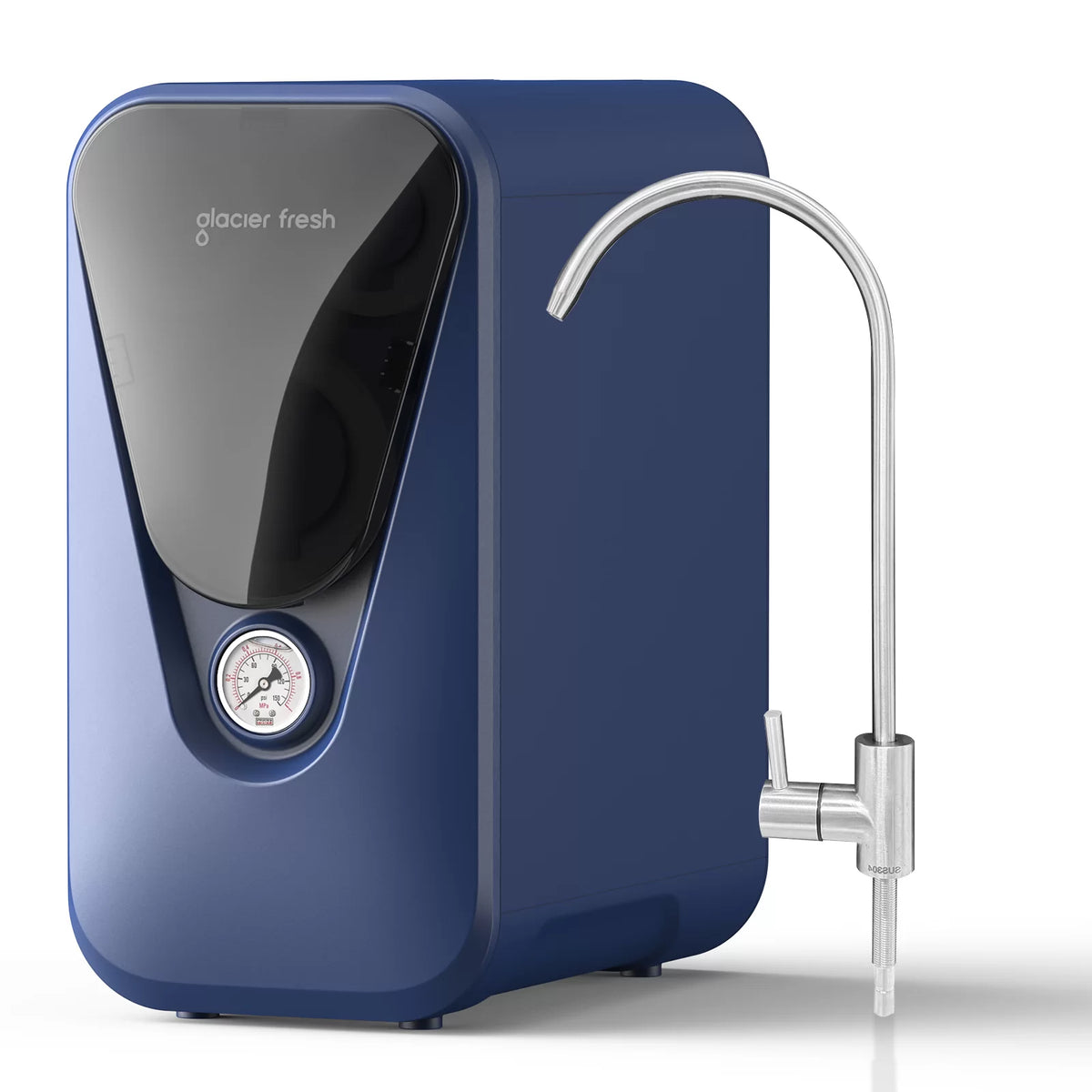
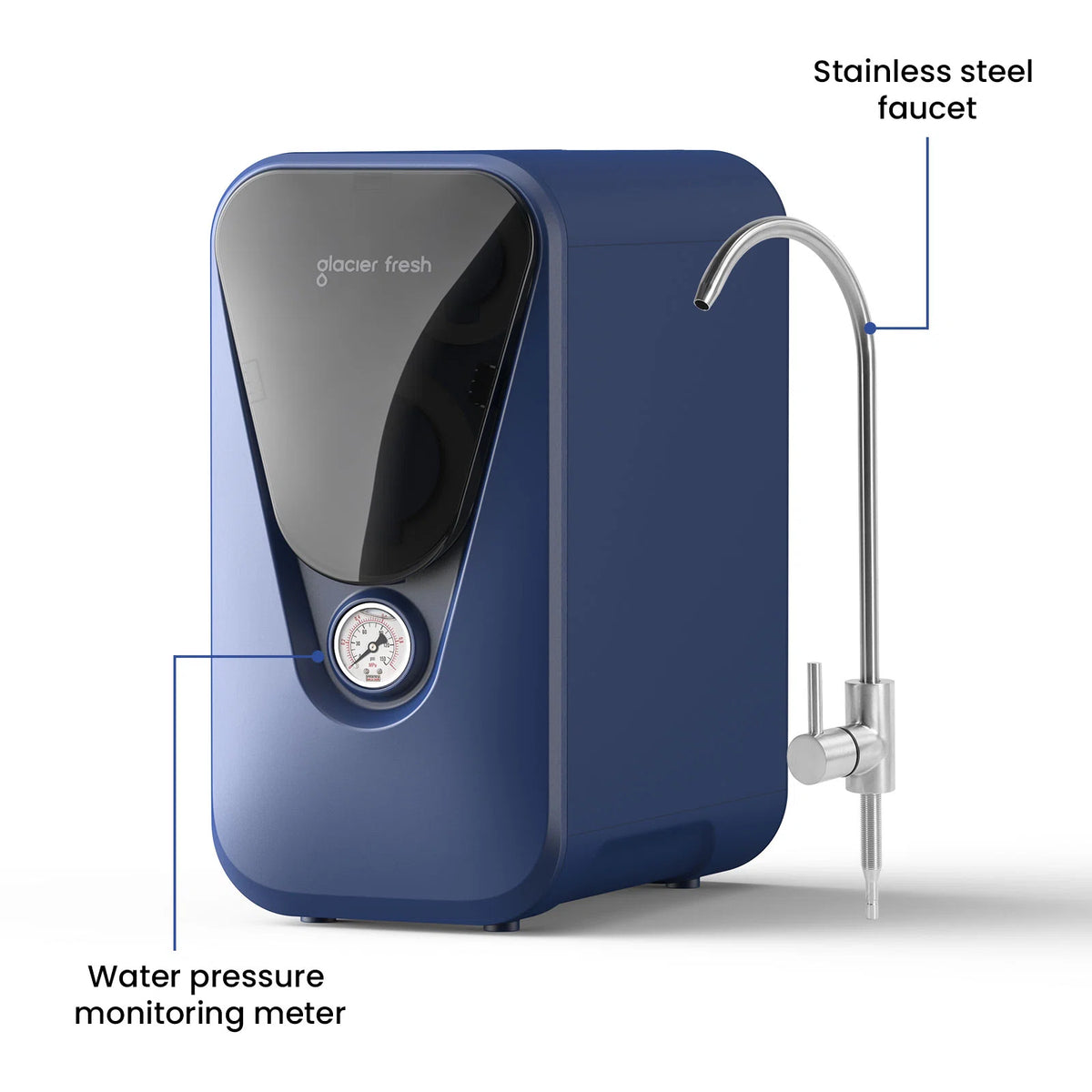
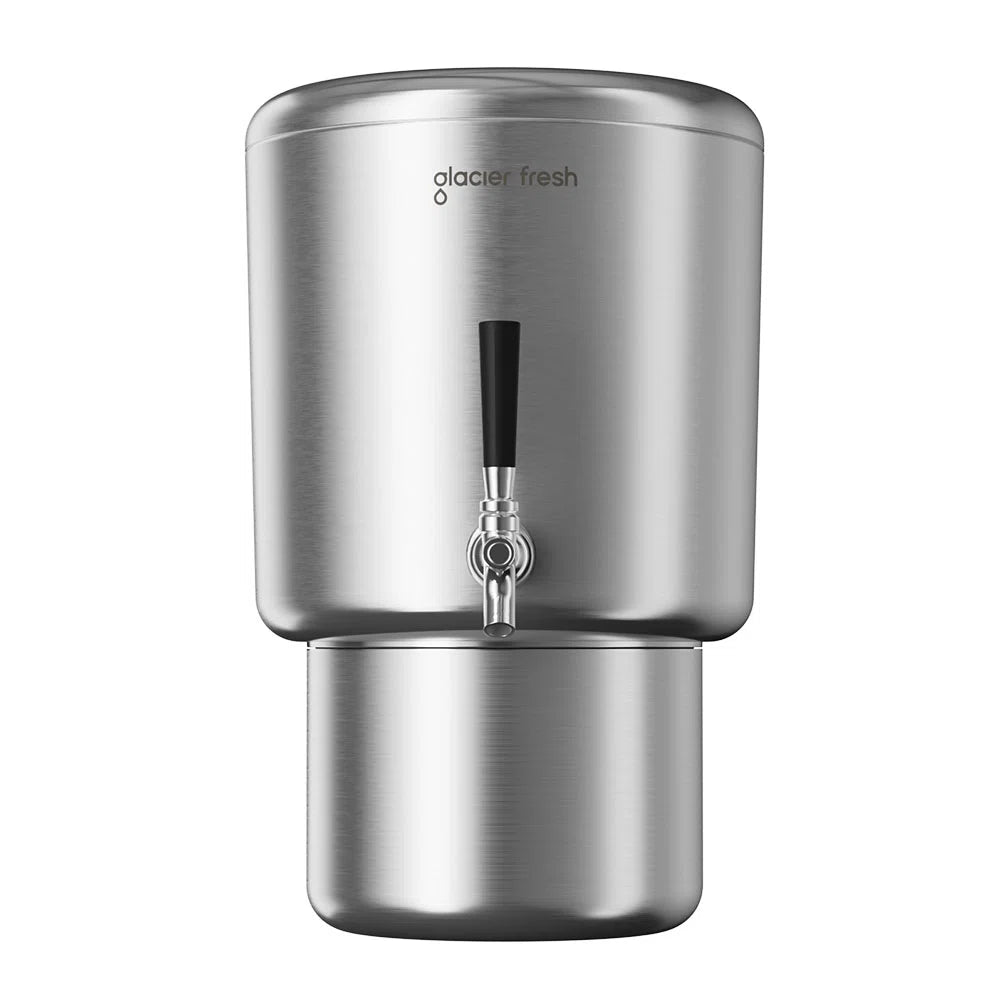
🏆 Choosing Glacier Fresh RO System when you: Chasing the lower price but with the high performance. No drilling required, power-free, save space, drain ratio 3:1, 800 GPD. (Recommend Model: U03)
🏆 Choosing Waterdrop RO system when you: Seeking smart technology and with a generous budget. Real-time TDS display, filter life monitoring, and high flow rate. (Recommend Model: G3P600)
Key Technical Specification Comparison
For this feature comparison, we’ll be looking at the two brands’ most representative RO system models: the Glacier Fresh U03 and the Waterdrop G3P600. To learn more about the brands, models, and related information, please visit the official website.
| Specification | Glacier Fresh U03 | Waterdrop G3P600 |
|---|---|---|
| System Type | Tank-Inside Under-Sink RO System | Tankless Under-Sink RO System |
| Rated Capacity | 800 GPD | 600 GPD |
| Filtration Stages | 5-Stage | 8-Stage |
| Pure-to-Darin Ratio | 3:1 | 2:1 |
| Power Requirement | No Power Required (Water-Driven) | Requires Outlet |
| Pump Noise | Zero Noise (No Electric Pump) | Low Electric Pump Hum (<65 |
| Smart Monitoring | Standard Faucet | Smart Faucet with Live TDS & Filter Indicators |
| Starting Price | $209 ~ $249 | $439 ~ $540 |
An In-Depth Comparison of Five Key Features
When purchasing a reverse osmosis (RO) water purification system, there are five key points we must consider. Since water purifiers are items we use frequently in our daily lives, we should not only consider their features and purchase price but also their maintenance costs.
1. Filtration & Water Efficiency
Filtration Quality: Both systems feature 0.0001-micron RO membranes capable of reducing up to 99% of contaminants, including heavy metals (lead, arsenic), PFAS, microplastics, and chlorine. The Waterdrop G3P600 utilizes an 8-stage composite structure across 3 physical cartridges, whereas the Glacier Fresh U03 uses a 5-stage setup featuring a 16-layer rolled RO membrane.
Pure-to-Drain Ratio
- Glacier Fresh U03 leads in water conservation with a 3:1 pure-to-drain ratio, yielding 3 gallons of purified water for every 1 gallon sent down the drain.
- Waterdrop G3P600 operates at a 2:1 ratio, which is still efficient compared to traditional RO systems (often 1:3 or 1:4), but wastes slightly more water than the U03.
2. Daily User Experience & Faucet Tech
Waterdrop G3P600 (Smart Control): Comes with a dedicated smart screen faucet. The digital display shows live Total Dissolved Solids (TDS) levels every time you turn on the tap and alerts you with color-coded light rings when filters need replacing.
Glacier Fresh U03 (High Flow & Simplicity): Delivers a higher rated output of 800 GPD (dispensing up to 0.6 GPM), meaning it fills cups slightly faster. However, it relies on a clean, traditional mechanical faucet without real-time digital TDS screen metrics.
3. Power, Noise & Under-Sink Mechanics
Electrical Needs:
- Glacier Fresh U03 is non-electric, operating solely on incoming tap water pressure. It will continue to dispense clean water even during power outages and requires zero electrical wiring under your sink.
- Waterdrop G3P600 requires an under-sink wall socket to run its internal booster pump. If your home loses power, the unit will not dispense water.
Operating Noise: Because the Waterdrop uses a booster pump to pressurize the system, it emits a low hum (under 65 dB) during operation. The Glacier Fresh U03 is virtually silent.
4. Long-Term Maintenance & Replacement Costs
Initial Cost: The Glacier Fresh U03 is considerably more budget-friendly up front, retailing around $210–$250 compared to Waterdrop’s standard price tier of $450–$540.
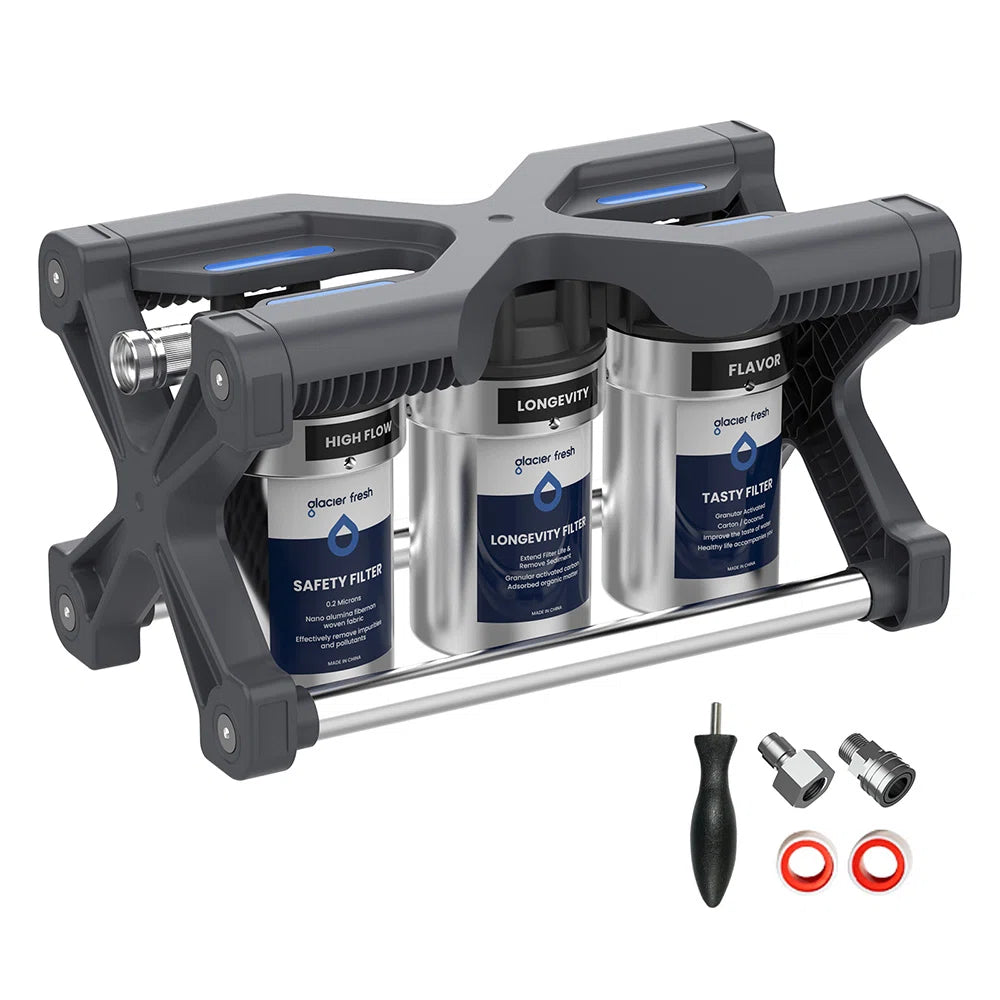
Filter Swapping: Both systems feature quick-twist cartridge designs that can be replaced in seconds without turning off main water valves or using specialized tools.
Filter Replacement Expense: Glacier Fresh replacement sets generally carry a lower annual maintenance cost, while Waterdrop replacement filters run slightly higher due to the integrated electronics and multi-stage composite design.
Also Read: Glacier Fresh RO Water System vs. Apec RO System
How Do You Choose in Different Scenarios?

Buy the Glacier Fresh U03 if:
1. You have no under-sink electrical outlet: You want a drill-free, plug-free setup without hiring an electrician.
2. You are looking for maximum value: You prefer lower upfront equipment costs and lower long-term filter replacement expenses.
3. You want maximum water efficiency and quiet performance: You want a 3:1 pure-to-drain efficiency ratio with zero pump noise.
Buy the Waterdrop G3P600 if:
1. You want visibility into your water quality: You want peace of mind by seeing actual TDS numbers on your faucet every morning.
2. You have low incoming home water pressure: The built-in electric pump ensures full water pressure out of the tap even if your municipal supply pressure is weak.
3. You already have a power outlet installed under your sink.
Conclusion
Overall, the Waterdrop and Glacier Fresh RO systems have different focuses. Waterdrop emphasizes smart interaction and water quality testing, while Glacier Fresh has gained more user support for its value for money, as well as its convenience—it operates silently and requires no electricity.
Before making a purchase, we recommend checking whether there is an outlet near your kitchen sink, whether there is sufficient space, and selecting a model based on your budget.