
Table of Contents:
Why Does Air Make RO Water Look Milky?
What Does the Clear-Glass Check Show?
Why Can Cloudiness Start After a Filter Change?
How Does Proper Flushing Clear Trapped Air?
When Is Cloudy RO Water a Water-Quality Concern?
Conclusion
FAQs
A glass of freshly filtered water can look white or milky even when the system has not produced visible sediment. Tiny air bubbles are one common explanation, particularly after installation, a water shutoff, or a filter change. The useful clue is what happens next: bubbles rise and the appearance clears, while other kinds of haze may linger or behave differently. A clear-glass observation can help narrow down the cause, but it is not a water-quality test. If the appearance persists or comes with unusual color, odor, or a local advisory, investigate further.
Why Does Air Make RO Water Look Milky?

When water leaves a pressurized faucet, the pressure drop can release some dissolved air as tiny bubbles. They scatter light and give the glass a whitish cast. A filter change or opened housing can also let air into the line, which is why this is often noticed after service. As the bubbles rise and escape, the water should become clearer.
Appearance alone cannot tell you what is in the water. Bubbles, loose particles, and lasting turbidity can look alike at first, so let the sample stand and watch whether the haze changes.
What Does the Clear-Glass Check Show?
Fill a clean, clear glass and leave it on a level surface. Watch for bubbles rising and note whether the haze clears as the sample stands.
Rinse the glass well so soap film does not cloud the sample, and view it against a light background. Check it when poured and again after it has rested; shaking can keep small bubbles suspended. If the issue recurs, a photo taken at a consistent interval may help you explain it to a service provider, though it cannot identify dissolved material or confirm safety.
| Appearance | What You Observe | Possible Explanation | Next Step |
|---|---|---|---|
| Fine white haze clears from the bottom upward | Tiny bubbles rise | Air released after pressure changes | Check startup or flushing directions |
| Visible particles settle | Material moves downward | Sediment or loose filter material | Follow manufacturer flushing guidance |
| Haze remains suspended | Little change while standing | Persistent turbidity or another issue | Contact the supplier or arrange testing |
| Unusual color remains | Sample does not clear like bubbles | Source-water or system condition | Investigate rather than relying on appearance |
The glass check can suggest whether the haze behaves like air or visible particles, but it cannot identify chemicals or microorganisms. Follow any active water advisory even if the sample looks clear.
For a comparison, use a fresh glass for each sample and record how long the clearing takes. Collect source and treated water only from safe, clean sampling points. Differences may help locate where the appearance begins, but a visual check cannot identify a specific contaminant or replace a laboratory test.
Why Can Cloudiness Start After a Filter Change?
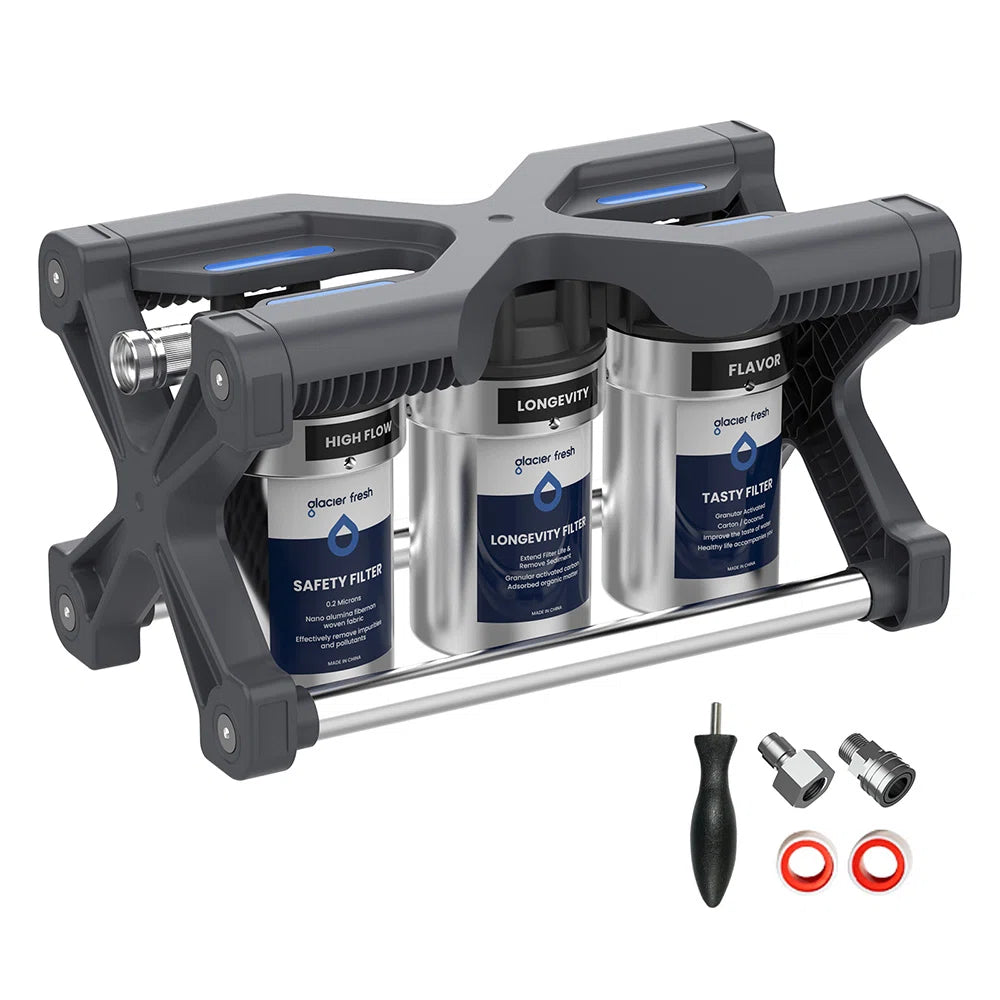
Replacing a cartridge can leave air in an emptied housing or tubing. Some systems also require an initial flush to clear air and manufacturing residue from new filter media. In that period, fine particles and bubbles may appear close together, but they are not the same: bubbles rise, while particles may settle or remain suspended.
After service, confirm that the cartridge lock, O-ring, and housing are fitted as shown in the manual before turning the water back on. Watch for leaks, then complete the specified flush without cycling the faucet repeatedly. A tank-based system may deliver a different first draw while the tank refills, so judge later samples only after following the unit’s startup steps.
Recall what happened just before the water changed: whether the supply was shut off, a housing opened, or the faucet sputtered on restart. That timing can connect the symptom to the service work. If the cloudiness began during normal use, look for a leak, interrupted supply, or another cause listed in the system’s troubleshooting instructions.
How Does Proper Flushing Clear Trapped Air?

Use the startup or replacement procedure for the exact RO model and cartridge set. In general, confirm the cartridge is seated and oriented as directed, open the supply, flush for the specified volume or time, then observe a fresh glass. The required amount differs by system, so do not substitute a generic number of gallons or minutes for the manual.
Stop once the model’s specified flush is complete; running water longer without a change may waste water and leave an installation issue unresolved. If the haze remains, compare other taps and consider whether the source water has changed. Note the service date, cartridge model, and timing of the symptom. A consistent photo can also help support staff determine whether the effect is limited to startup or keeps returning.
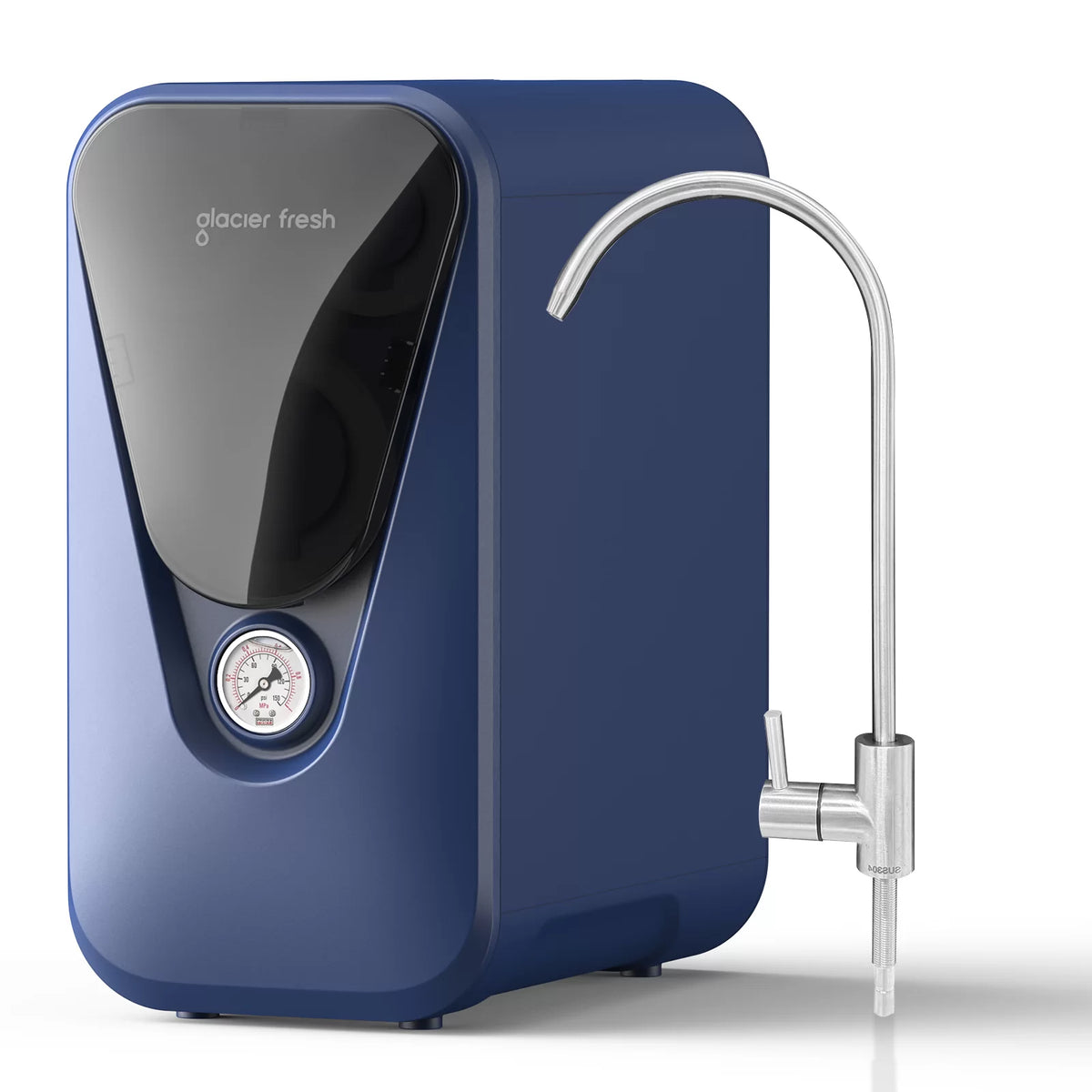
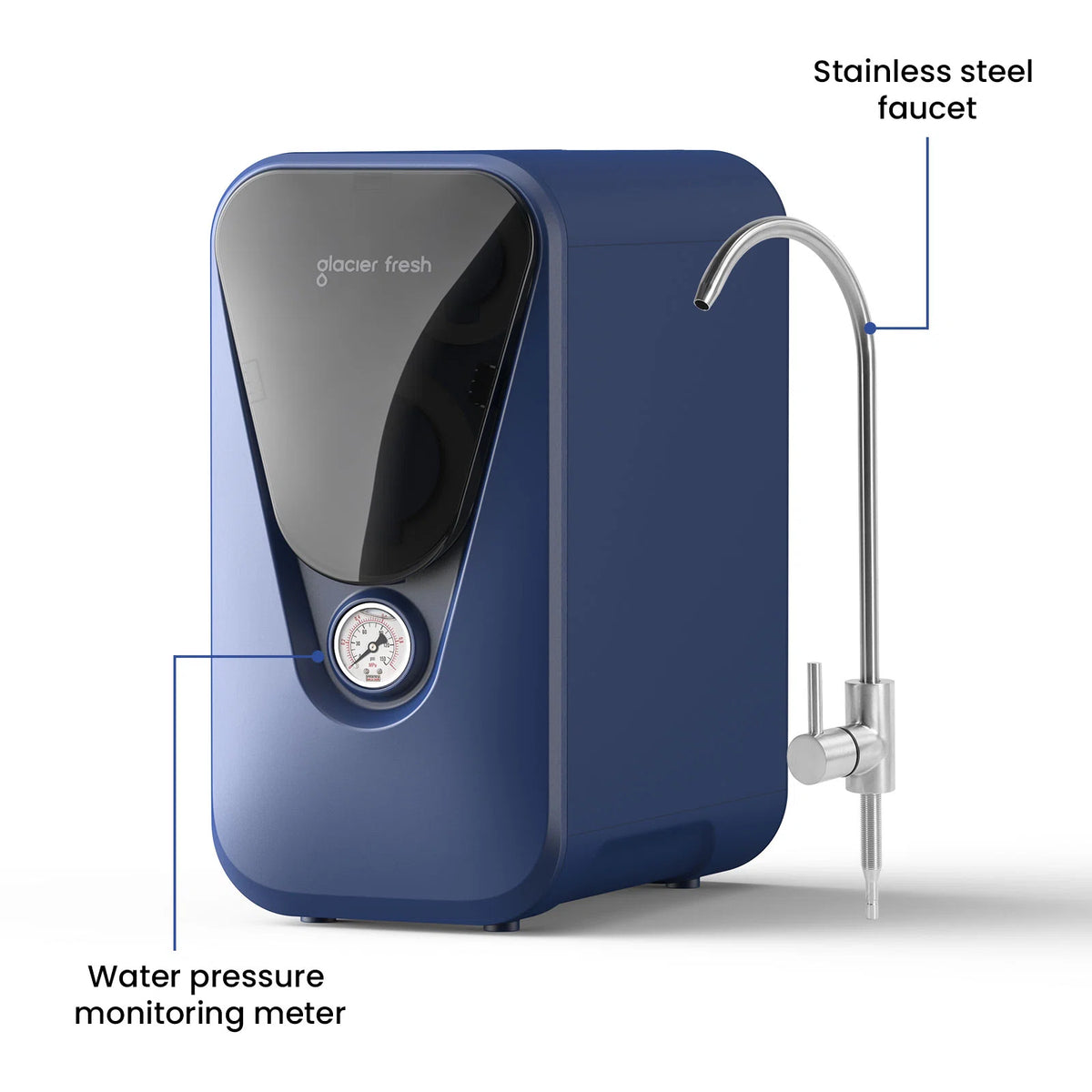
For a GlacierFresh U03, follow the instructions supplied for the installed version when starting the system or changing filters. Do not open a pressurized housing or remove tubing as an ordinary flushing step. If the appearance returns after the prescribed flush, check the supply and installation for recurring air entry or contact support before replacing cartridges again.
For a household replacing a tank-based setup, the U03 TankInside design integrates storage into the system and avoids a separate bulky tank. The layout is different, but bubbles can still appear briefly after installation or a cartridge change. Check the water connection and installation requirements before choosing an upgrade.
When Is Cloudy RO Water a Water-Quality Concern?
A haze that clears as bubbles rise, especially immediately after service, differs from discoloration or turbidity that remains. Persistent particles, unusual color or odor, a change affecting every tap, or a local drinking-water advisory deserves more attention. Contact the supplier if the problem may be in the source, or use appropriate testing when the water needs evaluation.
Check whether the appearance is limited to the RO faucet or present at other taps. If only the treated-water outlet is affected, review that installation and its dedicated line; a change throughout the home may originate in the incoming supply or recent plumbing work. Follow any boil-water notice even when the water looks clear. When the cause remains uncertain, ask the local utility or a certified laboratory what testing is appropriate.
Neither a TDS reading nor clear appearance establishes that water is safe. A TDS meter does not test for every contaminant, and visual inspection cannot rule out microorganisms or chemicals. When the cause is unclear, consult the system documentation and arrange appropriate testing instead of relying on repeated flushing.
When you contact a utility, installer, or laboratory, note which taps are affected, when the change started, any recent plumbing or filter work, and whether the sample clears while standing. This gives them a clearer starting point for investigation. If the water develops a sudden color or odor, pause using it for drinking until you understand the cause and follow local health guidance.
Conclusion
Cloudiness that clears as bubbles rise can have a different cause from haze or discoloration that remains. Note whether the change followed filter service, complete the system’s specified flush, and investigate persistent changes or any issue covered by a water advisory.
FAQs
Q1: Does an air-gap RO faucet add air to drinking water?
An air gap separates the drain connection to help prevent backflow. It is not designed to inject air into the treated-water stream. Microbubbles in a glass are associated with pressure changes in the water path, not the air gap’s drain function.
Q2: Can I connect an RO system to the hot-water supply?
Use only the feed-water temperature range specified for the exact system. Hot water can exceed that range and damage components. The permitted inlet conditions come from product documentation, not from how the filtered water looks.
Q3: Why can RO water taste flat?
Reverse osmosis reduces dissolved minerals that can contribute to taste, so the result may taste different from the source water. A remineralization stage changes the mineral composition after RO treatment. A sudden or unusual taste change should be assessed alongside the source water and system condition.
References
North Dakota State University Extension — Filtration: Sediment, Activated Carbon, and Mixed Media
Centers for Disease Control and Prevention — About Choosing Home Water Filters
https://www.cdc.gov/drinking-water/prevention/about-choosing-home-water-filters.html
Centers for Disease Control and Prevention — Safe Water Storage
https://www.cdc.gov/global-water-sanitation-hygiene/about/about-safe-water-storage.html
U.S. Geological Survey — Why Does My Drinking Water Look Cloudy Sometimes?
https://www.usgs.gov/faqs/why-does-my-drinking-water-look-cloudy-sometimes?items_per_page=6&page=1
CDC — Drinking Water Advisories: An Overview
https://www.cdc.gov/water-emergency/about/drinking-water-advisories-an-overview.html
CDC — About Home Water Treatment Systems
https://www.cdc.gov/drinking-water/about/about-home-water-treatment-systems.html