
Table of Contents:
What is a nanofiber membrane?
How are nanofiber membranes made?
Pore size and the numbers that matter
How do nanofiber membranes remove contaminants?
What nanofiber membranes can remove?
Nanofiber membrane vs. traditional filters
Key benefits of nanofiber membranes
Who should consider using nanofiber membranes?
How to evaluate nanofiber-based filters on the market
FAQs
Conclusion
Clean, safe drinking water has never been more important. From microplastics to bacteria to fine sediments, today’s water can contain contaminants that traditional filters sometimes miss. That’s why many modern filtration systems are turning to nanofiber membrane—a next-generation technology known for powerful filtration and fast flow.
This article explains what nanofiber membranes are, how they’re made, how they perform (with data from peer-reviewed work), how they compare to other filters like reverse osmosis (RO), and when they’re the right choice.
What is a nanofiber membrane?

A nanofiber membrane is a filtration layer made from extremely thin polymer fibers (often tens to a few hundred nanometers in diameter) arranged into a porous mat. That mat acts like a microscopic net — small pores and large surface area let water pass quickly while trapping very small particles, bacteria, and sometimes even virus-containing aerosols when designed for that purpose.
How are nanofiber membranes made?
The most common manufacturing method is electrospinning. In electrospinning, a liquid polymer solution is pulled into fine threads by an electric field; the threads solidify into fibers that form a thin, nonwoven web. The process can produce very uniform fibers in the 10s–100s nm range, and by tuning the polymer, solution, and process settings, manufacturers control pore size, thickness, and performance.
Pore size and the numbers that matter
Pore size determines what the membrane can block. Electrospun nanofiber membranes are typically engineered with pore sizes of about 0.1–1.0 micrometers (μm), depending on application and fiber diameter; many water-treatment nanofiber membranes target pores ~0.2 μm to block bacteria and microplastics while maintaining useful flow. These ranges are widely reported in the nanofiber literature.
A practical data point from filtration performance studies: electrospun nanofiber membranes with fiber diameters ~100 nm have been shown to reject more than 90% of 0.2 µm particles in microfiltration tests — a useful benchmark when evaluating product claims.
How do nanofiber membranes remove contaminants?

Nanofiber membranes work via a combination of mechanisms:
- Size exclusion (physical trapping): particles larger than the membrane’s effective pore size get retained.
- High surface-area interception: the large surface area of nanofibers increases the likelihood that particles will collide with and stick to fibers.
- Electrostatic attraction (in some designs): charged fibers attract oppositely charged particles (helpful for very small colloids).
- Functional coatings: membranes can be modified with antimicrobial substances or adsorption layers to add chemical removal or kill microbes.
These mechanisms explain why nanofiber membranes can achieve high removal efficiency while maintaining high flux (faster flow) compared with dense, tortuous membranes that rely solely on diffusion.
What nanofiber membranes can remove?
Depending on pore size and any added layers, nanofiber membranes can remove or significantly reduce:
- Suspended solids, sand, silt, rust.
- Microplastics and nanoplastics (particles down to sub-micron sizes).
- Bacteria and many protozoa (when pore size ≤ ~0.2 µm).
- Some virus-containing particles and aerosolized virus particles (with specialized designs/coatings).
- Larger organic particles and some particulates that would otherwise pass standard sediment filters.
Broader contaminant removal (chlorine, dissolved heavy metals, PFAS, salts) typically requires additional stages such as activated carbon, ion exchange, or under sink reverse osmosis system. Nanofiber membranes are often used as part of multi-stage systems to give both particulate/microbial protection and good taste/chemistry control.
Nanofiber membrane vs. traditional filters

To truly understand why nanofiber membranes stand out, it helps to compare them with other common filtration types.
1: Nanofiber vs. activated carbon filters
Activated carbon filters excel at removing chlorine, taste, and many organic molecules, but not ultra-fine particles. Nanofiber membranes, on the other hand, capture microscopic contaminants that carbon filters cannot. Therefore, combining AC and nanofiber layers provides both particulate removal and taste/chemical control — a common, effective architecture in high-performance point-of-use systems.
2: Nabofiber vs. reverse osmosis (RO) systems
RO removes dissolved salts and very small dissolved molecules (TDS), delivering near-complete desalination in severe cases — but RO often wastes water. The U.S. EPA notes that typical point-of-use RO systems can send 4–5 gallons to the drain for every 1 gallon of treated water, though modern WaterSense-certified units can be much more efficient.
Nanofiber membranes don’t remove dissolved salts the way RO does, but they can preserve beneficial minerals, operate with no electricity or pressure tanks, and avoid that water-waste tradeoff in many household use-cases.
For many consumers, a nanofiber-based multi-stage system (nanofiber + carbon) strikes a practical balance between water conservation and particle/microbe safety.
3: Nanofiber vs. standard sediment filters
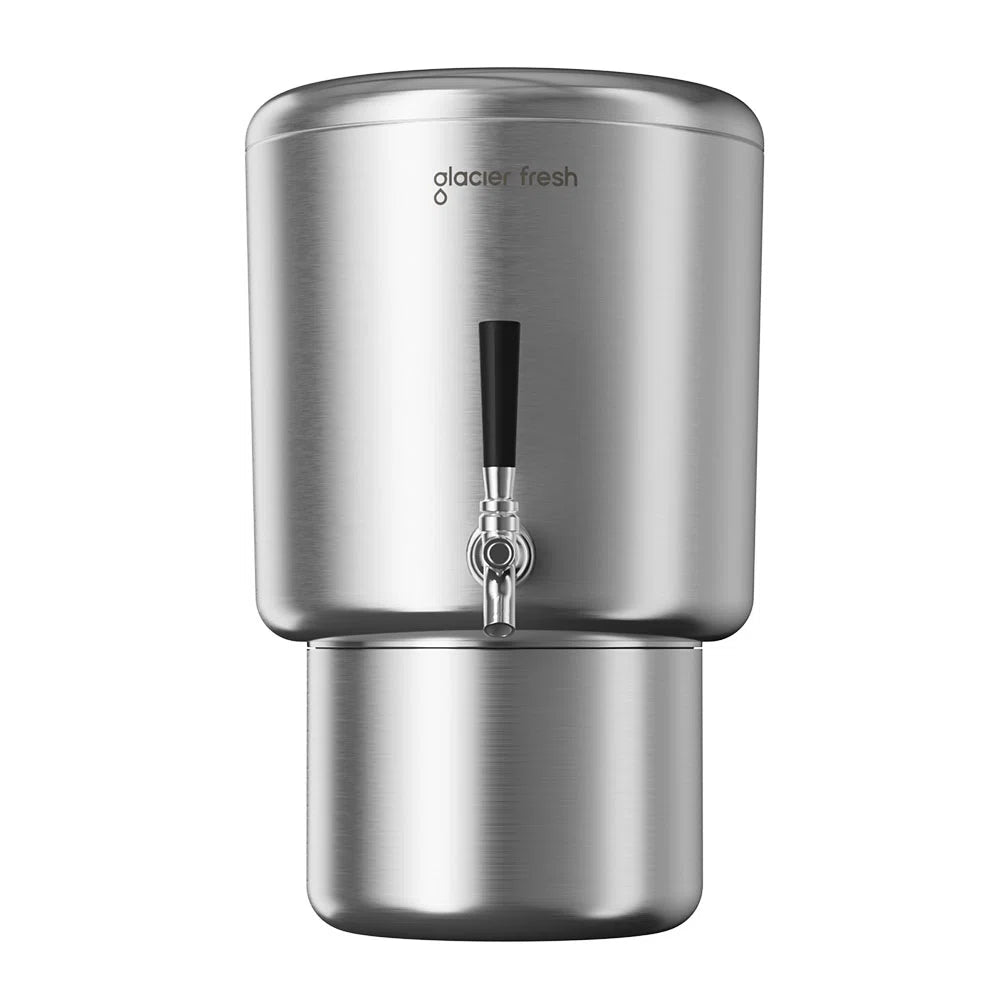
Standard sediment filters typically remove larger particles (tens of microns and up). Nanofiber membranes like countertop water filter system target sub-micron particles, microplastics, and bacteria that sediment filters miss. Nanofiber membranes offer precision filtration far beyond that of standard sediment filters.
Key benefits of nanofiber membranes
1: High filtration efficiency: captures particles down to the nanoscale.
2: Fast flow rate: water flows easily thanks to the membrane`s high permeability.
3: Energy efficient: works without pumps, electricity, or pressure tanks.
4: Longer filter lifespan: nanofibers resist clogging and maintain performance over time.
5: Lightweight and compact: great for modern home systems, outdoor gear, and portable filters.
6: Safe and stable: made from materials tested for food-grade or drinking-water safety.
Who should consider using nanofiber membranes?

Nanofiber-based filters are especially good for:
- Families want protection from microplastics.
- People who dislike slow RO flow rates.
- Apartment dwellers need compact systems.
- Outdoor enthusiasts (RV, camping, hiking).
- Anyone wanting improved filtration without complicated installation.
- Users who want a modern, energy-efficient solution.
If your water isn’t extremely high in dissolved solids but you want cleaner, safer water, nanofiber membranes are an excellent choice.
How to evaluate nanofiber-based filters on the market
When choosing a product, look for:
- Stated pore size or particle removal rating (e.g., 0.2 µm).
- Independent test data or third-party certification (NSF/ANSI certifications when applicable).
- Multi-stage designs that combine nanofiber layers with activated carbon or other treatments to handle taste/chemistry.
- Clear maintenance and replacement intervals, and manufacturer lab data for real feed-water scenarios.
FAQs
Are nanofiber membranes safe for drinking water?
Yes. Nanofiber membranes are considered safe as long as they’re manufactured using food-grade polymers and tested under standards such as NSF/ANSI 42, 53, or P231 (depending on claims). Always choose filters from reputable brands that publish lab results or independent testing data.
How long does a nanofiber membrane last?
Lifespan depends on water quality, but most point-of-use nanofiber membranes last 6–12 months under normal household use. Heavy sediment, rust, or microbial load can shorten lifespan because nanofiber webs can clog more quickly than coarse filters.
Can nanofiber membranes remove chemicals like chlorine, PFAs, or heavy metals?
Not by themselves. Nanofiber membranes specialize in physically trapping particles, including bacteria, microplastics, and fine sediments — but dissolved chemicals require other filtration media.
To remove:
- Chlorine / VOCs → Activated Carbon
- PFAS → Activated Carbon or Ion Exchange Resins
- Heavy Metals → RO or specialized adsorption media
Conclusion
Nanofiber membranes represent one of the most exciting advancements in modern water filtration. Their ultra-thin fibers, tiny pore size, and efficient design make them incredibly effective at removing micro-level contaminants—while still keeping a fast, easy water flow.
They’re safe, lightweight, and increasingly used in both home and outdoor water systems. Whether you want to reduce microplastics, improve the quality of your drinking water, or upgrade to a more modern filtration system, nanofiber technology offers a powerful, user-friendly solution.