
Table of Contents:
Why Is Water Filtration Becoming Increasingly Important?
What Water Filtration Should You Choose?
4 Types of Water Filtration Technologies
The Emerging Trends in Water Filtration Technology
Conclusion
FAQs
Water filtration in 2026 is moving toward smarter monitoring, better membranes, lower-energy operation, and more targeted contaminant removal. For homeowners, renters, and RV users, the most practical takeaway is to match the system to the water risk: sediment and chlorine, microbes, heavy metals, PFAS, or dissolved minerals.
In this article, we’ll walk you through the conveniences these new technologies offer and explain how you, as a user, can choose the water purifier that’s right for you.
Why Is Water Filtration Becoming Increasingly Important?

In recent years, a number of emerging contaminants have been entering natural water sources in large quantities. Traditional municipal water treatment plants are primarily designed to remove sediment, bacteria, and residual chlorine. Contaminants such as PFAS and microplastics are difficult to remove using conventional water treatment methods.
Furthermore, as water flows through aging urban pipes or water distribution systems installed decades ago, it is prone to becoming contaminated with lead, rust, copper, and biofilms that grow on the pipe walls. As a result, water filtration technology has become the most critical step in ensuring the safety of household drinking water.
What Water Filtration Should You Choose?
For users looking to choose a water purifier, the primary concerns are usually: "Which technology is best suited to my water quality?" and "How much money or hassle can these new technologies save me?" We have compiled a selection guide to address these two needs.
| Use Case / Water Issue | Primary Need | Recommendation Technology | Products |
|---|---|---|---|
| Municipal Tap Water (Renters / Apartments) | Chlorine, odor, PFAS, and microplastics reduction while retaining beneficial minerals | Activated Carbon + Nanofiber / Ultrafiltration (UF) | Water Filter Pitchers / Faucet-Mounted Filters |
| Older Buildings / Heavy Metal Concerns | Complete removal of lead, arsenic, nitrates, and high TDS | Reverse Osmosis (RO) + Smart TDS Monitoring | Under-Sink RO Systems |
| Well Water / Outdoor / RV & Camping | Microbe sterilization, sediment control, and low energy usage | Sediment Pre-filter + UV Disinfection + Low-Pressure RO | Multi-Stage RV & Outdoor Filtration Systems |
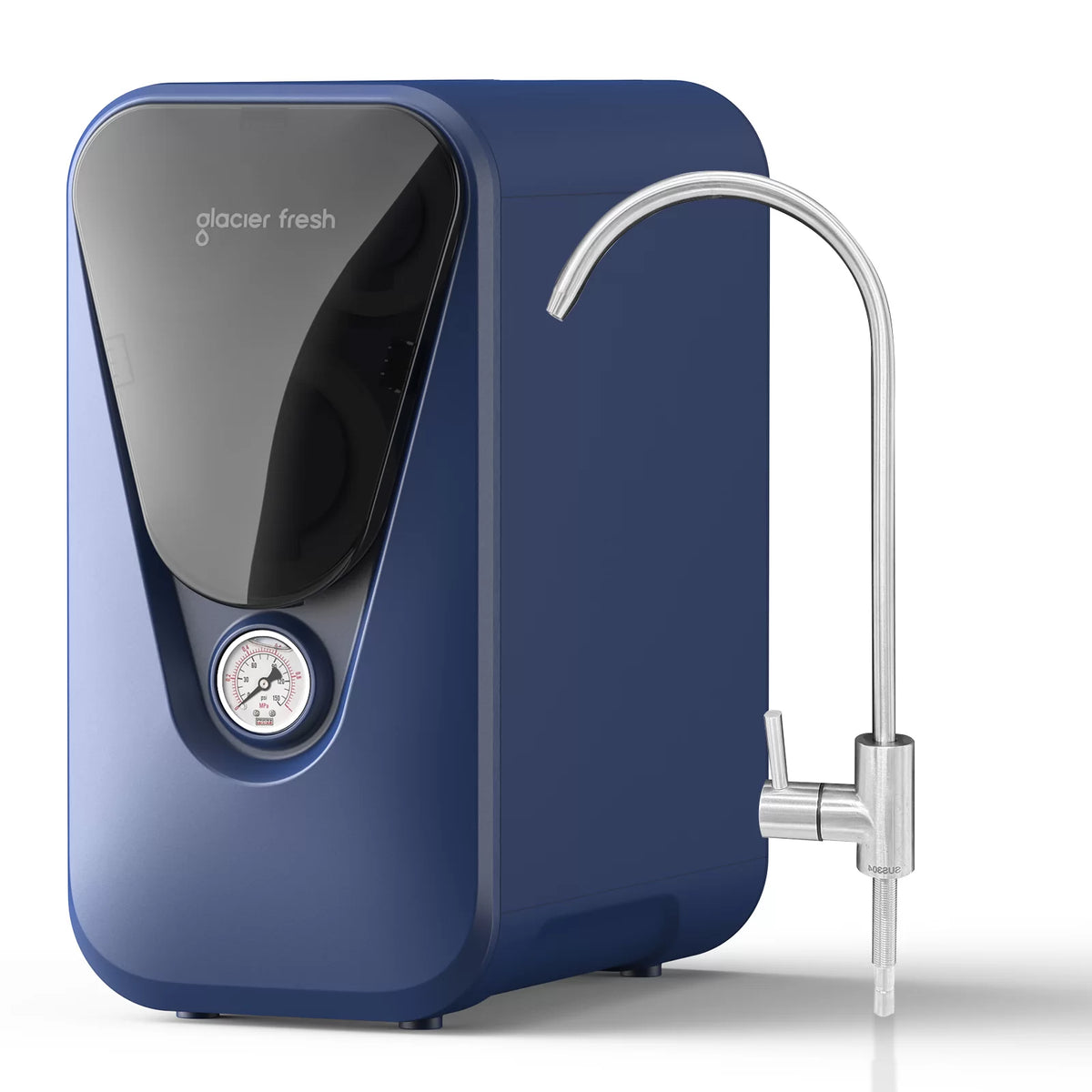
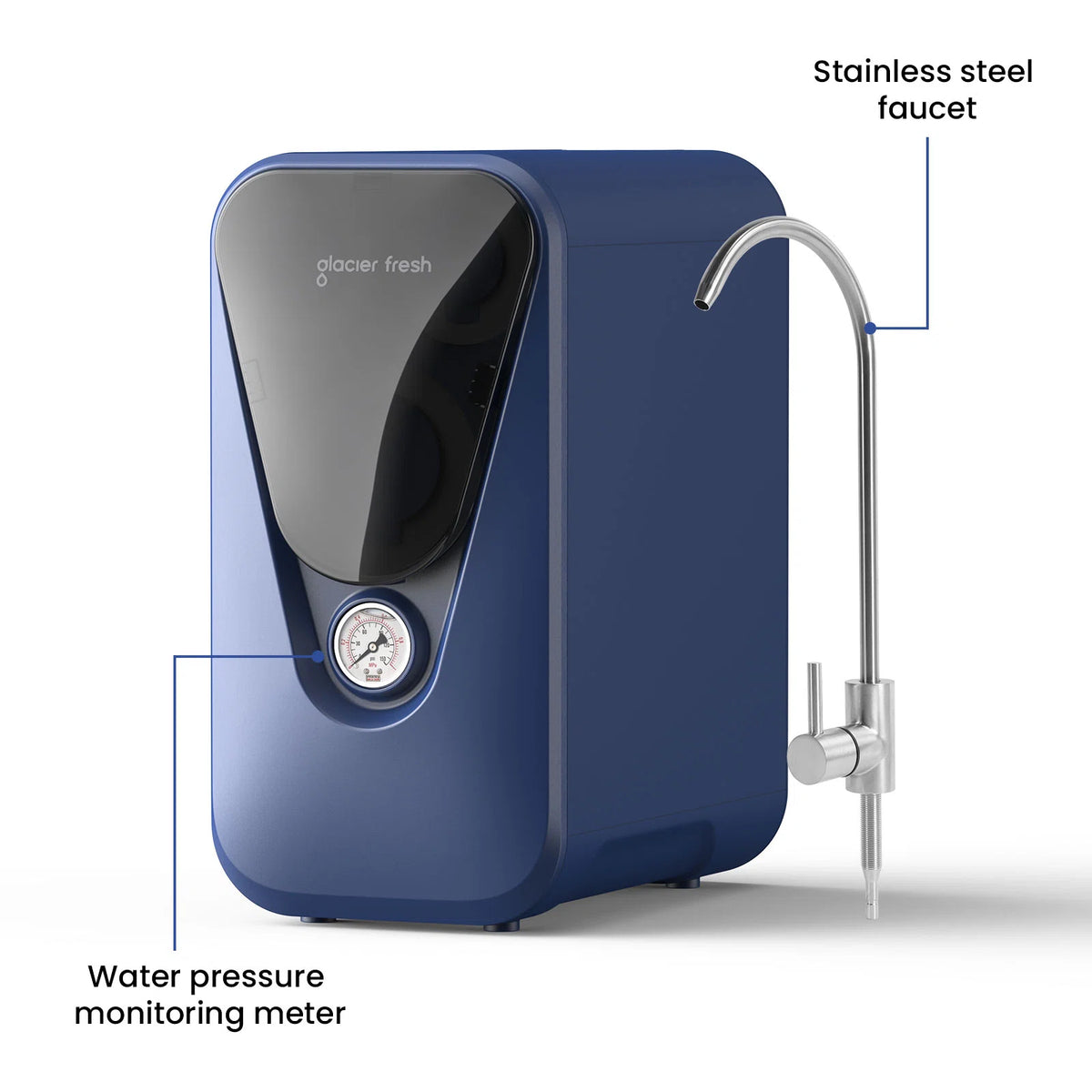
💡Glacier Fresh U03 as a water purifier that utilizes the latest RO (reverse osmosis) membrane filtration technology; it is certified to NSF 53/58 standards and features a 3:1 ratio of purified water to wastewater, significantly reducing water waste.
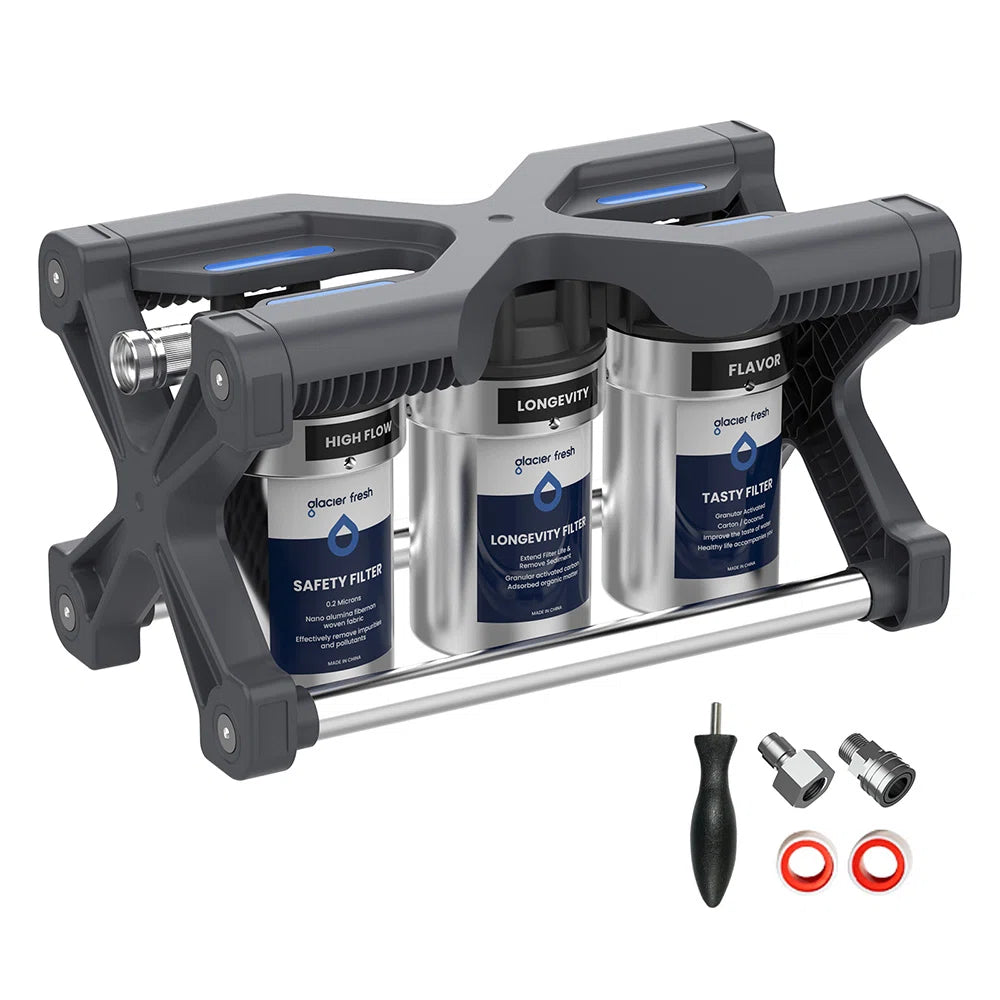
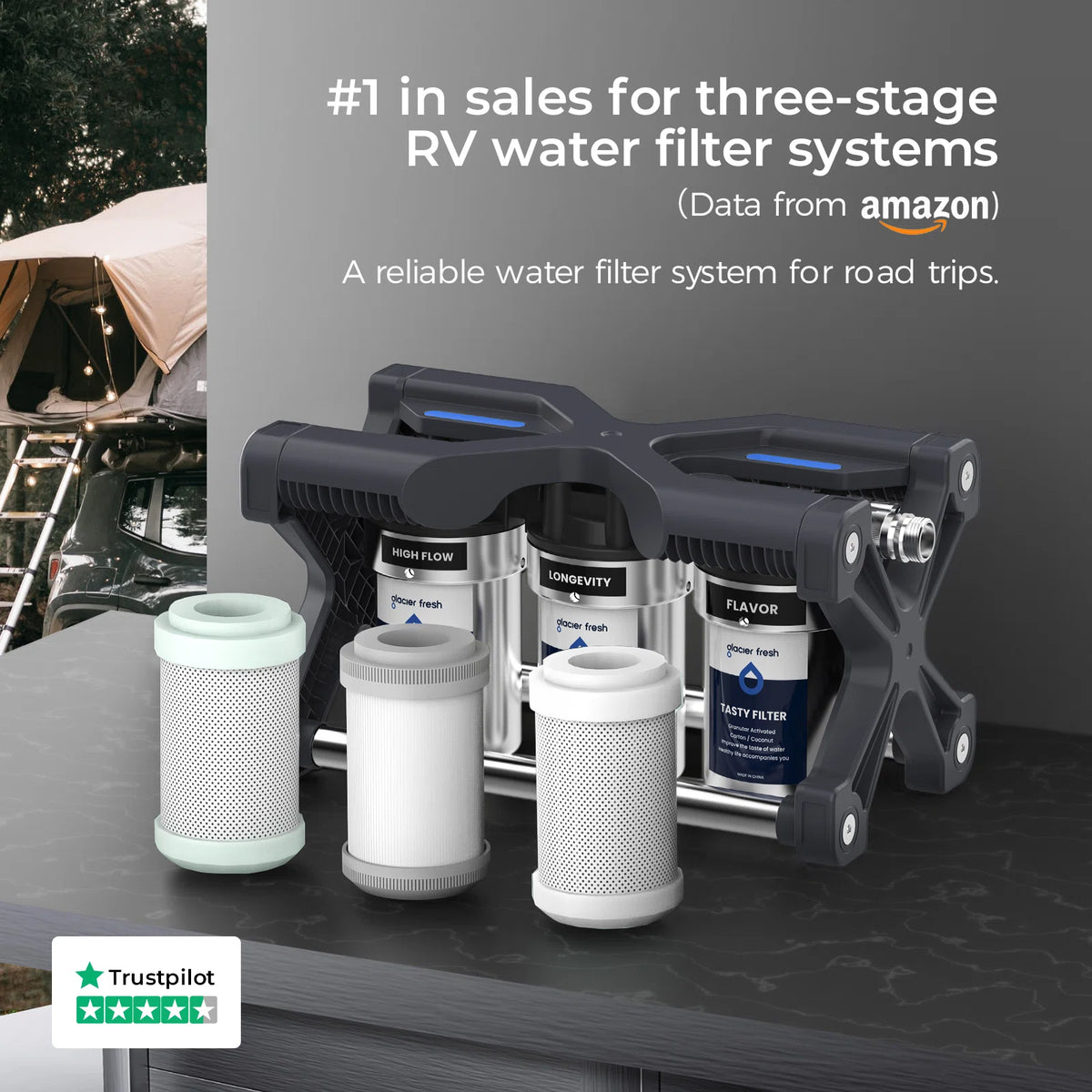
💡Glacier Fresh 3-Stage RV Filtration System is designed specifically for off-grid exploration and the RV lifestyle. Incorporating the latest 2026 low-pressure, high-flow filtration technology, it rapidly removes sediment, odors, and harmful contaminants without the need for a high-power water pump. It offers lower energy consumption, a more compact design, and superior efficiency—ensuring worry-free drinking water for your road trips.
4 Types of Water Filtration Technologies
Physical filtration

Physical filtration removes contaminants by size, flow path, and membrane structure. In modern water filtration systems for homes, physical media are often layered with carbon, ion exchange, or membrane technology to improve both performance and taste.
- Nanofiltration: Uses semi-permeable membranes to reduce selected dissolved ions, hardness minerals, and small organic molecules while allowing some beneficial minerals to pass through.
- Microfiltration: Uses larger membrane pores to reduce sediment, cysts, and suspended solids, making it useful as a pre-filter in multi-stage systems.
- Ultrafiltration: Uses tighter membranes to reduce fine particles, colloids, bacteria, and some viruses, while typically retaining more minerals than reverse osmosis.
- Cross-flow filtration: Keeps water moving across the membrane surface to reduce fouling, support longer operating cycles, and improve system durability.
Biological filtration
To understand biological filtration, start by exploring the role of microorganisms in purifying water. Biological filtration uses controlled microbial activity to break down organic matter, transform nutrients, and stabilize water quality in wastewater treatment, aquaculture, and selected environmental applications.
- Ultrafiltration membranes: Trap microorganisms and larger particles while allowing treated water to pass.
- Smart devices: Monitor biological filtration conditions, including flow, turbidity, and other indicators, so operators can adjust performance quickly.
- Biofilm reactors: Grow beneficial microbial layers that help break down organic matter and remove selected contaminants.
- Biological activated carbon: Combines activated carbon adsorption with microbial activity to improve taste, odor, and organic compound reduction.
Chemical filtration

Chemical filtration uses adsorption, oxidation, ion exchange, or other reactions to capture or transform contaminants that simple screens cannot remove. It is especially important when water contains chlorine, volatile compounds, dissolved metals, or pollutants that require targeted media.
|
Technology |
Description |
Best application |
|
Chemical adsorption |
Activated carbon or specialty media attract and hold pollutants. |
Taste, odor, chlorine, and selected organic compounds |
|
Advanced oxidation |
Oxidants such as ozone or hydrogen peroxide break down certain pollutants. |
Disinfection support and complex organic contaminant reduction |
|
Membrane fouling control |
Pretreatment and maintenance help prevent buildup on membranes. |
RO, nanofiltration, and ultrafiltration reliability |
|
Water desalination |
Membrane separation reduces dissolved salts and minerals. |
Brackish water, high-TDS water, and selected travel or RV uses |
|
Water disinfection |
Chemical or physical processes inactivate microorganisms. |
Drinking water safety where microbial risk is present |
For whole home water filtration systems, chemical filtration is usually part of a larger treatment train rather than a standalone answer. A well-designed system may combine sediment filtration, carbon adsorption, softening, UV, and membrane treatment depending on local water quality.
Ultraviolet radiation technology
Ultraviolet (UV) disinfection uses UV-C light to inactivate bacteria, viruses, and protozoa by damaging their genetic material. It does not add chemicals to the water, which makes it attractive for homes, RVs, and facilities that want microbial control without changing water taste.
UV works best when water is clear and has already passed through sediment or carbon pre-filtration. It should not be treated as a replacement for filters that reduce metals, dissolved solids, PFAS, chlorine, or other chemical contaminants.
The Emerging Trends in Water Filtration Technology
Real-time monitoring and automation
Real-time monitoring is one of the most important innovations in modern filtration because it turns water quality from a periodic check into a continuous operating signal. Sensors can track parameters such as flow rate, turbidity, TDS, pH, pressure drop, and filter life.
- Real-time monitoring helps detect performance changes before water quality noticeably declines.
- Automation reduces manual intervention and supports consistent performance across changing water conditions.
- Data collection helps users understand when a cartridge, membrane, or UV lamp needs service.
- Predictive maintenance helps reduce emergency failures and makes water filtration replacement easier to plan.
Innovative materials and membranes
Innovative filtration materials are improving flow rate, durability, contaminant selectivity, and resistance to fouling. Nanofiber membranes, advanced carbon blocks, ceramic media, and hybrid membrane structures are helping systems deliver better performance in smaller formats.
For compact apartments, countertop units, RVs, and point-of-entry filtration setups, the most useful materials are those that combine high contaminant reduction with simple maintenance and a predictable filter life.
Improved energy efficiency
Energy efficiency is becoming a key differentiator in 2026. Smart pumps, low-pressure membranes, efficient UV lamps, and optimized flow paths allow filtration systems to deliver stronger performance without excessive electricity or water waste.
- Energy-saving controls adjust operation based on actual demand instead of running continuously.
- Solar-ready or low-voltage systems support outdoor, RV, and emergency-use cases.
- More efficient membranes reduce operating pressure and help lower system energy needs.
- Better pre-filtration reduces fouling, protecting pumps, membranes, and downstream components.
Enhanced sensitivity to harmful substances and contaminants
Newer systems are increasingly designed around specific contaminant groups rather than one vague promise of “clean water.” Better sensors, advanced test methods, and specialized filter media help users understand whether a system targets sediment, chlorine, lead, PFAS, microbes, hardness minerals, or dissolved salts.
This trend is especially useful for water filtration systems for homes because the best choice depends on local water quality. A city apartment may prioritize chlorine, taste, and PFAS reduction, while a well-water home may need sediment, iron, hardness, UV, and lab testing before selecting equipment.
Conclusion
Water filtration technology in 2026 is becoming smarter, more compact, and more targeted. The strongest solutions combine proven treatment methods with clear testing, practical maintenance, and realistic filter-life expectations. Whether you are comparing countertop purifiers, RV filters, under-sink systems, or whole-house setups, the right choice begins with the contaminants you need to reduce and the convenience level you need every day.
FAQs
What are the latest innovations in the watertech industry in 2026?
The biggest innovations include real-time sensors, smart filter-life tracking, nanofiber and nanofiltration membranes, lower-energy pumps, UV LED improvements, and predictive maintenance.
What are the best smart water filtration systems, and how do their features and costs compare?
The best smart systems combine certified or lab-tested contaminant reduction with filter-life alerts, flow monitoring, leak detection, app-based reminders, and easy replacement access. Cost depends on whether the system is countertop, under-sink, RO, UV, or whole-house. The most valuable option is the one that reduces the contaminants actually found in your water while keeping replacement costs predictable.
What are the best UV water purifiers for home use, and how do they compare on safety and maintenance?
UV purifiers are best used where microbial risk is a concern, especially with well water or stored water. They compare well on chemical-free disinfection and low daily maintenance, but they require clear pre-filtered water, periodic lamp replacement, sleeve cleaning, and power. UV does not remove lead, PFAS, chlorine, or dissolved minerals by itself.
What are the top-rated electric countertop water purifiers, and how do they compare on speed and filter life?
Electric countertop purifiers are useful for renters, apartments, offices, and small kitchens because they are compact and convenient. Compare them by filtration technology, reservoir size, flow or dispensing speed, cooling or heating features, contaminant testing, and cartridge life. Filter life matters as much as purchase price because replacements determine long-term value.
How should families choose between countertop, under-sink, RV, and whole-house filtration?
Families should start with a water test or local water report, then choose the treatment level. Countertop systems fit convenience and rental situations; under-sink systems fit daily cooking and drinking water; RV systems need portability and source flexibility; whole home water filtration systems are best when the goal is to treat water before it reaches showers, appliances, and multiple taps.