
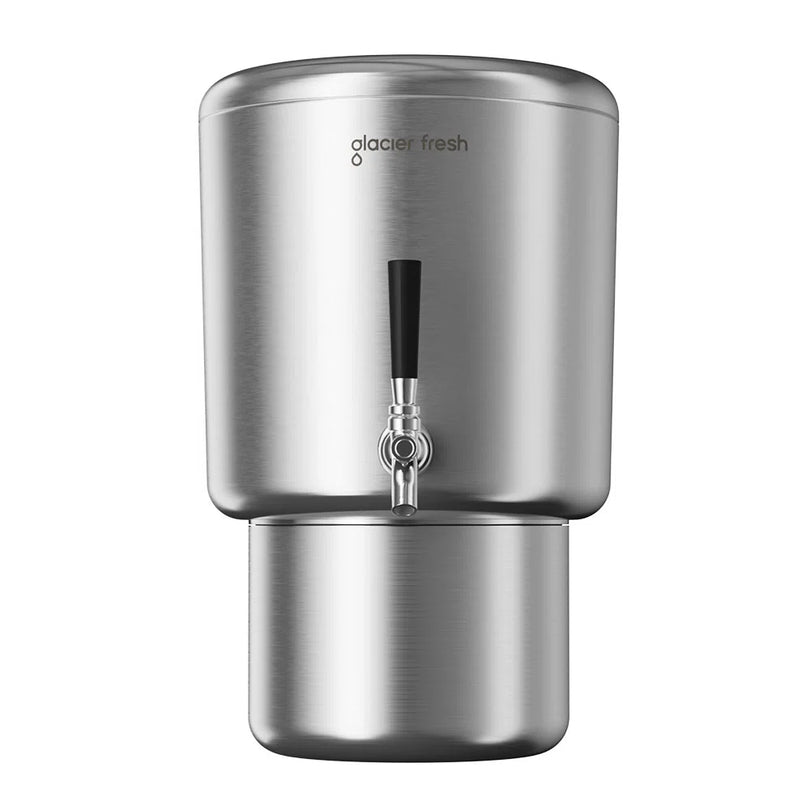
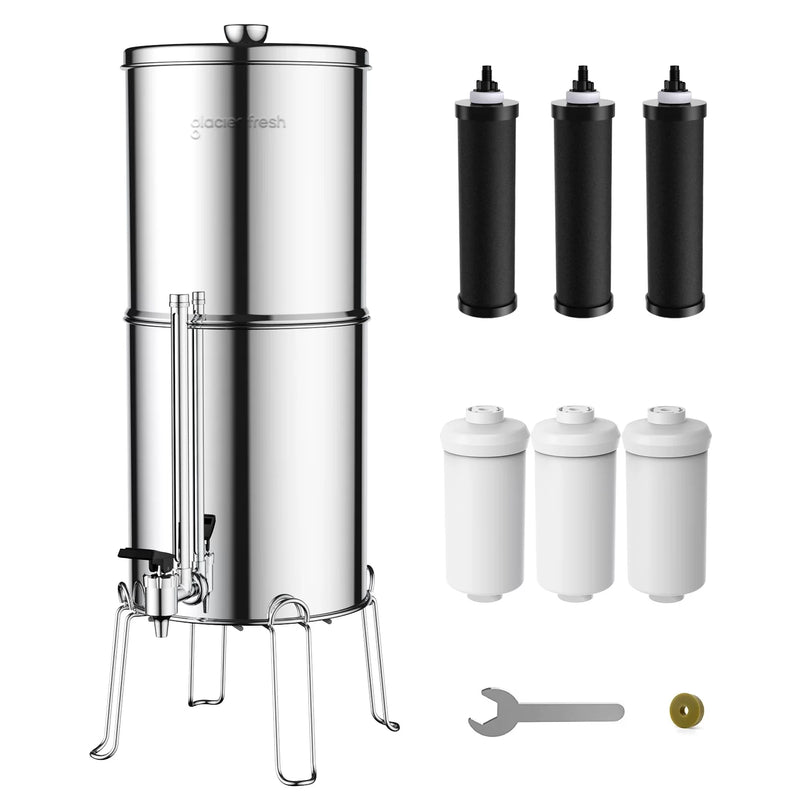
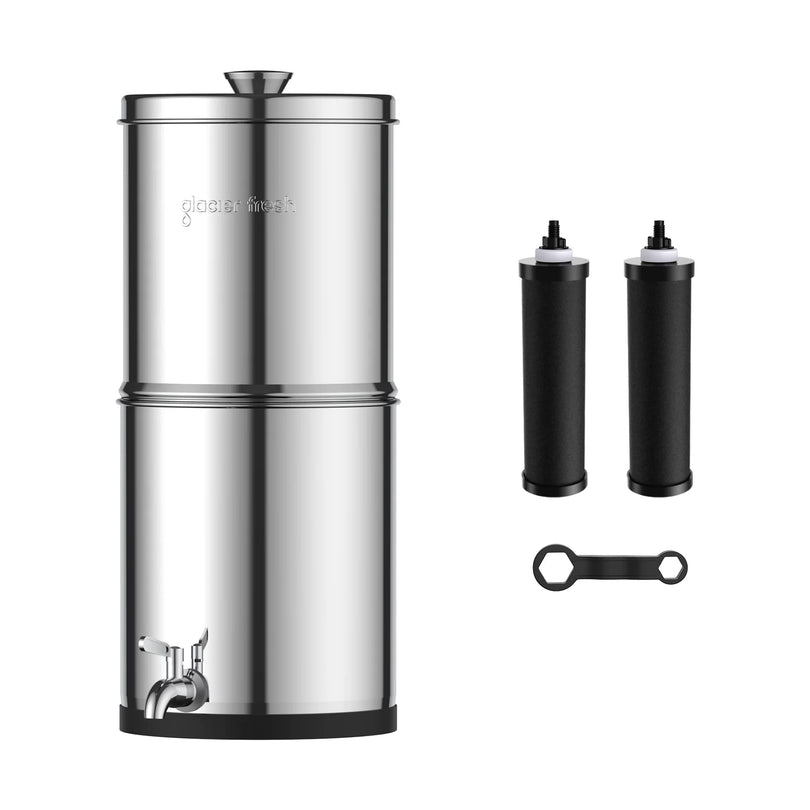
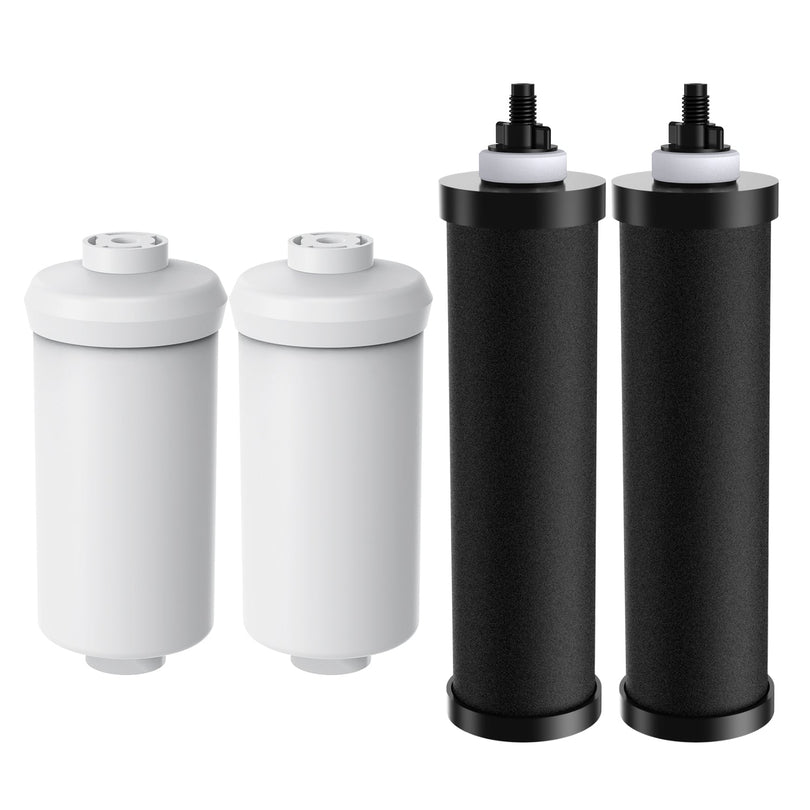

From Glacier to Your Glass
Outdoor Water Filter Systems
Enjoy crisp-tasting water wherever your RV takes you. Upgrade your trip with a camper water filter designed for life on the road.
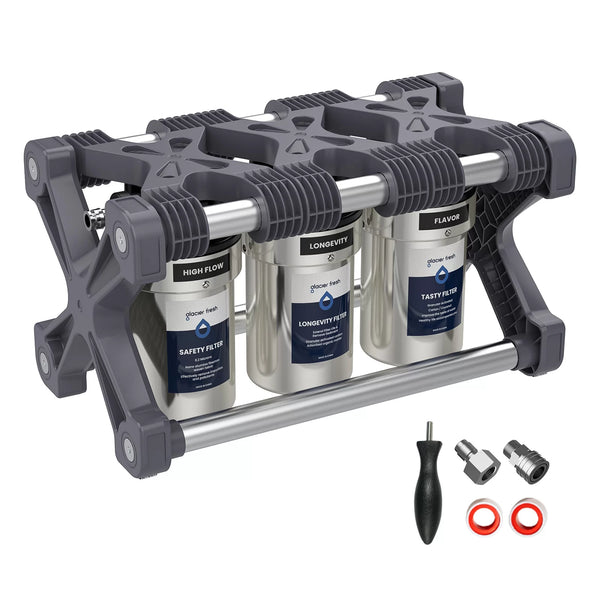
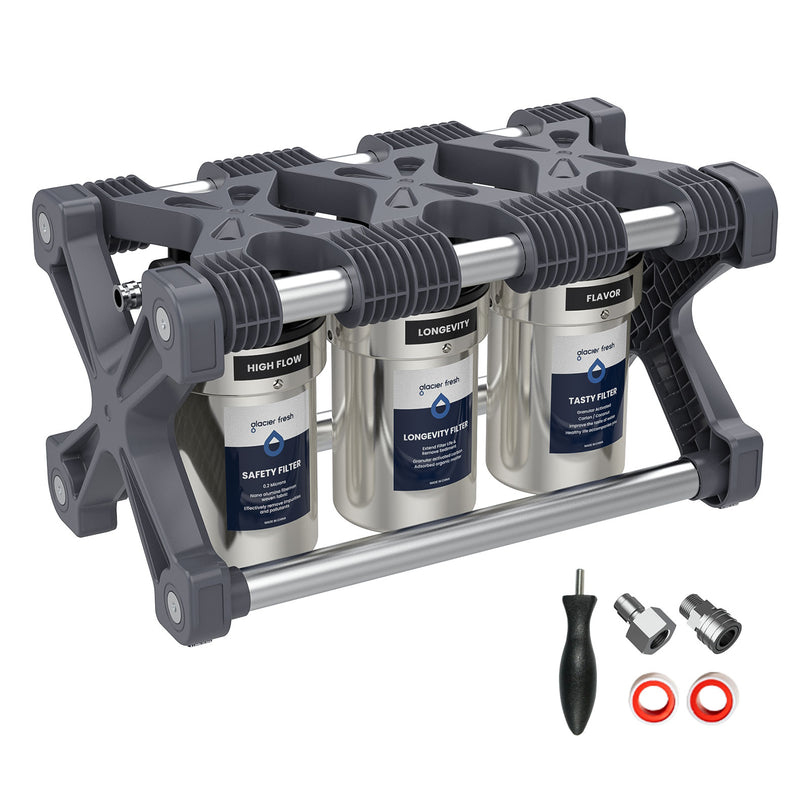
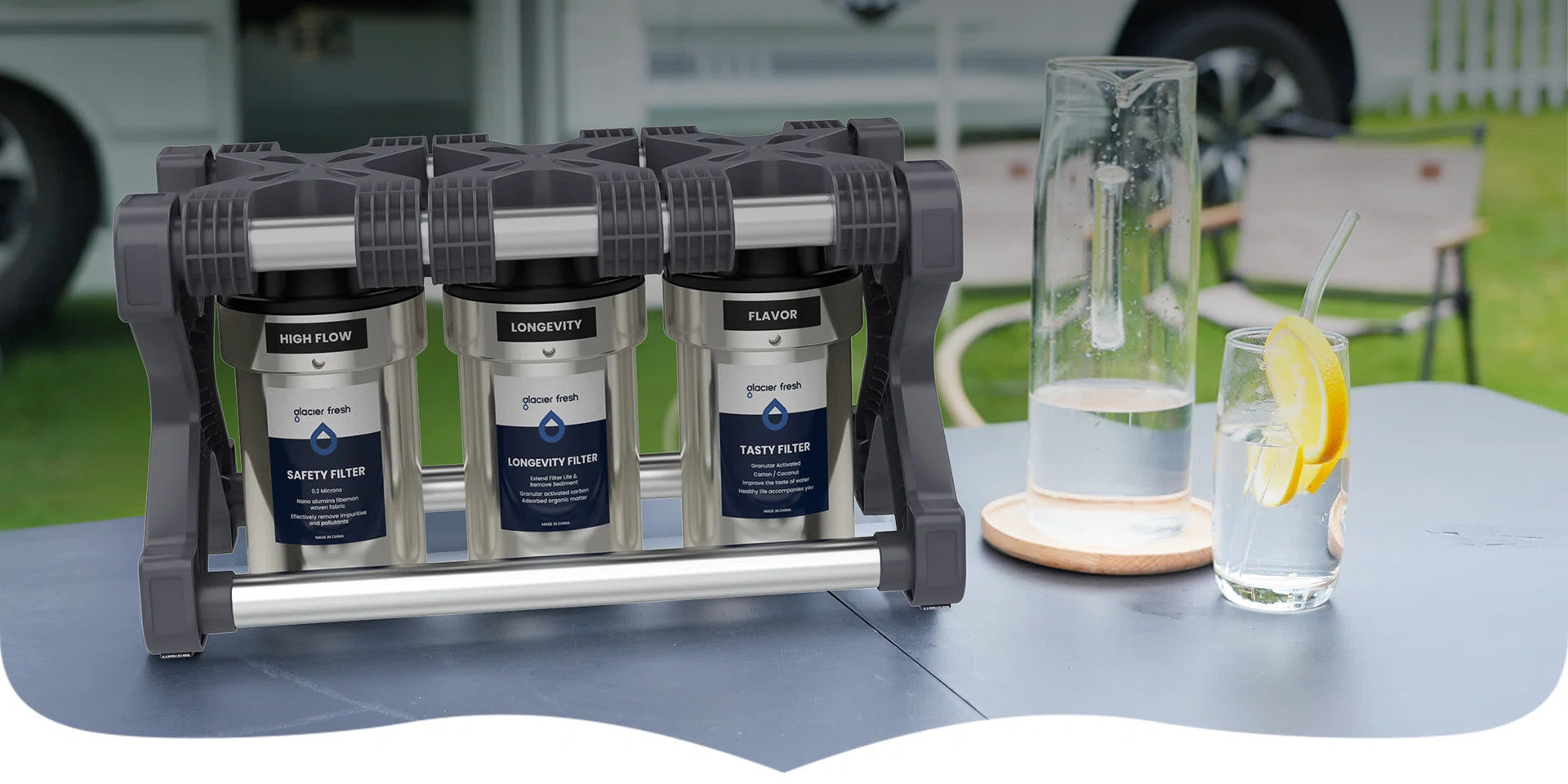
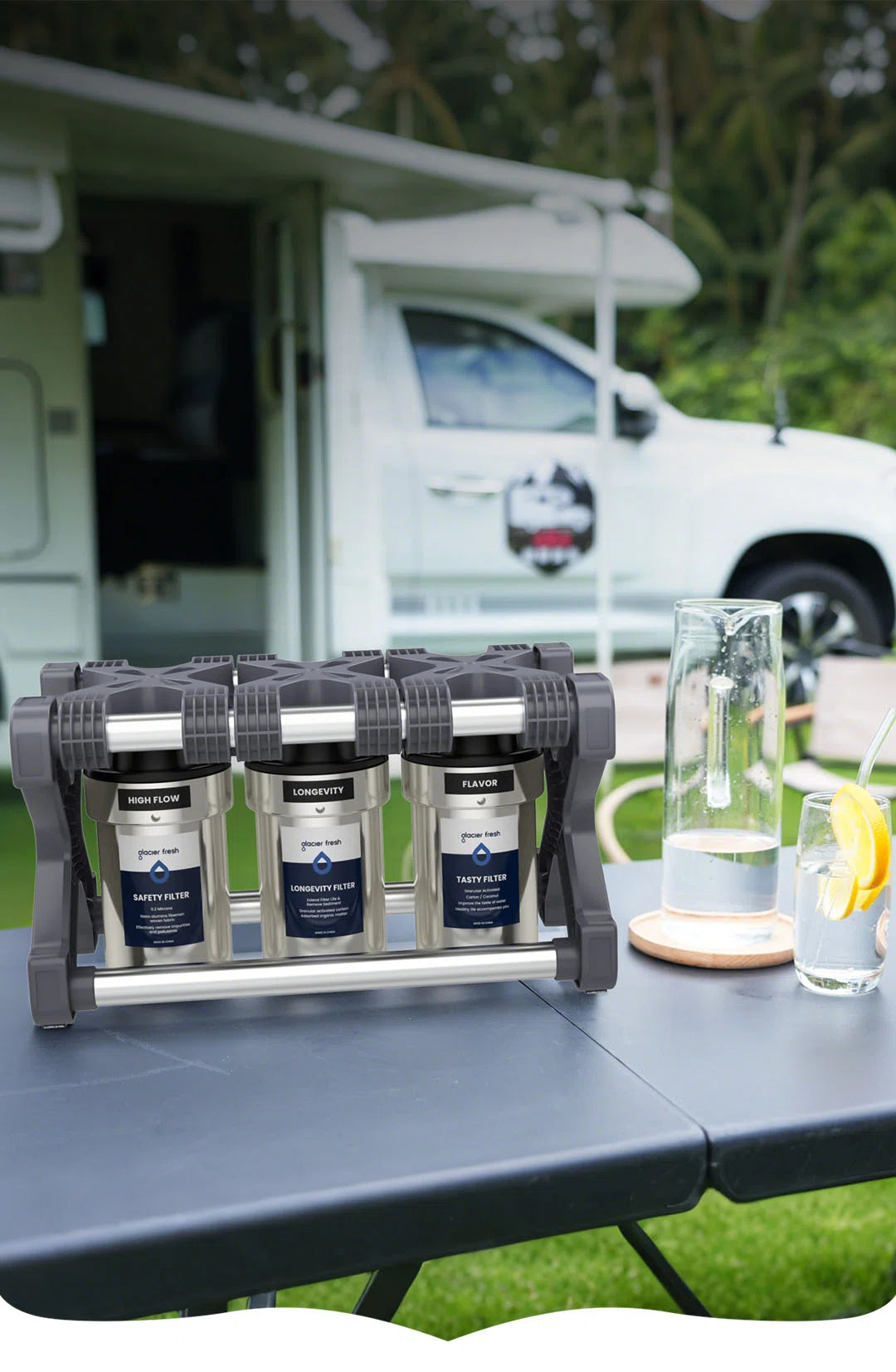
GlacierFresh AUQAGO 3-Stage RV Water Filter System - Premium Filtration for RVs & Campers
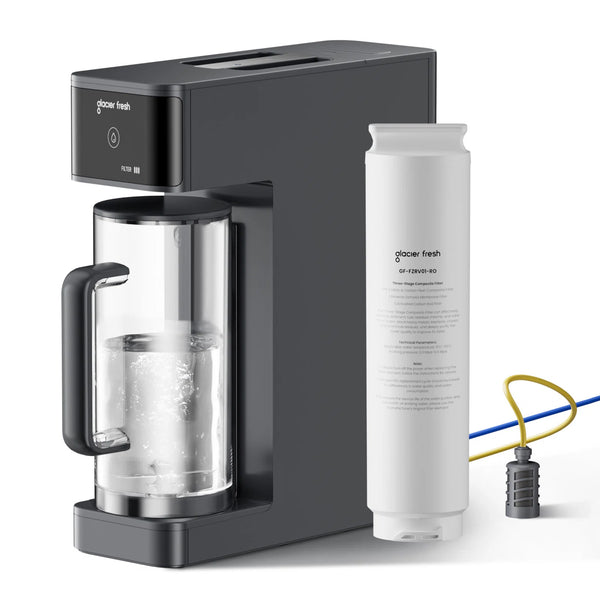
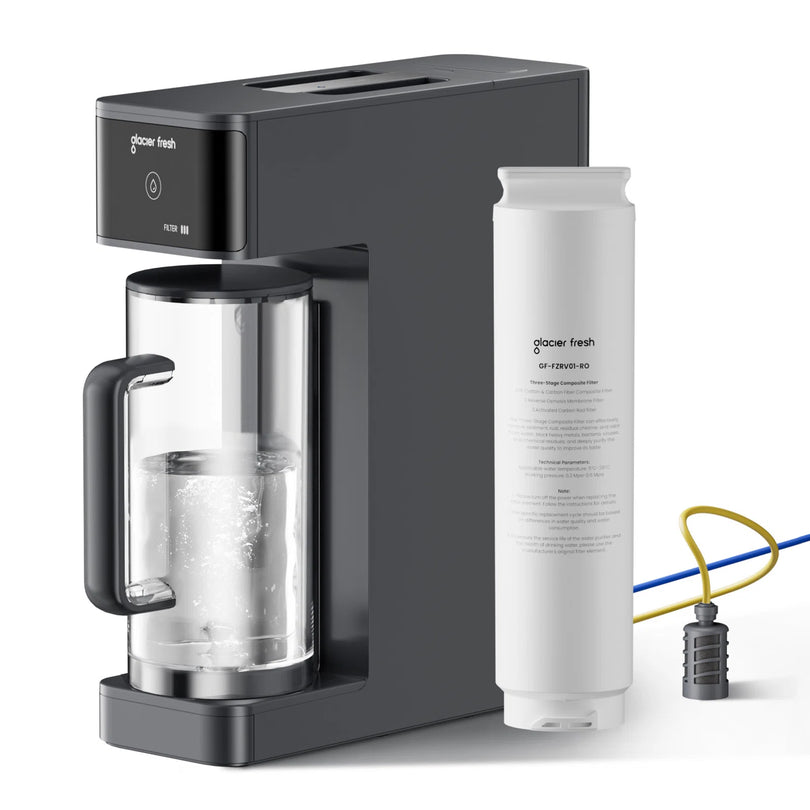
GlacierFresh RV Reverse Osmosis System - Portable RO Water Filter for Camping & Travel

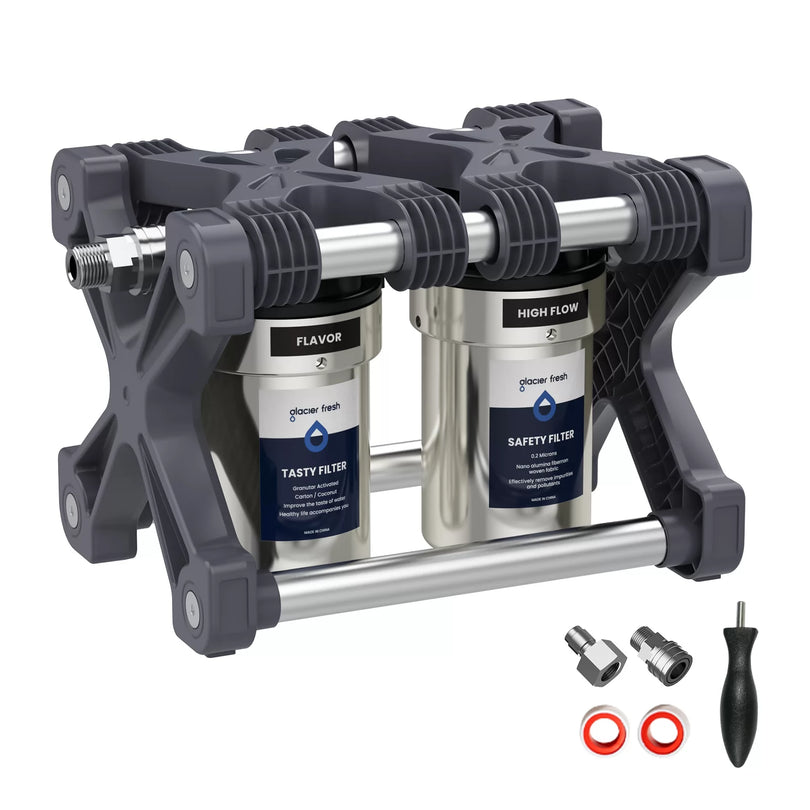
GlacierFresh 2-Stage Garden/RV Water Filter System
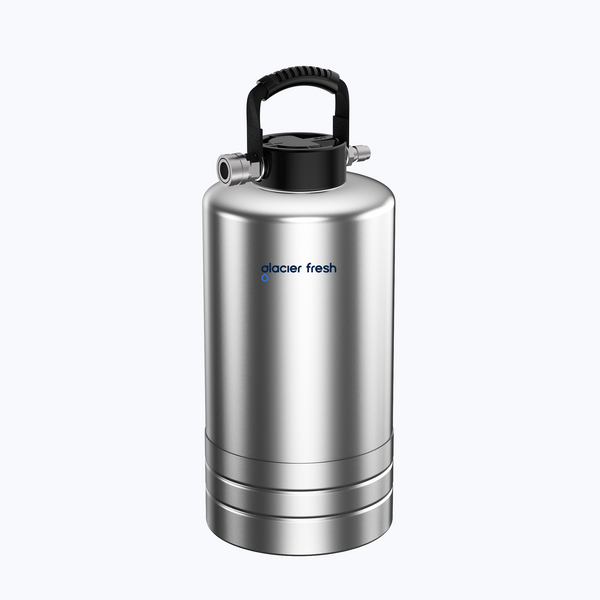
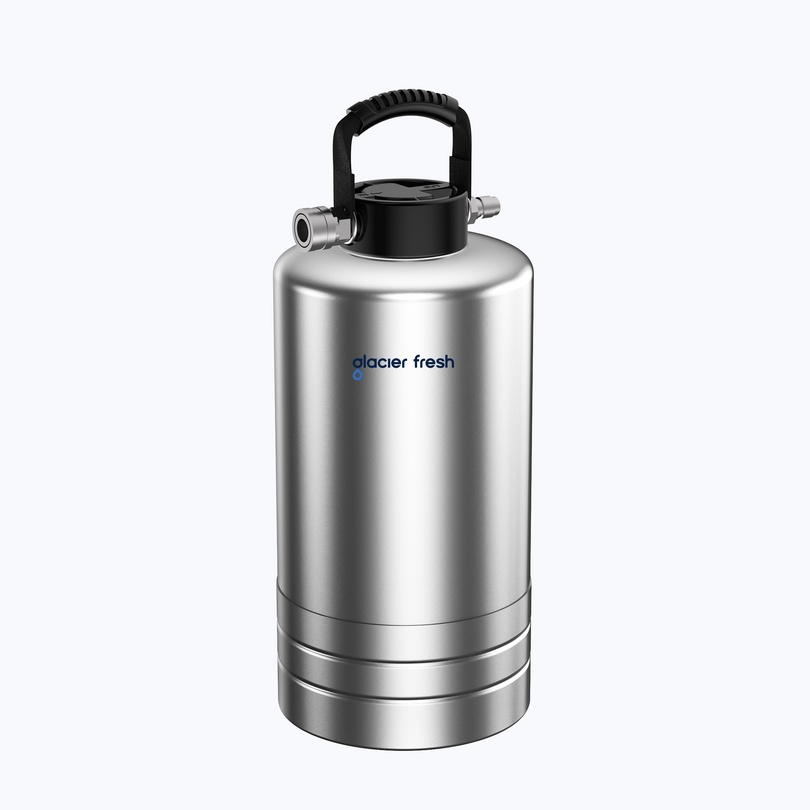
GlacierFresh Portable RV Water Softener - 16,000 Grain with Stainless Steel Quick Connects

Glacier Fresh Replacement for RV Inline Water Filter, 2-Pack
RV003, RV Water Filter System, 3 Stage Premium RV Water Filtration System, for RVs, offers the convenience of clean water wherever you go.
RV004, Glacier Fresh 2-Stage RV Water Filtration System, Equipped with stainless steel garden hose quick connects, easy install.
Glacier Fresh Portable RV Water Softener, 16,000 Grain with Stainless Steel Garden Hose Quick Connects for RVs, provides up to 2,000 gallons (at 8 GPG hardness) or 40 days of soft water.
RVRO01, AQUAGO/GlacierFresh Portable outdoor reverse osmosis (RO) system is designed for off-grid outdoor activities. This powerful camper water filter removes 99.9% of impurities like bacteria, viruses, heavy metals (lead, arsenic), chlorine, and microplastics.
Glacier Fresh Replacement for RV Inline Water Filter, Compatible with RV Inline Water Filter, Flexible Hose Protector. Please replace every 6 months.
What YouTube Creators are Saying
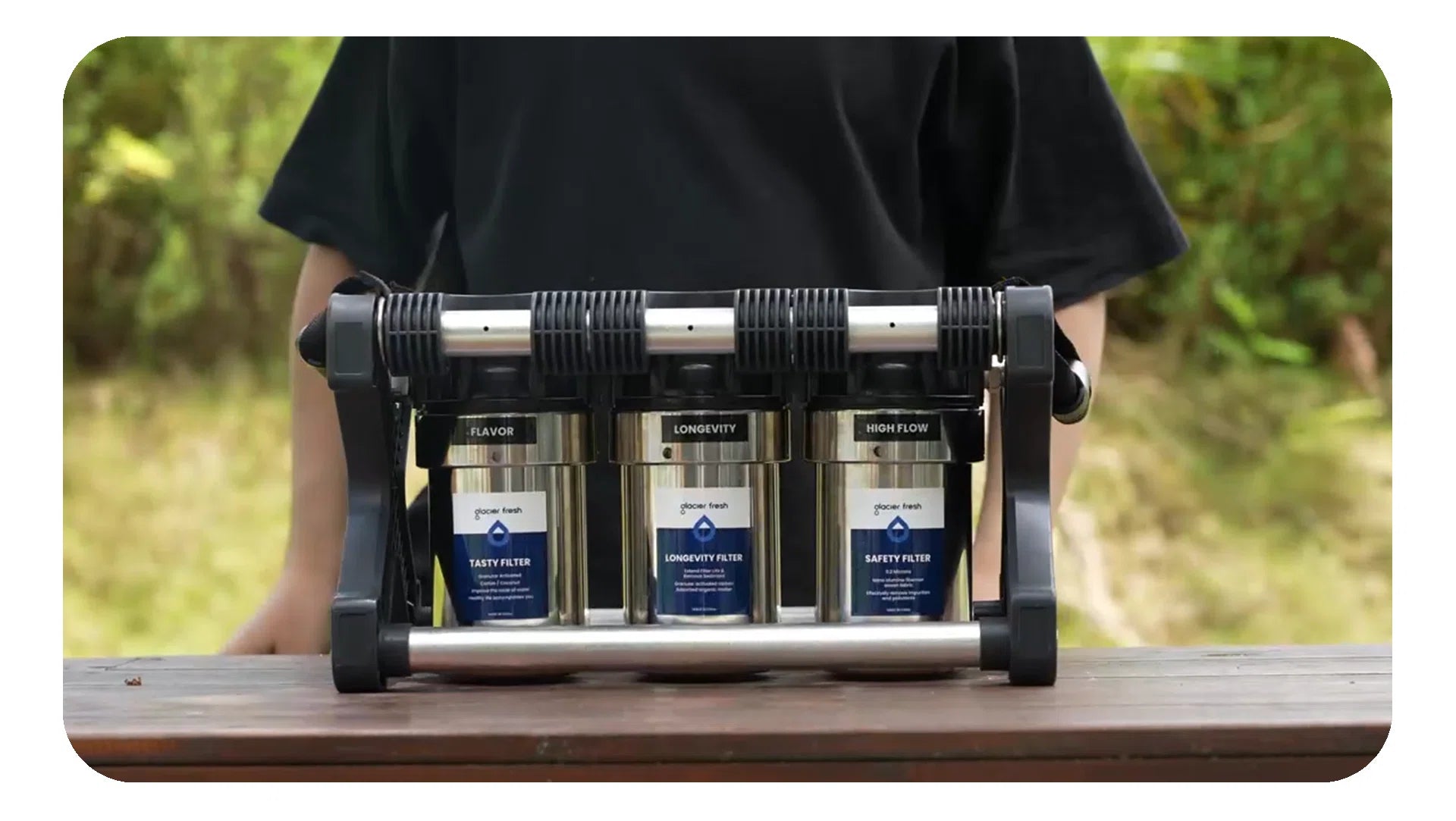
See which ones are helpful to you
Installation & Compatibility
- Most of our RV water filters feature stainless steel garden hose quick connects for easy installation. Simply connect between your water source and RV inlet - no tools required.
- Yes, our filters are compatible with all standard RVs, campers, travel trailers, camper vans, and boats with standard hose connections.
- Absolutely! Our portable RO systems are specifically designed for off-grid camping and boondocking.
Performance & Filtration:
- Our systems remove 99.9% of impurities including bacteria, viruses, heavy metals (lead, arsenic), chlorine, microplastics, and sediment.
- 3-stage systems provide premium filtration with additional layers for superior water quality, while 2-stage systems offer excellent everyday protection at a more affordable price.
- If you're in areas with hard water (high mineral content), a water softener protects your RV plumbing and appliances from scale buildup. Our 16,000 grain softener provides up to 2,000 gallons or 40 days of soft water.
Maintenance & Replacement:
- We recommend replacing inline filters every 6 months for optimal performance and water quality.
- Depending on water quality and usage, our filters typically last 6 months or up to 2,000 gallons for softeners.
- Yes, we offer replacement filters compatible with all our RV systems.
Product Selection:
- For basic filtration, choose our 2-stage system. For premium protection, opt for the 3-stage system. For the purest water or off-grid use, our portable RO system is ideal.
- RO systems provide the highest level of purification (99.9% contaminant removal) and are perfect for drinking water, while standard filters are great for general use throughout your RV.
Water Quality & Capacity:
- Our water softener provides up to 2,000 gallons at 8 GPG hardness, while our filtration systems are rated for continuous use with regular filter replacement.
- Yes! Our filters remove chlorine and other contaminants that affect taste and odor, giving you fresh, clean-tasting water.
Practical Use:
- Yes, especially our RO systems which are specifically designed for safe drinking water by removing 99.9% of contaminants.
- Our systems are designed to maintain good water flow while providing excellent filtration.
The RV water purification system is a machine suitable for RV or camping adventure enthusiasts to filter and treat water in outdoor or garden settings, meeting your needs for clean and safe water.
- 1. In-line Filters vs. Multistage Filtration Systems
In-line filters (such as small hose filters) are inexpensive and easy to install, but their primary function is to remove sediment and chlorine.
Multistage filtration systems (including separate sediment filters, activated carbon filters, and advanced filter media) are more effective at removing contaminants. If you frequently use your RV's tap water for drinking/cooking, a multistage filtration system is a worthwhile option to consider.
- 2. Flow Rate and Capacity
Choose a system that maintains good water pressure/flow to ensure the water flow from showers and faucets isn't too weak. Larger capacity filter cartridges also mean a longer lifespan (reduced replacement frequency).
- 3. Installation Location
Some water purifiers are installed at external inlets, while others are installed under the sink or indoors—consider space availability, ease of installation, and the stability you require when choosing.
Best High-end RV Water Purifiers
Clearsource Ultra RV Water Purification System – A high-end multi-stage filtration system with VirusGuard technology, effectively protecting against bacteria and viruses, ideal for full-time RV travelers or anyone concerned about water quality.
CLEAR2O RV Three-Tank Water Purification System – A superior three-tank system equipped with sediment + activated carbon and advanced filter media, providing excellent filtration, strong water flow, and ample capacity.
iSpring CW31 Three-Stage RV Water Purification System – A reliable three-stage filter using sediment + dual activated carbon filtration, effectively blocking contaminants and chlorine, significantly improving water cleanliness.
Mid-Range Options
Glacierfresh RV Three-Stage Water Purification System – A highly rated and reliable three-stage RV filter that combines high performance, ease of installation, and cost-effectiveness. Effectively filters chlorine, contaminants, bacteria, sediment, and microorganisms.
Camco EVO X2 Two-Stage Premium RV Water Purifier Kit – Camco's two-stage filter is an excellent upgrade from basic straight-through filters, effectively removing sediment, chlorine, and odors while maintaining good water flow.
GlacierFresh RV Two-Stage Water Purification System – Another reliable three-stage water purifier at an affordable price, effectively removing contaminants. Moreover, it's suitable for garden settings, Car wash, flower watering and swimming pool water supply etc.
Economical and Convenient Options
iSpring CW21 Water Purification System – This two-stage tankless water purification system is easy to install and provides superior filtration compared to basic hose filters.
RV Water Purification System (RVF-10) – This affordable, compact filter improves the taste of water and reduces sediment, making it ideal for occasional campers or weekend getaways.
Most RV water filters attach directly to the hose that connects your RV to a campground or an external water source. They are usually installed between the spigot and your RV’s water intake, ensuring that all incoming water is filtered before it enters your plumbing system. This setup helps remove common contaminants like sediment, chlorine, and bacteria, improving both the safety and taste of your water. Inline RV water filters are particularly popular because they are easy to install and replace, making them ideal for quick hookups on the road.
Some advanced RV water filters are part of more comprehensive systems, including under-sink units or full RV filtration setups that treat all water entering the RV. These systems may feature multiple stages of filtration and are effective for extended trips or areas with questionable water quality. Whether you're staying at a well-equipped RV park or a remote campsite, using RV water filters helps ensure consistent access to clean, safe water for drinking, cooking, and cleaning throughout your journey.
RV water filter systems are designed to remove a wide range of contaminants commonly found in campground or city water sources. They typically eliminate sediment like sand, rust, and dirt, which can clog pipes and damage appliances. In addition, RV water filter systems effectively reduce chlorine levels, which improves the taste and odor of drinking water. Many models also help remove harmful bacteria and microorganisms that may be present in untreated or poorly maintained water supplies.
Some advanced RV water filter systems go a step further by targeting heavy metals such as lead and mercury, as well as pesticides and VOCs (volatile organic compounds). This ensures that the water is not only safe but also healthier for long-term use during travel. By choosing high-quality RV water filter systems, RV owners can enjoy peace of mind knowing their water is clean, safe, and free from a variety of harmful substances that could affect their health or plumbing.
Some household filters can technically be used in an RV, but they are not optimized for mobile water systems. A camper water filter is specifically designed to handle the varying water pressure, inconsistent water quality, and compact plumbing commonly found in RVs. While a household filter might improve taste or reduce basic contaminants, it may not perform reliably under the unique conditions of travel and campground hookups. For example, household filters often lack the portability and durability required for outdoor environments.
A camper water filter is built with convenience, efficiency, and safety in mind. It typically offers easy installation between water hoses, better sediment control, and targeted filtration suited for campgrounds or unfamiliar water sources. Using a dedicated camper water filter ensures better protection against chlorine, sediment, and even bacteria, keeping your water clean and safe. For the best performance and peace of mind while traveling, a camper water filter is far more suitable than a general household unit.
The ideal water pressure for most RVs ranges between 40 and 55 PSI to protect plumbing and appliances from damage. Going above this range may risk leaks or burst hoses, especially in older systems. A high-quality RV filter system not only purifies the water but also helps regulate flow, ensuring the pressure stays within a safe range. For example, the GlacierFresh RV filter system is built to handle water pressure up to 60 PSI, making it suitable for most campground hookups without compromising filtration performance.
Using a dedicated RV filter system adds an extra layer of protection for your water lines by reducing contaminants while maintaining stable water pressure. It’s important to pair your RV filter system with a water pressure regulator to avoid surges that could overwhelm the system. Whether you're parked at a high-pressure city supply or drawing from a low-pressure well, a reliable RV filter system helps maintain safe and efficient water flow throughout your journey.
An RV water filter works by attaching to your freshwater hose or water inlet, filtering water as it flows into your RV’s plumbing system. On the road, these filters remove contaminants such as sediment, chlorine, and rust that are commonly found in campground or city water sources. The portability and simplicity of an RV water filter make it ideal for travel, ensuring you get clean water wherever you camp.
Many RV water filter models use inline carbon filtration, which doesn’t require electricity or a large installation setup. They function passively—filtering water automatically as it passes through. With the right RV water filter, you’ll enjoy safe, better-tasting water at all stops, whether for drinking, cooking, or washing.
Yes, an RV water filter is designed to treat all incoming water, meaning it’s effective for both drinking and showering. Since the filter connects to the water supply line, it processes every drop before it reaches your faucet or showerhead. This means an RV water filter not only improves the taste of your drinking water but also ensures safer, cleaner water for bathing.
Using an RV water filter for your shower helps reduce exposure to chlorine, which can dry out your skin and hair. Whether you’re brushing your teeth or rinsing off after a hike, the water filtered through an RV water filter will be noticeably cleaner and more pleasant.
A camper water filter is designed with mobility and versatility in mind. Unlike bulky home filtration systems, a camper water filter is compact and easy to install, often attaching directly to hoses or inlets. While household filters are built for constant water pressure and stable conditions, a camper water filter must adapt to fluctuating sources like campground spigots or untreated well water.
Additionally, many camper water filter models are more rugged and resistant to vibration, making them better suited for travel conditions. The goal of a camper water filter is to offer similar water safety as home systems but in a portable, user-friendly form that meets the needs of RVers and campers.
Yes, a well-designed RV water filter system can effectively remove heavy metals like lead and mercury, as well as chlorine and its byproducts. These systems often use multi-stage filtration, combining sediment filters, activated carbon, and sometimes KDF media to target a wide range of impurities. A quality RV water filter system enhances both safety and taste.
If you're staying in areas with questionable water quality, investing in a robust RV water filter system is essential. With regular maintenance, an RV water filter system provides peace of mind by delivering cleaner, healthier water for drinking and other uses.
When selecting an RV filter system, consider the type of water sources you’ll encounter, such as campground hookups, wells, or municipal water. If the water quality varies significantly, opt for a multi-stage RV filter system that handles both sediment and chemical contaminants. For occasional travelers, a simple inline RV filter system may suffice.
Also factor in ease of installation and filter replacement. A compact RV filter system with quick-change cartridges is ideal for those on the move. Ultimately, the best RV filter system matches your RVing habits and ensures safe, clean water no matter where you camp.
Drinking tap water from an RV depends largely on the quality of your RV water filter. Without proper filtration, the water in your RV tank can contain sediments, bacteria, or chlorine from campground sources. A high-quality RV water filter removes impurities and improves taste, ensuring your water is safe for cooking, brushing teeth, and drinking. Always sanitize your water tank regularly to prevent bacterial growth, especially if the RV has been unused for a while.
Even with an RV water filter, it’s important to replace it as recommended—usually every three to six months. Using a filter ensures you have clean, safe water on every trip, no matter where you refill it. For extra safety, flush your lines before use and avoid drinking from the tap if the water looks cloudy or smells off.
Cleaning an RV water filter system helps maintain water quality and extend the filter’s lifespan. First, turn off your water supply and carefully remove the filter housing. Rinse it with clean water to remove debris and sediment buildup. For deeper cleaning, use a mild vinegar or bleach solution to disinfect the housing and rinse thoroughly. Avoid using harsh detergents, as they may damage the filter components or leave chemical residues.
When reinstalling, check the O-rings for wear and apply a bit of silicone grease for a proper seal. Regular cleaning of your RV water filter system ensures optimal flow and performance, keeping your water fresh and safe throughout your travels.
If you’re unsure whether your RV includes an RV water filter, start by checking under the sink or near the water pump. Look for a small canister or an inline cartridge connected to the water line—this is often the RV water filter. Some models may also have external filters attached to the hose where you connect to the campground’s water supply.
If you still can’t locate it, refer to your owner’s manual or contact the manufacturer. Knowing whether you have an RV water filter helps you maintain it properly and ensures that you’re always drinking safe, clean water on the road.
Replacing an RV water filter system is a quick and essential maintenance task. Start by turning off your water source and relieving pressure from the lines. Unscrew the old filter housing, remove the used cartridge, and insert the new one following the arrow direction for water flow. Reattach the housing and tighten it securely.
Once installed, please turn on the water and let it run for a few minutes to flush out air and carbon dust. Replacing your RV water filter system regularly keeps your water fresh and prevents contamination. It also extends the lifespan of your plumbing and appliances by reducing sediment buildup and bacterial growth.