


Table of Contents:
What Is Reverse Osmosis Water?
What’s the Difference Between distilled and reverse osmosis water?
Distilled Water vs Reverse Osmosis Water: Which One to Choose?
FAQs
Summary
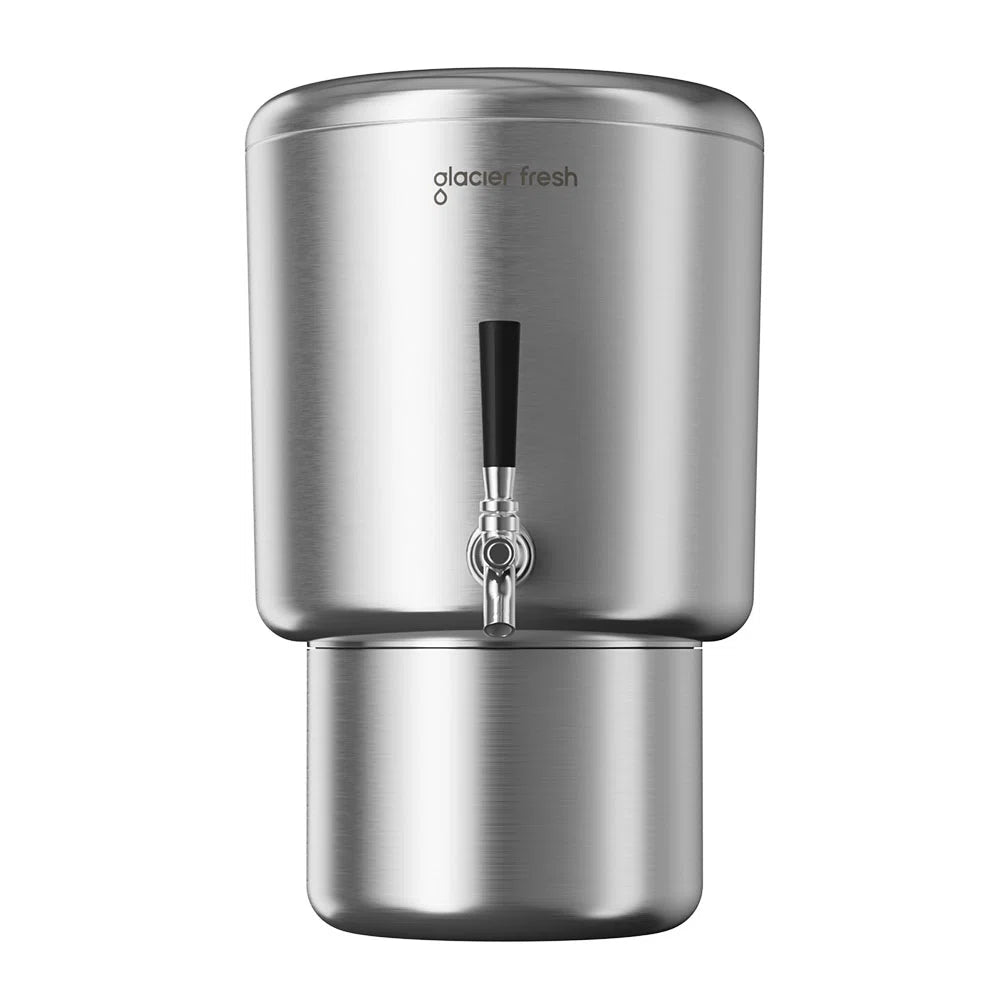
What Is Distillation?
Distillation is a heat-based purification method that separates water from many dissolved substances by boiling it into vapor and then condensing that vapor back into liquid. It is valued in settings where mineral-free water is needed, but its energy demand and slow output make it less convenient for everyday household drinking.
In practical terms, distillation can remove dissolved minerals, salts, many heavy metals, and other non-volatile impurities because those substances do not travel with the steam. The result is very low-mineral water that is commonly used for medical labs, steam irons, car batteries, and some CPAP machines. It can be safe to drink, but many people describe the taste as flat because minerals that normally contribute to flavor are absent.
For daily hydration, the main limitation is practicality: a home distiller requires electricity, time, cooling, and regular cleaning. Distilled water is useful, but it is not always the most efficient choice for a family that wants fresh drinking water on demand.
What Is Reverse Osmosis Water?

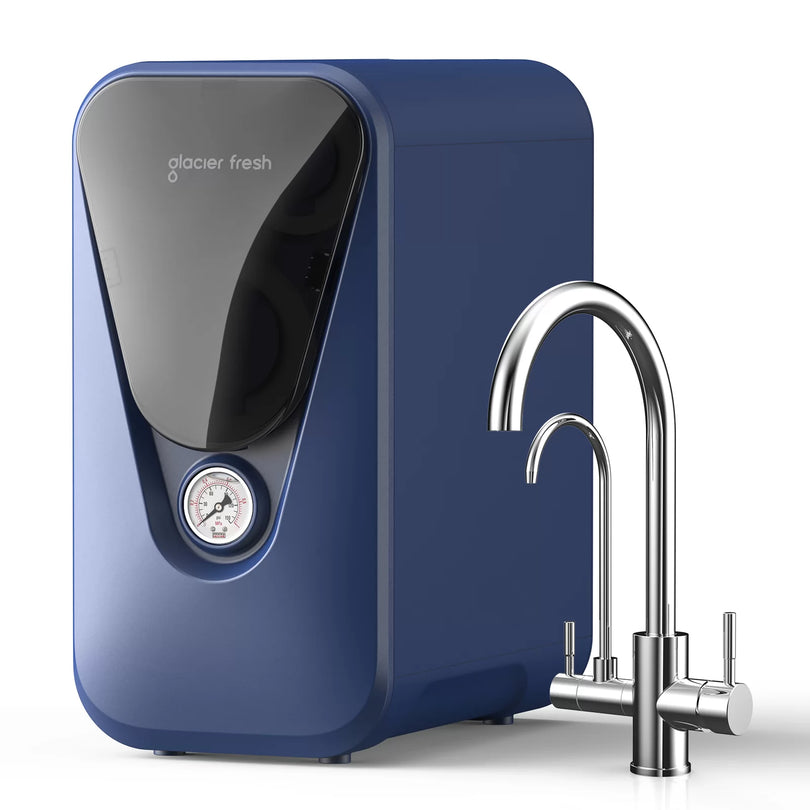
Reverse osmosis is a pressure-driven filtration process that pushes water through a semi-permeable membrane. It is commonly used in home drinking-water systems because it can reduce a broad range of dissolved and suspended contaminants while delivering water more quickly than a countertop distiller.
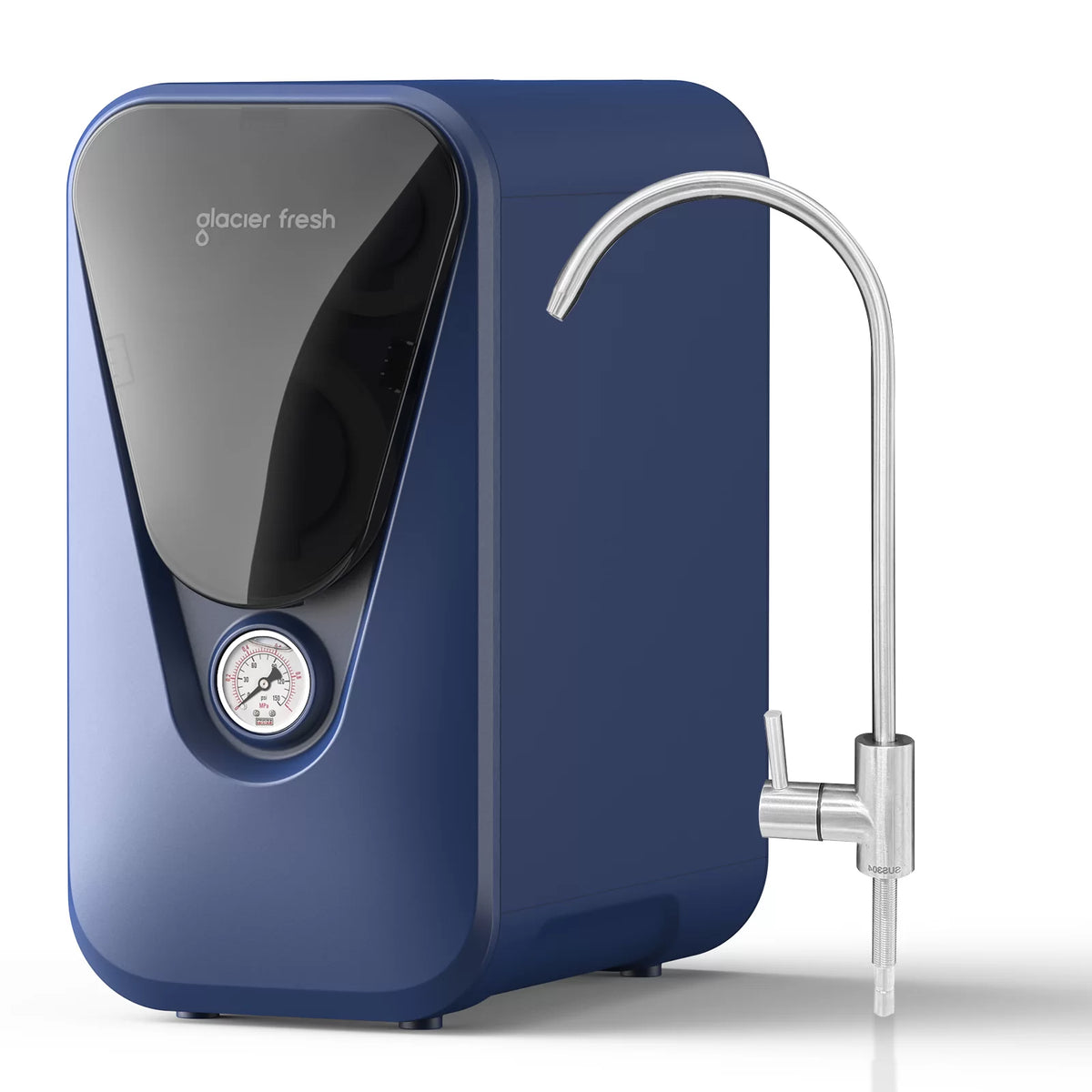
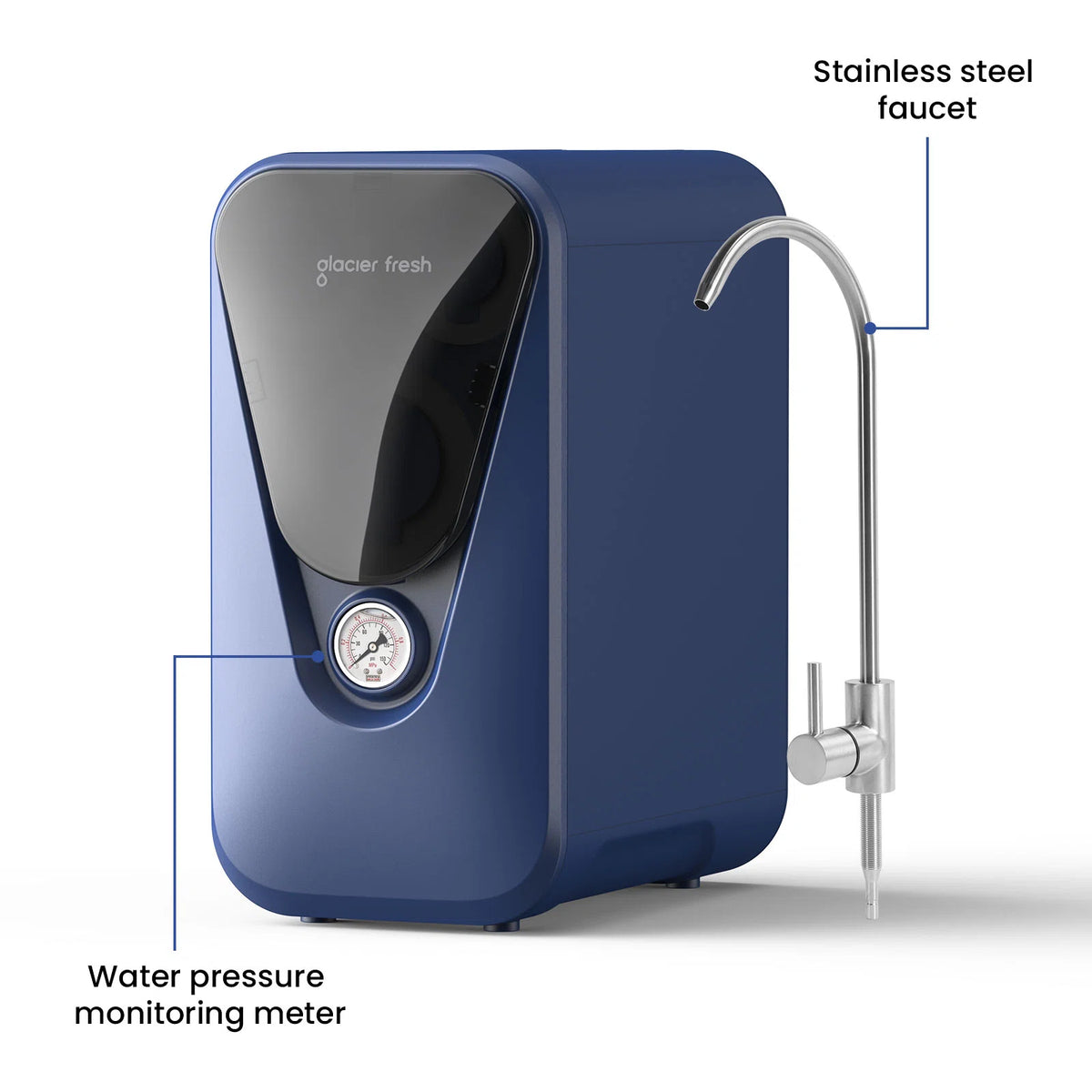
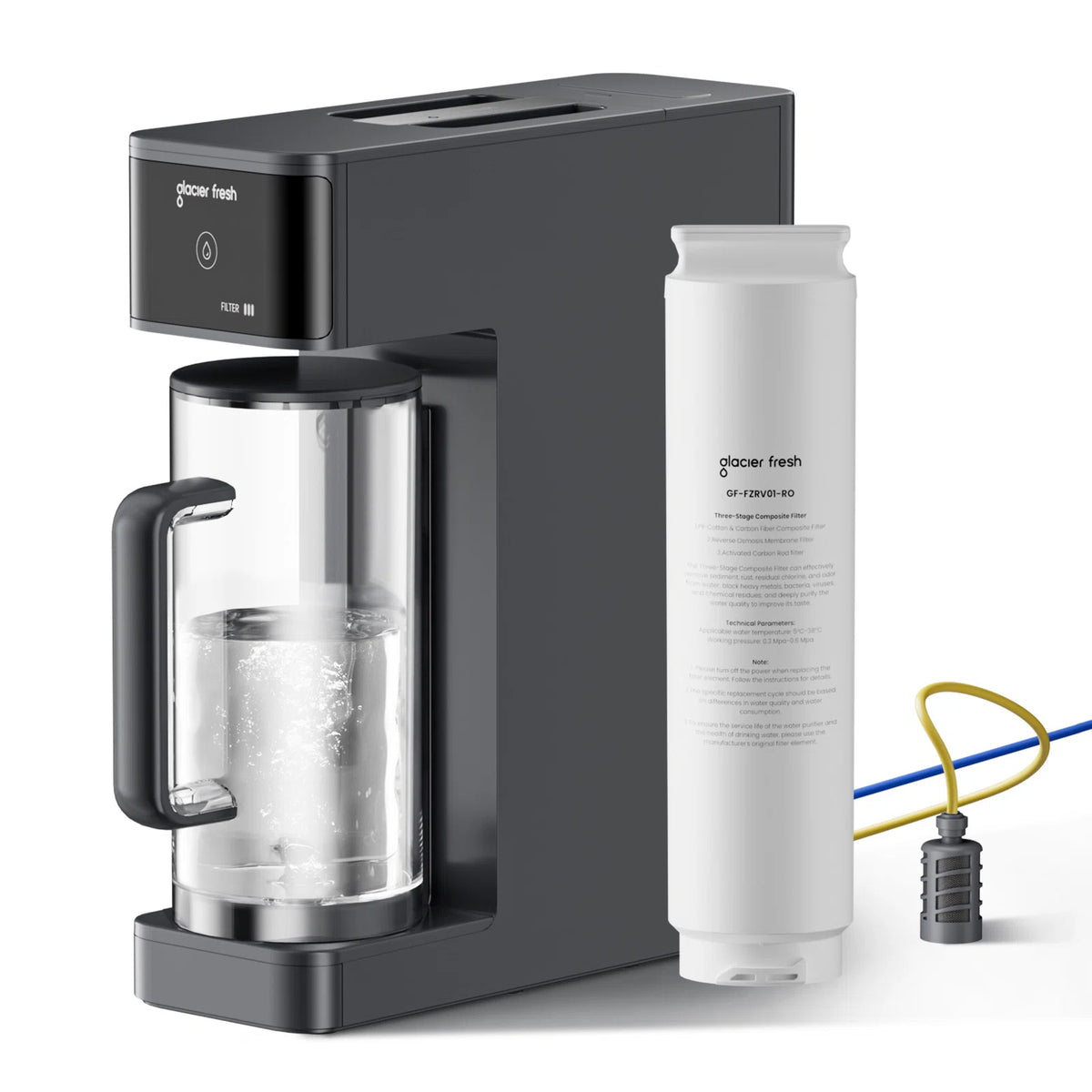
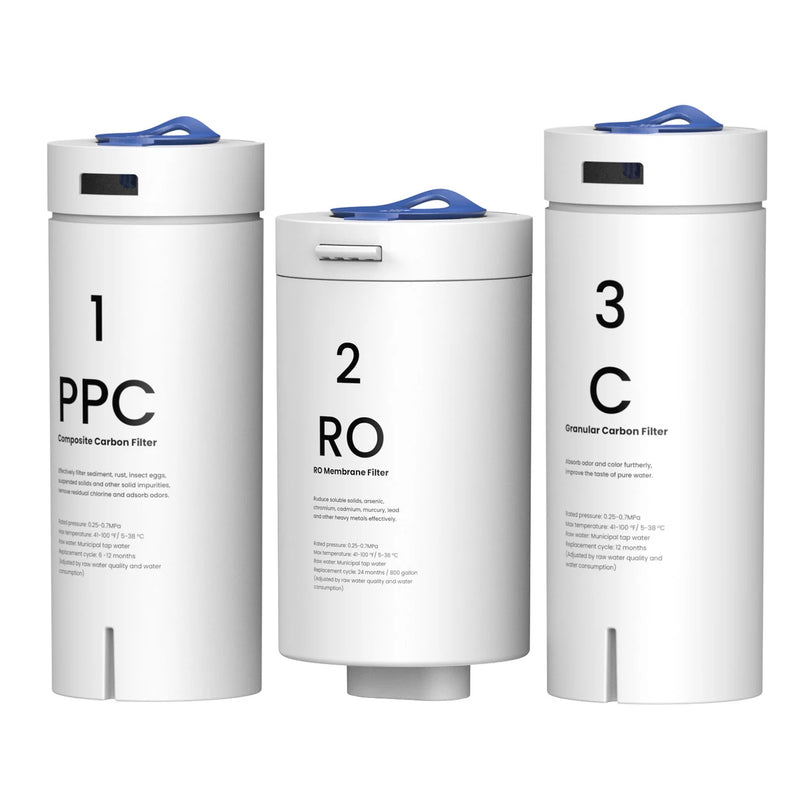
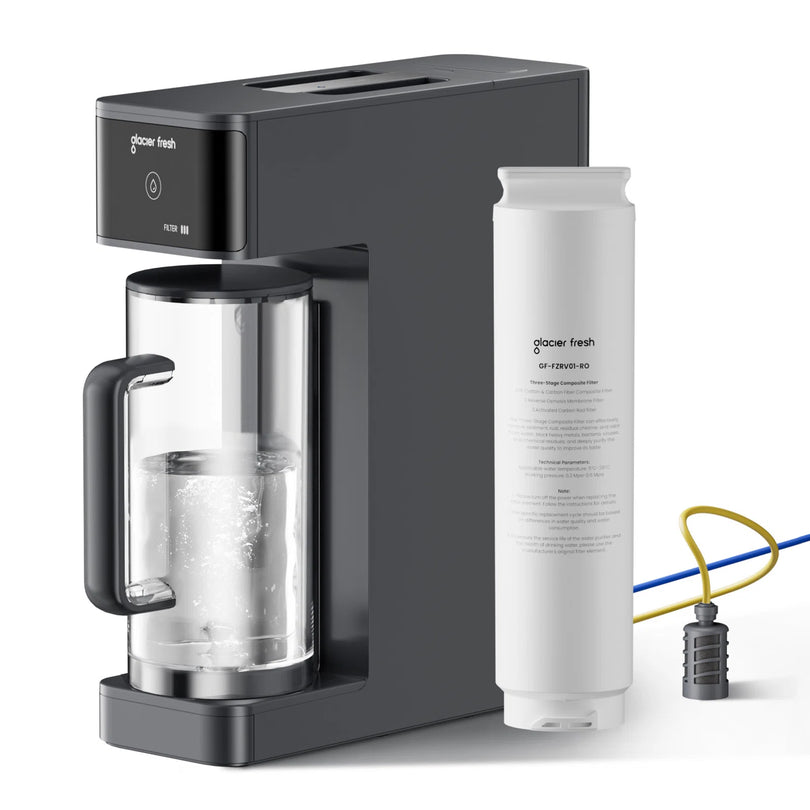
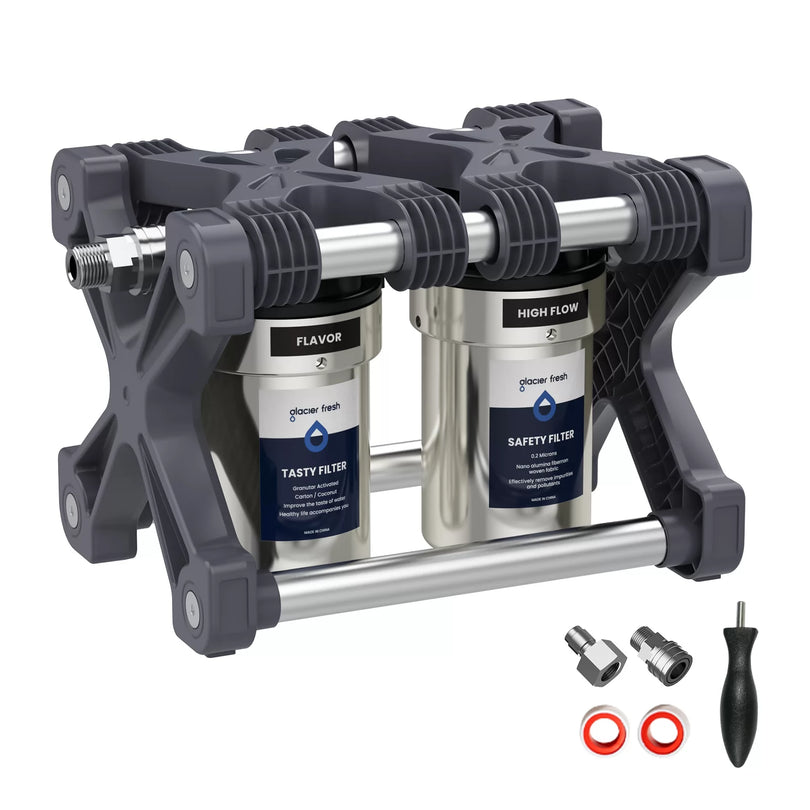
A typical RO system uses multiple stages, such as sediment filtration, carbon filtration, the RO membrane, and sometimes post-filtration or remineralization. Many households choose RO when they want cleaner water for drinking, cooking, tea, coffee, and ice without relying on bottled water. A compact countertop reverse osmosis water filter system can also be useful when under-sink installation is not ideal.
RO water is usually clear, neutral-tasting, and convenient. Some systems add calcium or magnesium back after filtration to improve taste and mouthfeel. This makes reverse osmosis a practical middle ground: highly purified water that can still be pleasant for everyday drinking.
What’s the Difference Between distilled and reverse osmosis water?
The difference between distilled water and reverse osmosis water is best understood across process, TDS, minerals, pH, taste, use case, and operating cost. The table below gives a concise side-by-side answer.
|
Comparison Factor |
Distilled Water |
Reverse Osmosis Water |
|
Process / Technology |
Water is boiled; steam is condensed into liquid, leaving many dissolved substances behind. |
Water is forced through a semi-permeable RO membrane, usually with carbon and sediment pre-filters. |
|
Typical TDS |
Very low; often close to zero because minerals are removed. |
Low to very low; exact TDS depends on feed water, membrane quality, and remineralization. |
|
Mineral Content |
No meaningful mineral content. |
Usually greatly reduced; may include added minerals if the system has a remineralization stage. |
|
pH Profile |
Can be slightly acidic after absorbing carbon dioxide from air. |
Often near neutral, but varies by system and whether minerals are added back. |
|
Taste / Mouthfeel |
Flat, blank, or bland because minerals are removed. |
Clean and crisp; remineralized RO water often tastes fuller. |
|
Best Use Cases |
Medical devices, labs, steam irons, batteries, and appliances that require mineral-free water. |
Daily drinking, cooking, coffee, tea, ice, and general household water use. |
|
Cost & Convenience |
Higher electricity use, slower output, more heat, and smaller daily production. |
Faster on-demand use, lower energy demand, filter replacement costs, and better household convenience. |
Purity Level
Distilled water is often treated as the ultra-pure option because the process removes minerals along with many dissolved impurities. Reverse osmosis water is also highly purified, but it is engineered for practical household use rather than absolute mineral-free output.
Taste
Taste is one of the clearest day-to-day differences. Distilled water can taste plain or empty, while RO water tends to taste cleaner and fresher, especially when a polishing filter or remineralization stage is included.
Mineral Content
Distilled water contains virtually no minerals. RO water may contain very low mineral levels, and some RO systems intentionally add minerals back to improve flavor. This is why RO is often preferred for long-term daily drinking.
Energy Efficiency
Distillation requires boiling, which makes it energy-intensive. RO uses water pressure rather than heat, so it is typically more efficient for routine drinking-water production.
Speed and Convenience
Home distillers can be slow, so they may not keep up with family cooking and hydration needs. A well-designed RO system water purifier provides quicker access to purified water, especially when the system is tankless or has strong flow performance.
Applications
Distilled water is the better match for appliances and medical or laboratory tasks that require water with no minerals. RO water is the stronger choice for drinking, food preparation, coffee, tea, and everyday kitchen use.
Distilled Water vs Reverse Osmosis Water: Which One to Choose?

Choose based on the job. A reverse osmosis water filter is primarily a home drinking-water solution, while distilled water is better for use cases that require water completely devoid of minerals. For most homes, a quality RO water filter is more convenient, economical, and pleasant for daily drinking.
In short, distillation vs reverse osmosis is not a single winner-takes-all comparison. It is a choice between absolute mineral removal and practical daily purification.
|
If You Need... |
Choose |
Why |
|
Better-tasting daily drinking water |
Reverse osmosis |
RO is faster, easier to use, and can include remineralization for improved flavor. |
|
Water for coffee, tea, and cooking |
Reverse osmosis |
It reduces unwanted contaminants while preserving a cleaner, more drinkable taste profile. |
|
Water for a CPAP machine or device manual requiring distilled water |
Distilled water |
Mineral-free water helps prevent mineral scale; always follow the device manual. |
|
Water for steam irons, car batteries, or lab-style use |
Distilled water |
These uses often require water with minimal dissolved minerals. |
|
A lower-effort family drinking-water setup |
Reverse osmosis |
It supports regular use without boiling batches of water or storing many jugs. |
|
A backup option when only small batches are needed |
Distilled water |
A distiller can be useful when slow production is acceptable and mineral-free output is required. |
FAQs
Can I use RO water instead of distilled?
Yes, for drinking and cooking, RO water is usually a better everyday choice than distilled water because it is convenient and can taste better.
Is it better to drink tap water or reverse osmosis water?
It depends on your local tap water quality. RO water can reduce many common contaminants and improve taste, so it is often preferred in homes where tap water has chlorine taste, sediment, heavy metals, or other quality concerns.
Is distilled water and reverse osmosis water safe to drink?
Both can be safe to drink. Distilled water is very low in minerals and may taste flat. RO water is also highly purified and may include remineralization, which many people prefer for daily drinking.
What are the pros and cons of using distilled water versus filtered tap water for espresso?
Distilled water is not ideal for espresso by itself because it lacks minerals that help extraction and flavor. Filtered tap or RO water with balanced minerals usually gives better coffee taste, but very hard water can cause scale inside equipment.
How do reverse osmosis systems compare to bottled water for brewing coffee and tea?
RO systems can be more convenient and cost-effective over time than repeatedly buying bottled water. For coffee and tea, RO water with controlled remineralization can offer consistent flavor while reducing plastic waste and storage needs.
Summary
Distilled water and reverse osmosis water both improve upon untreated tap water, but they solve different problems. Distilled water is best when the main requirement is mineral-free water. Reverse osmosis is usually the better choice for everyday drinking because it is faster, more convenient, and better suited to home kitchens.
For most households, the practical answer is simple: use RO water for drinking, cooking, coffee, tea, and regular hydration; use distilled water when a device, lab-style process, or appliance specifically requires mineral-free water.
Related readings
· Reverse Osmosis, Nanofiber, Ultrafiltration: Which One Is Right for You?
· Reverse Osmosis Disadvantages: What to Know Before Installing a System